

The right jewelry rolling mill can instantly improve your metalwork. If you’ve ever struggled with uneven sheet or wire, you already know how much difference the right machine makes.
This quick guide breaks down the five jewelry rolling mill types most jewelers use, helping you choose the one that fits your workflow and budget.
1. Basic Manual Rolling Mills
This is the quintessential entry-level option, perfect for those starting their metal forming journey.
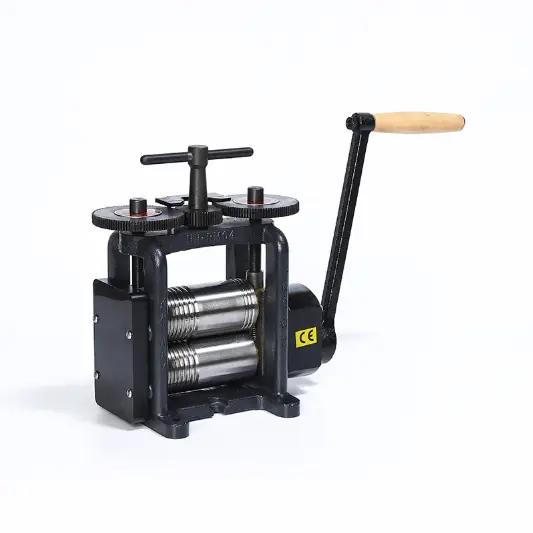
- Positioning: The most economical and accessible choice.
- Core Features: Purely hand-cranked, with flat rollers (for pressing sheet metal only). Standard specs typically feature an efficient 4:1 gear ratio and a minimum roller width around 130mm.
- Core Advantages: The low price threshold and simple, lightweight structure make it ideal for small-batch, occasional use.
- Target Audience: Ideal for new jewelers, dedicated students, or small studios with low-volume, specialized sheet metal needs.
- Product Example: US Type 130MM Manual Rolling Mill for Jewerly.
2. Combination Rolling Mills
For the majority of growing professional workshops, the combination rolling mill is the standard workhorse, offering crucial versatility.
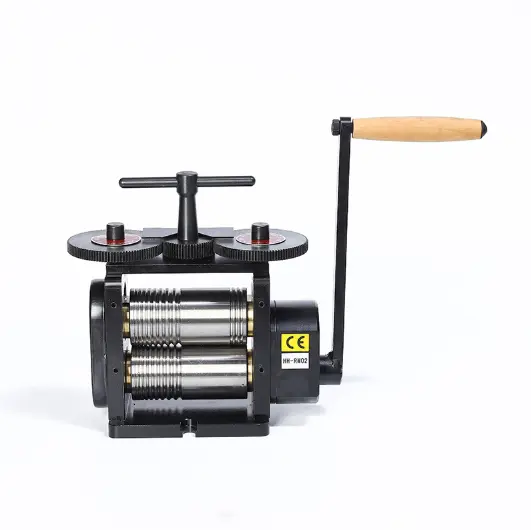
- Positioning: Standard configuration for small to medium-sized professional workshops, with versatile functions.
- Core Features: The roller design expertly integrates flat sections (for sheet metal) and grooved sections (for precisely sizing square and semi-circular wires). Common models offer a roller width of 130mm and handle wire sizes ranging from 1.0mm to 6.5mm square.
- Core Advantages: Highly versatile, completing basic processing needs for both sheet and wire in one compact machine. This is an ideal solution for space- and cost-constrained environments.
- Target Audience: General fabrication jewelers and small to medium-sized studios needing to handle various metal shapes efficiently.
- Product Example: Combination Rolling Mill 130MM(L)*65MM(D).
3. Dedicated Types: Wire-Only / Flat-Only
When a jeweler needs maximum consistency for a specific shape, the specialized, dedicated rolling mill is the clear choice for precision.
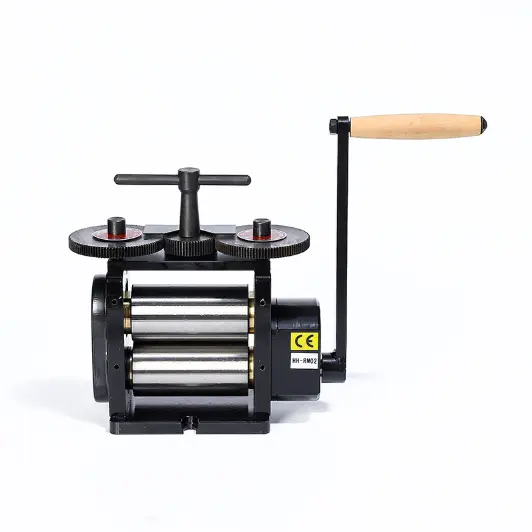
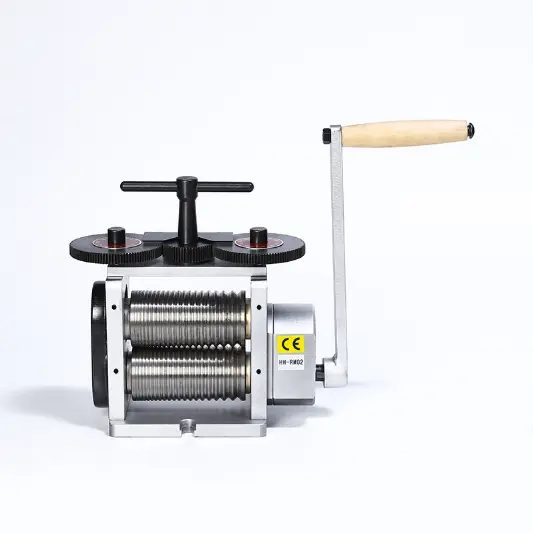
- Positioning: Designed specifically for high-precision or high-volume production of a particular shape.
- Key Features: Highly specialized roller design, designed solely for wire-only or flat-only production. Wire-only models maximize the number of grooves for maximum wire sizing precision.
- Key Advantages: Focused on providing ultimate precision and dimensional consistency, avoiding the need for constant adjustment or wear on combination rollers.
- Target Audience: Professional craftspeople specializing in a single product line, or those requiring extra-wide sheet or high-precision wire of specific specifications.
| Dedicated Product Type | Product Example |
| Sheet-Only | Flat Rolling Mill 130mm(L)*65mm(D) |
| Wire-Only | Us Made Black Only Wire Rolling Mill |
4. Desktop Electric Rolling Mills
Stepping into the realm of powered equipment, the desktop electric rolling mill offers a powerful and necessary leap in productivity for the busy jeweler.
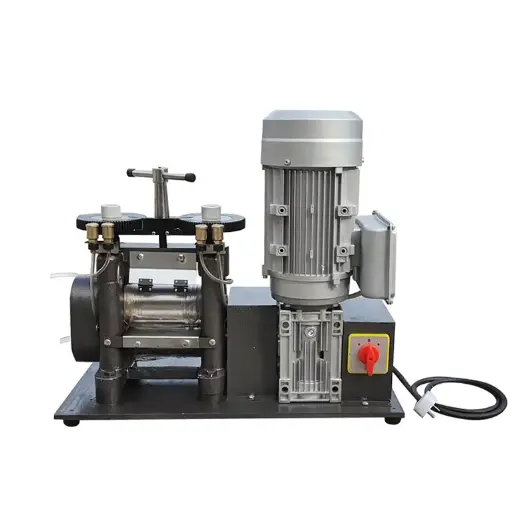
- Positioning: Efficiency upgrade for medium-sized workshops.
- Key Features: Compact design, equipped with a reliable motor typically rated at 1.5 HP (1.125 kW). This power provides ample torque for continuous, medium-batch production.
- Key Advantages: Saves physical labor and significantly improves medium-batch production efficiency, especially when reducing thicker gauge metals, while maintaining a small footprint.
- Target Audience: Established medium-sized workshops requiring regular daily rolling operations, who seek a balance between automation and cost.
- Product Example: Single Sided 1.5HP Desktop Electric Rolling Mill.
5. High-Power Floor Model Electric Rolling Mills
These machines are built for serious output and continuous commercial use. They are the choice of large-scale operations where productivity and endurance are paramount.
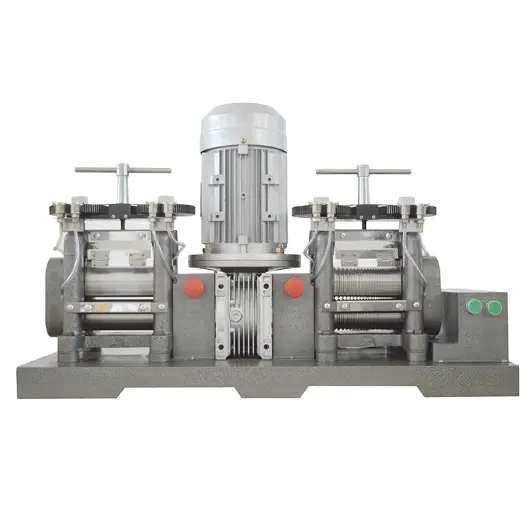
- Positioning: Commercial-grade, factory-scale heavy-duty continuous production.
- Key Features: High-power motor (often 1.5 HP or higher), heavy-duty transmission, and a stable floor-standing design. These models frequently feature dual heads (one dedicated to sheet, one to wire) to maximize throughput.
- Key Advantages: Highest efficiency and power, easily handling the largest volumes and can process the hardest metal blanks over long shifts.
- Target Audience: Commercial manufacturers, large jewelry manufacturing plants, and users requiring the rolling of large quantities of hard metals.
- Product Example: 1.5HP 2 Heads Electric Rolling Mill.
Buying Guide: How to Choose the Right Rolling Mill for You?
Selecting the correct jewelry rolling mill machine is a critical investment. Use these four factors to guide your decision:
1. Budget Considerations
Compare the low initial cost of manual models with the higher upfront investment required for electric models. Crucially, calculate the return on investment (ROI)—if the machine saves you hours of labor every week, the electric option quickly justifies the expense.
2. Workload and Frequency
Differentiate your usage: If you require the machine only for occasional use or small, one-off projects, a manual combination mill is usually sufficient. If your workflow demands continuous heavy daily use or the pressing of thick, hard metals, an electric model is essential for consistent output.
3. Space and Installation
Rolling mills are heavy. A typical manual combination mill weighs around 25kg (55lbs), requiring a robust workbench. Desktop electric mills can weigh 70kg (155lbs) or more. If you opt for a floor model, ensure you have a dedicated, level area that can handle the full machine weight, which can easily exceed 170kg (370lbs). Never mount a rolling mill to a flimsy surface.
4. Core Purpose
Clarify your primary material output. Do you need only sheet material or only wire (opt for a dedicated model), or do you need both for general fabrication (choose a combination model)? Your specific purpose dictates the necessary roller configuration.
Conclusion
Investing in the right metal rolling mill is the most significant step you can take toward increasing your studio’s efficiency and the quality of your finished metal components. By carefully evaluating your production volume, budget, and material requirements against these five essential types, you can find the perfect tool to drive your business forward.Ready to find the ideal rolling mill for your workshop? Explore the comprehensive catalog of high-quality JYBS rolling mills and related jewelry tools today to make your next best investment.