

Why Wire Drawing Needs a Specific Type of Rolling Mill
- Custom Alloy Control: Jewelers specializing in filigree, chain making, or wire-wrapping do not buy pre-made wire; they alloy and draw their own to perfectly control the temper and color.
- Preparation Utility: In this discipline, the rolling mill is used strictly as a preparation tool.
- Core Purpose: Its sole purpose is to take a thick, square poured ingot and progressively step it down through a series of V-grooves until it is thin enough to fit into a tungsten carbide drawplate.
- Combination Mill Flaws: A standard combination mill is deeply flawed for this task because it usually only offers 4 or 5 wire grooves.
- Defect Formation: Jumping between groove sizes that are too far apart will cause the metal to squeeze out the sides of the rollers, creating razor-sharp “fins” or “flashing.”
- Structural Damage: When these fins are rolled over in the next pass, they create deep, permanent cold-shuts (cracks) in the wire.
- Specialized Solution: A dedicated wire-drawing mill must feature a full 100% V-groove configuration with micro-graduated step-downs, allowing the jeweler to reduce the wire gently and perfectly square without ever forming a fin.
Key Technical Specs for Wire Drawing Applications
For flawless wire production, micro-graduated grooves and precise alignment are the only specs that matter.
| Specification | Recommended Range | Why It Matters for Wire Drawing |
| Roller Configuration | 100% Wire V-Grooves | Provides 15 to 20 progressive step-down grooves, eliminating the risk of “flashing” or “fins” during reduction. |
| Groove Alignment | Zero-Tolerance Calibration | If the top and bottom V-grooves do not align perfectly, the resulting wire will be diamond-shaped rather than square. |
| Gear Ratio | 4:1 to 5:1 | Smooth, continuous torque prevents “hiccups” or lines in the wire caused by stopping and starting the crank. |
Top 3 Rolling Mill Recommendations for Wire Drawing
Engineered for perfect square-stock reduction, these mills are the first step to flawless filigree:
1. Us Made Black Only Wire Rolling Mill 130MM(L)65MM(D) – JYBS
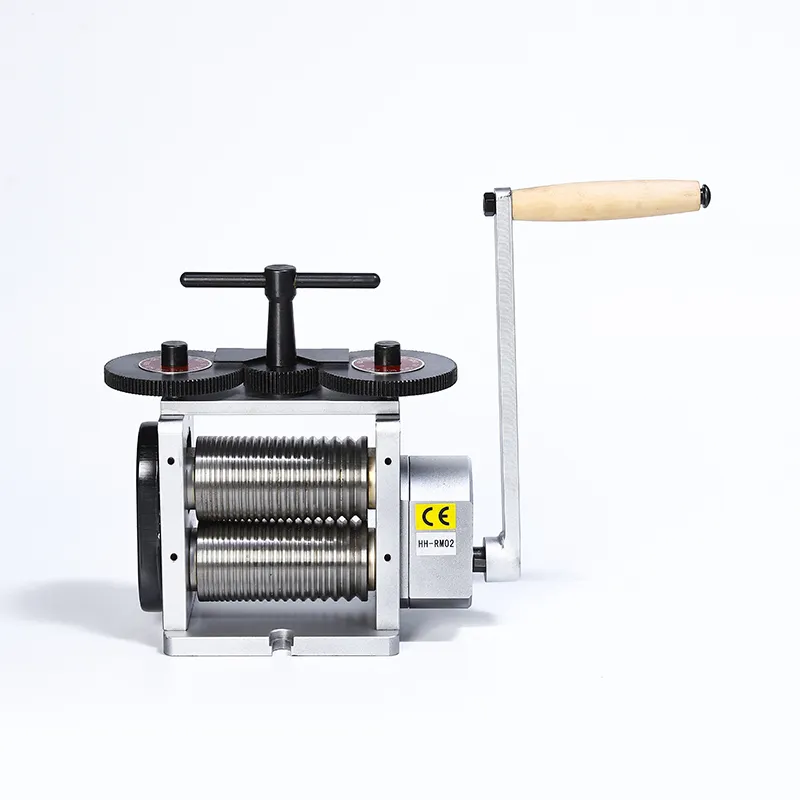
- Specs: 130mm dedicated wire width, massive 65mm roller diameter, 4:1 gear ratio, extensive square wire range (1.0mm to 9.0mm) plus half-round grooves.
- Verdict: The ultimate manual prep tool for chain makers. By eliminating the flat section entirely, this dedicated wire mill offers a highly dense progression of V-grooves up to 9.0mm. This micro-graduated step-down allows you to reduce thick ingots smoothly without ever forcing the metal out the sides to form razor-sharp “fins” or cold-shuts.
2. 1.5HP 2 Heads Electric Rolling Mill – JYBS
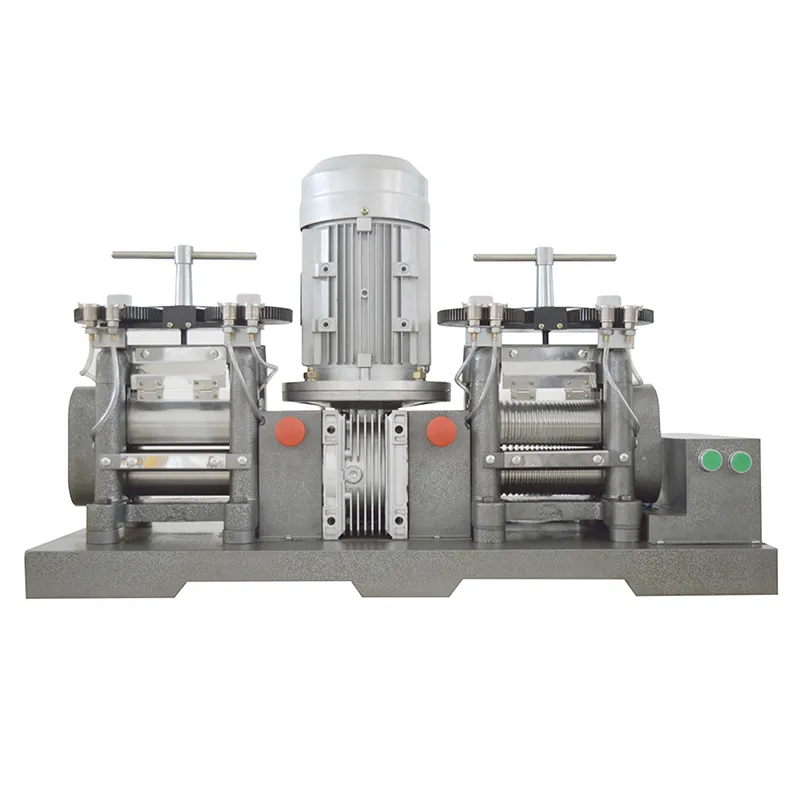
- Specs: 1.5HP (1100W) continuous motorized torque, heavyweight 177kg chassis, dedicated wire-drawing head featuring an incredible 24 precise wire holes (from 1.0mm down to 7.0mm).
- Verdict: An absolute powerhouse for high-volume wire production. Standard combo mills fail at wire drawing because they lack enough step-down sizes. This machine solves that by dedicating an entire head strictly to wire with 24 perfectly calibrated grooves. Combined with the 1.5HP motor, you can perfectly reduce billets into flawless square wire effortlessly, completely avoiding operator fatigue and jerky crank movements.
3. Only wire Rolling Mill – JYBS
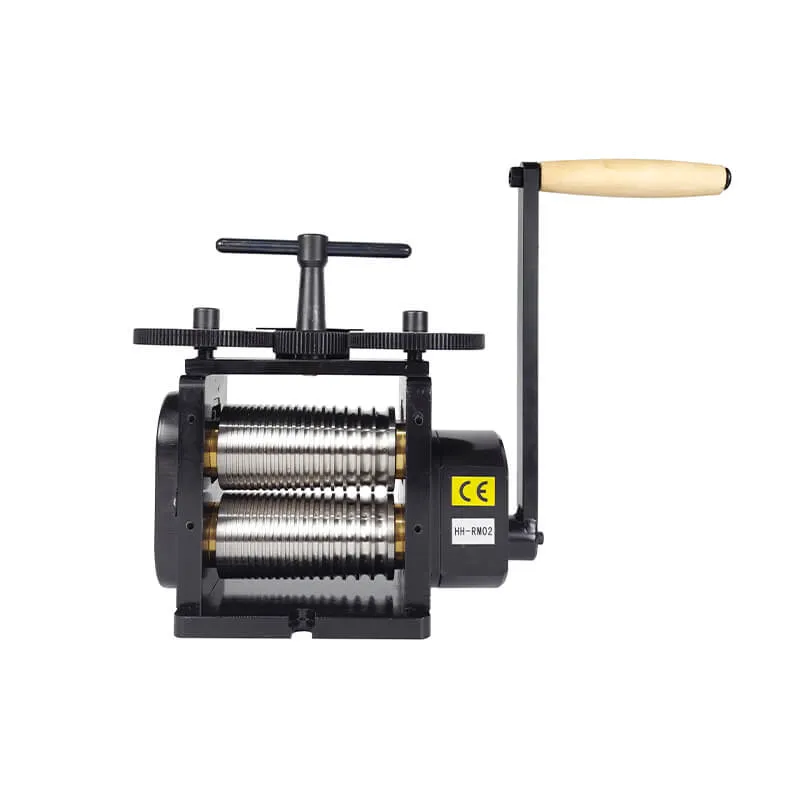
- Specs: 130mm overall width dedicated to wire reduction, massive 65mm roller diameter, 4:1 gear ratio. Features an extraordinary 18 micro-graduated square wire grooves (1.0mm up to 9.0mm), heavy-duty 23KG anti-rust frame.
- Verdict: The ultimate benchtop solution for pure wire artisans. If you are a filigree artist or chain-maker, this manual unit is your perfect dedicated prep tool. By focusing entirely on wire drawing, it offers an incredible 18 highly dense, progressive step-downs up to 9.0mm. This micro-graduation allows you to reduce thick ingots smoothly and squarely, completely eliminating the risk of “flashing,” “fins,” or structural cold-shuts that plague standard mills.
Maintenance Tips for Wire Drawing Workshops

- Debris Accumulation: Wire drawing generates microscopic metal flakes, especially if the wire is not frequently annealed.
- Structural Flaws: These tiny flakes can accumulate in the bottom of the V-grooves. If left uncleaned, the next piece of wire you roll will press those hardened flakes into its surface, creating deep structural flaws.
- Daily Cleaning: Keep a stiff brass brush next to your mill and scrub the grooves out daily.
- Proper Lubrication: Additionally, always lubricate your wire lightly with beeswax or drawing oil before passing it through the smaller grooves; this reduces friction and helps compress the metal’s grain structure smoothly.
Frequently Asked Questions about Wire Drawing Tools
- Q: Why does my wire keep getting “fins” or sharp edges on the sides?
- A: You are skipping a groove or trying to reduce the thickness too fast. The metal has nowhere to go but out the sides. You must rotate the wire 90 degrees after every single pass, and step down to the next groove gradually.
- Q: When should I stop using the rolling mill and switch to a drawplate?
- A: The rolling mill creates square wire. You should stop rolling when the square wire is approximately 0.2mm larger than the target round size you need. Then, taper the end and pull it through a round drawplate to reshape it.
- Q: Can I roll round wire in a rolling mill?
- A: No. Rolling mills only feature flat, V-shape (square), or half-round grooves. True round wire must be pulled through a carbide or sapphire drawplate.
- Q: Does rolling make the wire stronger?
- A: Yes. The rolling process severely compresses the crystalline lattice of the alloy, drastically increasing its tensile strength and hardness (work hardening). This is why frequent annealing is required to prevent snapping.
- Q: What happens if the top and bottom V-grooves don’t align?
- A: You will produce rhomboid or diamond-shaped wire. This wire will not fit properly into a standard round drawplate, causing the drawplate to shave off uneven curls of metal and ruin the wire.
Ready to upgrade your Wire Drawing setup?
Get a Quick Quote. Our team will provide a detailed quote sheet within 3 hours.