
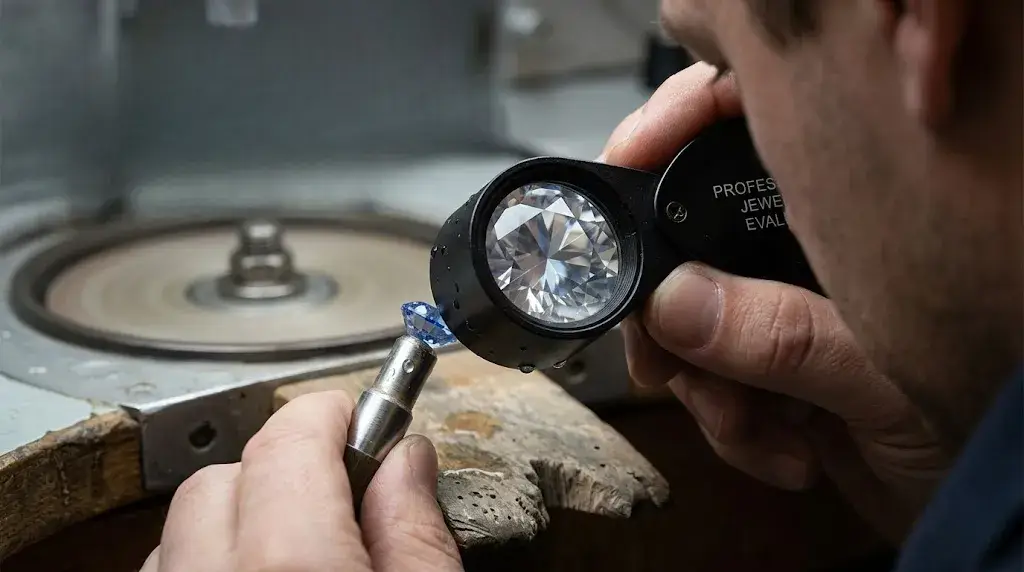
Why Gem Cutters and Lapidaries Require a Specialized Loupe
- An Active Manufacturing Tool: For a lapidary artist or master gem cutter, the loupe is an active manufacturing tool, not just an inspection device.
- Continuous Evaluation: A cutter must continuously evaluate the stone while it is still on the dop stick.
- Precision Checks: They are checking for “meetpoint symmetry” (ensuring that all facet junctions intersect perfectly at a single microscopic point), verifying the quality of the final polish, and hunting for subsurface damage or “comet tails” left behind by coarse diamond laps.
- Requirement for Aplanatic Correction: A lapidary’s loupe requires extreme Aplanatic (flat-field) correction.
- Avoiding Distortion: If the lens introduces spherical distortion (barrel or pincushion effects), perfectly straight facet edges will appear curved, deceiving the cutter into making incorrect adjustments on the faceting machine.
- Visual Clarity in Harsh Conditions: Because a cutter evaluates the stone covered in water or oil slurry, the loupe must provide high contrast and a generous Depth of Field (DoF) to see through the fluid and evaluate the actual surface of the corundum or beryl.
Critical Optical Specs for Lapidary Standards
Precision geometry is the lapidary’s goal; distortion-free optics are the only way to achieve it.
| Key Specification | Recommended Standard | Why It Matters for Gem Cutters |
| Spherical Correction | Aplanatic Flat-Field | Absolutely critical. Facet junctions must be seen exactly as they are. Edge distortion will make it impossible to achieve true meetpoint symmetry. |
| Depth of Field (DoF) | High (Deep Focal Plane) | Allows the cutter to focus on the crown facets and gaze down into the pavilion simultaneously to check for windowing or light extinction. |
| Lens Coating | Hydrophobic / Anti-Reflective | Lapidaries work in wet environments. A hydrophobic coating helps repel accidental splashes of cutting slurry, while anti-reflective layers cut through the glare of a wet stone. |
Top 3 Loupe Recommendations for Gem Cutters & Lapidaries
Engineered for geometrical accuracy and active workshop conditions:
1. Zeiss D40 & D36 Loupe
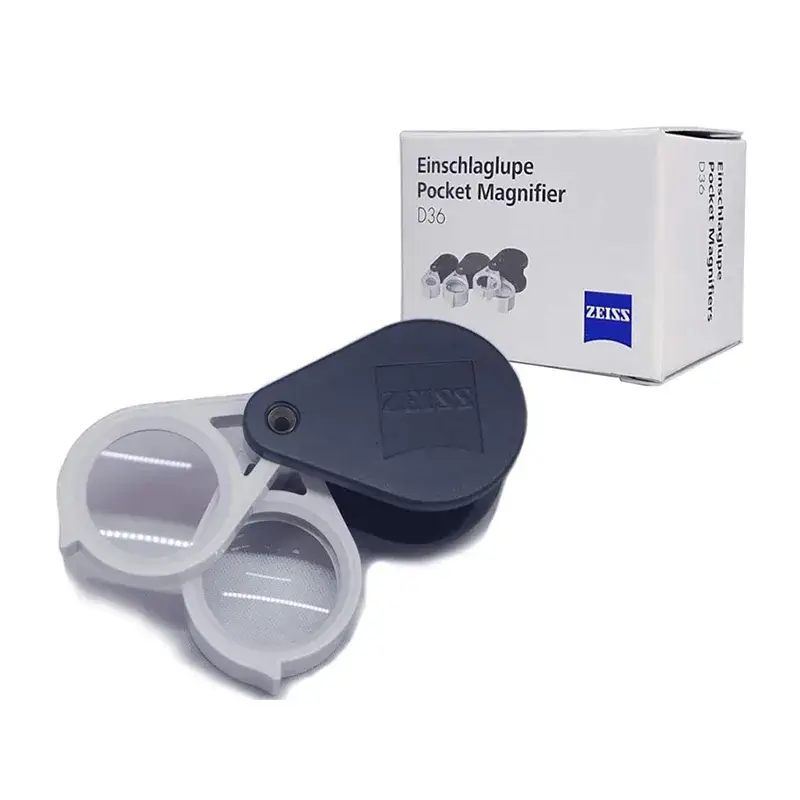
- Specs: German-made Aplanatic-Achromatic optical system, T* Anti-Reflective Coating. Available in D40 (10X, 13mm) or D36 (9X variable, 22mm).
- Verdict: The ultimate faceter’s tool. Zeiss’s proprietary T* Anti-Reflective Coating effortlessly cuts through the glare of cutting slurry. The D40 model offers an uncompromising 10X fixed triplet lens for strict, distortion-free meetpoint evaluation. For those needing a wider field to evaluate rough materials, the D36 provides a dual-lens structure allowing flexible 3X, 6X, or 9X magnifications across a broad 22mm aperture.
2. Nikon Triplet Loupe
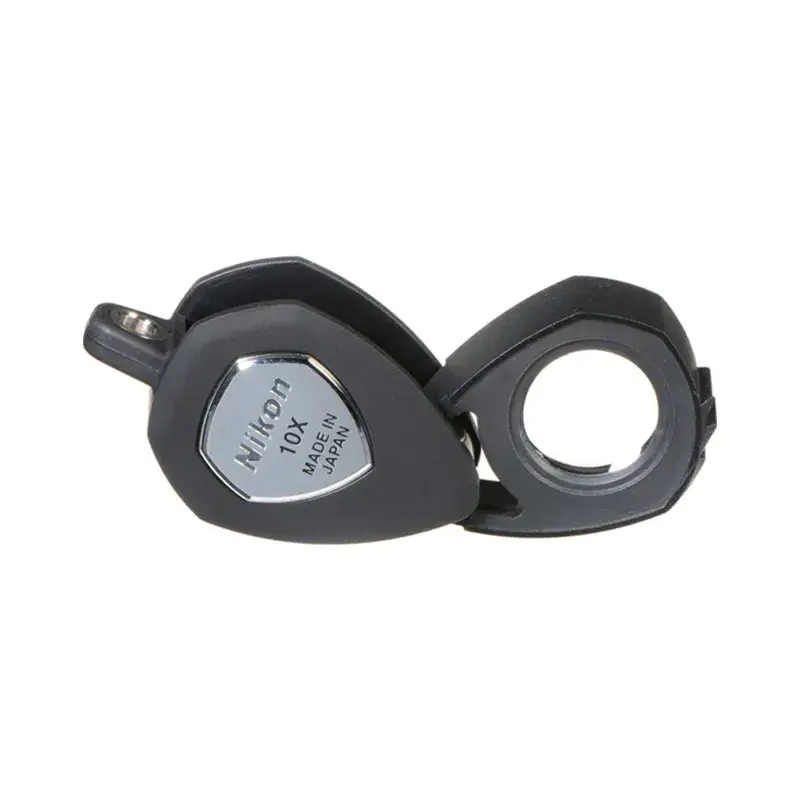
- Specs: Japanese-made 10X Triplet, 13mm Orthoscopic Lens (>63 lines/mm), 1-inch Working Distance, Lightweight Black Plastic Frame.
- Verdict: Designed specifically for the active cutting bench. Nikon’s orthoscopic lens guarantees sharp edges and zero spherical distortion. Crucially for lapidaries, it offers a generous 1-inch working distance, providing ample room to inspect a stone mounted on a dop stick. Furthermore, the lightweight black plastic frame won’t accidentally scratch the gemstone if contact occurs, and it effectively eliminates internal reflections.
3. Diamond Cut Scope-JYBS
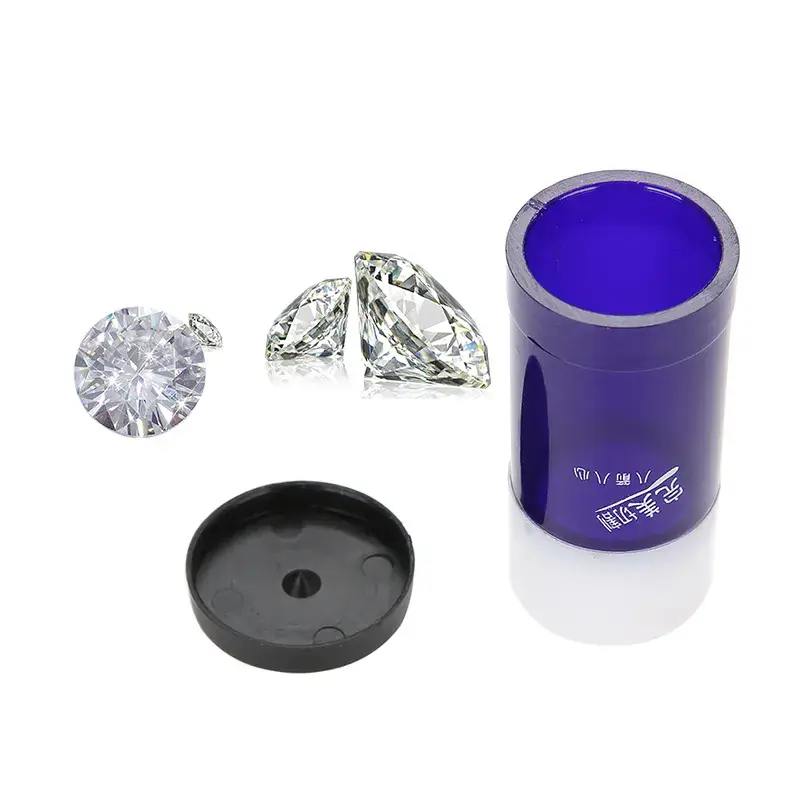
- Specs: 5X Magnifying Optical Viewer, Portable 26x62mm Design, Dedicated Black Base for Diamond Placement.
- Verdict: Essential for diamond cutters and extreme precision faceters. While a traditional 10X loupe is used to check flat facets on the lap, this 5X scope acts as the final proving ground for optical symmetry. It allows the cutter to evaluate overall proportions and strictly verify internal light performance—such as the perfect “8 Hearts and 8 Arrows” alignment in brilliant cuts—that standard loupes cannot capture.
How to Clean and Protect Your Lapidary Loupe
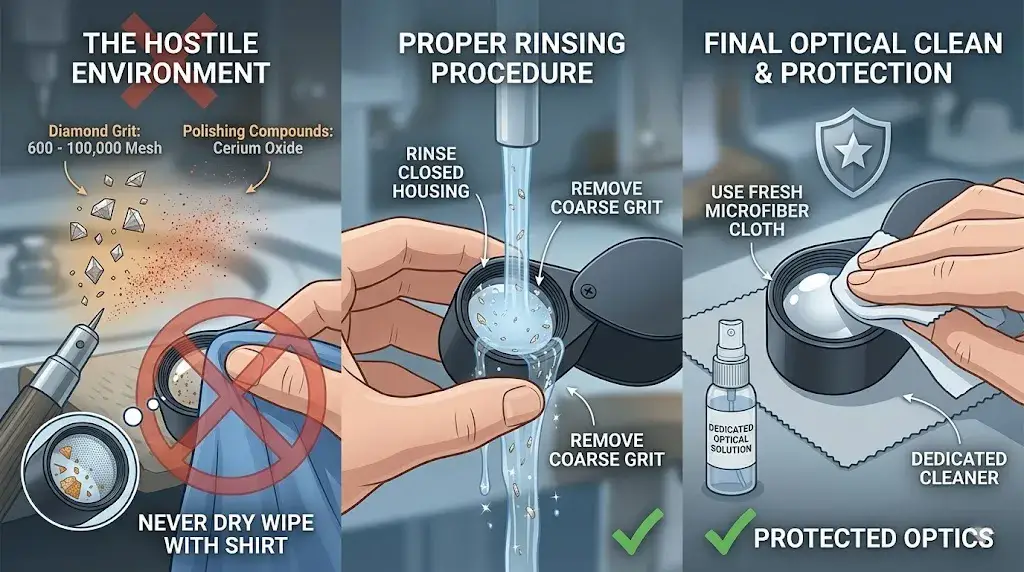
- Acknowledge the Environment: A faceting bench is a hostile environment for optical glass.
- Identify Abrasive Hazards: Airborne diamond grit (from 600 mesh to 100,000 mesh) and polishing compounds like cerium oxide are highly abrasive.
- Avoid Dry Wiping: Never wipe a dry lapidary loupe with your shirt; you will grind microscopic diamond dust into the anti-reflective coating.
- Follow Proper Rinsing Procedure: Always rinse the closed loupe housing briefly under clean water to remove coarse grit before using a dedicated optical cleaning solution and a fresh microfiber cloth.
FAQ: Selecting a Loupe for Gem Cutting
- Q: Why do my facets look curved in my loupe when they are flat on the lap?
- A: You are using a cheap single-lens or doublet loupe that suffers from spherical aberration. A professional Triplet lens mathematically corrects the light paths so that straight lines remain perfectly straight.
- Q: Can a loupe help me orient a piece of rough before cutting?
- A: Yes. An Achromatic (color-corrected) 10x loupe is vital for finding the “C-axis” in dichroic stones like tourmaline or sapphire, allowing the cutter to orient the table to display the best possible color.
- Q: Do I need a 20x loupe to check my final polish?
- A: No. A 20x loupe has a focal length of only half an inch, making it incredibly difficult to maneuver a mounted stone into focus. A high-quality 10x loupe with darkfield lighting is far more effective at exposing polish flaws.
Need to bulk buy for your Lapidary or Gem Cutting Studio?
Get a Quick Quote. Our optical specialists will respond within 3 hours.