

Why Small Jewelry Factories Need a Specific Type of Rolling Mill
- Manual Labor as a Bottleneck: When operators are processing kilograms of 14K gold or sterling silver daily to create standardized sheet and wire stock, a hand-cranked mill is entirely insufficient.
- Risks of Manual Mills: Relying on manual mills in a factory setting leads to severe operator fatigue, inconsistent gauge thicknesses across production batches, and significant delays in output.
- Requirement for Motorized (Electric) Power: Small factories require motorized (electric) rolling mills. These machines must deliver continuous, uninterrupted torque to process thick, freshly poured ingots down to 0.5mm sheet in a matter of minutes.
- Structural Rigidity: A production mill must feature a highly rigid cast-iron chassis to eliminate any frame deflection.
- Precision and Quality Control: If the frame flexes even 0.05mm under heavy load, your sheet metal will exhibit a “camber” (a curved edge), making it useless for precision CNC stamping or automated laser cutting further down the assembly line.
Key Technical Specs for Small Jewelry Factory Applications
For production scaling, your primary concerns are duty cycle, motor horsepower, and absolute structural rigidity.
| Specification | Recommended Range | Why It Matters for Factories |
| Drive System | 1.0 HP to 2.0 HP Electric Motor | Provides continuous torque, eliminating operator fatigue and drastically speeding up the reduction of large metal billets. |
| Roller Width | 130mm – 150mm Minimum | Allows operators to process wider sheets for mass-stamping or run multiple wire billets simultaneously. |
| Cooling/Lubrication | Oil-Bath Gearbox | Factory machines run for hours; an oil-bath gearbox prevents thermal expansion of the gears, ensuring long-term HRC 64 roller alignment. |
Top 3 Rolling Mill Recommendations for Small Jewelry Factories
Built for continuous duty and high throughput, these motorized units are the backbone of efficient production:
1. 1.5HP 2 Heads Electric Rolling Mill – JYBS
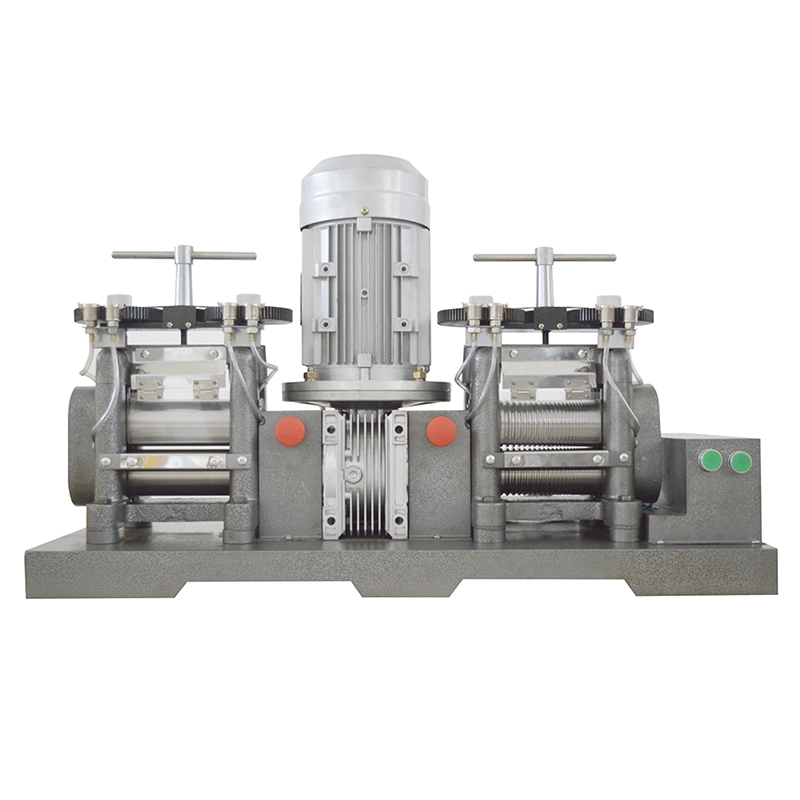
- Specs: 140mm roller width, powerful 1.5 HP (1100W) motor, massive 177kg (390lb) chassis, 24 dedicated wire holes (1mm to 7mm), operates on 220V.
- Verdict: The ultimate high-volume solution. The massive 177kg gross weight guarantees absolute structural rigidity and zero frame deflection under extreme loads. The double-head setup is a game-changer for factories, allowing operators to process sheet metal on one side and draw wire on the other without ever stopping to change rollers—drastically reducing production downtime.
2. Durston® Powered Rolling Mills TUI – C130
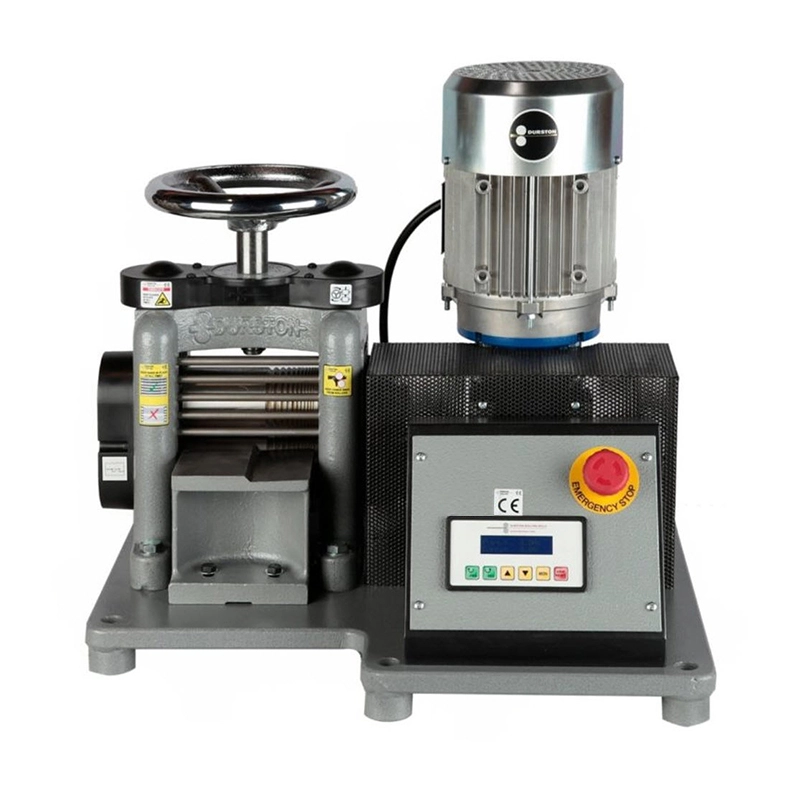
- Specs: 130mm combination roller, UK-engineered gearbox, heavy-duty 110kg build, handles up to 6mm sheet thickness and 8mm wire capacity, versatile 110V/220V options.
- Verdict: The gold standard for agile factories. Renowned for its precision, this Durston model effortlessly handles thick billets right out of the crucible. It is ideal for setups that need a premium, reliable machine to quickly switch between drawing thick square wire for chain-making and flattening sheet for pendants.
3. US Made 1HP Electric Rolling Mill 130MM – JYBS
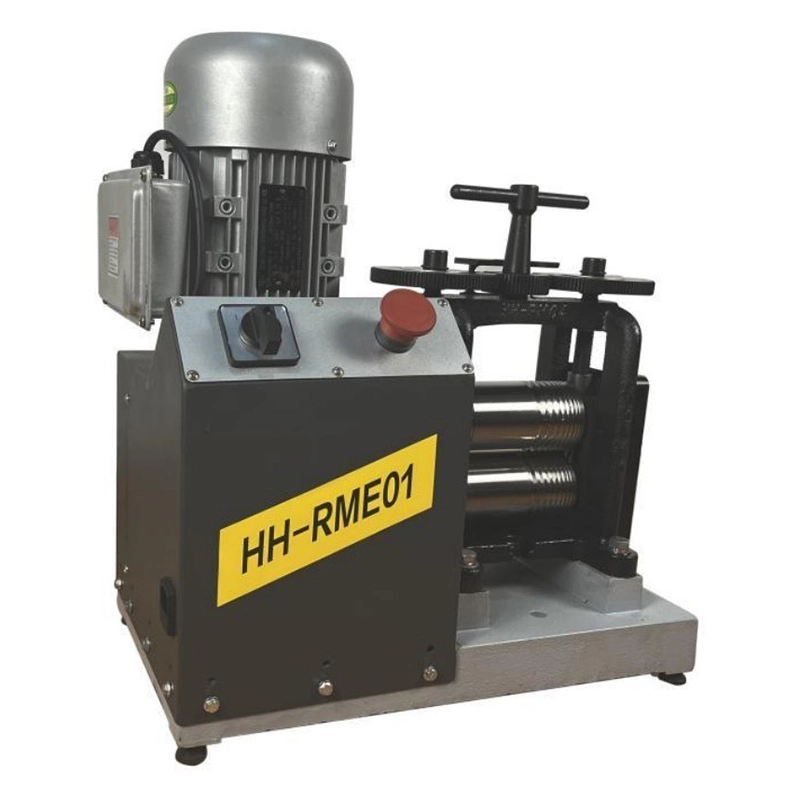
- Specs: 130mm overall roller width (63mm flat area), 1.0 HP motor, compact 72.5kg desktop design, accommodates half-round ring shanks, 110V/220V compatibility.
- Verdict: The perfect bridge for studios transitioning into small factory status. It provides consistent, continuous motorized torque and versatile wire grooves, running smoothly on standard 110V. Its compact 72.5kg footprint delivers real factory-level reduction power without demanding heavy industrial floor space or dedicated electrical phases.
Maintenance Tips for Small Jewelry Factories
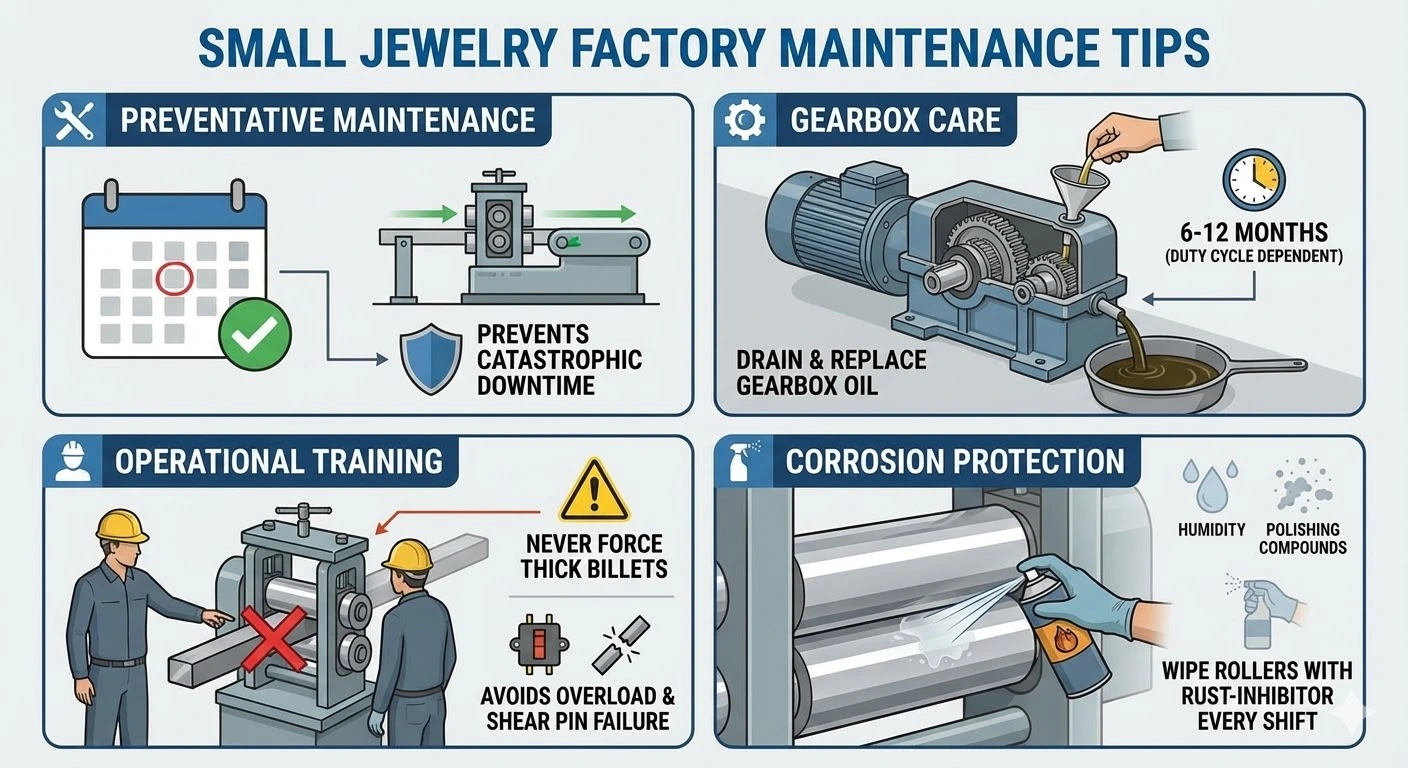
- Preventative Maintenance: In a factory, preventative maintenance prevents catastrophic downtime.
- Gearbox Care: Motorized mills generate significant internal torque; the gearbox oil must be drained and replaced every 6 to 12 months, depending on the duty cycle.
- Operational Training: Operators must be trained to never force a billet that is too thick into the rollers—while an electric motor won’t tire out, forcing too steep of a reduction will trigger the thermal overload switch or sheer the safety drive pin.
- Corrosion Protection: Ensure the rollers are wiped down with industrial rust-inhibitor spray at the end of every shift, as factory humidity combined with airborne polishing compounds creates a highly corrosive environment.
Frequently Asked Questions about Small Jewelry Factory Tools
- Q: Can a motorized mill handle all types of alloys?
- A: Yes, but the reduction speed must be monitored. Highly ductile metals like 24K gold can be rolled quickly, but tough alloys like 18K nickel-white gold require slower speeds to prevent edge-cracking.
- Q: What is a safety shear pin, and why does my mill keep breaking them?
- A: A shear pin is a sacrificial component that snaps to protect the motor and gears if you attempt to roll a billet that is too thick or too cold. If it breaks, you are exceeding the machine’s safe reduction limit.
- Q: How often should we anneal metal when using a motorized mill?
- A: Because motorized mills are so fast, operators often miss the tactile signs of work-hardening. Establish strict standard operating procedures (SOPs)—for example, mandating an annealing cycle after every 40% reduction in thickness.
- Q: Do we need a dedicated flat mill and a dedicated wire mill?
- A: In a true factory setting, yes. Changing out rollers or constantly adjusting guides wastes production time. Having dedicated stations is the most profitable setup.
- Q: Are motorized mills safe for new employees?
- A: Motorized mills require strict safety training. Look for models with an emergency “bump bar” or knee-stop switch that instantly cuts power if an operator’s glove or tool gets caught.
Ready to upgrade your Small Jewelry Factory setup?
Get a Quick Quote. Our team will provide a detailed quote sheet within 3 hours.