

Why Mokume Gane Artists Need a Specific Type of Rolling Mill
- Metallurgical Complexity: Mokume Gane (the traditional Japanese art of creating wood-grain patterns in metal) is arguably the most metallurgically demanding process a jeweler can undertake.
- Material Composition: You are not rolling a single, uniform alloy; you are compressing a diffusion-bonded billet made of alternating layers of metals with entirely different rates of ductility and tensile strength—such as fine silver, 18K gold, and shakudo (a copper-gold alloy).
- Structural Precision: If a rolling mill has even a microscopic amount of “play” in its gears or frame, it will apply uneven pressure.
- Risk of Failure: This uneven pressure creates shear stress between the bonded layers, leading to catastrophic delamination (the layers peeling apart), instantly ruining days of firing and forging work.
- Essential Features: Therefore, a rolling mill for Mokume Gane must prioritize absolute top-roller parallelism and a massive reduction gear.
- Torque Requirements: You need continuous, uninterrupted torque to compress the fused billet smoothly without the “jerking” motion typical of direct-drive mills.
Key Technical Specs for Mokume Gane Applications
When processing multi-layered diffusion billets, structural rigidity and smooth torque are your only safeguards against delamination.
| Specification | Recommended Range | Why It Matters for Mokume Gane |
| Roller Configuration | Dedicated Flat Area (100% Flat Preferred) | Wire grooves are unnecessary and subtract from the vital flat surface area needed to roll wide, patterned sheets evenly. |
| Drive System | Precision 4:1 Gear or Motorized | Ensures a continuous, smooth rotational force. Jerky, manual movements can cause shear stress and split the bonded layers; motorized mills eliminate this risk entirely. |
| Frame Rigidity | Solid Metal / Heavyweight Chassis | Prevents frame deflection under extreme pressure. If the frame flexes, one side of the billet compresses faster, warping the wood-grain pattern. |
Top 3 Rolling Mill Recommendations for Mokume Gane
Engineered for flawless parallelism and high torque, these mills protect your bonded billets during the extreme reduction process:
1. Flat Rolling Mill 130MM(L)65MM(D) – JYBS
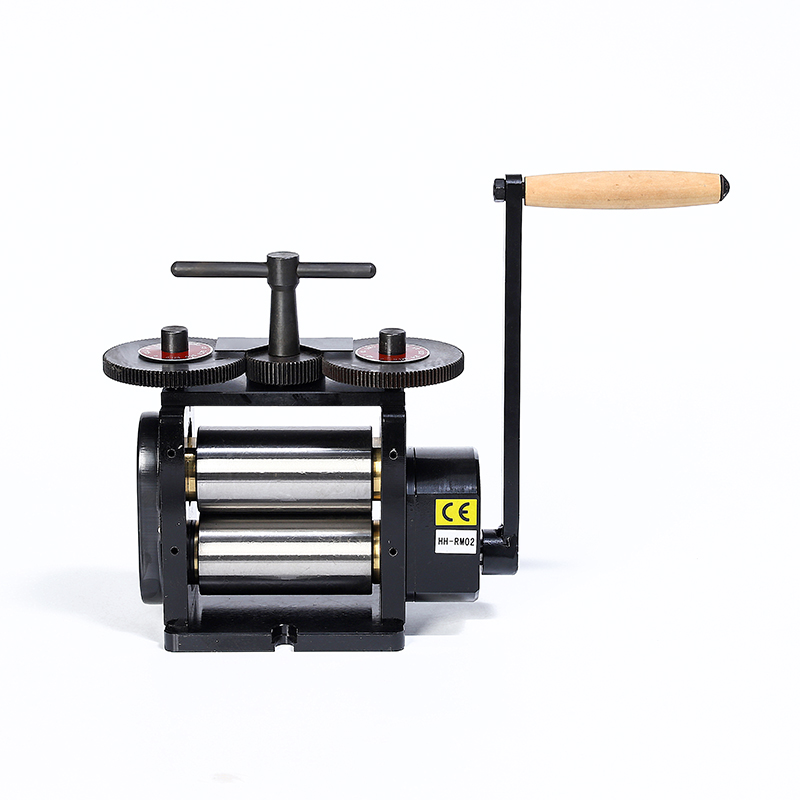
- Specs: 130mm 100% flat width, massive 65mm roller diameter, 4.5mm maximum opening, precision 4:1 Gear Ratio, solid metal construction (23kg).
- Verdict: The ultimate manual tool for pattern-welded metals. With zero wire grooves, the entire 130mm is dedicated to flat rolling. The massive 65mm rollers and precision 4:1 gear box allow you to apply immense, stable downward force on bonded copper/silver billets, ensuring all layers reduce at the exact same rate without microscopic frame deflection.
2. Single Sided 1.5HP Desktop Electric Rolling Mill – JYBS
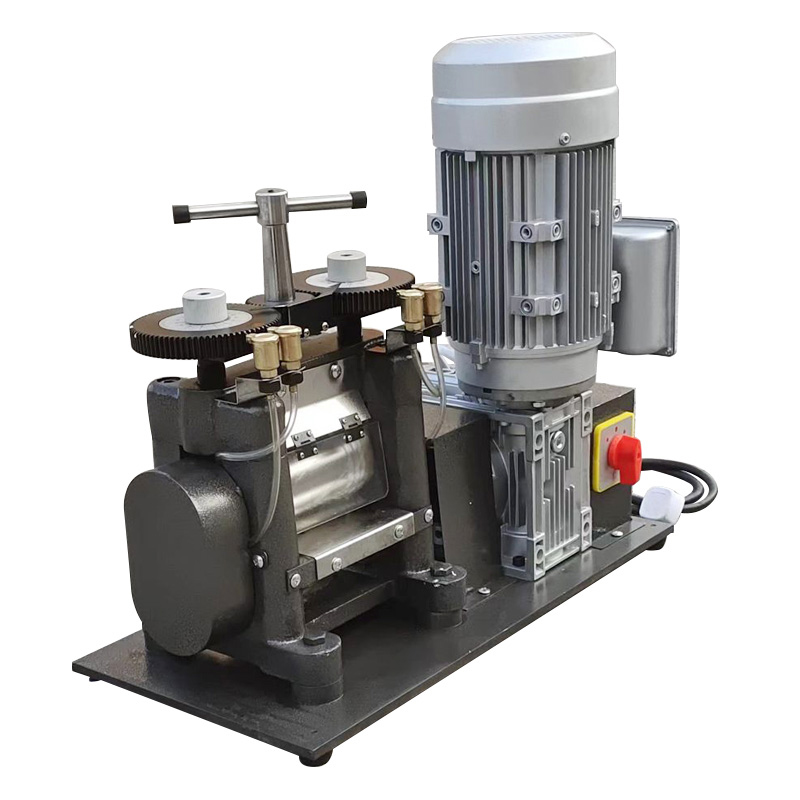
- Specs: 1.5HP (1.125KW) continuous motorized torque, heavyweight 70kg chassis, robust chrome steel rollers with a 70mm dedicated flat surface.
- Verdict: The ultimate solution for eliminating shear stress. Manual hand-cranking can introduce a “jerking” motion that causes delicate Mokume billets to delaminate. This 1.5HP electric powerhouse delivers absolutely continuous, uninterrupted torque, compressing the fused billet flawlessly across its flat section while the 70kg frame absorbs all resistance.
3. US Made Flat Rolling Mill 110MM(L)55MM(D) – JYBS
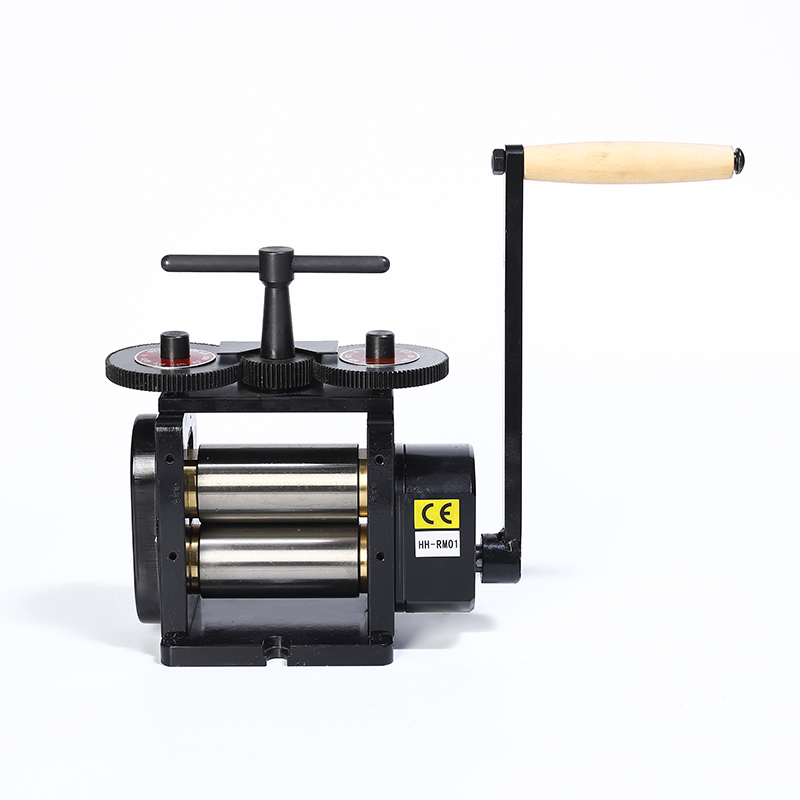
- Specs: 110mm dedicated flat width, 55mm roller diameter, 4mm maximum opening, smooth 4:1 Gear Ratio, rigid solid metal frame (18.5kg).
- Verdict: A phenomenal choice for independent Mokume artists making ring blanks. Built strictly for flat rolling, this focused, highly rigid mill guarantees that the top roller remains perfectly parallel to the bottom. This prevents the uneven pressure and edge-pinching that typically ruins delicate wood-grain patterns in standard combination mills.
Maintenance Tips for Mokume Gane Workshops
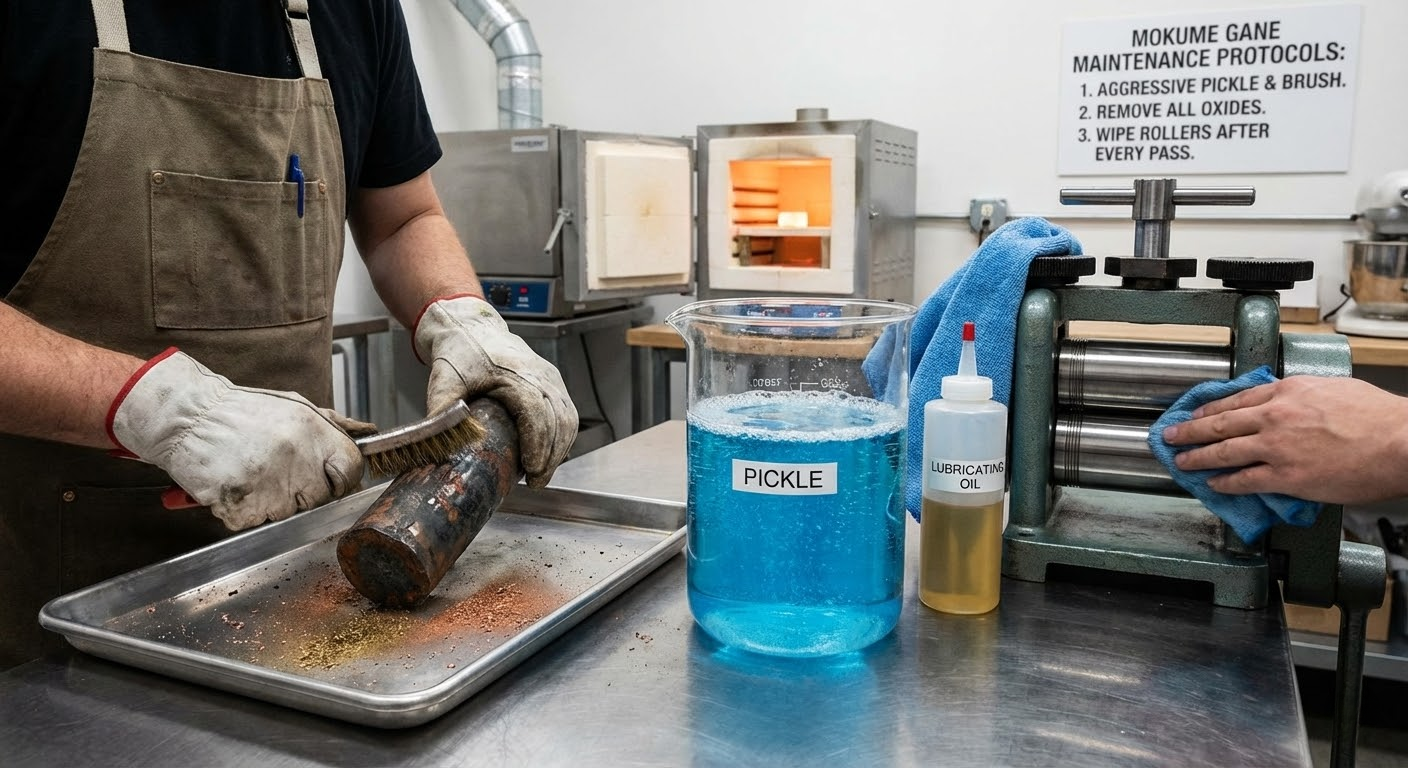
- Oxidation Risks: Mokume Gane billets are repeatedly fired in a kiln or open forge, which generates heavy oxides, especially on the copper or brass layers.
- Surface Preparation: Before passing a forged billet through your mill, it must be aggressively pickled and wire-brushed.
- Aesthetic Protection: Any hard cupric oxide left on the surface will be pressed deeply into the softer silver layers by the rolling mill, creating ugly black inclusions that ruin the delicate wood-grain aesthetic.
- Passing Protocol: Wipe your rollers with a lightly oiled microfiber cloth after every single pass to remove any microscopic abrasive flakes that may have sheared off the billet edges.
Frequently Asked Questions about Mokume Gane Tools
- Q: Why does my Mokume billet delaminate (split) when it goes through the mill?
- A: Delamination during rolling is usually caused by either a poor initial diffusion bond, trying to reduce the thickness too aggressively in a single pass, or using a mill that jerks and creates uneven shear forces.
- Q: Do I need to anneal my Mokume billet more often than standard silver?
- A: Yes. Because the billet contains multiple metals, it will work-harden at the rate of its hardest layer (usually the copper or karat gold). You must anneal frequently to keep all layers uniformly ductile.
- Q: Can I use a combination mill to make Mokume Gane wire?
- A: It is highly discouraged. Rolling a bonded flat billet into a square V-groove applies diagonal crushing forces that will almost certainly shear the diffusion bonds apart. Mokume wire is traditionally twisted, not drawn through V-grooves.
- Q: Should I roll the billet straight or cross-roll it?
- A: Cross-rolling (rotating the billet 90 degrees) is essential in Mokume Gane to expose the starburst or concentric ring patterns, and to ensure the grain structures of the different metals stretch evenly in all directions.
- Q: What is the maximum safe reduction per pass for a Mokume billet?
- A: Never exceed a 10% thickness reduction per pass. Gradual, light passes with a high-ratio gear mill are the secret to keeping the layers intact.
Ready to upgrade your Mokume Gane setup?
Get a Quick Quote. Our team will provide a detailed quote sheet within 3 hours.