

Why Traditional Silversmiths Need a Specific Type of Rolling Mill
Traditional Silversmithing Requirements
- Specialized Demands: Traditional silversmithing—the art of forging, raising, and planishing large-scale objects like bowls, flatware, and holloware—demands equipment that prioritizes flat surface area over wire grooves.
- Material Scale: Unlike bench jewelers who work with delicate gold wire, silversmiths start with solid ingots of Britannia silver (958) or Sterling silver (925). A standard 100mm jewelry mill often lacks the width required for these large pours.
- Primary Function: For a silversmith, the rolling mill is used primarily for “breaking down” ingots into workable heavy-gauge sheet metal. This requires a mill with maximum structural weight and oversized flat rollers to maintain parallelism.
- Surface Utility: Because silversmiths frequently cross-roll their metal (rotating it 90 degrees to increase width rather than length), a combination mill with wire grooves is often a hindrance; it subtracts from the vital flat surface area needed to process wide vessels.
Key Technical Specs for Traditional Silversmith Applications
Size, surface area, and structural rigidity define a proper silversmith’s mill in a professional studio.
| Specification | Recommended Range | Why It Matters for Silversmiths |
| Roller Configuration | 100% Flat Rollers | Maximizes the width available for cross-rolling large sterling silver sheets used in holloware and vessels. |
| Roller Diameter | 55mm – 65mm | Larger diameters provide a better “bite” on thick ingots and distribute pressure more evenly to prevent edge-rippling. |
| Gear Ratio | 4:1 Precision Gear | High-precision hobbed steel gears (4:1) provide the ideal balance of torque and smooth, continuous rotation for thick silver sheet. |
| Maximum Opening | 4.0mm – 5.0mm | Optimized for modern studio ingots cast in graphite or vertical molds, ensuring maximum stability within the working range. |
Top 3 Rolling Mill Recommendations for Traditional Silversmiths
Designed for heavy-gauge metal forming and maximizing flat surface area, these mills are essential for the professional silversmithing workshop:
1. Durston® Double Rolling Mills Double D2
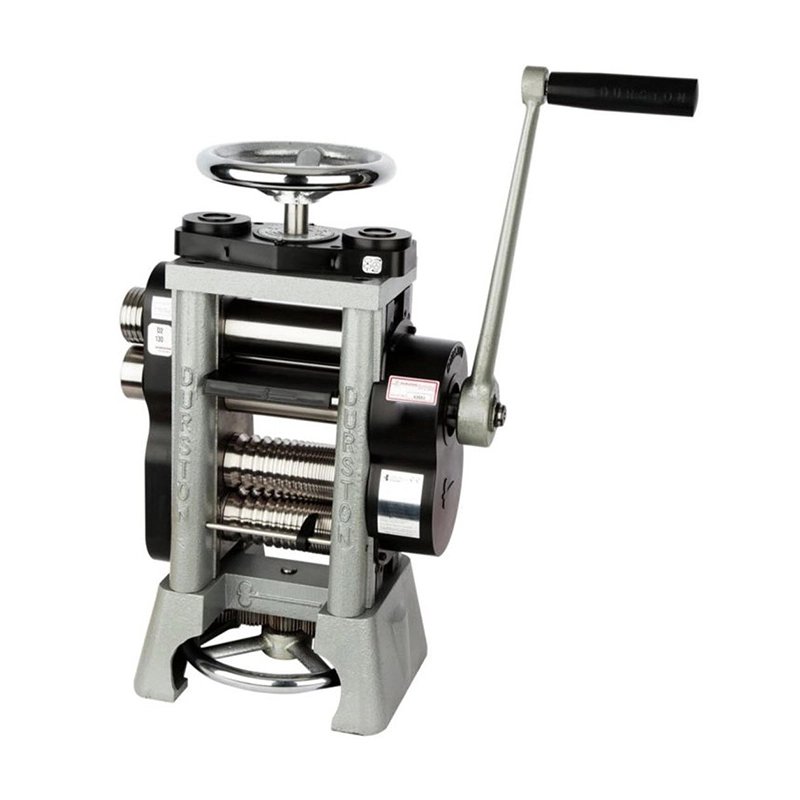
- Specs: Dual rolling setup, 130mm roller length, maximum 6mm sheet thickness, heavy 74KG chassis, equipped with an incredible 7:1 reduction gearbox.
- Verdict: The silversmith’s dream machine. Pushing thick sterling ingots through steel rollers requires immense torque. Durston’s legendary 7:1 gearbox allows the operator to effortlessly break down massive pours without stalling. The massive 74KG weight and dedicated flat rolling area ensure perfect parallelism when cross-rolling sheet metal for holloware.
2. 1.5HP 2 Heads Electric Rolling Mill – JYBS
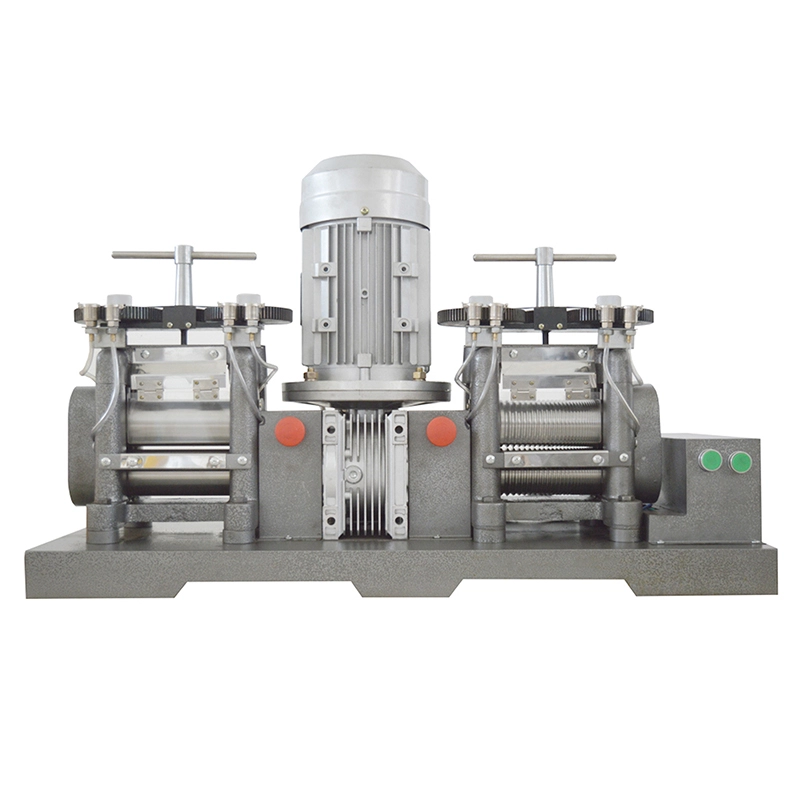
- Specs: 1.5 HP (1100W) motorized power, massive 177kg (390lb) cast-iron chassis, dual-head continuous operation, operates on 220V.
- Verdict: The ultimate modern power solution for high-volume traditional workshops. Breaking down massive Britannia silver ingots manually can cause severe operator fatigue. This 1.5HP unit replaces the manual gear ratio with continuous, unyielding motorized torque. Its staggering 177kg weight provides absolute structural rigidity, preventing any frame deflection when extreme downward force is applied.
3. Flat Rolling Mill 130MM(L)65MM(D) – JYBS
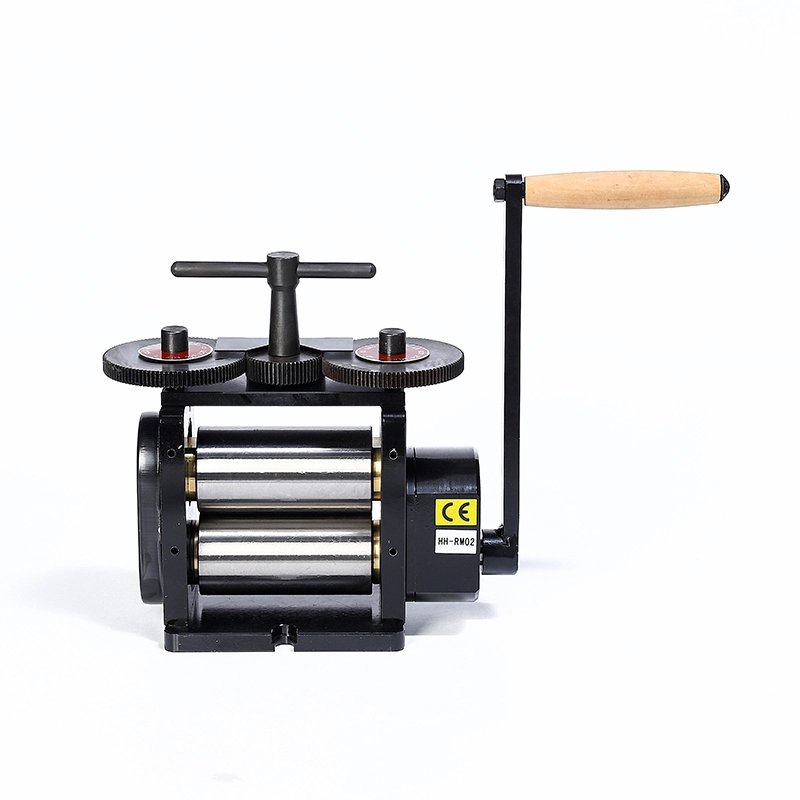
- Specs: 130mm 100% dedicated flat area, oversized 65mm roller diameter, 4.5mm max opening, solid precision 4:1 gear ratio.
- Verdict: The purist’s cross-rolling workhorse. Because silversmiths constantly rotate their metal 90 degrees to stretch the grain structure evenly, wire grooves only get in the way. By dedicating the full 130mm entirely to a flat surface, combined with oversized 65mm rollers for an optimal “bite” on the ingot, this mill delivers flawless heavy-gauge sheet metal without the “pie-crusting” edge ripples.
Maintenance Tips for Traditional Silversmith Workshops
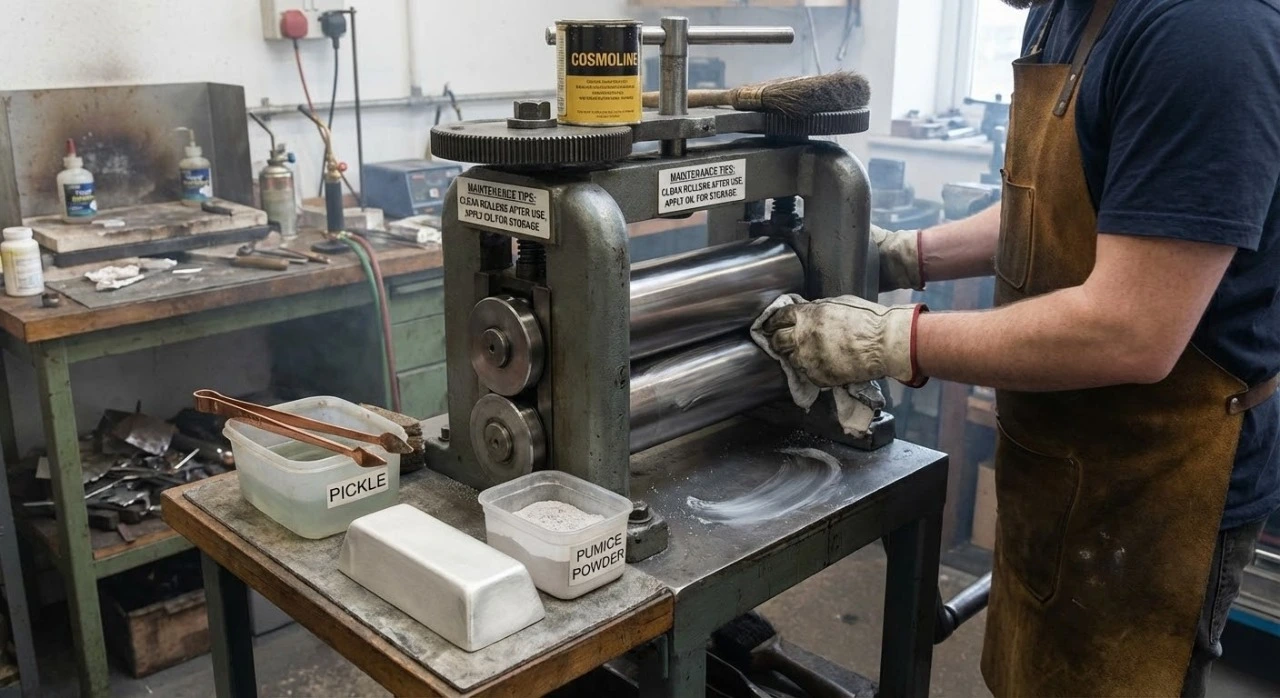
- Environmental Factors: Silversmithing involves a lot of flux, fire scale, and intense pickling.
- Surface Protection: Because silversmiths work with such large pieces of metal, it is easy to accidentally transfer abrasive borax glass or cupric oxide (fire scale) from a poorly cleaned ingot straight onto the rollers.
- Material Preparation: Always ensure your silver is flawlessly pickled and scrubbed with pumice powder before rolling.
- Corrosion Prevention: Due to the wide surface area of these rollers, they are highly susceptible to ambient shop humidity; apply a heavy coat of cosmoline or thick machine oil if the mill will not be used for several days.
Frequently Asked Questions about Traditional Silversmith Tools
- Q: Why is cross-rolling so important for silversmiths?
- A: When rolling metal in only one direction, the molecular grain structure becomes elongated and directional, which can lead to cracking when raising a bowl. Cross-rolling (rotating the metal 90 degrees) keeps the grain structure uniform and highly ductile.
- Q: What happens if my silver ingot has a “pipe” or shrinkage cavity in the center?
- A: Do not roll it! The cavity usually contains trapped flux or oxides. Rolling it will trap those impurities inside the sheet, resulting in massive blisters when the silver is later heated for annealing or soldering.
- Q: Can I use this mill for copper and brass holloware?
- A: Absolutely. However, brass and copper work-harden significantly faster than fine silver. You must anneal them almost twice as frequently to prevent damaging the mill’s gears.
- Q: Is a 15mm opening actually necessary?
- A: If you pour your own ingots in traditional vertical molds, yes. Typical ingot molds produce billets between 8mm and 12mm thick. A standard jewelry mill that only opens to 6mm cannot accept them.
- Q: Why are my wide silver sheets rippling at the edges?
- A: Rippling (or “pie-crusting”) occurs when the center of the sheet is being compressed more than the edges, usually due to microscopic flexing of the mill’s frame under extreme pressure. Take smaller, lighter passes.
Ready to upgrade your Traditional Silversmith setup?
Get a Quick Quote. Our team will provide a detailed quote sheet within 3 hours.