

When selecting an optical magnifier for technical tasks—such as stone setting, micro-welding, or watch assembly—magnification power is only half of the equation. The other critical, yet often overlooked factor is Working Distance (the exact spatial gap between the lens surface and the object when it is in sharp focus). Selecting a lens with an inadequate working distance restricts physical hand movement, obstructs the path of tools, and forces the user into an ergonomic posture that leads to rapid physical fatigue.
The Optical Physics: Power vs. Spatial Clearance
Working distance is dictated by the laws of refraction. In optics, there is an inverse relationship between magnification power and focal clearance:
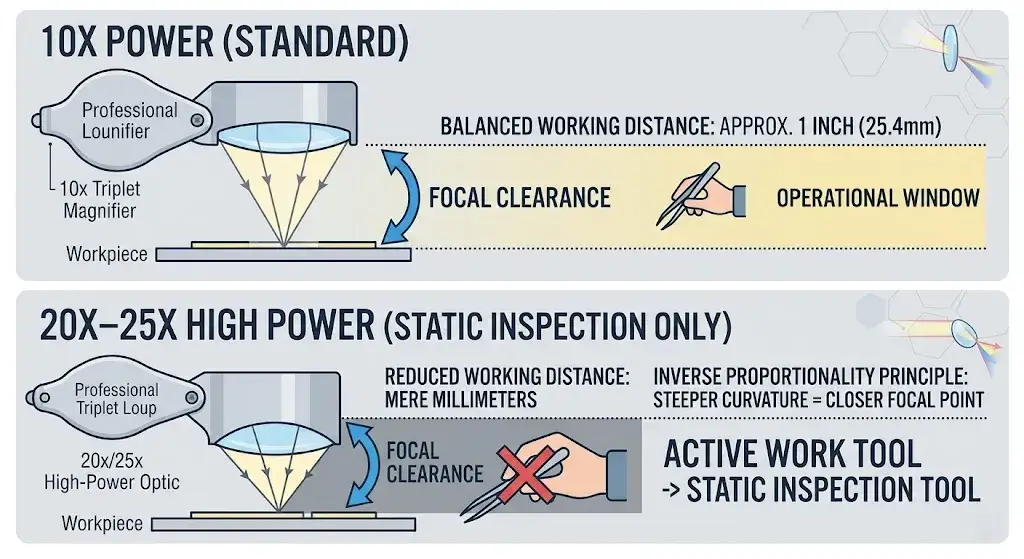
- The Inverse Proportionality Principle: As the magnification factor increases (e.g., jumping from 10x to 20x or 25x), the curvature of the glass lens must become significantly steeper. This steeper curvature bends light more aggressively, which naturally draws the focal point closer to the lens surface, drastically reducing the physical gap.
- 10x Clearance Standard: A professional 10x triplet magnifier typically yields a balanced working distance of approximately 1 inch (25.4mm). This clearance provides the standard operational “window” required to manipulate tweezers, gravers, or soldering tips beneath the optic.
- High-Power Restrictions: When using 20x or 25x optics, the actual working distance drops to mere millimeters. At this extreme proximity, introducing hand tools between the glass and the workpiece becomes physically impossible, shifting the lens’s utility from an “active work tool” to a “static inspection tool.”
Ergonomic Realities: Posture and Tool Clearance
In a continuous work environment, monitoring your clearance depth affects both output quality and long-term joint health:
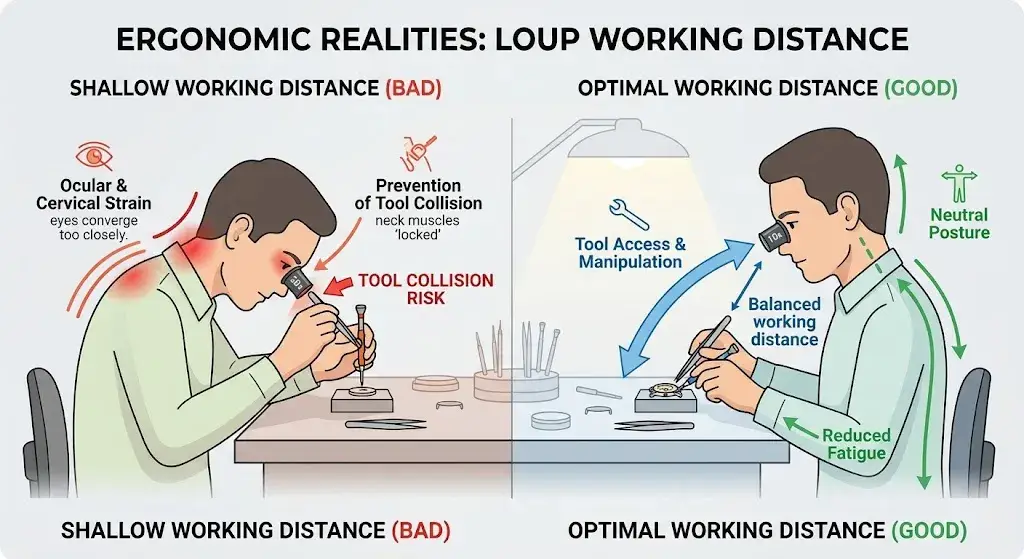
- Tool Access and Manipulation: A shorter working distance blocks incoming ambient light and prevents precision tools from approaching the object at the correct anatomical angle. A balanced working distance ensures that your hands can move dynamically without colliding with the lens housing.
- Ocular and Cervical Strain: If the working distance is too shallow, users are forced to lean uncomfortably close to the bench. This fixed, hunched posture strains the cervical spine, locks the neck muscles, and forces unnatural eye convergence, leading to tension headaches and occupational fatigue.
- Prevention of Tool Collision: For tasks involving heat or sharp edges (like soldering or carving), adequate spatial clearance prevents accidental contact between hot or sharp tools and the high-grade optical glass, protecting your instrumentation investment from scratches or thermal damage.
Technical Comparison: Power vs. Working Distance Clearance
| Magnification Power | Typical Working Distance | Tool Clearance Capacity | Primary Application |
| 5x to 7x Power | 35mm to 50mm (Very Deep) | Excellent (Maximum clearance) | Continuous bench assembly, rough gemstone sorting, watch repair layout |
| 10x Power (Standard) | 25.4mm (1 inch) (Optimal Balance) | High (Accommodates tweezers/gravers) | Standard clarity grading, stone setting, precision engraving |
| 20x to 25x Power | 6mm to 10mm (Extremely Shallow) | Minimal (Inspection only) | Micro-inspection, verification of laser inscriptions |
Top Recommendations for Optimal Tool Clearance
1. Alfa Mirage® Hand Grip 5x / 7x Magnification Loupe
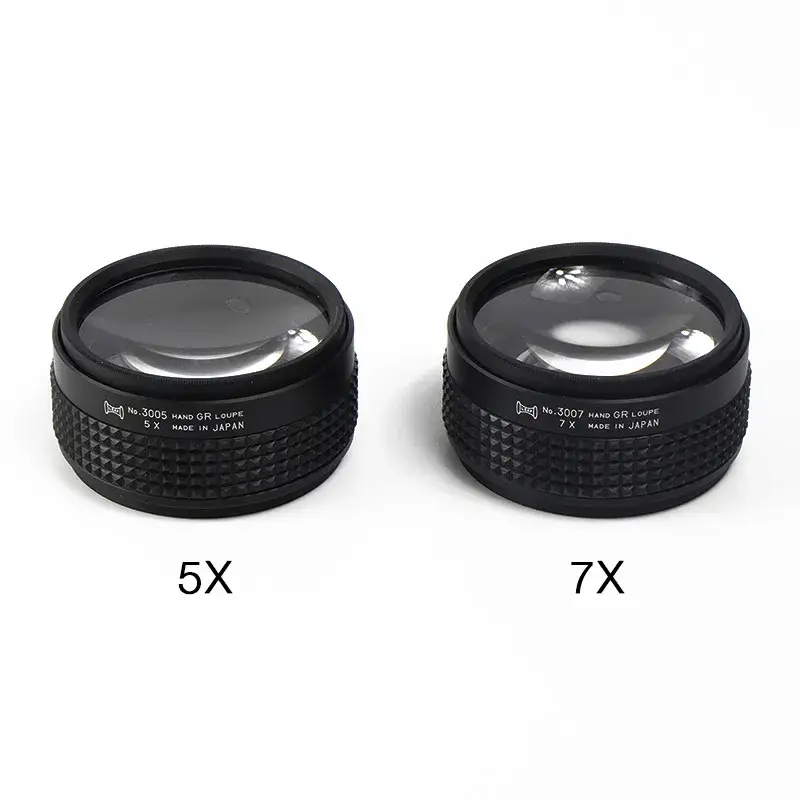
- Lens Structure: Made-in-Japan low-magnification configuration paired with an extra-large 53.5mm lens diameter, offering an extended, ultra-deep working distance window of 35mm to 50mm.
- Design Merit: Features an ergonomic handheld design built for an exceptionally wide field of view and maximum hand/tool clearance.
- Best For: Preliminary stone sorting, parsing raw parcels, and initial benchwork setup where massive physical room for hands and large tools is the absolute priority.
2. Professional Triplet Hexagon Loupe With Rubber Grip
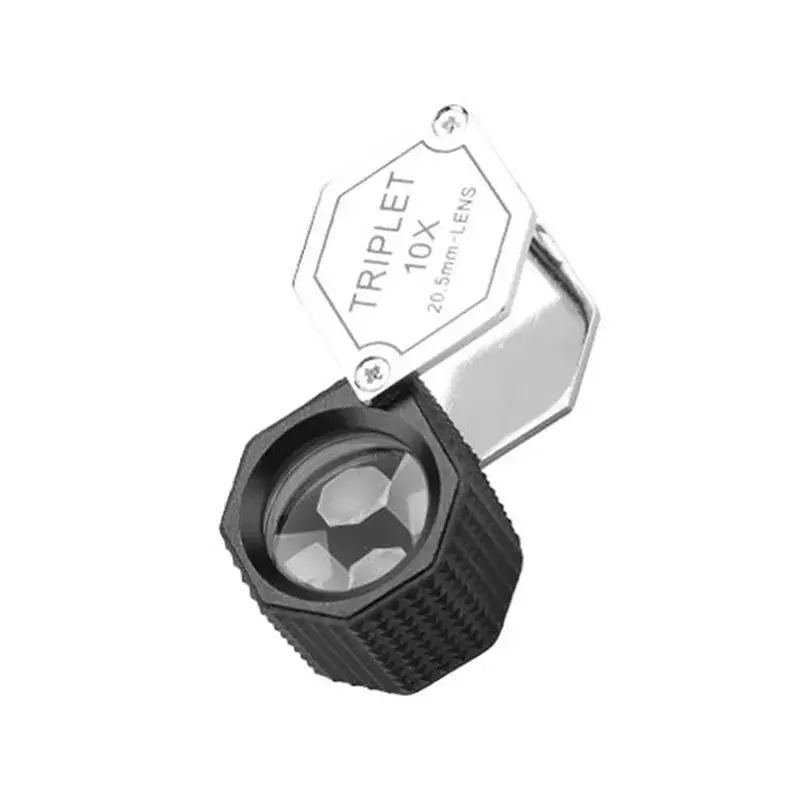
- Lens Structure: Precision-engineered 10x multi-element triplet system calibrated to deliver a perfectly balanced 1-inch (25.4mm) working clearance.
- Design Merit: Features a 20.5mm aperture with a flat black inner lens holder to eliminate ambient glare. Ridged rubber sides ensure a steady, non-slip grip during continuous use.
- Best For: High-frequency bench jewelry manipulation, stone setting, and continuous assembly work where both micro-detail and dynamic hand movement are required.
3. Diamond Inscription Loupe-B
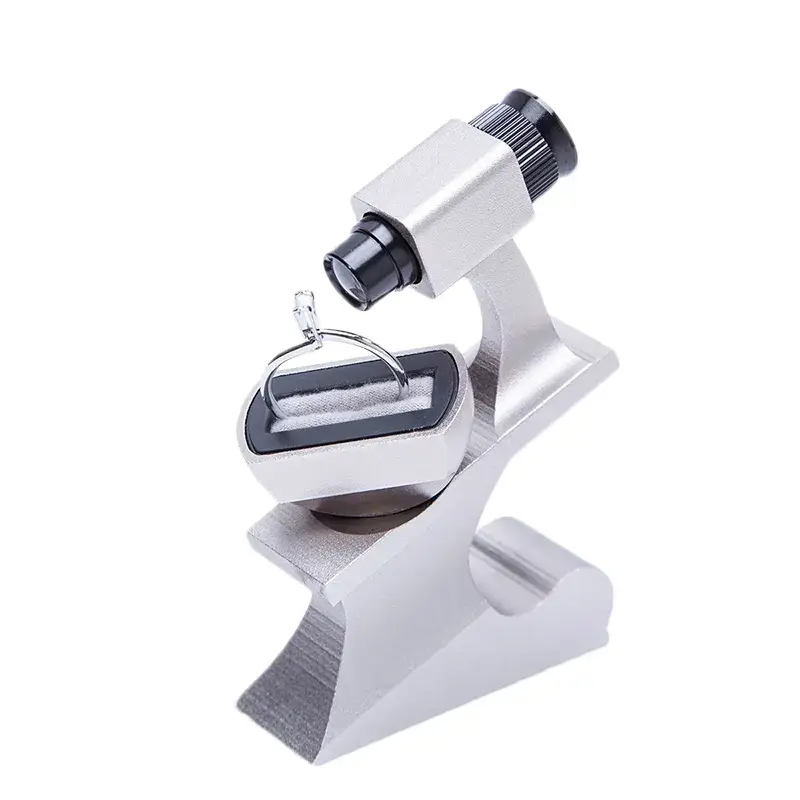
- Lens Structure: Ultra-high-power 25x specialized optical glass system designed for micro-proximity target inspection with a shallow, highly restricted working distance (6mm to 10mm).
- Design Merit: Because the ultra-short working distance makes steady hand-holding impossible, this system features a built-in stone/ring holder and a cushioned, 360-degree rotating platform to lock the gemstone into the exact millimeter-scale focal point, completely eliminating hand shake.
- Best For: Micro-inspection and reliable verification of laser serial numbers or inscriptions on diamond girdles where tool clearance is not required.
Frequently Asked Questions
Q: Can I modify the working distance of my loupe by shifting my eye position?
A: No. The working distance is a fixed mathematical property determined by the curvature and index of the glass lens assembly. Changing your eye position only changes your field of view or blurs the image; it cannot create more physical space between the lens and the object.
Q: Why do bench watchmakers and jewelers prefer 3x to 7x loupes over 20x loupes for general assembly?
A: Watch movements and intricate jewelry settings require constant manipulation with fine screwdrivers, tweezers, and files. Lower magnification loupes provide the necessary 35-50mm of clearance space; a 20x loupe would force the tool to physically collide with the lens glass.
Q: Does a larger lens diameter (like 20.5mm or 53.5mm) mean a deeper working distance?
A: No. Lens diameter controls the width of your view (field of view) and light intake, not the focal depth or working distance. However, a larger diameter makes working under the lens easier because it offers a more forgiving, brighter, and panoramic visual area.
Q: How does a shallow working distance cause rapid eye strain?
A: When an object is held extremely close to the face, the eyes must converge heavily inward to focus. This forces the extraocular muscles into an intense, unnatural state of contraction, causing rapid eye fatigue, strain, and tension headaches.
Q: Is there any way to get high magnification with a deep working distance?
A: Yes. To achieve high magnification (like 20x–40x) while keeping a spacious, unrestricted workspace, you must transition away from handheld loupes entirely and implement an optical Gemological Microscope system featuring a long focal-length objective lens.
Strategic B2B Partnerships
JYBS operates as a specialized supplier for global jewelry tool manufacturers and industrial laboratories. We focus on supplying high-precision instruments that strictly adhere to the rigorous technical standards of professional work environments.
Looking for Wholesale Pricing or Bulk Procurement?
- B2B Bulk Orders: Customized tiered pricing structures designed to scale for tool retailers, educational institutions, and gemological laboratories.
- Worldwide Shipping: We support worldwide procurement with reliable global shipping. Our professional tools—including industry-standard loupes—can be delivered directly to international buyers and facilities across the globe.
- Technical Consulting: Acquire the detailed specification sheets and high-volume wholesale quotes you require within a guaranteed 3-hour turnaround.
Contact our B2B Sales Team for a Professional Quote