

Your tools dictate the quality of your craft—compromising on cheap equipment only leads to ruined precious metals and costly downtime. This guide breaks down exactly how to evaluate and invest in the best professional jewelry equipment to maximize your productivity and ensure long-term success.
1. Identify Your Jewelry-Making Specialty
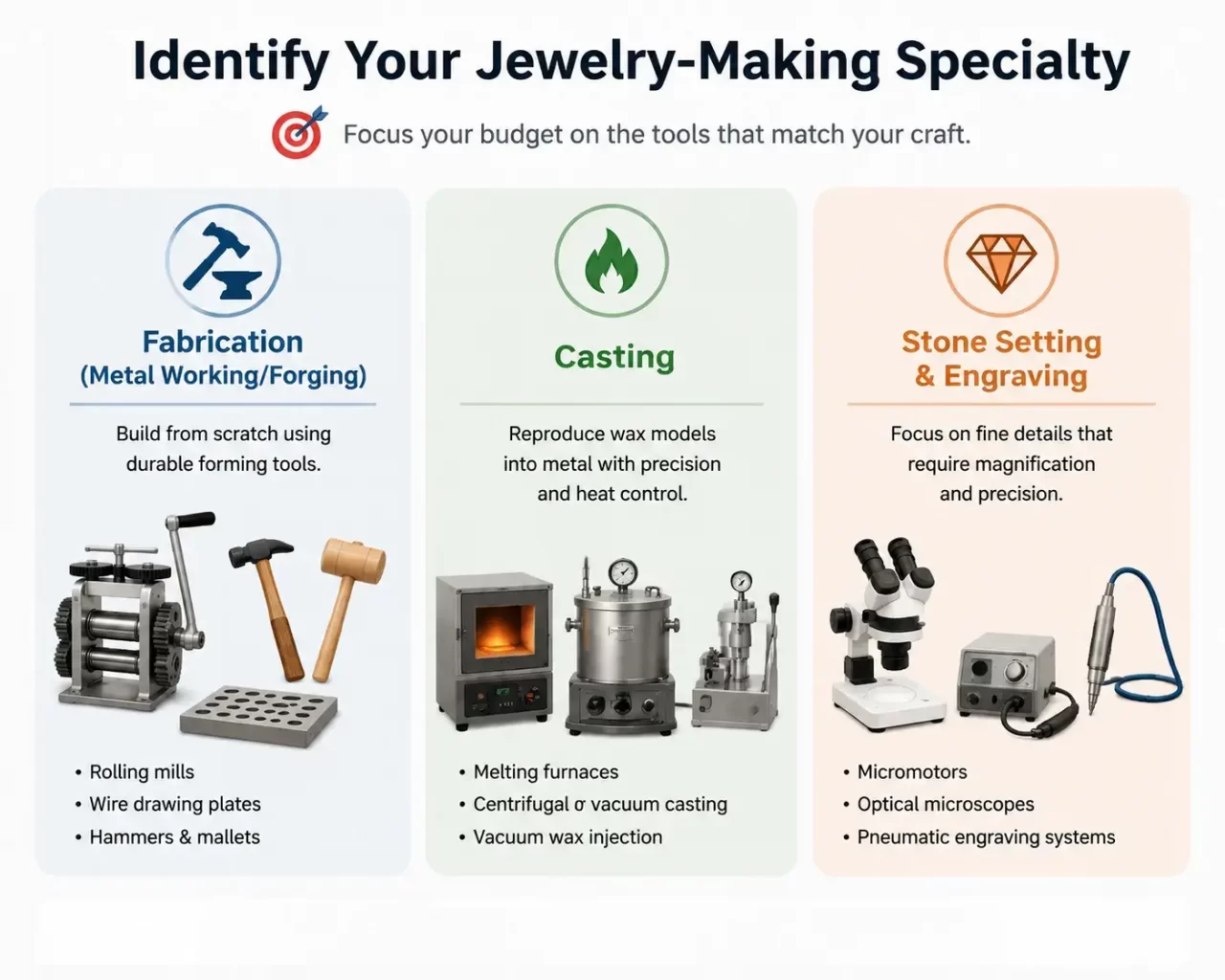
The “best” equipment is highly subjective and depends entirely on your specific daily operations. A master stone setter’s ideal workbench looks vastly different from a high-volume casting facility. Before purchasing, align your budget with your primary manufacturing processes:
- Fabrication (Metalworking/Forging): If you build pieces from scratch, you need heavy-duty forming tools. This includes rolling mills, wire drawing plates, and a variety of striking tools. In the professional field, hammers (used for stretching and moving metal) and mallets (used for forming without marring the surface) are strictly distinguished.
- Casting: For those reproducing wax models into metal, thermal control is everything. Your core setup will require melting furnaces, centrifugal or vacuum casting machines, and reliable vacuum wax injection systems.
- Stone Setting & Engraving: Detail work demands extreme magnification and rotational precision. Core tools here include specialized micromotors, optical microscopes, and responsive pneumatic engraving systems.
Identifying your core specialty helps you decide where to direct the bulk of your equipment budget first.
2. Essential Categories of Jewelry Equipment (and How to Choose Them)
Once you know your focus, you need to know exactly what technical parameters separate a professional machine from a hobbyist toy.
Melting and Casting Equipment
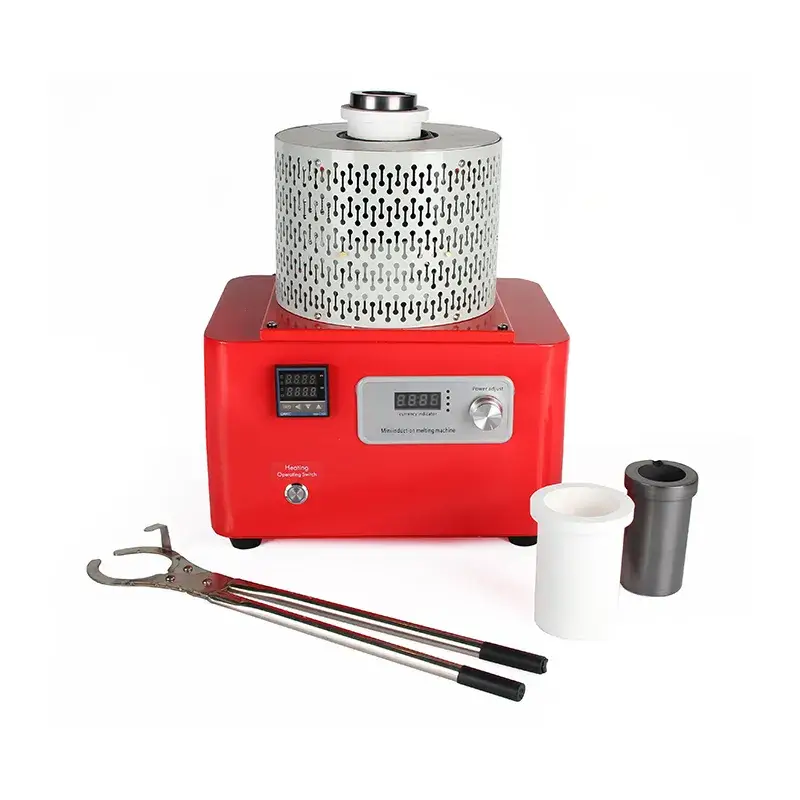
When dealing with molten gold, platinum, or palladium, safety and accuracy are non-negotiable.
- What to look for: Prioritize machines with exact temperature control accuracy to prevent burning off vital alloys. Verify the maximum temperature limits to ensure compatibility with your specific metals. Pay close attention to the crucible material (such as high-grade graphite) and the machine’s thermal insulation and safety designs to protect your operators.
Forming and Fabrication Tools
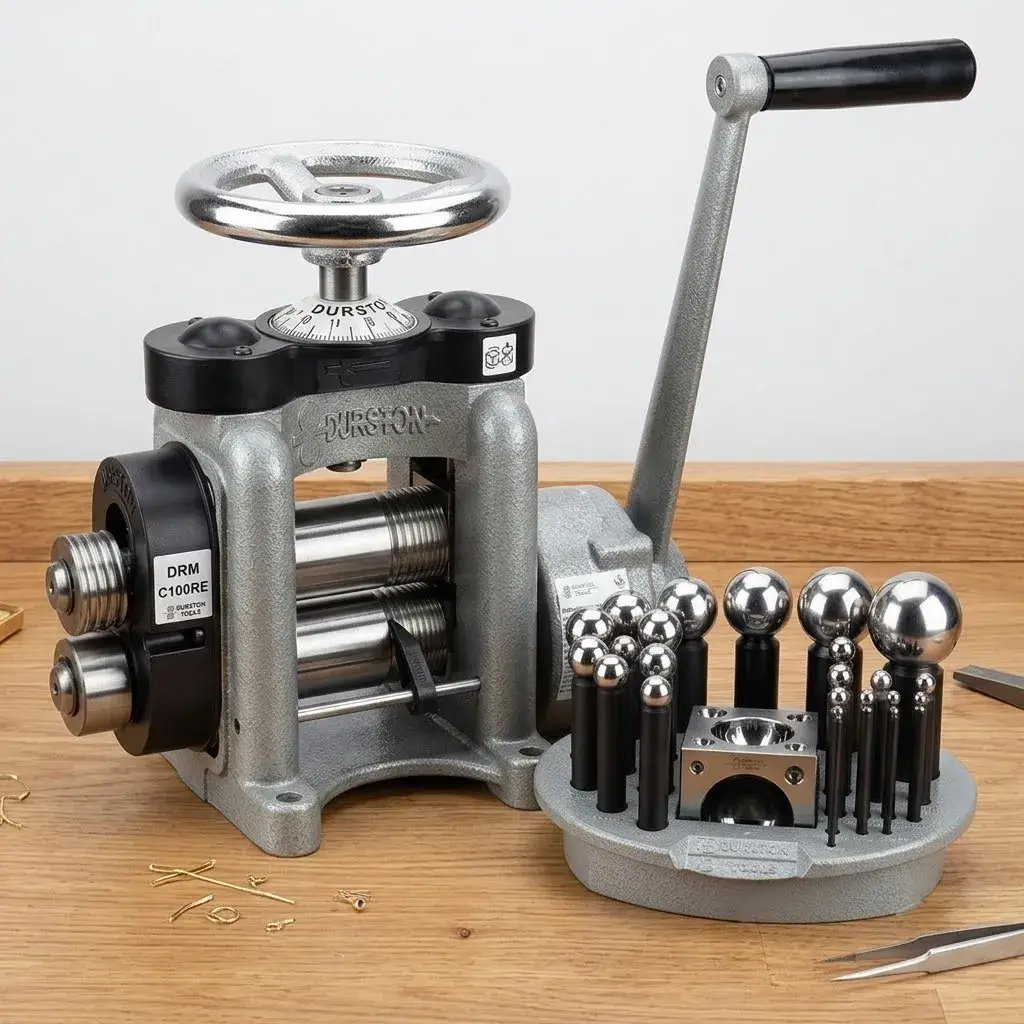
These tools take immense physical stress. If they warp, your jewelry warps.
- What to look for: When evaluating rolling mills, the hardness and mirror-like smoothness of the steel rollers are critical to prevent transferring textures onto your metal sheet. Ensure the gear transmission offers a smooth, reduction-ratio pull. For hand tools, strictly verify that the material is industrial-grade hardened steel that will not deform under heavy strikes.
Soldering and Welding Systems
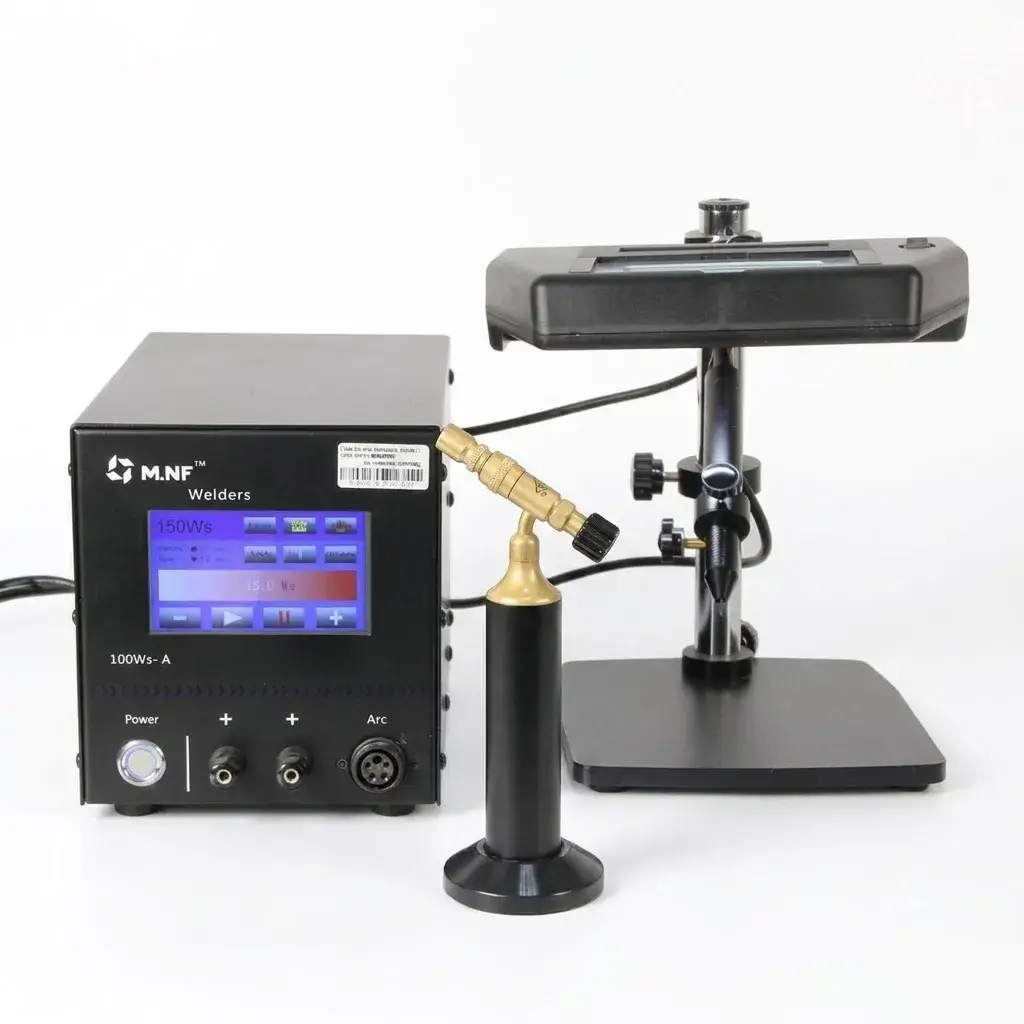
Heat control dictates the cleanliness of your joints.
- What to look for: For traditional soldering, evaluate the precision of the welding torch’s flame control and the flexibility of multi-head switching for different tip sizes. If you are investing in Pulse Arc Welders (spot welders), scrutinize the power adjustment range to ensure it can handle everything from delicate jump rings to thick ring shanks.
Polishing and Finishing Machines
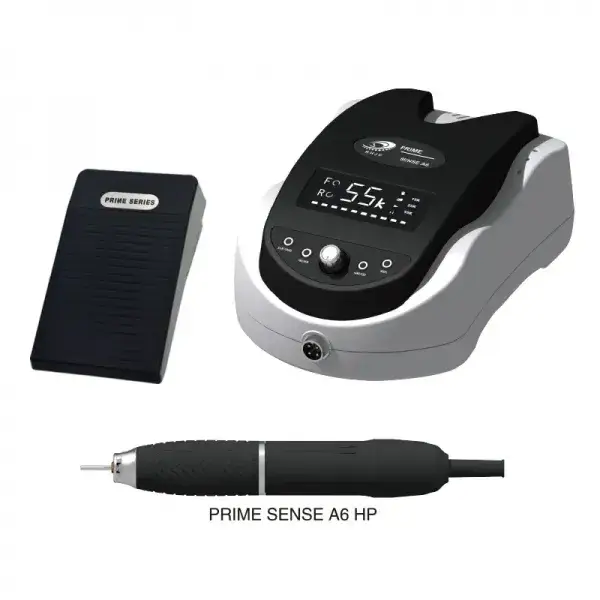
A flawless mirror finish requires consistent torque, not just high speeds.
- What to look for: Look for high maximum speeds (RPM) combined with absolute torque stability under pressure. True professional dental micromotors—which are the gold standard for jewelers—provide sustained power and concentricity that cheap manicure drills simply cannot match. Additionally, evaluate the heat dissipation capacity during long-term operation and the CFM (Cubic Feet per Minute) efficiency of your dust extraction system to recover precious metal sweeps.
Measurement and Inspection Tools
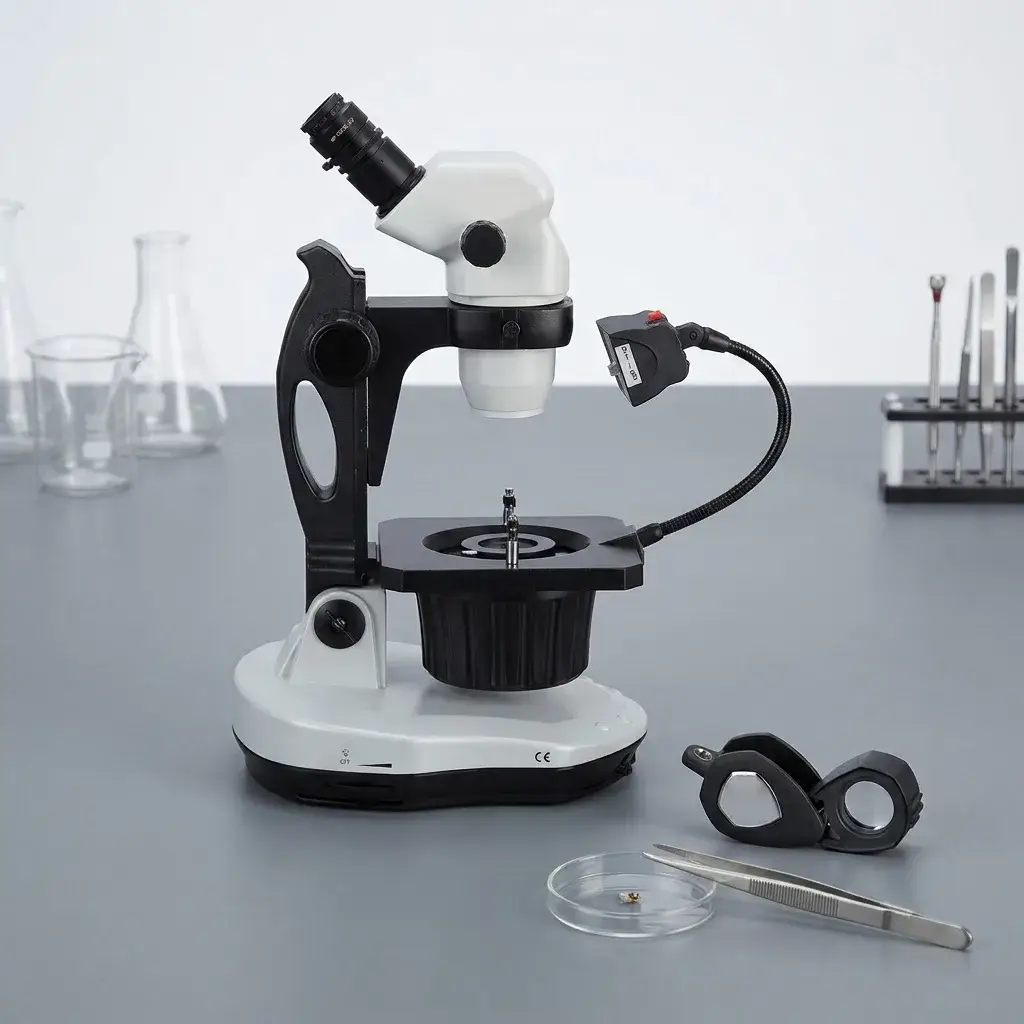
Precision is the bedrock of jewelry manufacturing, especially when buying and selling precious materials.
- What to look for: For microscopes and magnifiers, look for specific metrics: microscopes require at least a 100mm working distance to maneuver handpieces underneath, while magnifiers need achromatic lenses to eliminate edge distortion. For precision weighing, bypass standard strain gauge scales. Insist on analytical balances equipped with Electromagnetic Force Restoration sensors to guarantee true, drift-free 0.001g precision, which is crucial for exact alloy compounding.
3. Key Features to Look For in Any Professional Equipment
Regardless of the specific tool, true professional-grade equipment shares several universal characteristics. Use the following criteria to evaluate any potential addition to your workshop:
| Evaluation Criteria | What to Look For | Why It Matters |
| Build Quality & Materials | Housings made from cast iron or heavy-duty stainless steel. Industrial-grade internal bearings. | Ensures the machine can withstand continuous, high-volume production without vibrating out of alignment. |
| Precision & Control | Stepless speed control, micro-adjustable temperature regulation, and absolute spindle concentricity. | Gives the bench jeweler total control over the process, reducing scrap rates and ruined stones. |
| Ergonomics & Safety | Zero-vibration brushless handpieces, quick-change collet mechanisms, and true thermal overload protection. | Prevents nerve fatigue during prolonged micro-setting, allows tool-free bur changes, and avoids catastrophic motor burnout. |
4. Budgeting: When to Splurge and When to Save
Equipping a jewelry studio requires strategic capital allocation. You do not need to buy the most expensive version of every single item on day one.
When to Splurge: Direct your premium investments toward machines that actively generate revenue or define the final quality of the piece. You should always splurge on micromotors, rolling mills, primary welding torches, and precision analytical balances. A vibrating micromotor or an inaccurate scale will cost you far more in damaged goods and lost metal than the initial purchase price.
When to Save: You can opt for cost-effective alternatives for auxiliary tools and basic consumables during your initial setup. Standard measuring calipers, basic hand files, bench pins, and generic buffing wheels can be sourced economically and upgraded later as your production volume increases.
5. Warranty, Maintenance, and Brand Support
Even the toughest industrial tools eventually require maintenance. Top-tier equipment is distinguished not just by how it runs, but by the ecosystem supporting it.
When evaluating a brand, verify that they offer long-term warranties on core components like motors and circuit boards. Ensure that vital consumables and replacement parts (such as carbon brushes, specialized collets, and crucibles) are readily available. Finally, assess their customer service: a brand that provides responsive technical support can be the difference between a minor hiccup and weeks of halted production.
Conclusion
Purchasing professional jewelry equipment is fundamentally a long-term business investment. By assessing your specific craftsmanship needs, insisting on industrial-grade build quality, and allocating your budget toward the tools that matter most, you set the foundation for superior jewelry manufacturing.
When you are ready to upgrade, choosing the right supplier matters. JYBS is a dedicated supplier of professional jewelry tools and equipment, offering everything from precision handpieces to heavy-duty forming tools. We fully support bulk orders and B2B transactions to keep your manufacturing facility running smoothly. Visit the JYBS catalog today to find the reliable equipment you need.