

High-volume gemological labs rely on commercial-grade tools where minor calibration drifts can cause costly misclassifications and missed synthetic indicators. For professional testing facilities, precision hardware with verifiable tolerances ensures reliable grading reports and long-term client trust. Below are the key technical specifications for outfitting a modern laboratory.
I. Detailed Technical Specifications for Core Gemological Inspection Tools
| Instrument | Key Hardware Specification | Performance Purpose |
| Gemological Microscope | 6.7x–45x Zoom, FN 22, Trinocular Camera Port | Darkfield inclusion analysis & photo documentation |
| Precision Refractometer | 1.300–1.810 RI Range (0.01 Scale) | Birefringence & Refractive Index identification |
| Commercial Polariscope | High-Efficiency Glass Polarizers & Rotating Stage | Strain & optic figure mapping |
| Dual-Wavelength UV Cabinet | 365nm LW / 254nm SW Dual Light Tubes | Synthetic diamond & treatment screening |
| Laboratory Spectroscope | 400–700nm Visible Spectrum Bandwidth | Absorption line fingerprinting |
1. Professional Gemological Microscope
The microscope serves as the primary workhorse for internal characterization, fracture assessment, and origin determination.
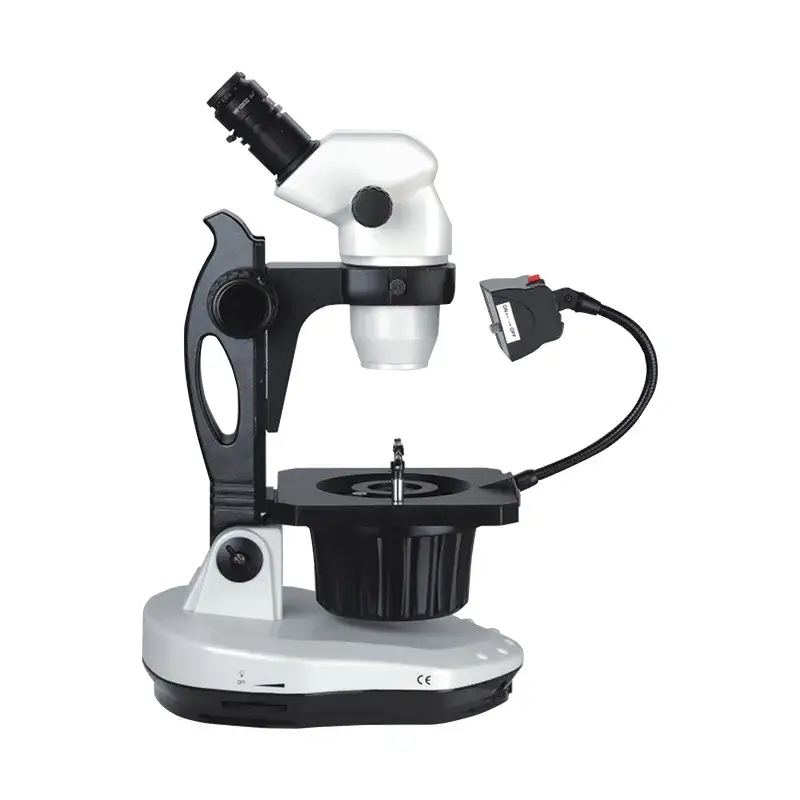
- Optical System: Features a continuous zoom ratio from 6.7x to 45x (expandable via auxiliary objective lenses and 20x eyepieces). Built on a high-resolution Greenough optical system with a High Field Number (FN 22) to provide a wide, flat, and sharp field of view. Includes a dedicated trinocular camera port interface for digital screen output, industrial camera connections, and photo documentation.
- Light Source & Illumination: Equipped with a high-performance dual-illumination system combining a transmitted halogen base light (for true-color darkfield/brightfield inclusion analysis) and an adjustable overhead LED/fluorescent light source. Includes seamless mechanical switching and an adjustable iris diaphragm to control darkfield light intensity.
- Ergonomic Construction: Built on a heavy-duty, rotatable base with an adjustable tilt mechanism (0° to 45°) for operator comfort. The housing utilizes a solid metal mechanical arm designed to endure continuous daily operation without focal drift.
2. High-Precision Gemological Refractometer
Refractive Index (RI) measurement remains the quickest diagnostic method for separating anisotropic and isotropic mineral species.
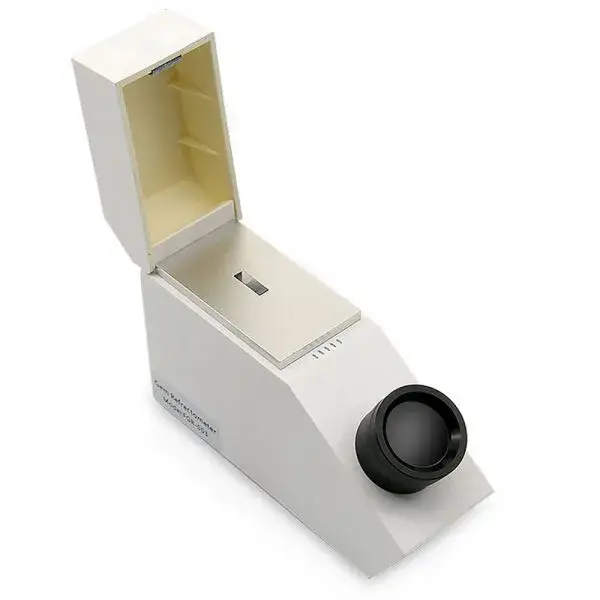
- Measurement Range & Precision: Standard optical range from 1.300 to 1.810 RI, featuring a high-contrast internal scale with clear graduations for precise optical readings.
- Core Configuration: Designed with a high-transmittance, scratch-resistant lead-glass prism mounted in a corrosion-resistant metal housing. Includes a specialized optical light inlet, optimized for use with an external 589nm monochromatic LED light source or narrowband filter torch to eliminate chromatic dispersion and yield sharp shadow-line transitions.
3. Commercial-Grade Polariscope & Conoscope
Polarization optics allow rapid separation of single-refracting, double-refracting, and aggregate crystal structures.
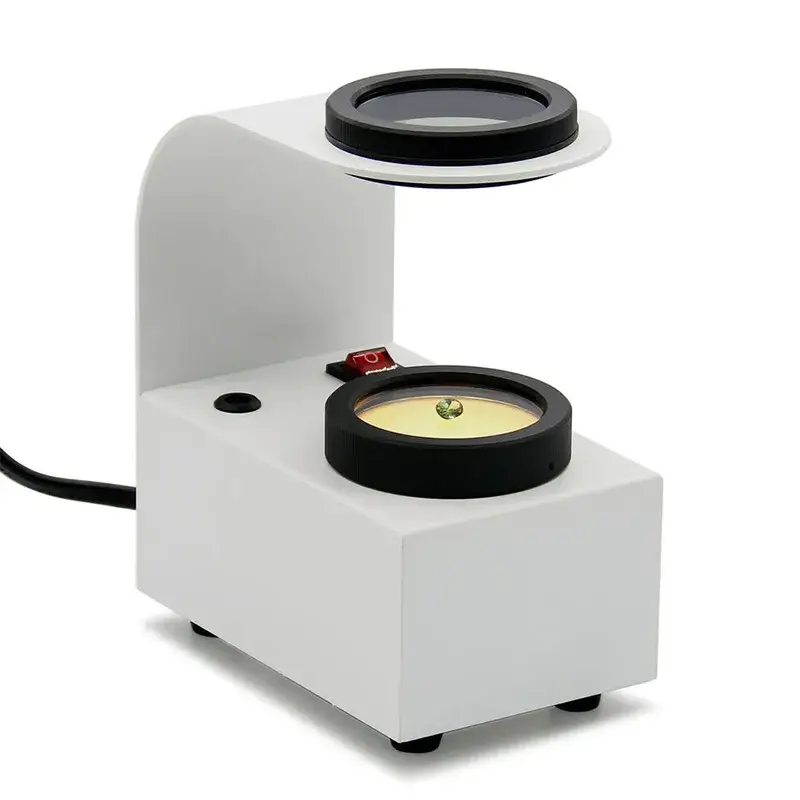
- Optical Design: Utilizes high-grade polarizing filters mounted over a built-in cold light source. The lower polarizer and upper analyzer provide excellent extinction alignment for accurate strain mapping.
- Expansion Modules: Includes a 360° glass rotating stage for smooth sample orientation tracking, paired with a detachable, high-transmittance conoscope interference ball for clear uniaxial vs. biaxial figure determination.
4. Dual-Wavelength UV Analysis Cabinet
Ultraviolet fluorescence and phosphorescence testing are critical first-line screens for synthetic diamond verification and treatment detection.
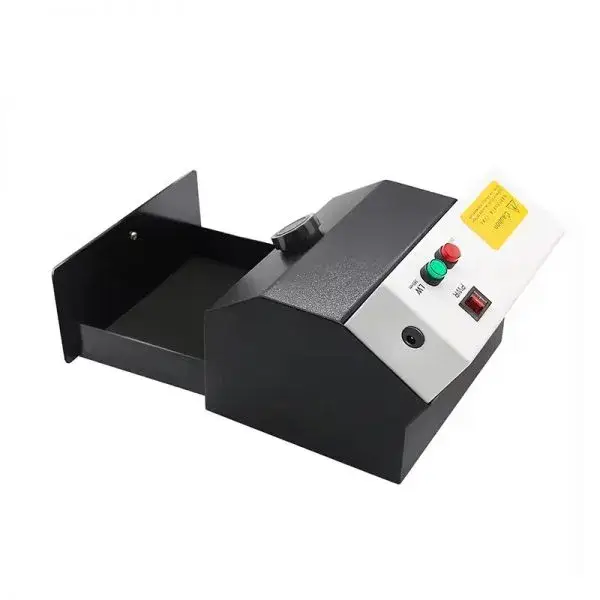
- Wavelength Specifications: Dual-switchable light tubes configured for standard Long-Wave (LW 365nm) and Short-Wave (SW 254nm) inspection.
- Safety & Enclosure: Built with a compact, light-shielded viewing chamber that protects the operator from direct UV radiation while maximizing visualization of weak fluorescence and phosphorescence reactions in loose or mounted gems.
5. Spectroscope and Analysis System
Spectroscopic analysis identifies diagnostic absorption bands caused by transition elements (Fe, Cr, Mn) or color centers.
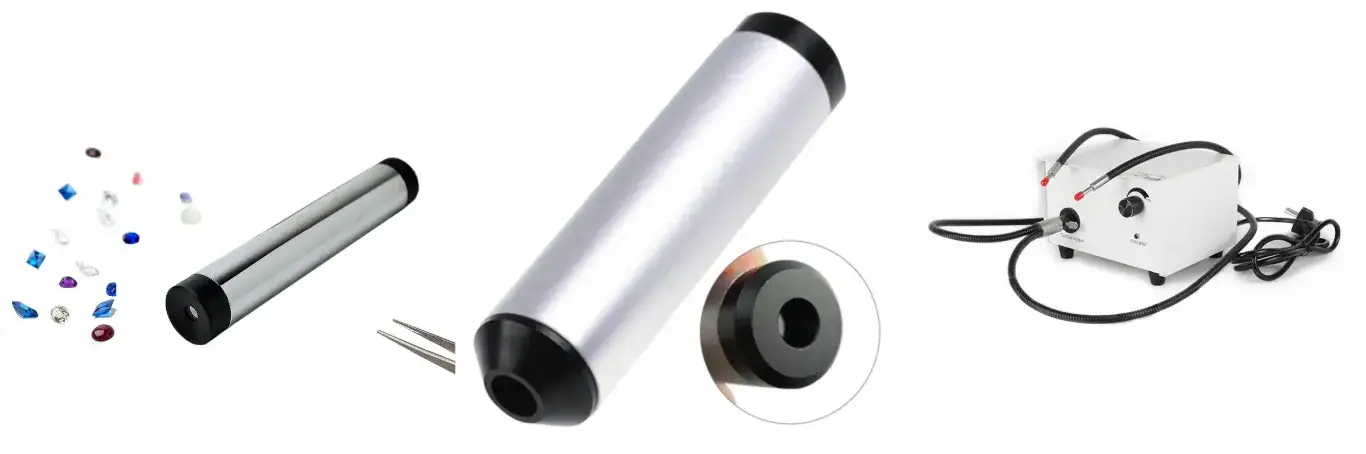
- Type Options: Accommodates both diffraction grating and prism spectroscopes. Grating models offer evenly spaced wavelength displays across the visible spectrum, while prism models deliver high light resolution in the blue/violet region (400–450 nm).
- Specifications: Complete visible light coverage (400–700 nm) paired with an adjustable high-intensity fiber optic or cold light guide to direct light through the gemstone without thermal damage.
II. Practical Screening Equipment for Lab-Grown Diamonds and Treatments
As HPHT/CVD diamond growth techniques and clarity enhancements become more common in commercial supply chains, testing facilities require reliable screening devices to maintain diagnostic efficiency.
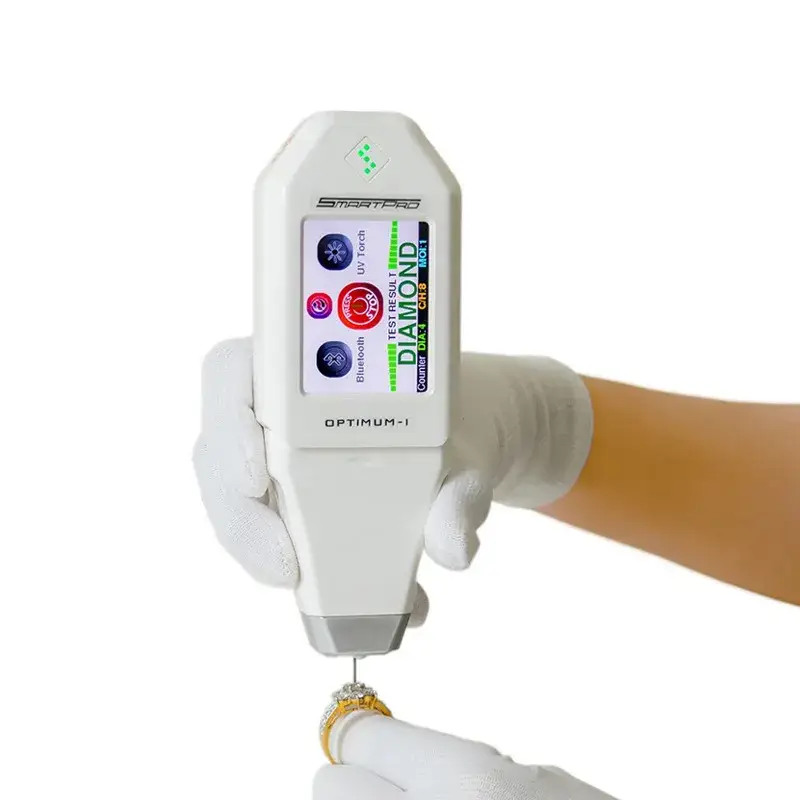
- Diamond Thermal & Electrical Conductivity Testers: Portable, high-precision thermal/electrical dual probes featuring fine-point micro-thermistors. These serve as rapid primary screening tools to separate natural diamonds, moissanite, and Type IIb diamond candidates in high-volume testing workflows.
- Short-Wave UV Fluorescence / Phosphorescence Screeners: Commercial-grade compact screening cabinets equipped with high-intensity short-wave UV illumination. Designed for rapid batch-screening of loose diamonds to identify characteristic HPHT/CVD phosphorescence persistence without complex setup times.
III. Laboratory Equipment Compliance, Calibration, and Maintenance Standards
Operating an efficient testing facility requires adherence to basic maintenance routines and quality management protocols.
Compliance & Safety Standards
Commercial testing equipment must meet standard operational and electrical requirements:
- CE/FCC Electrical Safety Certification: Light bases, power transformers, and UV ballasts comply with commercial electrical safety standards.
- Quality Traceability: Optical specifications and scale graduations meet industry standards for consistent batch testing.
Standard Operating Procedures (SOP) for Calibration
- Refractometers: Conduct bi-weekly calibration checks using high-purity reference standards (such as cubic zirconia or natural spinel blocks with known RI values) and standard 1.81 RI contact fluid.
- Microscopes: Perform periodic accuracy verifications of internal measuring reticles and camera output software using a stage micrometer scale.
Total Cost of Ownership (TCO) Control
- Light Source Longevity: Hybrid Halogen and LED lighting systems balance spectral accuracy with low maintenance downtime.
- Consumable Management: Maintain stock of high-index contact liquid (1.81 RI), replacement halogen/LED bulbs, and spare polarizing filters to ensure continuous workflow.
IV. Procurement Evaluation Checklist
Use this practical checklist when sourcing new instruments or auditing prospective hardware suppliers for commercial laboratory setups:
- [ ] Optical & Illumination Precision: High-resolution Greenough optical system, FN 22 wide field eyepieces, and dual transmitted/reflected lighting setup.
- [ ] Housing & Structural Integrity: Heavy-duty metal chassis, stable cast alloy base, and robust focusing mechanisms.
- [ ] Component & Warranty Terms: Reliable factory warranty on core optical assemblies and electrical components.
- [ ] Manufacturer Support: Direct factory sourcing options with reliable wholesale volume availability and technical support.
Conclusion
Equipping a modern grading facility or testing facility requires a clear understanding of instrument performance parameters. Choosing heavy-duty, highly repeatable gemological tools ensures that your laboratory delivers reliable results, maintains regulatory compliance, and protects its industry standing. Investing in equipment built to rigorous specifications reduces downtime, lowers long-term operational costs, and gives gemologists the clarity needed to identify complex synthetic stones and advanced material treatments.
When outfitting your facility with commercial-grade testing equipment, sourcing hardware from an experienced manufacturer makes all the difference. JYBS provides a comprehensive lineup of professional gemological tools, laboratory-grade microscopes, and precision refractometers. Whether you are expanding a single testing station or building out a full-scale regional laboratory, JYBS offers reliable, high-precision equipment with complete wholesale supply options tailored to your operational requirements. Contact our sales team today to discuss bulk pricing and complete laboratory outfitting solutions.