

Whether you are a beginner starting your jewelry journey or an artisan upgrading your studio, choosing the right gear from hundreds of options can be overwhelming. Instead of listing endless accessories, this guide curates the absolute core metal forming tools every workbench needs. These essential investments will optimize your workflow, protect your precious metals from damage, and drastically cut down on tedious finishing time.
Phase 1: The “Golden Trio” for Beginners
Every metal-smithing journey begins with three foundational elements: a way to strike, a surface to strike upon, and a mandrel to guide your curves. If you are setting up your very first jewelry bench, start with this essential trio.
Tool 1: Non-Marring Striking Tools — Rawhide Mallet or Wooden Mallet
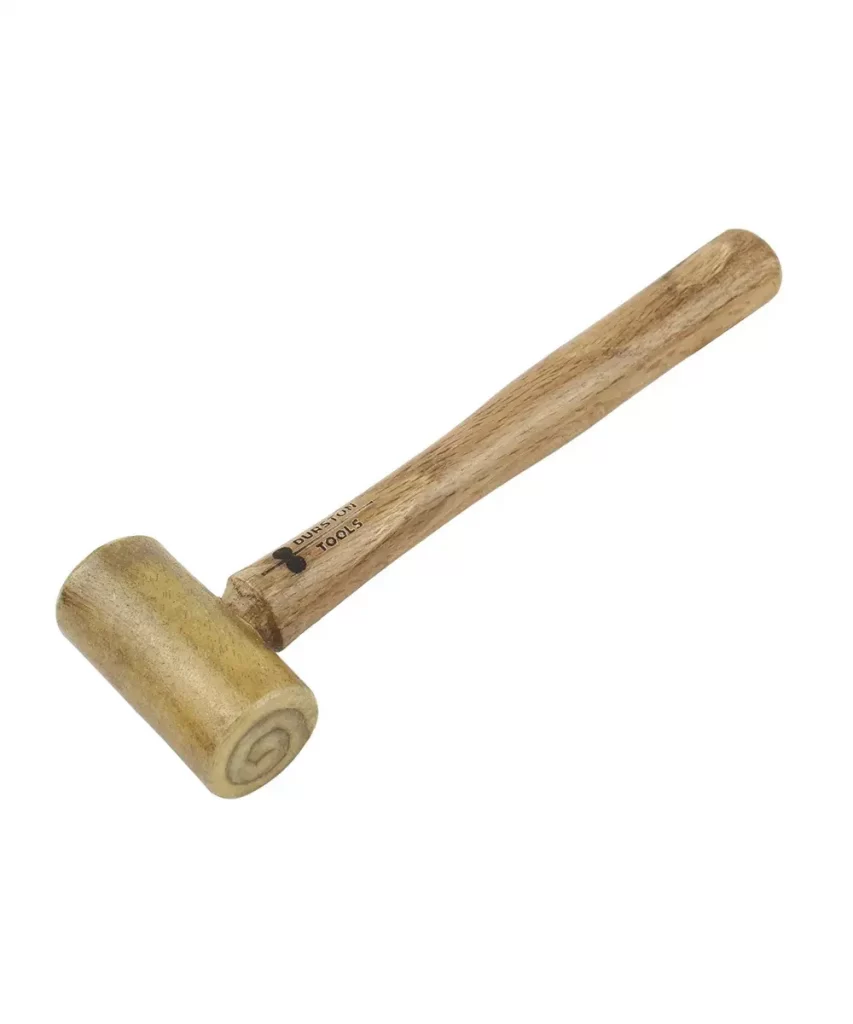
- Why You Need It: When bending, wrapping, or shaping ductile precious metals like fine gold, sterling silver, or copper, standard steel household hammers will scar the metal, leaving deep, irreparable dents. A rawhide mallet (or a premium hardwood mallet) is the jeweler’s primary defense against marring. It delivers sufficient kinetic force to displace and bend the metal while absorbing the harsh shock that would otherwise deform your workpiece’s surface.
- Buying Tips: Prioritize mallets constructed with a dense, highly compressed rawhide head and an ergonomic, shock-absorbing wooden handle. Look for solid assembly where the mallet head is securely pinned to prevent shifting during heavy hand-forming sessions.
Tool 2: Support and Forming Base — Steel Bench Block
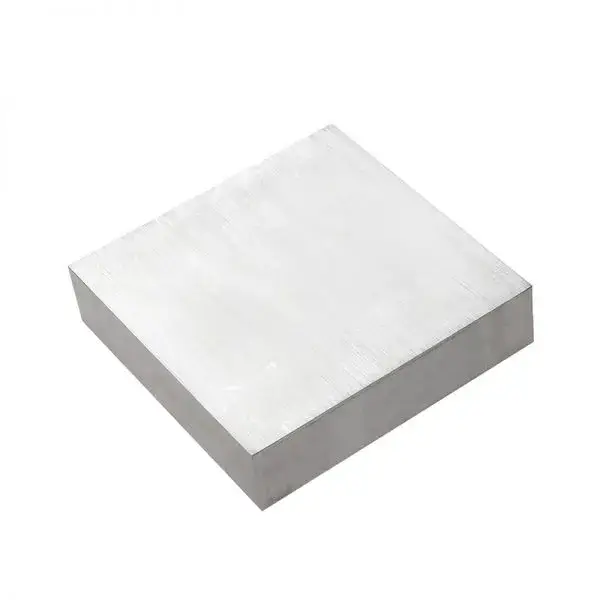
- Why You Need It: Every striking and flattening action requires a solid, flat, and extremely hard surface to provide adequate resistance. High-carbon steel bench blocks (sometimes called jeweler’s anvils) are essential for flattening sheet metal, hardening dead-soft wire, and supporting stamping tools.
- Buying Tips: Choose a block explicitly labeled as hardened steel that features a high-grade mirror-polished surface. If a bench block is made of soft, untreated iron or arrives with pre-existing surface scratches, every single hammer blow will transfer those exact imperfections and texture lines directly onto the back of your jewelry.
Tool 3: Curvature Shapers — Ring and Bangle Mandrels
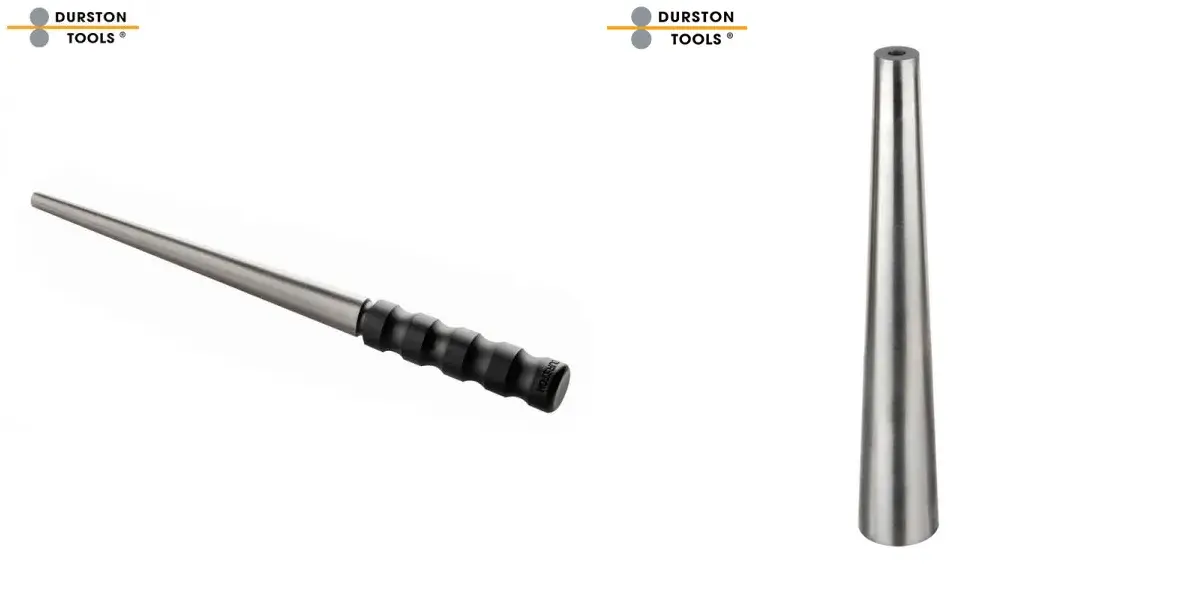
- Why You Need It: Hardened steel mandrels are the industry standard for transforming flat strips of metal sheet or wire into perfectly concentric circles. Without them, shaping symmetrical rings, hoops, and cuffs is virtually impossible. They also serve a double duty for sizing and restructuring distorted bands.
- Buying Tips: For heavy-duty hammer forming, we highly recommend choosing a solid, hardened steel graduated ring mandrel without size marks. Repeatedly hammering metal over engraved size lines will stamp those measurement numbers into the inside of your ring shank. Save your graduated, marked mandrels strictly for sizing and measuring.
Phase 2: Advanced 3D Shaping
Once you master basic flat-metal manipulation, the next step is creating dimension. To transition from flat cutouts to organic, volumetric, and hollowware designs, you will need specialized metal-smithing tools.
Tool 4: Dapping Block & Punch Set
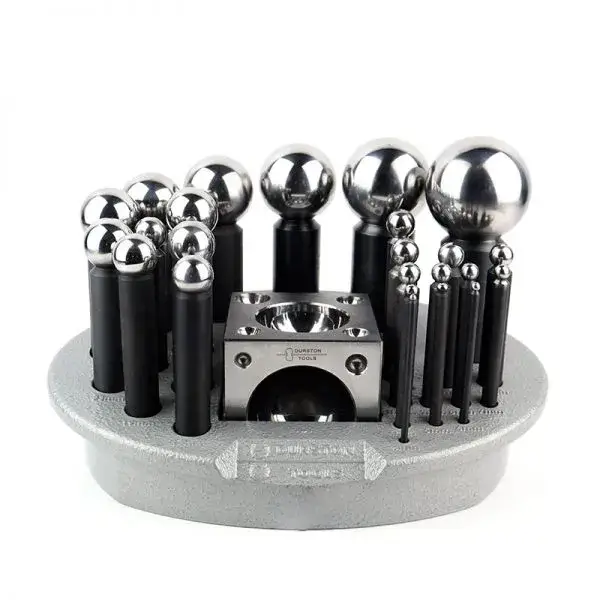
- Why You Need It: This is the ultimate secret weapon for transforming flat, two-dimensional metal discs into perfect, symmetrical hemispheres (domes). Whether you are crafting hollow bead halves, locket faces, cup settings for gemstones, or complex organic pendants, a dapping block and punch set (or doming block) is non-negotiable.
- Buying Tips:
- What to Avoid: Steer clear of cheap, cast-iron replica sets. The machining tolerances are poor, resulting in a loose fit between the spherical punches and the block’s hemispherical depressions, which will pinch and tear your metal.
- The Golden Rule: The inner walls of the block’s depressions and the spherical heads of the punches must be polished to a flawless mirror finish. Any pit, line, or rust spot on the steel will ruin the smooth dome of your silver or gold piece, forcing you to spend hours grinding away blemishes.
Tool 5: Forming Pliers (e.g., Round-Nose, Concave/Convex Pliers)
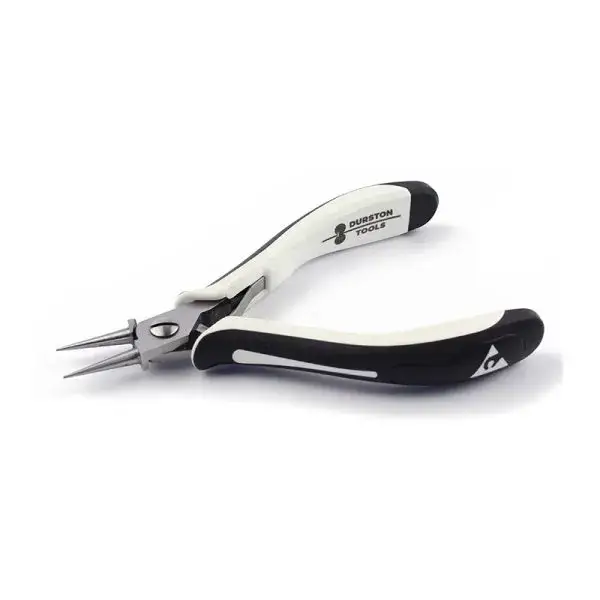
- Why You Need It: While hammers and blocks excel at large-scale force, specialized forming pliers give you micro-control. Tools like round-nose pliers, step pliers, and concave/convex bending pliers allow you to quickly bend fine wire, form bezel wire, and loop metal strips cleanly without ever needing to pick up a mallet.
- Buying Tips: The inner jaws of your shaping pliers must be completely smooth and toothless. Regular hardware-store pliers have serrated jaws that will bite deeply into precious metals, destroying hours of prep work in a single squeeze.
Phase 3: The Ultimate Tool for an Efficient Studio
For jewelers looking to transition from a hobbyist to running a commercial studio, material cost control and custom sizing are paramount to profitability.
Tool 6: Manual Rolling Mill
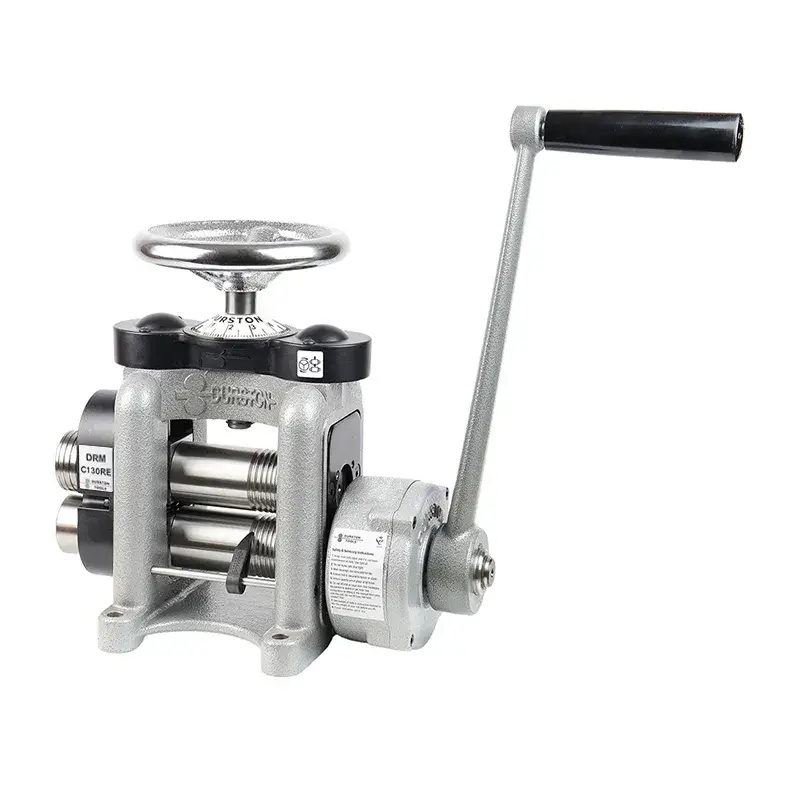
- Why You Need It: The manual rolling mill is widely considered the beating heart of a professional jewelry studio. Instead of purchasing expensive, pre-cut metal sheet and wire in dozens of different thicknesses—which balloons your overhead inventory—a rolling mill empowers you to melt down scrap metal, pour an ingot, and roll out your own custom-thickness sheets, square wires, or half-round bezel wires.
- Buying Tips:
- Check the Gear Ratio: Look for a machine with a high-reduction gear ratio (such as 4:1 or 5:1). This mechanical advantage reduces physical strain, making it smooth and easy to reduce thick metal ingots.
- Examine the Rollers: The cylindrical rollers are the most critical component. They must be manufactured from induction-hardened, high-strength alloy steel with a pristine mirror finish. High-quality rolling mills feature micro-precise top adjustment knobs to ensure perfectly uniform thickness from left to right across your metal plate.
Buying Guide Summary: How to Choose & Avoid Pitfalls
To help you make the smartest investment for your workshop, keep this quick-reference guide in mind when sourcing your jewelry tools:
| Tool Category | What to Look For (High Quality) | What to Avoid (Budget Pitfalls) |
| Steel Forming Tools (Anvils, Dapping Blocks, Mandrels) | • Hardened tool steel • Mirror-polished, flawless working surfaces | • Soft, unhardened cast iron • Pitted or scratched finishes that transfer marks |
| Striking Tools (Hammers, Mallets) | • High-density rawhide, wood, or brass heads • Shock-absorbing, balanced handles | • Standard household steel claw hammers • Low-grade rubber that degrades and leaves black smudges |
| Precision Pliers | • Completely smooth (toothless) jaws • Box-joint construction for perfect alignment | • Serrated utility jaws • Loose lap-joints that twist under pressure |
| Studio Machinery (Rolling Mills) | • Precision-ground alloy steel rollers • Synchronized, micro-adjustable dial systems | • Rough, unaligned internal bearings • Uneven pressure systems that result in warped sheets |
Conclusion
Investing in high-grade metal forming tools is one of the most rewarding decisions a jeweler can make. While cheap tools cause material waste and endless polishing frustration, premium-grade workshop equipment acts as an extension of your hands—allowing you to work faster, conserve precious metal stock, and elevate the overall value of your finished collections.
As a trusted jewelry tool manufacturer and supplier with our own dedicated production facility, JYBS is proud to manufacture high-precision metal forming tools designed to last a lifetime. From mirror-finished dapping sets to robust manual rolling mills, we maintain strict quality control to guarantee professional results. We welcome individual artisan purchases as well as bulk orders, custom manufacturing, and wholesale inquiries from commercial business clients worldwide.