

For professional jewelry studios, casting is the lifeblood of high-end production. Where entry-level DIY gear fails due to porosity and lost detail, industrial-grade systems deliver flawless results. This guide breaks down the top-rated jewelry casting machine configurations by heating technology and metal compatibility to help you select your perfect studio workhorse.
I. Core Standards: What Makes a Jewelry Casting Machine “Pro-Grade”?
Investing in a commercial-grade jewelry casting machine requires looking beyond basic melting capabilities. True professional equipment must deliver repeatable precision, high density, and metallurgical purity.
Efficient Heating and Precise Temperature Control
The choice of heating technology directly dictates your workflow efficiency and alloy integrity.
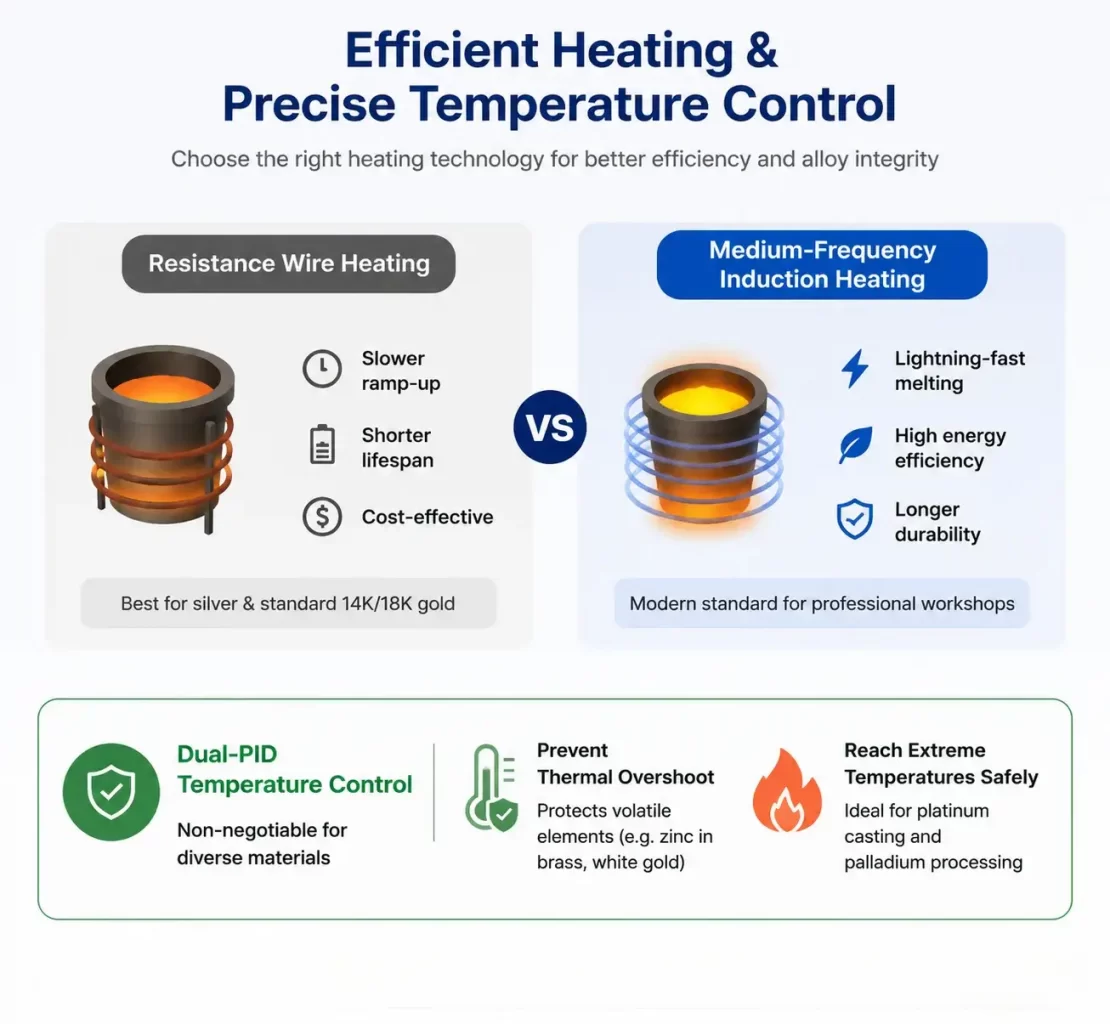
- Resistance Wire Heating: Utilizes traditional electrical elements. While cost-effective and suitable for lower-melting-point metals like silver or standard 14K/18K gold, it suffers from slower ramp-up times and a shorter heating-element lifespan under continuous industrial use.
- Medium-Frequency Induction Heating: The modern standard for serious workshops. Induction generators create an electromagnetic field that heats the metal directly within the crucible. This method offers lightning-fast melting cycles and excellent energy efficiency.
For studios working across diverse material portfolios, dual-PID temperature control is non-negotiable. It prevents thermal overshoot, protecting volatile alloy components (like zinc in brass or white gold) from boiling off, while safely reaching the extreme temperatures required for platinum casting and palladium processing.
Superior Porosity Prevention
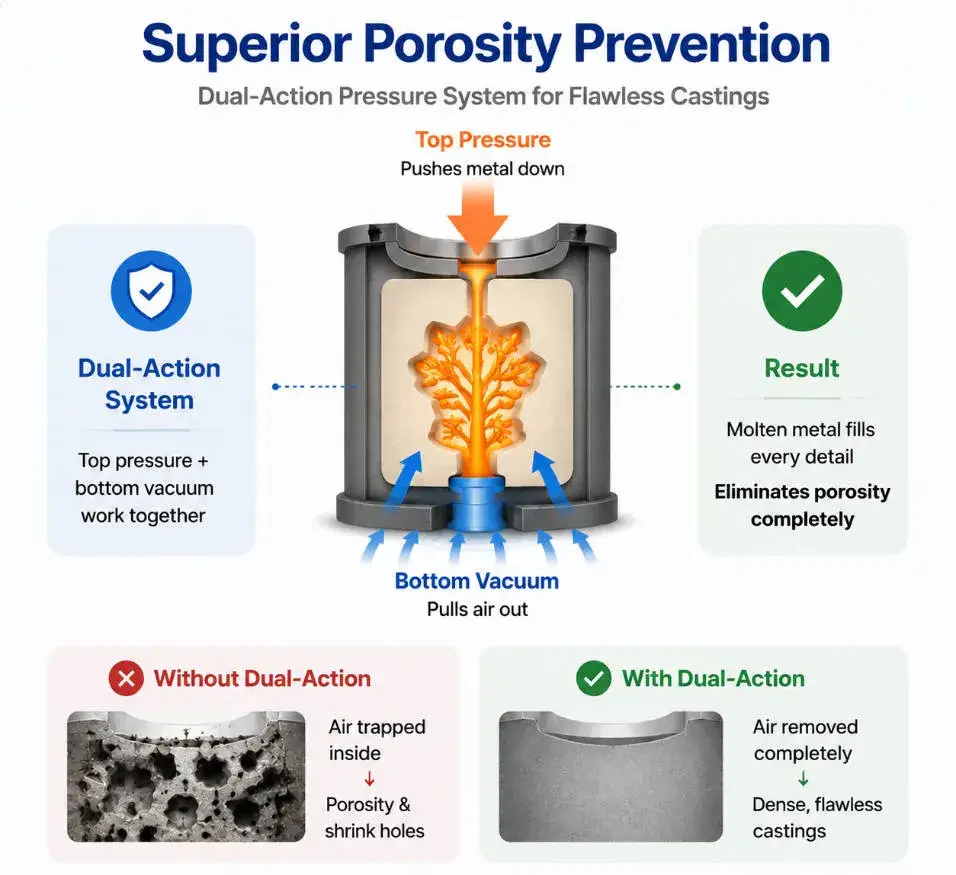
Subsurface and surface porosity are the archenemies of high-end finishing. Relying solely on gravity casting or weak, low-tier vacuum systems leaves air pockets trapped inside the investment mold. Professional-grade machines combat this through a dual-action mechanism: bottom-vacuum suction combined with top-side over-vacuum pressure.
By instantly evacuating the flask chamber while simultaneously applying positive pressure from above, the molten alloy is forced into the finest cavities before it can prematurely solidify, completely eliminating shrink holes and gas porosity.
Industrial-Grade Durability and Continuous Operation
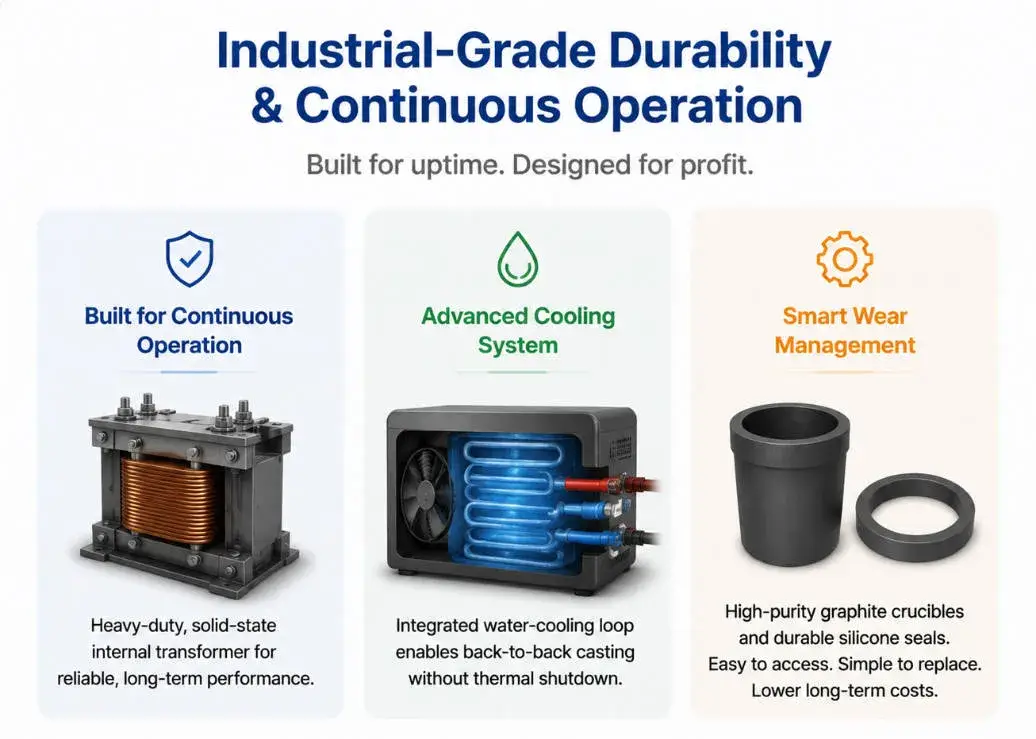
A studio’s profitability relies on uptime. Professional systems feature heavy-duty, solid-state internal transformers and integrated water-cooling loops that allow for back-to-back casting cycles without thermal shutdown. Furthermore, engineered wear management ensures that high-contact consumables, such as high-purity graphite crucibles and durable silicone seals, are easily accessible and simple to replace, keeping long-term operational costs predictable.
II. Top-Rated Jewelry Casting Machines by Technology Type
Different studio footprints and production volumes require distinct technical configurations. Selecting the right class of equipment ensures you don’t overpay for capacity you don’t use, or underpower your daily workflow.
Category A: Vacuum & Pressure Over-Vacuum Casting Machines
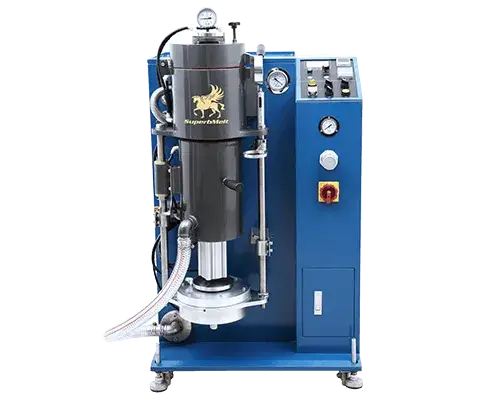
- Target Audience: High-end custom ateliers, independent designer studios, and specialized workshops demanding exquisite surface detail and handling large volumes of micro-pave settings or intricate openwork filigree.
- Key Advantages: Melting takes place in a fully sealed vacuum chamber, which prevents melt oxidation and scale buildup. By integrating an optional Argon gas shielding system, the alloy stays pristine. At the precise moment of the pour, the machine applies 2–3 bar of positive pressure from the top. This dual force eliminates porosity entirely, resulting in extremely dense castings that require minimal polishing and hold stone prongs perfectly.
- Representative Configurations: Integrated medium-frequency induction casting machines with automated pneumatic pressurization and digital gas management.
Category B: Compact Vacuum Casting & Stone-in-Wax Systems
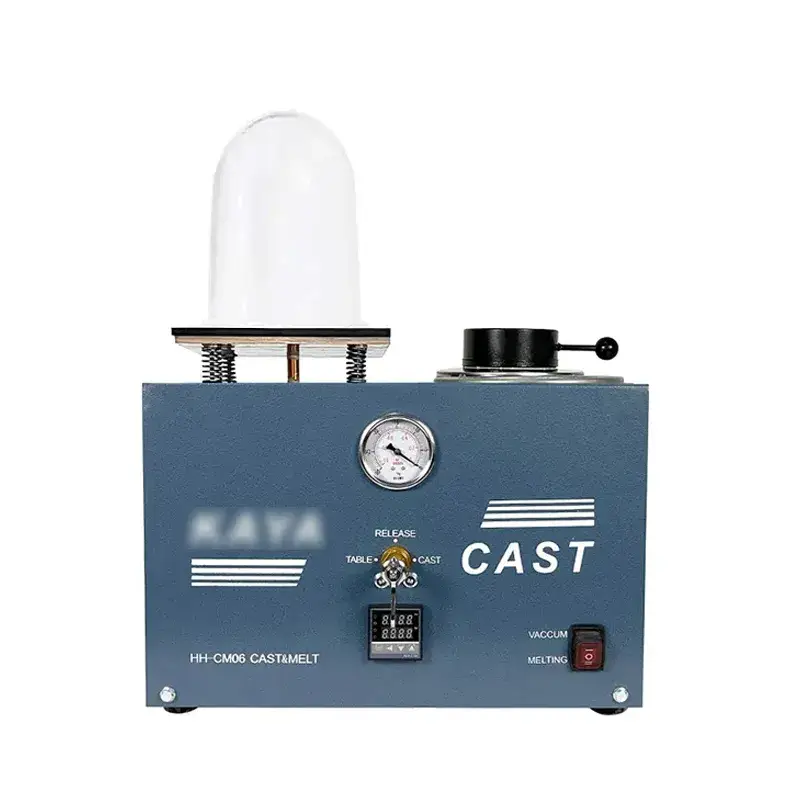
- Target Audience: Small-to-medium contract manufacturers, busy commercial workshops requiring rapid prototyping, and studios utilizing stone-in-wax casting techniques.
- Key Advantages: These systems feature a powerful, high-displacement bottom-suction vacuum system. They excel in workflow simplicity and offer excellent flask compatibility, accommodating various perforated and solid wall flasks. Because the cycle setup is rapid, it is the ideal configuration for high-frequency, small-batch, and multi-batch production schedules where turn-around speed is paramount.
Category C: High-Frequency Centrifugal Casting Machines
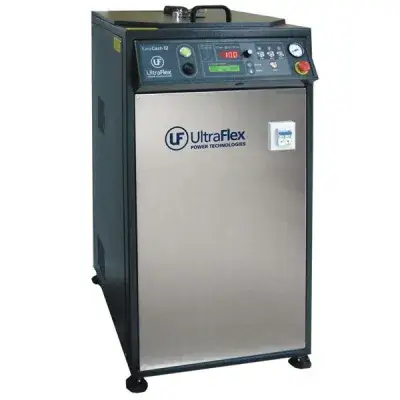
- Target Audience: Specialized industrial workshops and high-end horology or bridal studios focusing heavily on platinum (PT950), palladium, or specialized hard alloy jewelry.
- Key Advantages: High-melting-point metals possess high surface tension and cool incredibly fast. Centrifugal casting machines use high-frequency induction to liquefy the metal, then spin the arm at high RPMs. This immense centrifugal force overcomes the metal’s natural resistance to flow, forcing the liquid platinum into the outermost edges of the mold within fractions of a second for flawless filling.
III. Head-to-Head Comparison: Professional Studio Casting Equipment
To help your purchasing manager evaluate equipment capabilities at a glance, this structured data table breaks down the three primary tiers of professional jewelry casting systems:
| Core Specifications | Compact Studio Model | Pro Induction Model (Medium Production) | Industrial Heavy-Duty Pressurized Unit |
| Heating Technology | Resistance Wire / Rapid Induction | Medium-Frequency Induction | Closed-loop Smart Induction |
| Max Temperature | 1200°C (Gold/Silver/Copper) | 1600°C (Fully Platinum-Compatible) | 2000°C+ (Alloys/Special Precious Metals) |
| Pressure System | Bottom Vacuum Only | Top Argon Pressure + Bottom Vacuum | Smart Digital Pressure Control (Max 3-4 Bar) |
| Max Single-Batch Capacity | 500g Gold / 300g Silver | 2kg Gold / 1.5kg Silver | 4kg – 6kg Gold |
| Best Application Scenarios | Independent designers, master model making, small-batch customization | Precision micro-setting, high-end custom workshops, multi-metal processing | Large-scale B2B factories, mass contract manufacturing |
IV. Troubleshooting: Solving the Top 3 Casting Pitfalls in Professional Studios
Even with high-end equipment, mastering the casting environment requires solving common metallurgical variables. Professional machines provide the technical controls needed to troubleshoot these issues systematically.
Issue 1: How to eliminate micro-porosity on the casting surface?
- The Cause: Trapped ambient air inside the flask cavity or gas bubbles generated during the metal pour.
- The Solution: Ensure your machine utilizes an airtight chamber configuration with a high-cfm internal vacuum pump. The system must achieve deep vacuum levels instantly. When combined with premium-grade flanged silicone sealing rings, the air inside the investment plaster is entirely evacuated the split-second before the molten metal moves, leaving no gas behind to form surface pits.
Issue 2: What if complex prong settings or filigree details suffer from incomplete filling or missing edges?
- The Cause: Low fluid velocity or temperature drops causing the alloy to freeze before filling thin cross-sections.
- The Solution: Leverage the power of electromagnetic stirring inherent to medium-frequency induction heating. This stirring action homogenizes the alloy mixture, ensuring uniform heat throughout the melt. When paired with a top-side over-vacuum pressurization system, the molten metal is driven into the mold at an optimized velocity, guaranteeing that even microscopic claw prongs are fully formed.
Issue 3: Severe surface blackening or oxidation on 18K gold or palladium castings?
- The Cause: Oxygen exposure at elevated melting or pouring temperatures, leading to rapid metal oxidation.
- The Solution: Switch to a casting machine featuring an airtight melting chamber equipped with an automatic inert gas purging function. By flooding the chamber with nitrogen or argon gas prior to heating, you completely displace the oxygen. The metal melts and pours in an inert envelope, emerging from the investment with its natural metallic luster, significantly reducing acid pickling times.
V. Looking for a Reliable Jewelry Casting Equipment Manufacturer?
Choosing a hardware partner for your studio involves more than just buying a machine; it requires securing a reliable supply chain and robust manufacturing support. As a trusted global supplier and source manufacturer, JYBS delivers commercial-grade foundry solutions engineered to keep your production moving.
Factory-Direct Wholesale Pricing
By sourcing your workshop equipment directly from JYBS, you eliminate middleman markups and agent fees. This ensures your studio gets the highest return on investment (ROI) on heavy-duty machinery, giving you premium, factory-direct wholesale pricing while freeing up capital for precious metal inventory and custom designs.
Comprehensive Parts & Consumables Ecosystem
A casting line is only as fast as its consumables. To keep your workshop running seamlessly during peak production seasons, JYBS maintains a constant stock availability across a comprehensive system of critical casting accessories and companion equipment:
- High-purity graphite crucibles and protective quartz sleeves for clean melts.
- Premium-grade steel casting flasks (both solid and perforated walls).
- Companion digital equipment, including vacuum investment mixers for flawless, bubble-free plaster preparation.
Conclusion
A professional jewelry studio cannot afford the inconsistent yields, porosity issues, and design limitations imposed by low-end casting gear. Upgrading to a professional jewelry casting machine engineered with advanced induction heating, precise dual-PID temperature control, and a vacuum-pressure delivery system is the single most effective way to protect your workflow, reduce scrap rates, and elevate the quality of your finished jewelry.
Ready to optimize your production line with high-precision manufacturing equipment? Explore our complete line of industrial-grade machinery and source factory-direct, top-rated solutions tailored to your workshop’s exact specifications. Contact JYBS today to consult with our engineering team and get a comprehensive quote on your next studio workhorse.