

Why Material Science Labs Need a Specific Type of Rolling Mill
- The Sample Preparation Gap: While final-stage analytical testing often requires $50,000+ computerized mills, everyday metallurgical sample preparation requires a heavy-duty, cost-effective workhorse.
- Experimental Consistency: When researchers are preparing experimental titanium-copper alloys or reducing battery-grade lithium foil for initial trials, consistent thickness reduction is critical.
- Eliminating Human Variables: A laboratory mill must provide smooth, uninterrupted material feed to prevent hesitation marks or uneven work-hardening across the sample.
- Frame Rigidity: It requires massive frame rigidity to minimize roller deflection under heavy loads when pressing high-tensile materials.
- Controlled Adjustments: Researchers need highly controlled, incremental compression to record accurate data on yield strength and material deformation during the prep phase.
- The Professional Repurpose: A standard, cheap hobbyist mill cannot provide the repeatable data required. However, high-end professional jewelry mills, engineered with robust gear reduction and heavy chassis, have become the secret weapon for university labs looking for reliable, repeatable sample prep without the aerospace price tag.
Key Technical Specs for Material Science Applications
Consistency, structural immobility, and controlled reduction are the core requirements for laboratory-grade prep mills.
| Specification | Recommended Range | Why It Matters for Science Labs |
| Reduction Control | 4:1 Gear Ratio or Geared Handwheel | Essential for highly controlled, incremental compression. A 4:1 ratio allows the researcher to reduce sample thickness smoothly without over-compressing the experimental foil. |
| Drive System | Motorized (1HP – 1.5HP) or Geared Manual | Consistent speed is vital. Motorized mills eliminate human hesitation marks during the roll, ensuring perfectly uniform samples for tensile testing. |
| Frame Rigidity | Heavy-Duty Solid Metal / Cast Chassis | Microscopic voids or weak frames will flex. A massive structural weight ensures minimal roller deflection when compressing high-tensile non-ferrous alloys. |
Top 3 Rolling Mill Recommendations for Material Science Labs
Engineered for strict tolerances and verifiable data collection, these mills belong in testing facilities:
1. Flat Rolling Mill 130MM(L)65MM(D) – JYBS
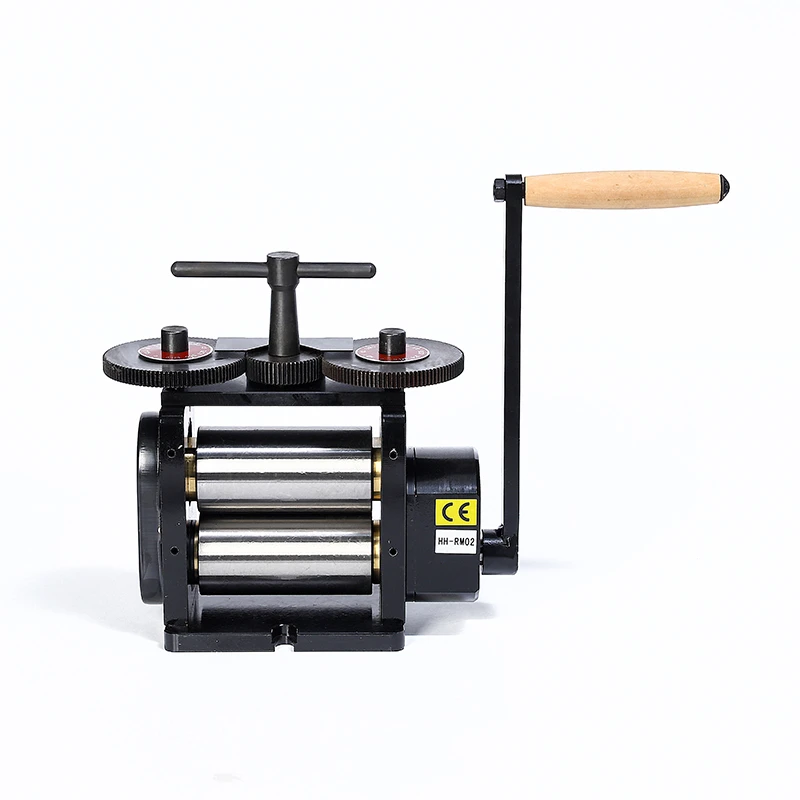
- Key Specs: 130mm dedicated flat area, 65mm roller diameter, 4.5mm maximum opening, 4:1 Gear Ratio, Solid Metal construction.
- Verdict: The perfect entry-level manual press for small-scale bench testing and foil preparation. By dedicating the entire 130mm width to a flat surface, researchers can prep wide foil samples without edge-interference. The robust metal frame and 4:1 gear reduction allow for highly controlled, incremental compression of experimental foils, making it ideal for low-volume, high-precision thickness reduction.
2. Single Sided 1.5HP Desktop Electric Rolling Mill – JYBS
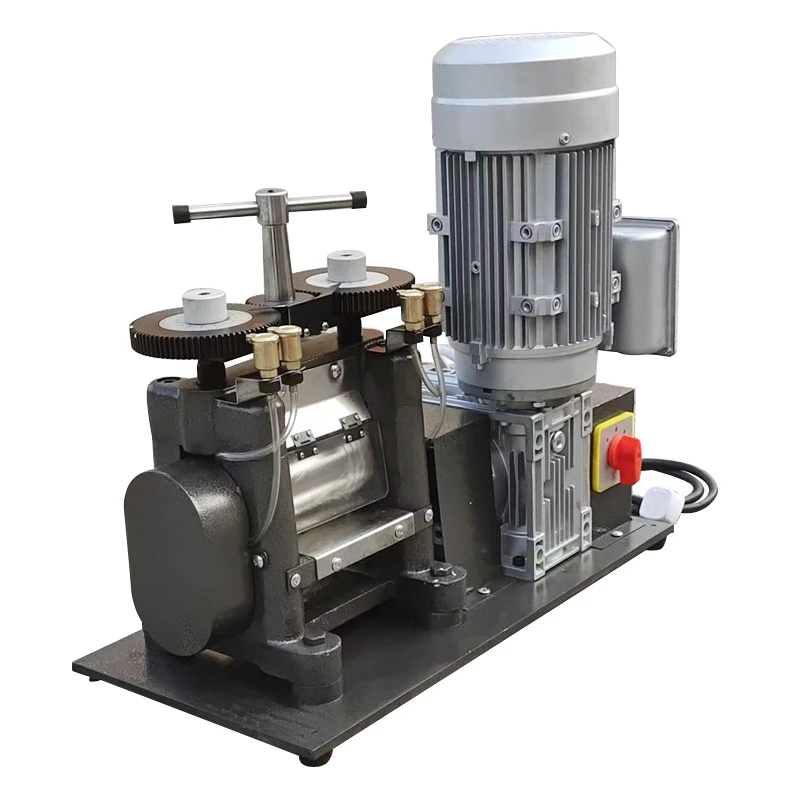
- Key Specs: 1.5HP (1.125KW) continuous motor, 220V, Heavy-duty Chrome Steel Rollers (70*140mm), 70KG structural weight.
- Verdict: The consistent-feed workhorse for advanced thinning experiments where human variables must be eliminated. The powerful 1.5HP motor ensures a constant, unwavering rotational speed. Combined with the ultra-hard, oversized Chrome Steel rollers and a 70KG chassis that prevents vibration, this mill allows researchers to draw uniform samples without the inconsistent pressures caused by hand-cranking.
3. US Made 1HP Double Heads Electric Rolling Mill 130MM – JYBS
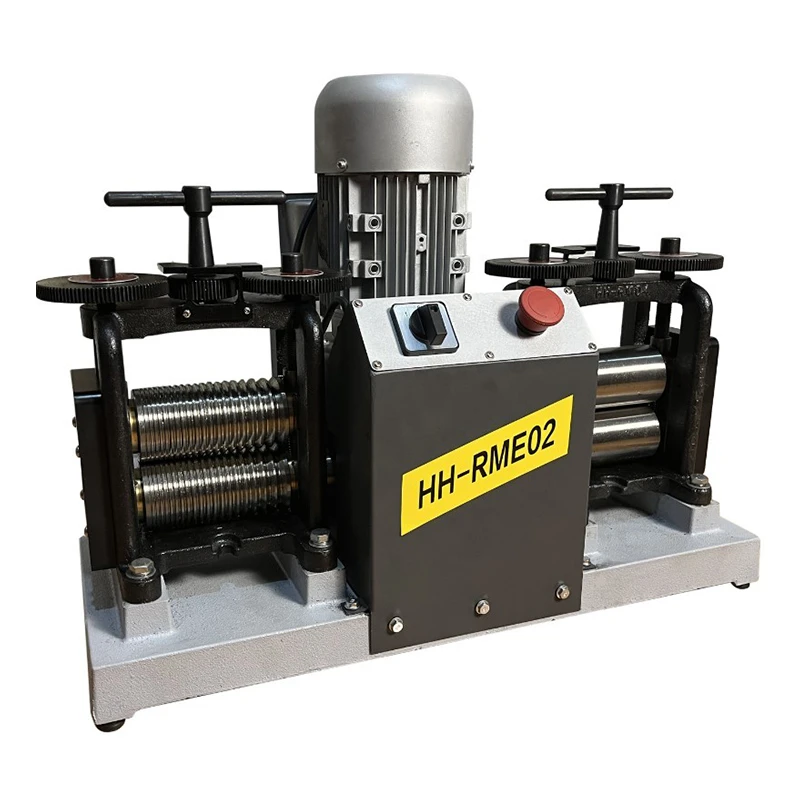
- Key Specs: 5mm maximum opening, 130mm flat area, robust structural design, versatile wire profiling.
- Verdict: The ultimate high-capacity manual workstation for university metallurgy labs. Despite its roots in high-end jewelry crafting, its heavy-duty structural mass guarantees exceptional frame rigidity. This versatile setup allows research facilities to run parallel prep work on both wide sheet samples and non-ferrous experimental alloy rods, drastically improving the workflow of daily material deformation studies.
Maintenance Tips for Material Science Labs
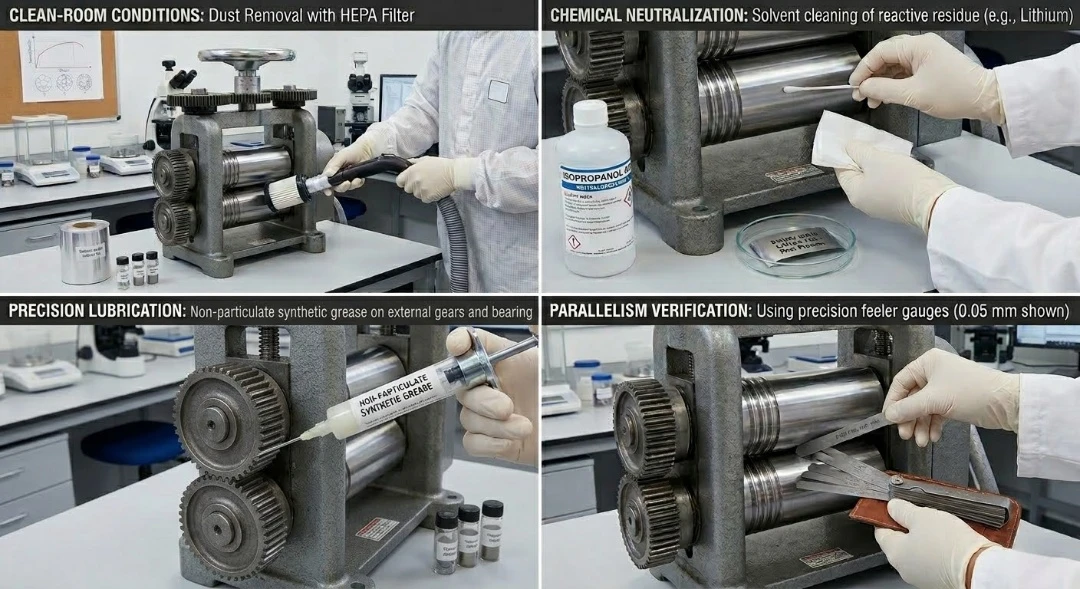
- Clean-Room Conditions: Laboratory mills must be kept in clean-room conditions to ensure data integrity.
- Chemical Neutralization: Because researchers often test exotic or highly reactive materials (like magnesium or battery-grade lithium), the rollers must be chemically neutralized and cleaned with laboratory-grade solvents after every experiment to prevent cross-contamination.
- Precision Lubrication: The adjustment threads and bearing blocks must be lubricated with non-particulate synthetic grease to ensure smooth, consistent adjustments.
- Parallelism Verification: Regularly verify roller parallelism using industrial feeler gauges to ensure your samples remain perfectly uniform.
Frequently Asked Questions about Material Science Tools
- Q: Why use a high-end jewelry mill for a university material science lab?
- A: Cost-efficiency and reliability. While ultimate final-stage analysis requires computerized machinery, high-end professional mills offer the exact heavy-duty frame rigidity and reliable gear reduction needed for 90% of daily sample preparation at a fraction of the cost.
- Q: What is roller deflection, and why does it matter?
- A: Deflection happens when the center of the steel rollers bows upward under immense pressure. It causes the resulting metal sheet to be thicker in the middle than on the edges. Heavy-duty frames mitigate this issue during prep work.
- Q: Can we roll high-tensile hardened steel samples on these mills?
- A: It is not recommended. As a rule of metallurgy, your rollers should be significantly harder than the material you are rolling. These mills are optimized for non-ferrous experimental alloys, precious metals, lithium, copper, and advanced composites.
- Q: How does a motorized mill improve experimental data?
- A: Manual hand-cranking naturally causes micro-pauses (hesitation marks) which can lead to uneven work-hardening in the sample. A motorized mill pulls the material through at a constant speed, ensuring uniform grain structure for tensile testing.
Ready to upgrade your material testing capabilities?
Request a Quote. Our engineering team will provide a comprehensive technical spec sheet and formal quote for your university or lab procurement within 3 hours.