

Why Jewelry Hobbyists Need a Specific Type of Rolling Mill
- Studio Challenges: Outfitting a home studio or spare bedroom presents distinct challenges that commercial goldsmiths never face, such as the inability to bolt 150-pound machines to concrete floors.
- Space and Budget Constraints: Hobbyists typically do not have the budget for specialized, single-purpose mills and require an “all-in-one” solution.
- Portability and Mounting: A home jeweler needs a machine lightweight enough to be mounted to a sturdy desk.
- Mechanical Performance: The mill must be sound enough to process sterling silver and copper without causing severe shoulder strain.
- Quality Standard: “Hobbyist” should never mean “low quality,” as cheap, imported direct-drive mills often feature soft cast-iron rollers that pit easily.
- Material Durability: Cheap rollers will instantly pit if used on work-hardened brass; therefore, a mill must feature true HRC 60+ hardened steel rollers.
- Mechanical Advantage: A proper home studio mill must feature a 4:1 reduction gear to compensate for the lack of a heavy jeweler’s bench and to prevent the physical exhaustion of drawing square wire.
- Versatility: The mill should utilize a combination (flat/wire) configuration to maximize versatility within a small footprint.
Key Technical Specs for Home Studio Applications
For the hobbyist, footprint, mechanical assistance, and versatility are the ultimate priorities.
| Specification | Recommended Range | Why It Matters for Hobbyists |
| Gear Ratio | 4:1 Reduction Gear | Essential. It allows you to roll metal smoothly without needing to throw your entire body weight into the crank, which can destabilize a home workbench. |
| Roller Configuration | Combination (Flat/Wire) OR Dedicated Flat | Most home jewelers need a combination mill to flatten sheet and draw wire on the same machine to save space. However, hobbyists focused strictly on metal stamping or texture rolling should opt for a dedicated flat mill to maximize their usable working width. |
| Mounting Footprint | Compact (Under 10×10 inches) | Must be small enough to be C-clamped or bolted to a heavy wooden desk or a portable jeweler’s bench. |
Top 3 Rolling Mill Recommendations for Jewelry Hobbyists
Engineered for the home environment without sacrificing metallurgical capability:
1. Durston® DRM Rolling Mills DRM C100RE
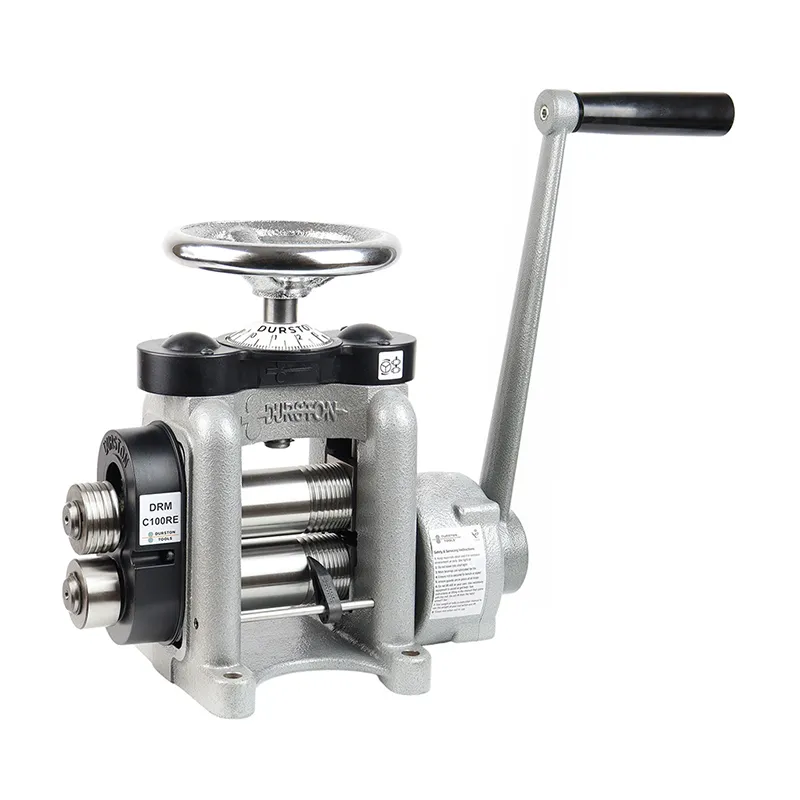
- Specs: 100mm combination width (65mm flat area, 9 square grooves), 4:1 Gearbox, Max sheet thickness 5.5mm, 29KG.
- Verdict: The gold standard for spare-bedroom studios. This is the ultimate professional tool scaled for home use. The self-lubricating 4:1 gearbox gives maximum efficiency for rolling materials up to 5.5mm or wire up to 7mm. The included side extension rollers (featuring 4 half-round profiles) provide unmatched flexibility for creating D-shaped ring bands without needing a separate machine.
2. Durston® Mini Rolling Mills Agile C110
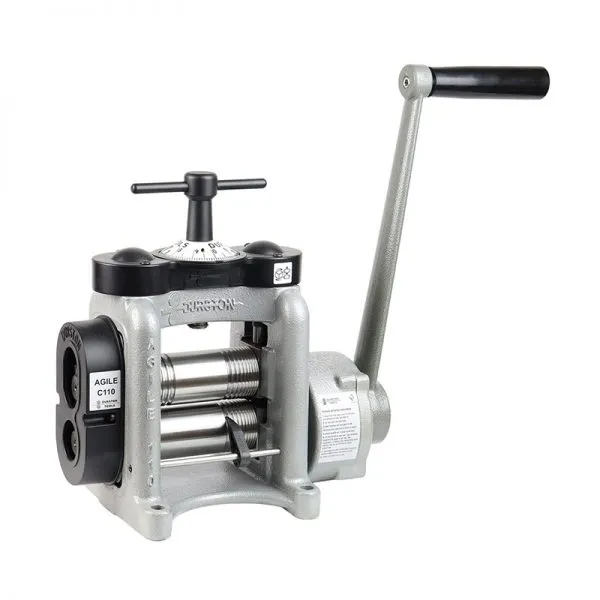
- Specs: 110mm combination width (50mm flat area, 4 half-round, 9 square grooves), 4:1 Gearbox, Max sheet thickness 5.5mm, 26KG.
- Verdict: An exceptional choice for professional-quality results. It features fully supported bearing blocks that are self-lubricating and completely maintenance-free, ensuring the best possible rolled finish. The 110mm width is a highly versatile sweet spot, packing flat rolling, square grooves, and half-round grooves into a single, smooth-operating footprint protected by safety guards.
3. Flat Rolling Mill 130MM(L)*65MM(D) – JYBS
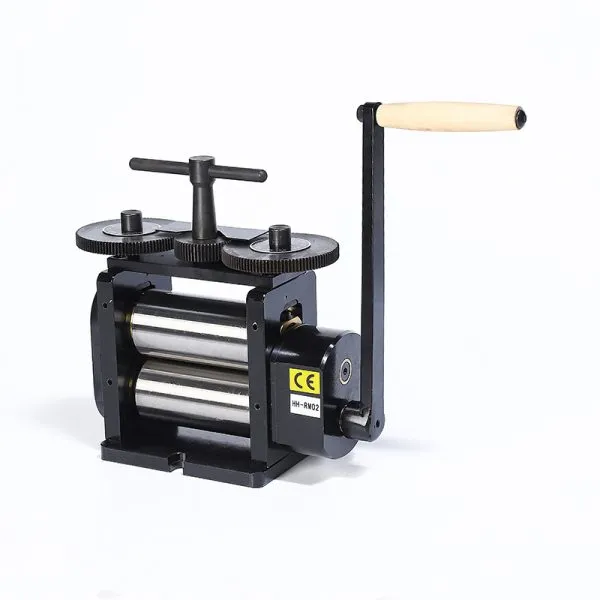
- Specs: 130mm dedicated flat width, 4:1 Gear Ratio, Max Opening 4.5mm, 65mm roller diameter, 23KG.
- Verdict: The ultimate specialized choice for hobbyists focused entirely on metal stamping, etching, and sheet fabrication. While combination mills are the standard “all-in-one” home solution, paying for wire grooves you will never use wastes valuable roller space. By opting for a dedicated flat mill, you gain a generous 130mm of uninterrupted rolling area. Furthermore, at a manageable 23KG, it provides excellent standalone stability on a sturdy home desk, utilizing the 4:1 reduction gear to easily imprint textures without requiring the machine to be bolted to a concrete floor.
Maintenance Tips for Home Workshops
Home studios, especially those in garages or basements, are prone to severe temperature and humidity fluctuations that can damage precision equipment. Here is how to maintain your rolling mill in these environments:
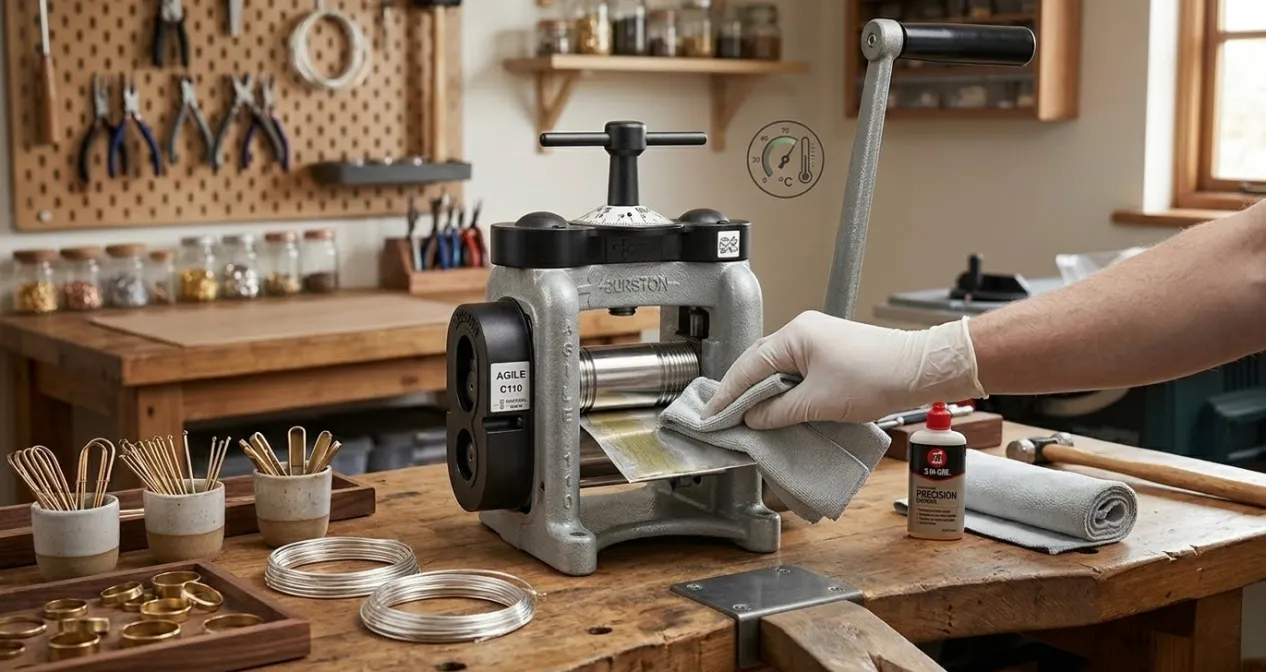
- Environmental Risk: Condensation is the absolute enemy of a rolling mill, as humidity leads to moisture buildup on metal surfaces.
- Preventing Flash Rust: If a mill sits idle for weeks between projects, flash rust will form on the steel rollers, potentially ruining their finish.
- Post-Use Cleaning: After every use, you must wipe the rollers with a microfiber cloth to remove any debris or moisture.
- Protective Coating: Apply a layer of 3-in-One oil or a specialized rust inhibitor to the rollers to create a barrier against oxidation.
- Relieving Tension: Never leave tension on the rollers when the machine is not in use.
- Bearing Protection: Always back the T-bar off by two full turns when finished; this prevents “flat-spotting” the internal bronze bearings.
Frequently Asked Questions about Home Studio Tools
- Q: Can I use a C-clamp to mount my rolling mill to a kitchen table?
- A: It is highly discouraged for heavy rolling. The torque generated will easily damage a standard table and cause the mill to slip, creating a safety hazard. Always bolt it to a dedicated, heavy workbench.
- Q: Why is my copper sheet getting stuck in the mill?
- A: You have reached the maximum work-hardening limit of the copper, or you are trying to take too large of a bite. You must stop, anneal the copper to a dull red, quench it, pickle it, and try again with a smaller reduction.
- Q: Are the cheap $150 green rolling mills online worth buying?
- A: No. They typically lack hardened rollers and use inferior cast gears that shear under pressure. A single pass of un-annealed metal can permanently dent the rollers, ruining the machine.
- Q: How do I make half-round wire for ring bands?
- A: You need a mill with side-extension rollers that feature half-round grooves. You roll your square wire through these external grooves to instantly create D-shaped ring stock.
- Q: Can I roll coins in my hobbyist mill?
- A: Absolutely not. Minted coins (especially cupronickel) are incredibly hard and will permanently dent HRC 60 rollers. Leave coin rolling to specialized industrial presses.
Ready to upgrade your Home Studio setup?
Get a Quick Quote. Our team will provide a detailed quote sheet within 3 hours.