

If you spend several hours a day looking through a standard pocket magnifier, you already know the physical toll it takes. By the end of a long grading shift or bench session, eye strain, blurred vision, and tension headaches are incredibly common.
Many professionals assume this fatigue is just an unavoidable part of the job. However, the root cause is often optical restriction. Traditional 12mm or 15mm compact loupes force your eyes into an unnatural, strained focus. Shifting to a 21mm large aperture lens fundamentally changes the way light enters your eye, eliminating the need to squint and drastically reducing occupational eye strain.
The Math Behind a 21mm Lens: More Light, Less Effort
The clear diameter of a lens directly dictates your viewing comfort. Moving from a restricted 15mm compact lens to a professional 21mm large aperture lens yields immediate physical advantages:
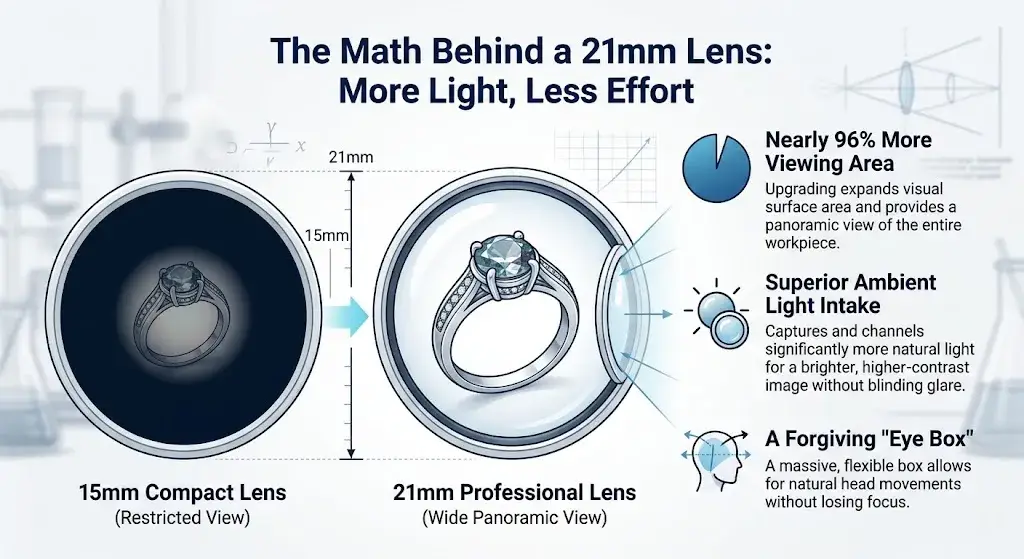
- Nearly 96% More Viewing Area: Upgrading from a 15mm aperture to 21mm expands your total visual surface area by nearly 96%—practically doubling your field of view. Instead of seeing only a tiny section of a ring or gemstone, you get a broad, panoramic view of the entire workpiece at once.
- Superior Ambient Light Intake: Larger lenses naturally capture and channel more light. This delivers a significantly brighter, higher-contrast image to your eye without relying on harsh, built-in LED lights that create blinding glare on polished precious metals.
- A Forgiving “Eye Box”: Small lenses have a microscopic sweet spot. If your eye or hand moves even one millimeter, the image cuts out or blurs. A 21mm lens creates a massive, flexible “eye box” that allows for natural head movements without losing focus.
Overcoming Fatigue: The Health Benefits at the Workbench
For a professional performing high-volume quality control or intricate repairs, a larger viewing window provides critical physiological benefits:
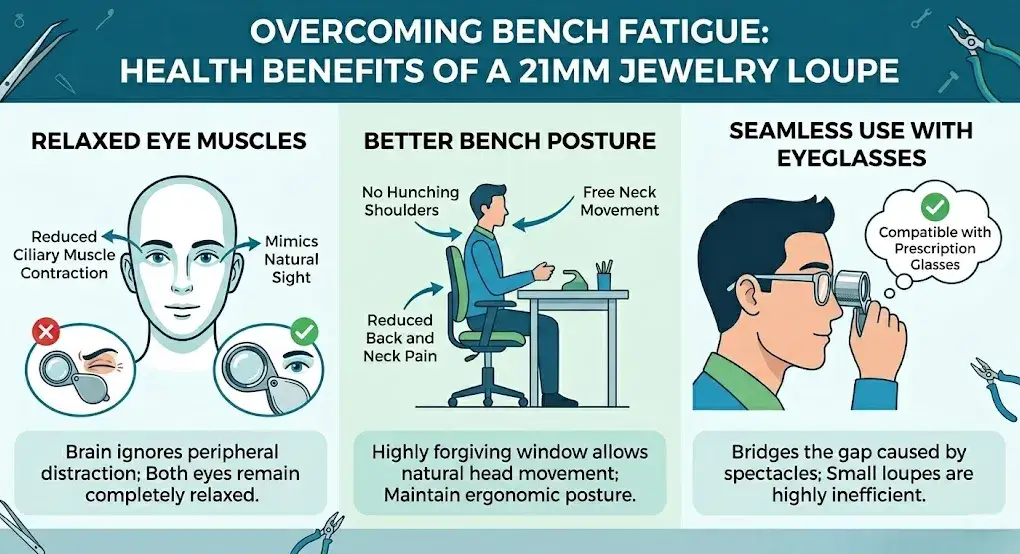
- Relaxed Eye Muscles: When using a tiny lens, your brain has to work hard to ignore your peripheral vision, which forces your ciliary eye muscles into a constant, tense contraction. A 21mm lens mimics normal, natural sight, allowing both eyes to remain completely relaxed.
- Better Bench Posture: Because the 21mm window is highly forgiving, you no longer need to hunch your shoulders and freeze your neck in a rigid position to keep the image aligned. You can sit in an ergonomically correct posture, reducing lower back and neck pain.
- Seamless Use with Eyeglasses: For appraisers who wear prescription glasses, small loupes are highly inefficient because the spectacle lens blocks the eye from getting close enough to the magnifier. A 21mm lens is wide enough to bridge this gap comfortably.
Technical Comparison: 21mm Aperture vs. Restricted Optics
| Feature | 21mm Large Aperture | 18mm Industry Standard | 12mm–15mm Compact |
| Visual Comfort | Maximum (No squinting) | Moderate | Low (Causes rapid eye fatigue) |
| Light Gathering | Superior (Naturally bright) | Average | Poor (Requires forced illumination) |
| Head Movement | Highly Forgiving | Standard | Restrictive (Must remain perfectly still) |
| Best Workflow Role | All-Day Bench Work & Sorting | Lab Grading | Quick Field Spot-Checks |
Top Recommendations for High-Comfort Inspection
1. Triplet Loupe with Rubber Grip
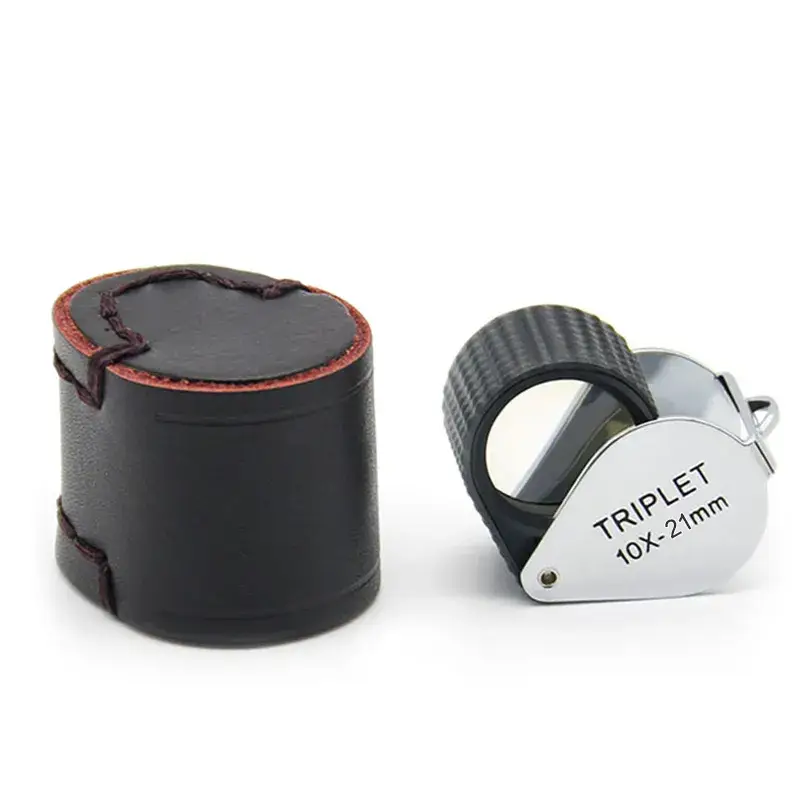
- Technical Specifications: 10X Magnification | 21mm Lens Diameter | 1″ Focal Distance.
- Eye Comfort Engineering: Built with a premium optical triplet lens that provides an exceptional depth of field with minimal glare. The lens barrel features a specialized flat black interior that actively prevents color distortion and controls light scattering, significantly increasing color transmission accuracy. Outfitted with heavy-duty ridged rubber sides, it guarantees a rock-solid grip, allowing your hand and ciliary eye muscles to remain completely relaxed during continuous sorting.
- Best Suited For: Long-duration diamond & gemstone grading, high-volume bench jewelry magnification, watchmaking, and general precision workshop repair.
2. Diamond Triplet Loupe
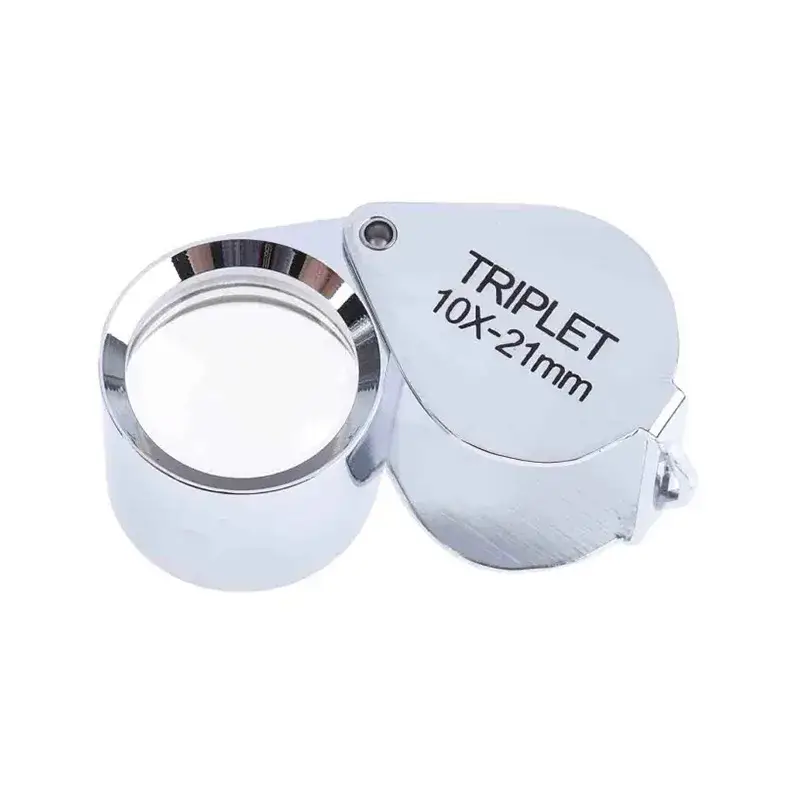
- Technical Specifications: 10X / 15X / 20X Magnification Options | 21mm Lens Diameter (Flagship 10X Edition) | Compact Dimensions (1.54 x 1.3 x 1.39 inches).
- Eye Comfort Engineering: A professional-grade instrument engineered with an advanced 3-lens triplet system. The flagship 10X configuration features an expansive 21mm viewing profile that drastically reduces spherical aberration, ensuring perfect edge-to-edge flatness and absolute sharpness across the entire field of view. Its unique, smooth geometric shape is highly ergonomic, allowing the housing to rest comfortably in the eye socket to promote correct bench posture. Features a classic round chrome-plated swing-away protective case and a practical integrated eyelet for chain attachment.
- Best Suited For: Strict diamond cut symmetry analysis, raw stone surface evaluations, authoritative gemological laboratory appraisals, and high-magnification configurations ideal for reading micro laser inscriptions on diamond girdles.
Frequently Asked Questions
Q: Does a larger 21mm lens mean the magnification is stronger?
A: No. Magnification (e.g., 10x) and lens diameter (21mm) are completely separate physics specifications. Magnification controls how big the object looks, while the diameter controls how wide and comfortable your viewing window is.
Q: Why are 21mm triplet loupes usually more expensive than smaller ones?
A: Grinding large pieces of optical glass to a steep curve without introducing distortion or blur at the outer edges is highly difficult and requires precision alignment during the triplet bonding process.
Q: Is a 21mm lens too bulky to carry in a pocket?
A: Not at all. While the optical glass is wider to prevent eye strain, professional housings utilize engineered lightweight alloys to ensure excellent portability without compromising on the robust, balanced feel required for bench tools.
Q: Do I need a built-in LED light with a 21mm loupe?
A: Generally, no. Because the wider 21mm aperture captures significantly more natural ambient light from your workshop or lab environment, the image is naturally bright, reducing the need for distracting battery-powered lights.
Q: Will a 21mm lens help if I wear multi-focal or progressive spectacles?
A: Yes. The expanded viewing area makes it much easier to line up the magnifier with the exact optical center of your corrective lenses compared to a tight, narrow compact loupe.
Strategic B2B Partnerships
JYBS operates as a specialized supplier for global jewelry tool manufacturers and industrial laboratories. We focus on supplying high-precision instruments that strictly adhere to the rigorous technical standards of professional work environments.
Looking for Wholesale Pricing or Bulk Procurement?
- B2B Bulk Orders: Customized tiered pricing structures designed to scale for tool retailers, educational institutions, and gemological laboratories.
- Worldwide Shipping: We support worldwide procurement with reliable global shipping. Our professional tools—including industry-standard loupes—can be delivered directly to international buyers and facilities across the globe.
- Technical Consulting: Acquire the detailed specification sheets and high-volume wholesale quotes you require within a guaranteed 3-hour turnaround.
Contact our B2B Sales Team for a Professional Quote