

In 2026, soaring precious metal costs and rising custom design demands make traditional manual jewelry production a major bottleneck. Upgrading to semi-automated, high-precision machinery is essential to eliminate gold loss, slash lead times, and maintain batch consistency. Here is our comprehensive commercial buyer’s guide to the top-rated jewelry-making machines across five essential production workflows.
I. 2026 Commercial Jewelry Equipment Selection Framework
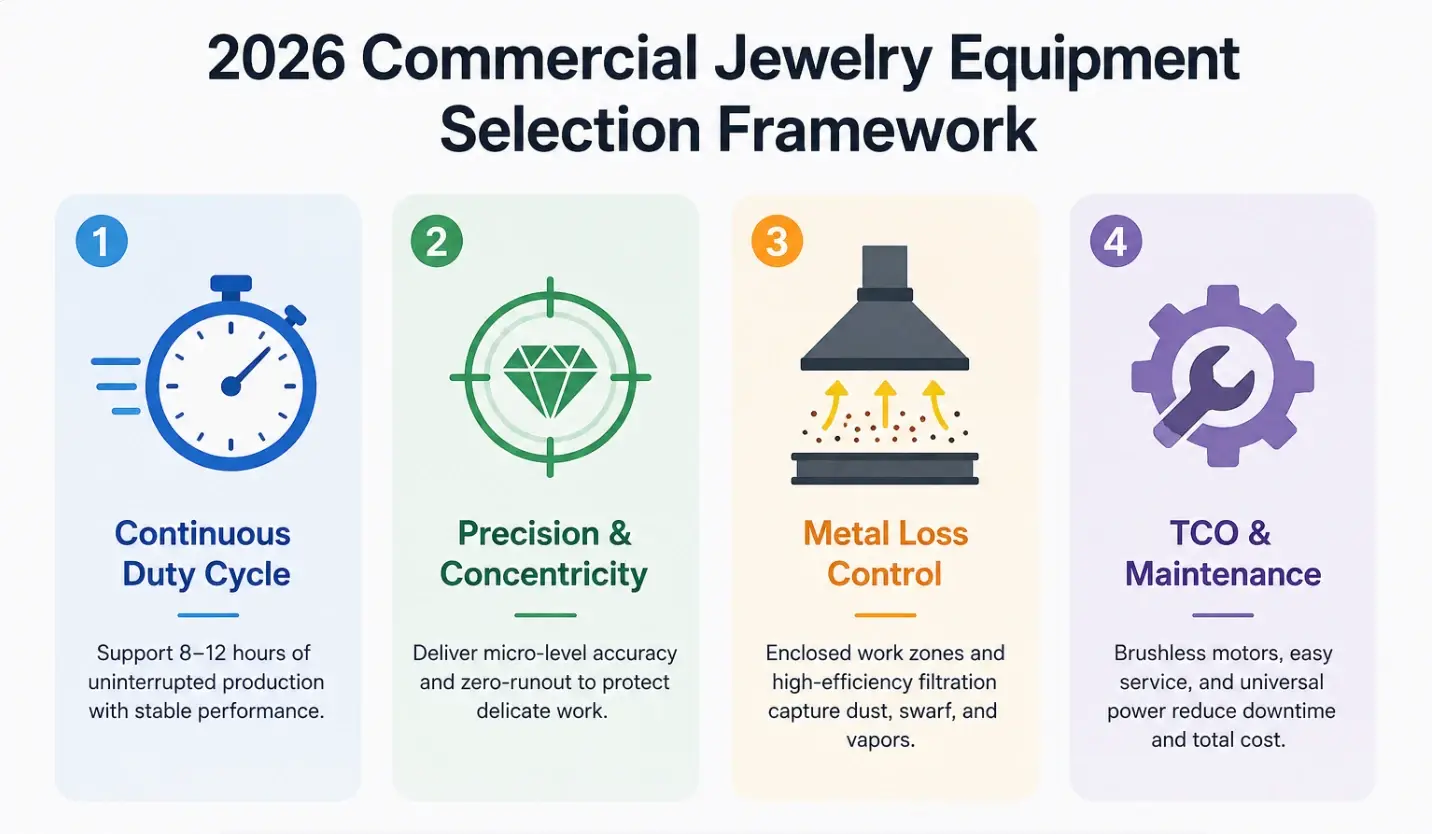
Before investing in workshop equipment, evaluate each system against four foundational operational benchmarks:
- Continuous Duty Cycle: Machinery must support 8 to 12 hours of uninterrupted daily production without thermal throttling, loss of torque, or mechanical fatigue.
- Precision & Concentricity: Spindles, rollers, and optical galvos must deliver micro-level tolerances and zero-runout performance to protect delicate gemstone mountings.
- Metal Loss Control: Equipment must feature enclosed work zones and high-efficiency filtration systems to capture precious metal swarf, vapor, and airborne dust.
- TCO & Maintenance: Prioritize brushless motor architecture, readily accessible wear parts, and universal power compatibility (110V/220V) to minimize lifelong operational downtime.
II. Best Commercial Jewelry Making Machines 2026
Module A: Precision Melting and Vacuum Pressure Casting Equipment
Vacuum casting quality directly determines casting density and whether molten precious alloys fill intricate filigree without gas porosity.
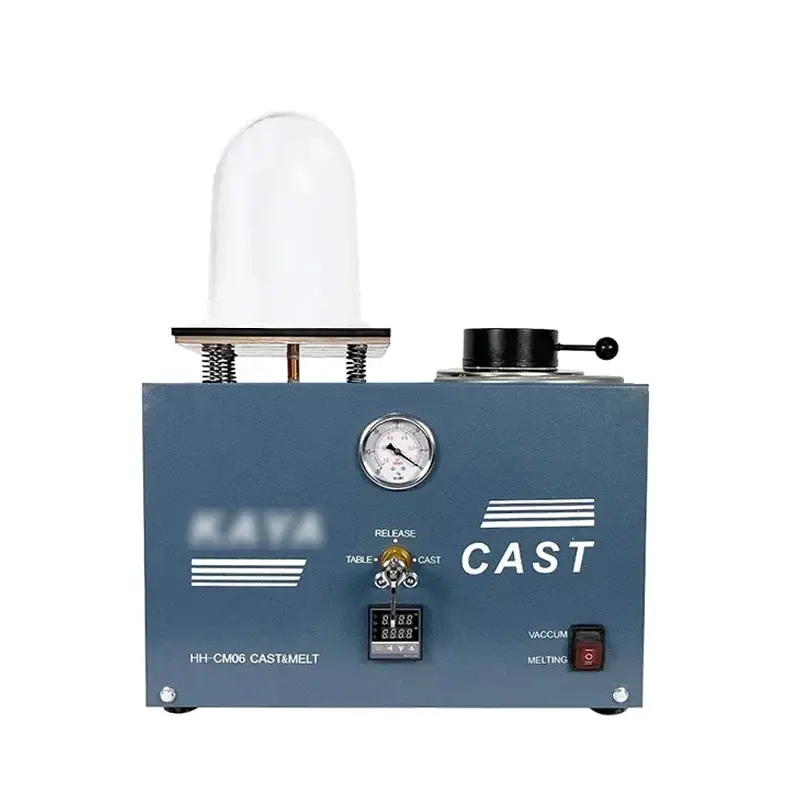
- Top Commercial Pick: All-in-One Desktop Vacuum Melting & Suction Casting Machine (HH-CM06)
- Key Specifications:
- 1500W digital PID melting furnace + 400W integrated vacuum pump
- Compatible with casting flasks up to 4″ x 7″; includes 200 x 200 mm investing table and 195 x 250 mm thickened bell jar
- Universal 110V/220V single-phase power; compact 47 x 50 x 36 cm footprint (39 kg gross weight)
- Key Advantages:
- 3-in-1 Closed-Loop Workflow: Integrates slurry degassing, metal melting, and vacuum-assist suction casting into a single unit, saving workshop space and equipment setup costs.
- Defect-Free Castings: Deep-vacuum degassing removes air from investment plaster, while negative-pressure suction forces molten metal into fine prongs to eliminate porosity.
- Ideal Applications: Custom goldsmith workshops, batch production of ring and pendant trees, and small-scale casting of K-gold, silver, and copper alloys.
- Key Specifications:
Module B: Metal Rolling & Wire Forming Equipment
Rolling mills compress metal grain structures evenly, transforming raw cast ingots into uniform sheet, wire, and sizing stock.
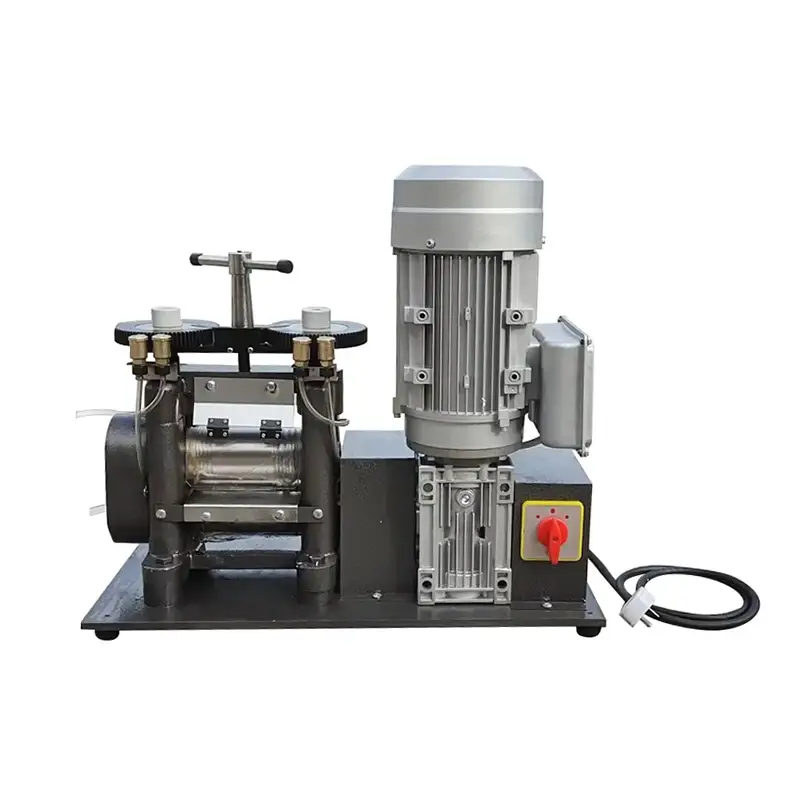
- Top Commercial Pick: 1.5HP Benchtop Commercial Electric Rolling Mill (RLFE0030)
- Key Specifications:
- 1.5HP / 1.125kW high-torque industrial motor
- Precision-ground chrome steel rollers (70 x 140 mm)
- Forming capacity: 70 mm flat sheet width; 1–8 mm square wire grooves (11 settings); 4 mm half-round profile
- Heavy-duty vibration-dampening chassis (300 x 600 x 530 mm; 70 kg net weight)
- Key Advantages:
- Constant-Torque Breakdown: Driven by a continuous-duty motor that eliminates the physical strain of manual hand-cranks while guaranteeing uniform thickness without wavy edges.
- All-in-One Stock Preparation: Integrates flat sheet, square wire, and half-round wire rolling, covering initial ingot breakdown through pre-drawing stages.
- Ideal Applications: Production goldsmith workshops, gold/silver bar breakdown, and batch wire pre-forming for custom jewelry studios.
- Key Specifications:
Module C: Precision Marking, Engraving, and Laser Cutting Equipment
Fiber lasers have largely replaced mechanical cutters for fine personalization, hallmark authentication, and complex sheet cutout manufacturing.
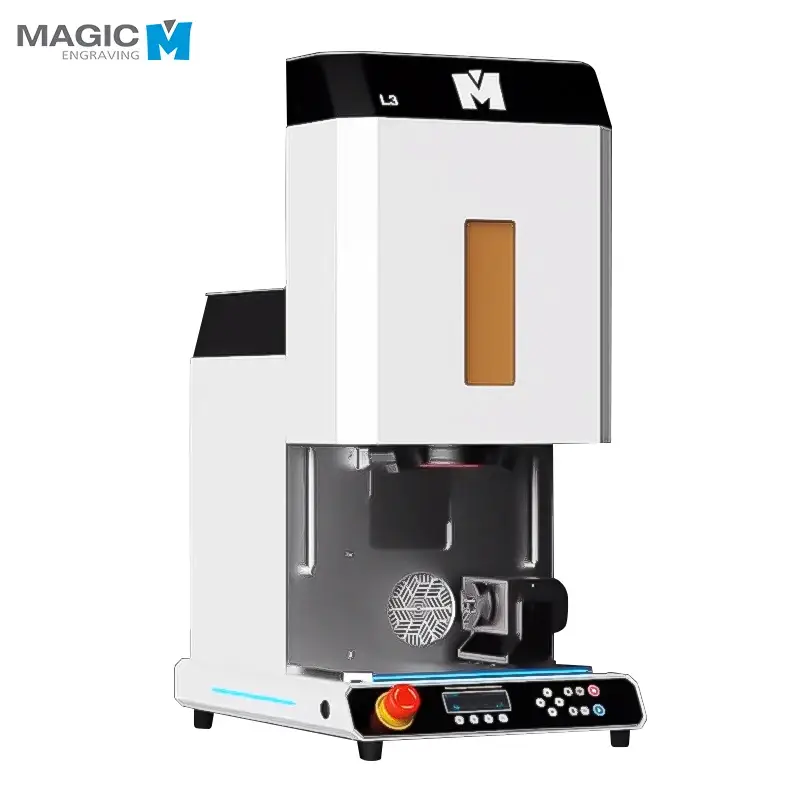
- Top Commercial Pick: MAGIC® L3 Fully Automatic Fiber Laser Engraving & Cutting Machine
- Key Specifications:
- Ytterbium MOPA fiber laser source (available in 20W, 30W, 60W, and 100W configurations)
- Built-in high-resolution camera vision system with automatic Z-axis focusing
- Wireless Load-N-Go rotary docking system with automatic angle-tilting functionality
- Enclosed Class-1 safety chassis with native MagicEngrave™ software and low-noise adaptive cooling
- Key Advantages:
- Vision-Guided Zero-Waste Setup: Operators can overlay engraving files directly onto jewelry pieces via the on-screen live camera view, eliminating positioning errors on expensive stock.
- Automated 360° Rotary Clamping: The wireless rotary axis automatically tilts to engrave ring interiors, outer bands, and bangles without manual indexing.
- High-Power Sheet Piercing: Higher wattage models (60W/100W) double as precision blanking cutters for metal sheets up to 1.2 mm thick.
- Ideal Applications: Retail personalization stations, hallmark authentication labs, and volume manufacturing of cut-out nameplates and deep-relief medallions.
- Key Specifications:
Module D: Mass Finishing & High-Gloss Surface Treatment Equipment
Surface finishing accounts for a large share of manual bench labor. A dual-stage automated tumbling and dust-collection approach delivers maximum efficiency.
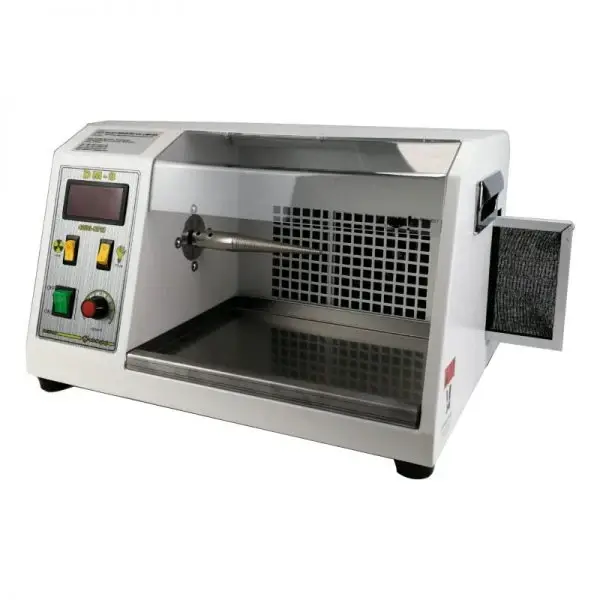
- Top Pick 1 (Mirror-Finish Polishing & Dust Recovery): DM-8 Variable-Speed Dust-Collecting Polisher (PMGA0034)
- Key Specifications: 550W (1/2 HP) industrial motor; 0–4200 RPM stepless variable speed; fully sealed steel dust-collection hood (13 kg net weight; 220V).
- Key Advantages: Maintains constant spindle torque under heavy buffing pressure, providing optimal surface speeds for high-gloss rouge finishing. The integrated suction unit captures buffing lint and recovers precious metal dust with high filtration efficiency.
- Ideal Applications: Final mirror-finish polishing, refurbishment benches, and gold/silver dust reclamation.
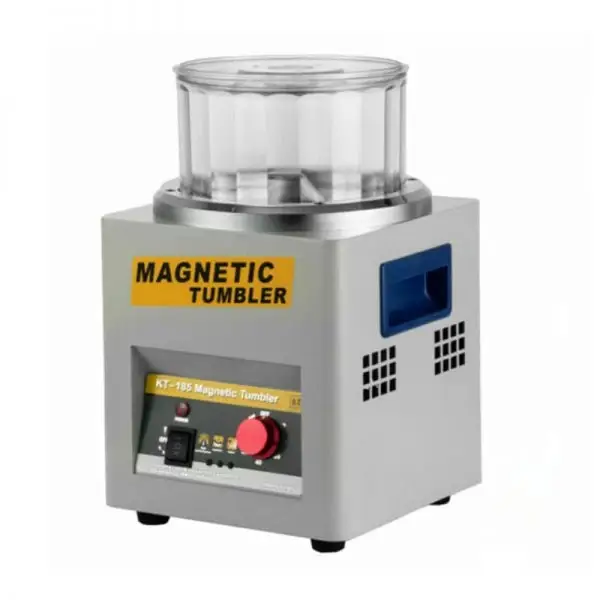
- Top Pick 2 (Recess Deburring & Pre-Polishing): KT-185 Bi-Directional Magnetic Tumbler (MBGD0017)
- Key Specifications: 200W magnetic drive base; 2000 RPM; 1500 g wet batch capacity; 10–60 minute timer with automatic bi-directional cycle switching (110V/220V).
- Key Advantages: Drives micro stainless steel pins into intricate filigree, undercuts, and prong settings in 30 minutes. The automatic reverse rotation eliminates dead zones and prevents delicate chains from knotting.
- Ideal Applications: Post-cast descaling, cleaning micro-prong settings prior to stone setting, and mass pre-polishing.
Module E: Precision Carving & Micromotor Systems
For detail carving, setting seat preparation, sprue cleanup, and delicate bench finishing, a high-torque micromotor system is indispensable.
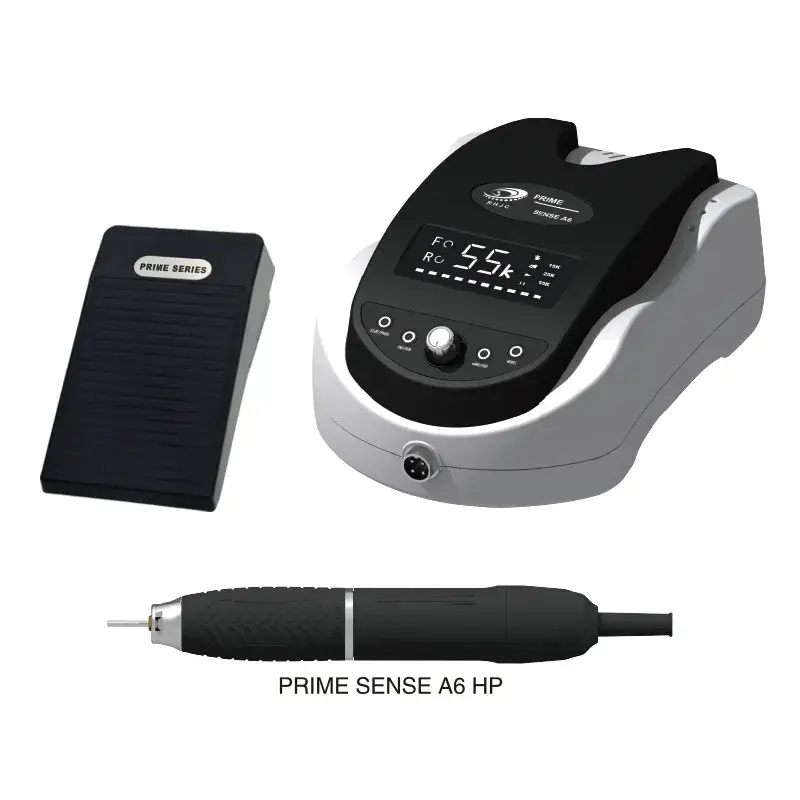
- Top Commercial Pick: RHJC Prime SENSE A6 Industrial-Grade Brushless Micro-Motor Grinding System
- Key Specifications:
- 230W industrial output; stepless speed control from 0 to 55,000 RPM
- Maintenance-free sealed brushless motor delivering 8.0 N·cm continuous torque
- Standard 2.35 mm precision collet; universal voltage with multi-region plug configurations (CE, RoHS, ISO9001 certified)
- Dual hand-dial/foot-pedal speed control, forward/reverse modes, and automatic overload protection
- Key Advantages:
- Maintenance-Free Heavy-Duty Run-Time: The brushless motor eliminates carbon dust and reduces handpiece heat, easily handling 8 to 12 hours of daily continuous use.
- High-Speed Precision & Low-Speed Torque: 55,000 RPM delivers chatter-free carving, while 8.0 N·cm torque ensures the spindle never stalls during low-speed burring or heavy metal removal.
- Bench Workflow Integration: Seamlessly complements bench setups running a pneumatic engraving machine for stone setting by serving as the primary tool for rapid drilling, seat cutting, and sprue cleanup.
- Ideal Applications: Pavé and prong stone setting, intricate filigree detailing, platinum sprue removal, and precision mold grinding.
- Key Specifications:
III. Equipment Comparison Matrix
| Production Stage | Recommended Model | Power & Drive | Capacity / Specification | Key Operational Advantage |
| Melting & Casting | HH-CM06 | 1500W Melt + 400W Vac | Max 4″ x 7″ Flask (39 kg) | 3-in-1 space-saving design; zero porosity |
| Rolling & Forming | RLFE0030 | 1.5HP (1.125kW) Geared | 70mm Flat; 1–8mm Wire (70 kg) | Constant-torque motorized reduction |
| Laser Processing | MAGIC® L3 | 20W–100W MOPA Laser | Flat Sheet + 360° Rotary Axis | Camera vision alignment; zero setup scrap |
| Mirror Buffing | DM-8 | 550W (1/2 HP) Electric | 0–4200 RPM Dual Spindle (13 kg) | Constant torque + 99% dust recovery |
| Recess Tumbling | KT-185 | 200W Magnetic Array | 1500g Batch Load Capacity | 30-min automated micro-prong descaling |
| Micro-Machining | Prime SENSE A6 | 230W Brushless Drive | 0–55,000 RPM / 8.0 N·cm | High torque without stalling under load |
IV. Workshop Infrastructure Checklist
- Electrical Load Management: Separate high-draw melting units (1500W+) and motorized rolling mills (1.5HP) onto isolated single-phase circuits to prevent voltage sags that could reset CNC or laser controllers.
- Fume Extraction & Filtration: Route fiber laser exhaust through certified HEPA and activated-carbon filters to safely capture metal vapors, and position buffing hood intakes close to wheels for maximum gold dust recovery.
- Essential Spares Kit: Keep replacement isostatic graphite crucibles, high-temp vacuum gaskets, spare collets (2.35 mm), and stainless steel tumbling pins on hand to prevent production downtime.
Conclusion & Commercial Sourcing
In 2026, competitive jewelry manufacturing relies on semi-automated, high-precision equipment to cut labor costs and minimize precious metal waste across every production stage.
For industrial-grade jewelry manufacturing equipment, specialized replacement components, and full workshop outfitting, visit JYBS—your trusted jewelry machinery supplier, supporting both individual studio orders and volume wholesale purchasing.