

When standard jewelry tools run 8 to 12 hours straight, they burn out—leaving you with scalding handpieces, seized motors, and a stalled production line. True continuous-duty machinery is built differently: engineered with heavy-load thermal channels, dust-proof sealing, and unyielding mechanical endurance. Here is how to pick industrial-grade equipment that never stops working when your factory needs it most.
I. Key Selection Criteria for Jewelry Equipment Designed for Continuous Daily Use
1. Micro-Motors and Handpieces for Grinding: Standards for High-Frequency Operation
Rotary handpieces used for grinding, stone setting, and sprue removal endure extreme friction and constant exposure to sharp debris.

- Dust Sealing: Fine gold, silver, and investment powder quickly ruin standard bearings. High-intensity handpieces must feature fully sealed, dust-proof ball bearings combined with multi-stage labyrinth seals. Ensure spindle runout is rated within 0.02 mm to prevent chatter marks on delicate workpieces and avoid internal binding.
- Heat Insulation and Dissipation: To prevent thermal transfer to the operator’s grip, look for handpieces built with dual-chamber thermal insulation air channels or integrated cooling fans. Control consoles should utilize large-surface-area aluminum heat sinks rather than passive plastic housings, keeping the handpiece cool during 8-hour shifts.
- Low-Speed Torque: Select micro-motor control units rated at ≥ 3.5 N·cm of torque with automatic feedback compensation. This electronic compensation delivers constant power under load, preventing the rotary tool from stalling during heavy metal removal at lower speeds.
- High-Duty Bench Recommendation: Industrial systems such as the RHJC PRIME SENSE A9 demonstrate these continuous-duty criteria in practice, packing a 240W brushless motor, 8.5 N·cm low-speed torque, and automated overload protection to prevent motor stall and heat buildup during full-shift factory use.
2. Benchtop Polishing Machines and Dust Extraction: Specifications for Prolonged High-Speed Operation
Jewelry polishing lathes run at elevated speeds while generating significant ambient abrasive dust and lint.
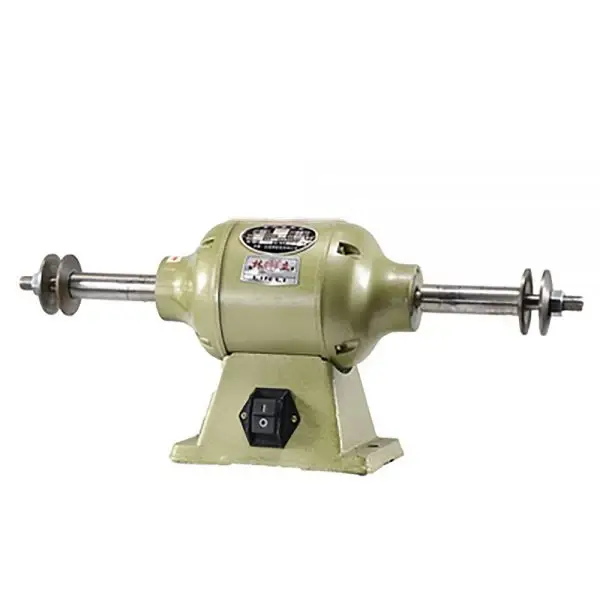
- Motor Dust Protection: Equipment must utilize a Totally Enclosed Motor (TEM). Open-vented motors draw metal shavings, rouge, and lint directly into the stator windings, causing short circuits and catastrophic motor failure.
- Air Cooling: Ensure the motor housing incorporates a heavy-duty external cooling fan and external heat-dissipating fins. This maintains internal operating temperatures within safe insulation limits over continuous, all-day buffing cycles.
- High-Duty Bench Recommendation: For high-volume continuous polishing, heavy-duty units like the Linli MD3220 550W Polishing Bench Lathe represent the ideal factory benchmark—built with a totally enclosed cast-iron body, a 550W pure copper motor, and dual threaded/clamp spindles to deliver stable 2850 RPM torque and complete dust protection without thermal burnout during 8-hour factory shifts.
3. Rolling Mills: Specifications for Heavy-Duty Material Processing
Whether breaking down ingots, reducing sheet gauge, or pulling wire, rolling mills experience immense hydraulic and mechanical resistance.
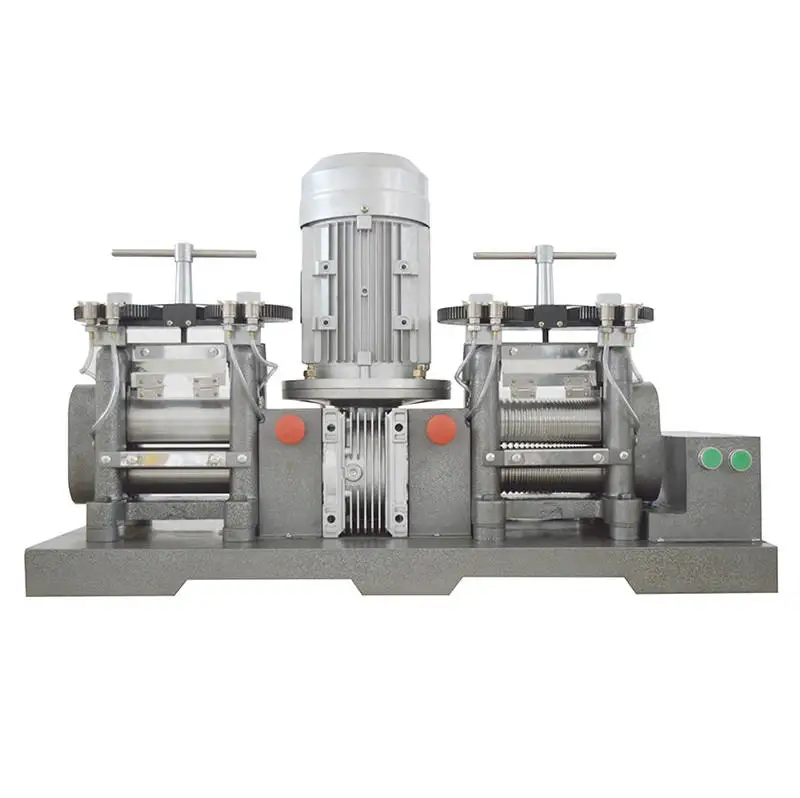
- Roller Material and Hardness: Rollers should be forged from cold-rolled alloy tool steel (such as SKD11 or AISI 52100) and vacuum heat-treated to a surface hardness of HRC 60–62. Inferior rollers dent when passing hard gold alloys, leaving raised blemishes on all subsequent sheet runs.
- Reduction Gearbox: Electric rolling mills require an industrial-grade, high-torque reduction gearbox mounted in a heavy-duty cast-iron frame. This prevents gear tooth shearing and motor stall when processing thick plate stock.
- High-Duty Bench Recommendation: Heavy-duty electric units such as the 1.5HP 2 Heads Electric Rolling Mill represent the definitive continuous-duty benchmark—featuring a powerful 1100W (1.5HP) motor, a massive 177kg heavy-duty chassis, 140mm wide hardened alloy rollers, and 24 specialized wire-hole channels (1-7mm) to handle heavy ingot breakdown and high-volume wire/sheet production without motor stall or gear failure.
4. Melting Furnaces and Casting Equipment: Specifications for High-Frequency Thermal Cycling
Continuous casting demands rapid recovery times without overheating sensitive internal components.
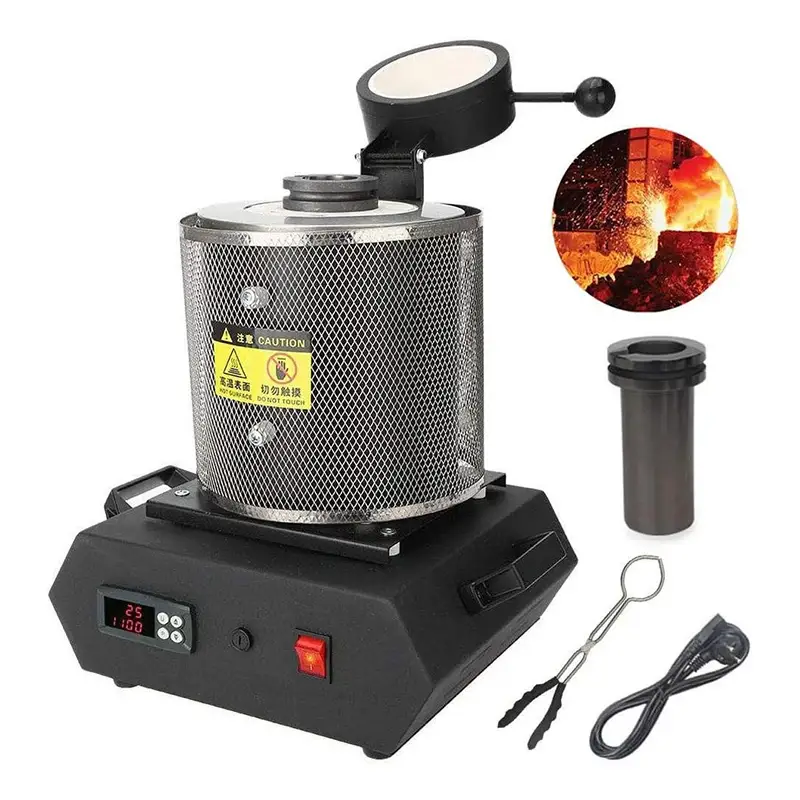
- High-Temperature Heating Elements: Melting furnaces require heavy-gauge, heat-resistant alloy elements (such as Kanthal A-1 wire) combined with high-purity graphite crucibles. These components withstand repeated thermal expansion and contraction without cracking or premature oxidation.
- Precise Temperature Control: Look for microprocessor-based PID temperature control with dual-probe thermocouple feedback and over-temperature safety cutoffs. PID logic prevents thermal overshoot, protecting precious metal melts from excessive oxidation and preserving crucible life.
- High-Duty Bench Recommendation: Electric melting units like the Gold Melting Furnace With Insulation Net demonstrate these high-frequency casting criteria—packing a 1600W heating element, low-expansion natural graphite crucibles (1kg-3kg capacity), and an advanced PID module that monitors chamber temperatures every 2 seconds up to 1150°C to prevent thermal overshoot and protect precious metal melts during repeated daily cycles.
II. Comparison: DIY-Grade vs. Industrial Continuous-Duty Equipment
Evaluating workshop tools against verifiable engineering specifications helps procurement teams avoid premature mechanical failures.
| Equipment Category | Standard / Lightweight Grade (Avoid for Factory Production) | Industrial Continuous-Duty Grade (Factory Standard) |
| Micro-Motors & Handpieces | Open bearings prone to dust binding; handpiece overheats within 60 minutes | Fully sealed dust-proof bearings; dual-chamber insulation; torque ≥ 3.5 N·cm |
| Polishing Lathes | Vented housing draws compound inside; prone to winding shorts | Totally Enclosed Motor (TEM); external cooling fins; rated for all-day runs |
| Rolling Mills | Soft rollers (< HRC 55); prone to surface pitting and frame flex | SKD11 quenched alloy steel rollers (HRC 60–62); cast-iron gear reduction box |
| Melting Furnaces | Light-gauge heating wire; prone to burning out under back-to-back melts | Heavy-gauge alloy heating elements; high-purity graphite crucibles; PID control |
III. Ensuring Continuous Operation: Wear-Part Maintainability and Supply Chain Support
No production machine is entirely immune to wear. Experienced workshop managers evaluate equipment based on serviceability and spare parts availability.
Modularity and Rapid Replacement
Under high-volume use, components like carbon brushes, collets, drive belts, buffing mandrels, and crucibles are natural consumables. Industrial jewelry making machinery should feature modular assemblies that allow operators to replace worn parts in minutes without specialized shop tools.
Supplier Parts Availability
Selecting an established jewelry equipment supplier ensures access to a deep inventory of replacement components. Partnering with a dedicated manufacturer like JYBS provides factories with direct access to OEM replacement parts, technical support, and wholesale supply chains—preventing extended downtime over minor maintenance needs.
Partnering with JYBS for Reliable Factory Performance
Selecting jewelry equipment for continuous, high-volume production requires looking beyond initial purchase price and top-line speed ratings. Long-term reliability depends on effective thermal management, robust dust sealing, hardened alloy construction, and reliable manufacturer support. Investing in continuous-duty tools protects your production schedules, reduces maintenance overhead, and delivers consistent manufacturing quality.
As a dedicated jewelry equipment supplier and manufacturer backed by integrated production facilities, JYBS delivers engineered tools built specifically for heavy-duty daily operations. From precision micro-motors and sealed polishing lathes to heavy rolling mills, JYBS supports factories worldwide with reliable machinery, OEM replacement parts, and flexible wholesale solutions.
If you wish to upgrade your factory equipment or bulk-purchase high-durability grinding/polishing kits and spare parts, please contact the JYBS technical team today for detailed technical specifications and customized supply solutions.