

Why Retail Custom Jewelers Need a Specific Type of Rolling Mill
- Dual-Purpose Functionality: For retail storefront jewelers who offer “while-you-wait” custom fabrication or open-concept workshops, the rolling mill serves a dual purpose.
- Functional Utility: First, it is a functional tool used to quickly draw sizing wire, flatten nameplate blanks, or roll out custom wedding bands.
- Visual Theater: Second, it is a piece of visual theater. Customers love watching the raw process of goldsmithing, which means your equipment is on display.
- Aesthetic and Space Requirements: A mill for a retail environment must be aesthetically clean, relatively compact to fit on a front-of-house bench, and exceptionally versatile.
- Efficiency and Showroom Real Estate: You cannot afford to have three different mills taking up valuable showroom real estate.
- Versatile Combination Needs: You need a highly capable combination mill (flat and wire grooves) that can instantly transition from drawing 18K gold wire to flattening a sterling silver pendant blank.
- Operational Experience: Furthermore, it must operate smoothly and quietly—a poorly geared mill that grinds or squeaks will detract from the luxury experience of your retail storefront.
Key Technical Specs for Retail Custom Applications
Versatility, footprint, and smooth mechanics define the perfect storefront mill.
| Specification | Recommended Range | Why It Matters for Retail Jewelers |
| Roller Configuration | 50% Flat / 50% Wire Combo | Maximizes versatility. Allows the jeweler to handle 90% of all walk-in custom requests (from ring sizing to sheet fabrication) on one machine. |
| Gear Ratio | 4:1 Reduction Gear | Provides smooth, quiet operation. Allows the jeweler to roll heavy gold stock effortlessly while maintaining a conversation with the client. |
| Footprint / Base | Compact Cast Iron Base | Must be small enough to bolt securely to a standard jewelry bench without obstructing the jeweler’s primary working area. |
Top 3 Rolling Mill Recommendations for Retail Custom Jewelers
Designed for maximum versatility and professional aesthetics, these JYBS manual mills are the perfect centerpieces for a premium storefront workshop where performance and presentation matter equally:
1. Combination Rolling Mill 130MM(L)65MM(D) – JYBS
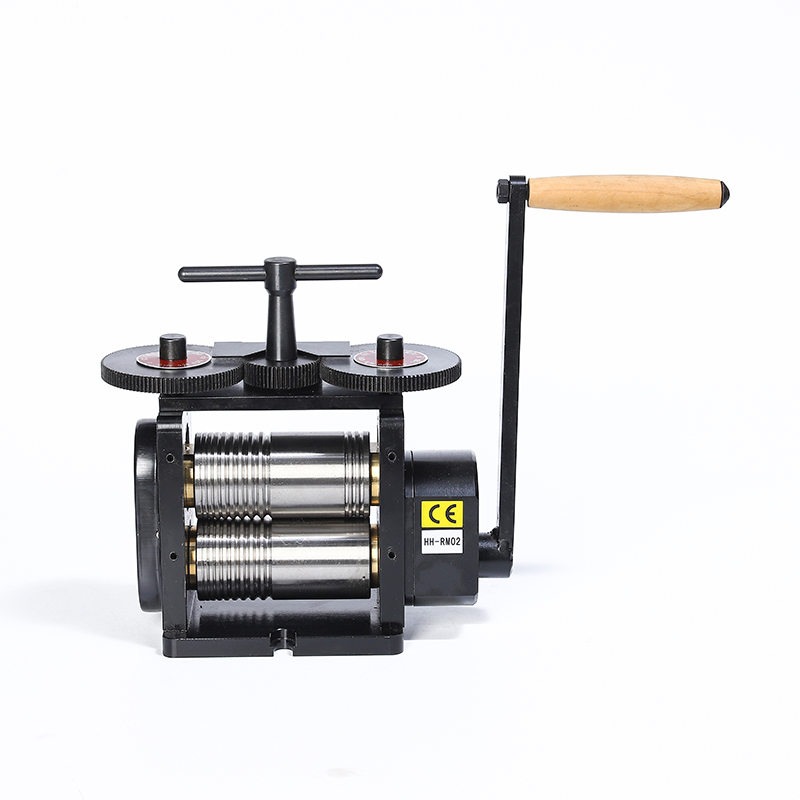
- Key Specs: 130mm total width, 63mm flat area, 4:1 Gear Ratio, 65HRC induction-hardened rollers, Aircraft-quality aluminum gearbox.
- Verdict: The ultimate all-in-one workstation for the retail bench. Its 130mm width provides enough real estate to switch instantly from flattening a silver pendant blank to drawing 18K gold wire (1.0mm–6.5mm) without changing tools. The precision-hobbed steel gears and anodized black aluminum gearbox ensure a whisper-quiet, smooth operation—allowing you to maintain a professional conversation with your client while you work.
2. US Type 130MM Manual Rolling Mill For Jewelry – JYBS
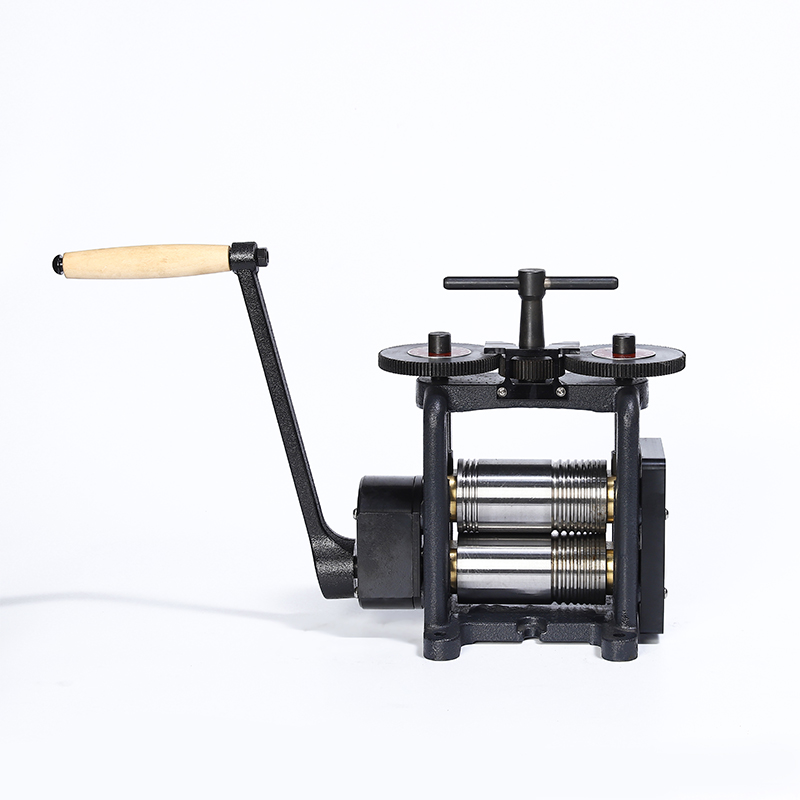
- Key Specs: 130mm width, 5mm maximum opening, integrated ring shank/half-round ellipsis (2.5×1, 3×1.25, 4×1.5mm), 4:1 Gear Ratio.
- Verdict: The bespoke ring maker’s dream. This model features a built-in specialized section for half-round (ellipsis) ring shanks, allowing you to custom-size or fabricate classic wedding bands right in front of the customer. With a robust 26.2KG stabilized frame and an ergonomically designed forged wood handle, it offers the high-end “feel” and stability that reinforces your status as a master craftsman in an open-concept studio.
3. Flat Rolling Mill 130MM(L)65MM(D) – JYBS
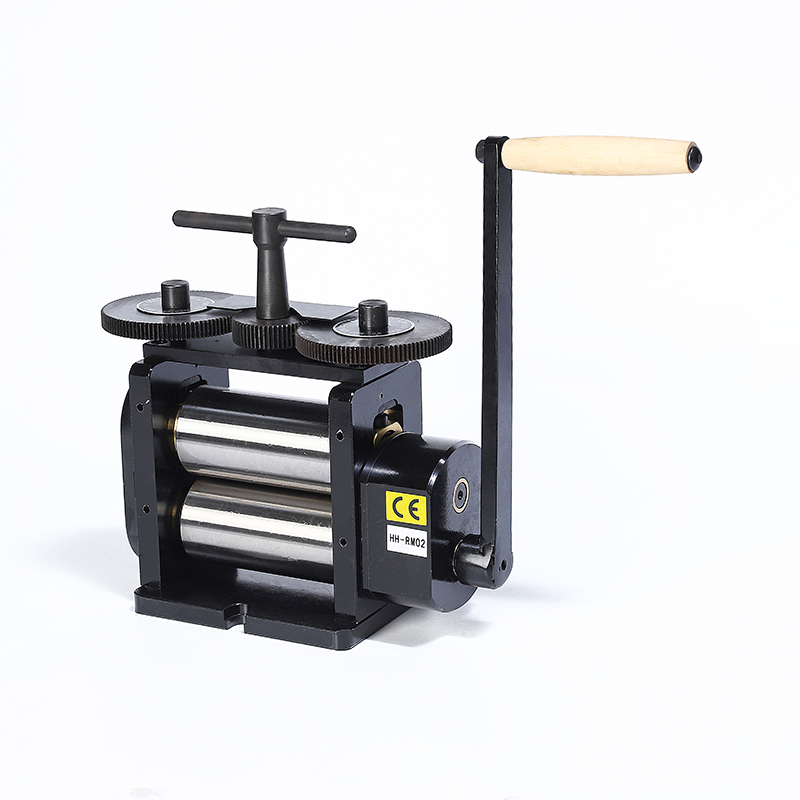
- Key Specs: 130mm dedicated flat width, 4.5mm max opening, mirror-polished rollers, one-piece solid precision steel body.
- Verdict: Ideal for boutiques that specialize in high-end plate work, engraving blanks, or textured sheet metal. By dedicating the full 130mm to a flat surface, it offers the cleanest “visual theater” for rolling out large, pristine sheets of precious metal. The one-piece solid steel construction ensures zero frame flex, providing the consistent thickness required for premium custom jewelry pieces.
Maintenance Tips for Retail Workshops
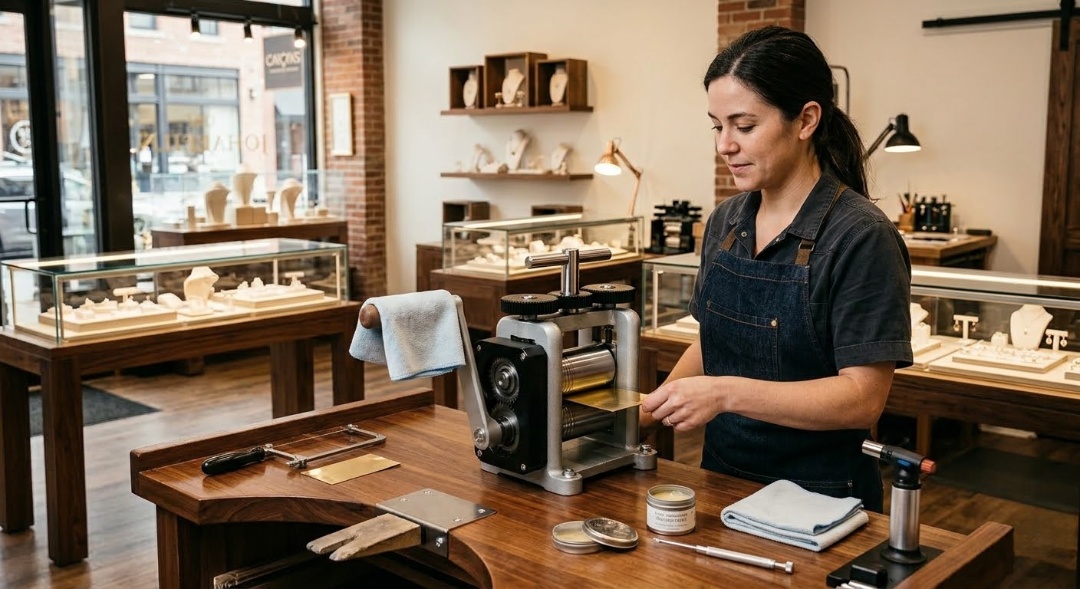
- Aesthetic Standards: In a retail setting, your tools must look as good as your jewelry.
- Professional Appearance: Dust, polishing rouge, and fingerprints on a rolling mill look unprofessional.
- Daily Exterior Care: Wipe down the external housing daily.
- Precision Gear Lubrication: More importantly, keep the gears lightly lubricated with a high-viscosity synthetic grease rather than thin oil; oil tends to drip onto the bench top and create a mess.
- Morning Cleaning Routine: Always keep a clean piece of brass shim stock nearby to run through the mill in the morning—this acts as a “sweep” to pick up any dust that settled on the rollers overnight before you roll a client’s expensive gold.
Frequently Asked Questions about Retail Custom Tools
- Q: Is a motorized mill a good idea for a retail storefront?
- A: Generally, no. Motorized mills are loud, bulky, and present a higher safety liability in an open-concept store. A high-quality manual mill with a reduction gear is much more appropriate.
- Q: Can I use this mill to roll out old jewelry a customer brings in?
- A: Yes, but exercise extreme caution. Old jewelry may contain hidden steel springs (in clasps) or hard solders. Always melt the scrap into a clean ingot first before passing it through your high-end mill.
- Q: How do I keep the rollers looking shiny for customers?
- A: Prevent rust by keeping your studio’s humidity controlled. At the end of the day, wipe the rollers with a cloth sprayed with a rust-inhibitor, and throw a custom canvas cover over the mill overnight.
- Q: Why does the mill make a clicking noise when I turn the handle?
- A: A clicking noise usually indicates a dry gear tooth or a loose retaining pin in the reduction gear assembly. Apply a thick gear grease immediately to prevent premature wear.
- Q: Do I need to bolt the mill down if I only use it for thin silver?
- A: Yes, absolutely. A loose mill is a severe safety hazard. If it shifts while you are cranking, you can easily pull a muscle or knock expensive tools off your bench.
Ready to upgrade your Retail Custom Jewelry setup?
Get a Quick Quote. Our team will provide a detailed quote sheet within 3 hours.