

Precision cutting is the foundation of handmade jewelry. While other tools get the spotlight, a jewelry saw is essential for creating intricate metal designs. This guide will help you choose the right one and master its use.
Getting to Know Your Jewelry Saw
Think of a jewelry saw as a tuned instrument, not just a cutting tool. When every part works together, you get cleaner cuts and better control.
Key Parts and What They Do
- A. The Saw Frame (Bow): This is your main structure. A sturdy frame keeps the blade tight and straight—cheap frames that flex too much will cost you in broken blades.
- B. Throat Depth: Measured from the blade to the frame’s inner curve, this determines how large a piece you can cut. A 3-inch throat handles charms and small components; for bracelets or larger forms, look for 4-5 inches.
- C. The Handle: Your grip matters. Wood or ergonomic plastic reduces slipping and hand fatigue during long cutting sessions.
- D. The Tension Mechanism: Usually a wing nut or screw near the handle. Proper tension gives a clear ping when you tap the blade. Loose blades wander and bend; overtightened ones snap easily.
How to Choose a Saw Frame?
You’ll typically choose between two frame types. Your decision should come down to your workflow, budget, and the scale of your projects.
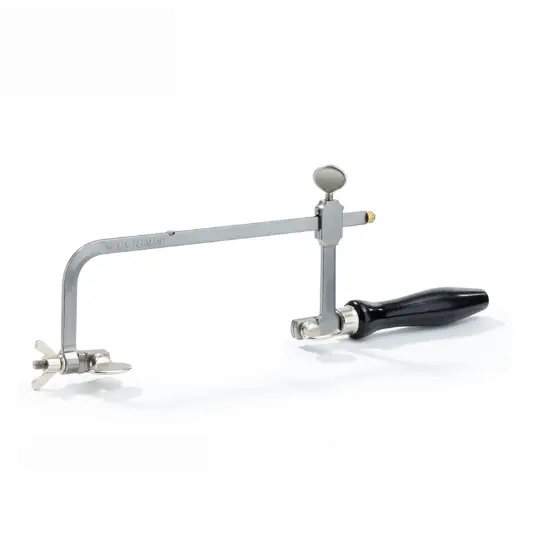
1. Adjustable Saw Frame
- What to Look For: Smooth-adjusting knobs and a rigid frame that doesn’t wobble as you tighten it.
- Why It’s Great: You can use different blade lengths, including slightly broken or shorter blades—cutting down on waste.
- Best For: Makers who work on a variety of projects and want one frame that does it all.
2. Fixed Saw Frame
- What to Look For: Total solidity. It should feel balanced and durable, accepting standard 5-inch blades.
- Why It’s Great: No flex, no play—just steady control. Ideal when blade length doesn’t change.
- Best For: Experienced jewelers doing consistent work with full-length blades.
How to Choose a Saw Blades?
The blade does the cutting, so choosing wisely saves time, metal, and frustration.
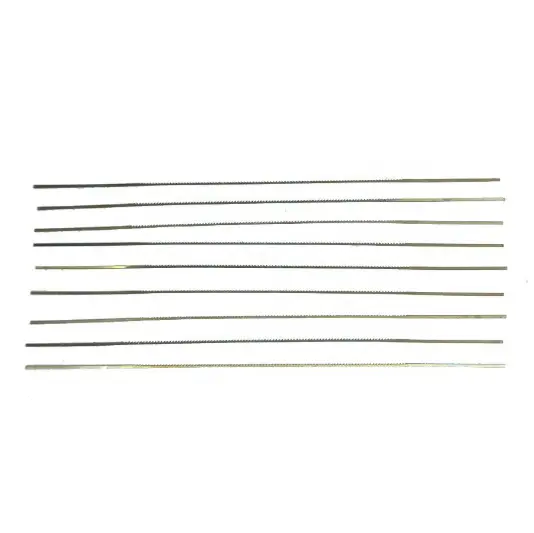
1. Matching Blade Size to Your Material
Blade sizes range from fine (8/0) to coarse (#8). Here’s a simple approach:
- Reach for finer blades (8/0 to 2/0) when working with thin sheet metal or doing intricate piercing—they leave a clean edge without tearing.
- Use coarser blades (#1 to #8) for thicker stock or rapid material removal. They’re stronger and resist binding.
2. The Three-Teeth Rule
This easy check prevents many common cutting issues:
- On thick metal, choose a coarser blade so at least three teeth are in contact—this keeps the cut moving smoothly.
- On thin metal, pick a finer blade to avoid catching and snagging.
Ignore this, and you’ll face more broken blades and rough edges.
3. Special Blades for Special Jobs
Sometimes a standard blade isn’t quite right:
| Blade Type | When to Use It | Ideal For |
| Skip Tooth | Cutting soft or sticky materials | Wax, wood, plastic—resists clogging |
| Reverse Skip | Need a clean underside on your workpiece | Reducing burrs on the exit side of the cut |
Pro Tips for Smoother Sawing
Good tools help, but good habits make the difference.
1. Throat Depth Matters
Match your frame’s throat depth to your typical project size. A 5-inch throat suits most jewelry tasks.
2. Feel the Balance
If possible, hold a saw before buying:
- Too light, and it may feel unstable.
- Too heavy, and your hand tires quickly.
- A well-balanced tool becomes an extension of your hand.
3. Blade Installation Done Right
- Teeth Direction: Ensure teeth point down and toward the handle—the saw cuts on the push stroke.
- Tension Check: Use the “ping test.” A tight blade rings clearly; a dull thud means it’s loose.
4. Set Up Your Workspace for Success
- Use a Bench Pin: This small wooden support gives a stable cutting surface and includes a V-notch for starting interior cuts.
- Wax Your Blade: Regular lubrication with beeswax or specialty blade wax reduces friction and extends blade life.
Final Thought
Choosing the right jewelry saw isn’t about buying the most expensive model—it’s about what feels right in your hand and fits the work you do.
Remember: Great results come from a comfortable frame, proper tension, and the correct blade.
Tools assist, but skill grows with practice. Before you start, check your material, follow the three-teeth rule, and invest in a saw that grows with your creativity.
Ready for an upgrade? Explore JYBS’s curated selection of professional-grade jewelry saws and blades. We’ll help you find the right tools to bring your most precise designs to life.