

Why Texture Embossing Needs a Specific Type of Rolling Mill
- Precision Depth Transfer: Texture embossing—the art of transferring a pattern from a master plate, laser-cut paper, or organic material (like a skeletonized leaf) onto precious metal—is a unique discipline. Unlike traditional fabrication, where the goal is simply reducing gauge thickness, embossing is about precision depth transfer. The mill is acting as a high-pressure printing press.
- Absolute Roller Parallelism: For this application, the defining characteristic of the mill must be absolute roller parallelism and a wide flat surface area. If the rollers are even slightly out of alignment, the embossed pattern will be deep and crisp on one side of the metal and faded on the other.
- Maximizing Surface Area: A dedicated embossing mill should ideally be a “flat-only” mill, maximizing the available surface area to accommodate wide brass texture plates without the wire V-grooves getting in the way.
- Extreme, Even Pressure: Furthermore, the mill needs a heavy-duty adjustment wheel to apply extreme, even pressure instantly, forcing the annealed silver or gold deep into the recesses of the texture matrix.
Key Technical Specs for Texture Embossing Applications
When transferring delicate patterns, surface area and structural alignment are everything.
| Specification | Recommended Range | Why It Matters for Embossing |
| Roller Configuration | 100% Flat Rollers | Wire grooves reduce the usable width for texture plates. Wide flat rollers allow for large cuff bracelets or pendants. |
| Roller Parallelism | High-precision calibration | Ensures the pressure is distributed perfectly evenly, preventing “faded” spots in the embossed pattern. |
| Gear Ratio | 4:1 Minimum | Embossing requires forcing metal into a matrix in a single, high-pressure pass. A gear ratio is essential to achieve this torque smoothly. |
Top 3 Rolling Mill Recommendations for Texture Embossing
Based on their wide surface areas and impeccable pressure distribution, these are the top choices for texture artists:
1. Flat Rolling Mill 130MM(L)65MM(D) – JYBS
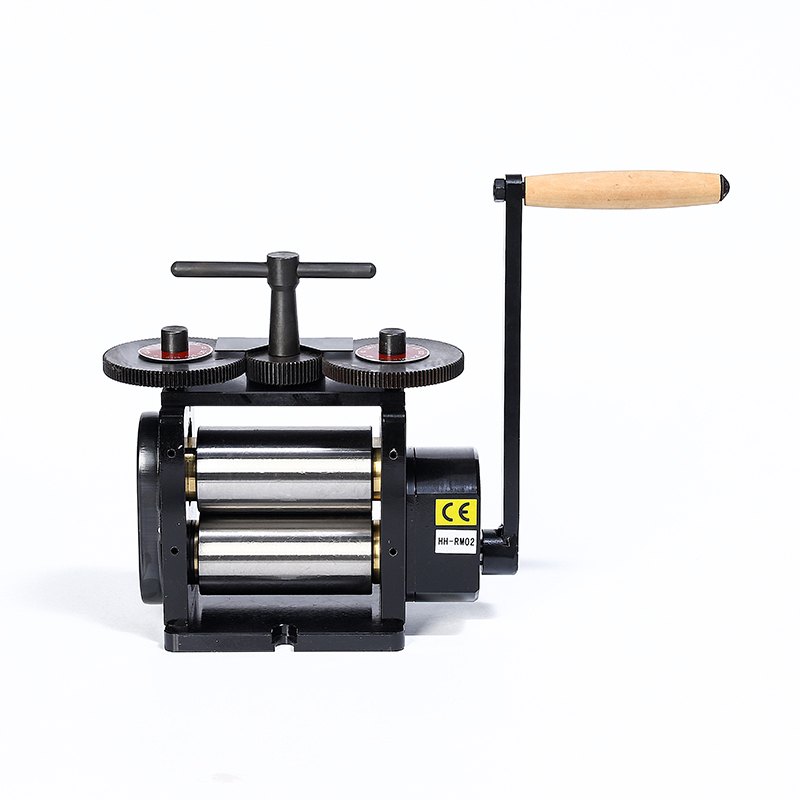
- Key Specs: 130MM Roller Width, 65MM Roller Diameter, 4:1 Gear Ratio, 130MM Flat Area, Maximum Opening: 4.5MM, Material: Metal, Dimension: 30×13.5×29.5CM, Weight: 23KG.
- Verdict: The ultimate dedicated embossing press. By eliminating wire V-grooves entirely, this mill provides a massive 130mm of uninterrupted flat surface area. It is specifically designed to accommodate wide brass texture matrices or large steel pattern plates without compromise. The dedicated flat design ensures absolute roller parallelism, guaranteeing that your embossed cuff bracelets and wide pendants have a crisp, perfectly even depth from edge to edge.
2. US Made Flat Rolling Mill 110MM(L)55MM(D) – JYBS
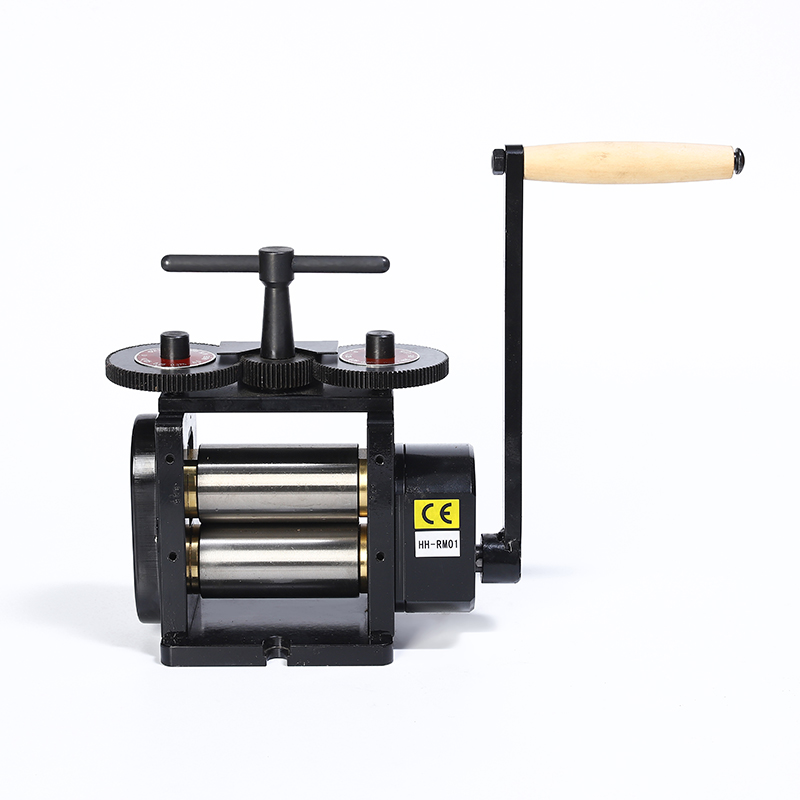
- Key Specs: 110MM Roller Width, 55MM Roller Diameter, 4:1 Gear Ratio, 110MM Flat Area, Maximum Opening: 4MM, Color: Black, Dimension: 23×13.5x28CM, Weight: 18.5KG.
- Verdict: An exceptional, highly precise flat-only mill. The 110mm dedicated flat rollers maximize your working space for constructing proper “rolling sandwiches” safely. The 4:1 gear ratio provides the smooth, continuous mechanical torque required to force annealed precious metal deep into delicate organic materials—like skeletonized leaves or laser-cut paper—in one single, continuous high-pressure pass without stalling.
3. Durston® DRM Rolling Mills DRM C150RE
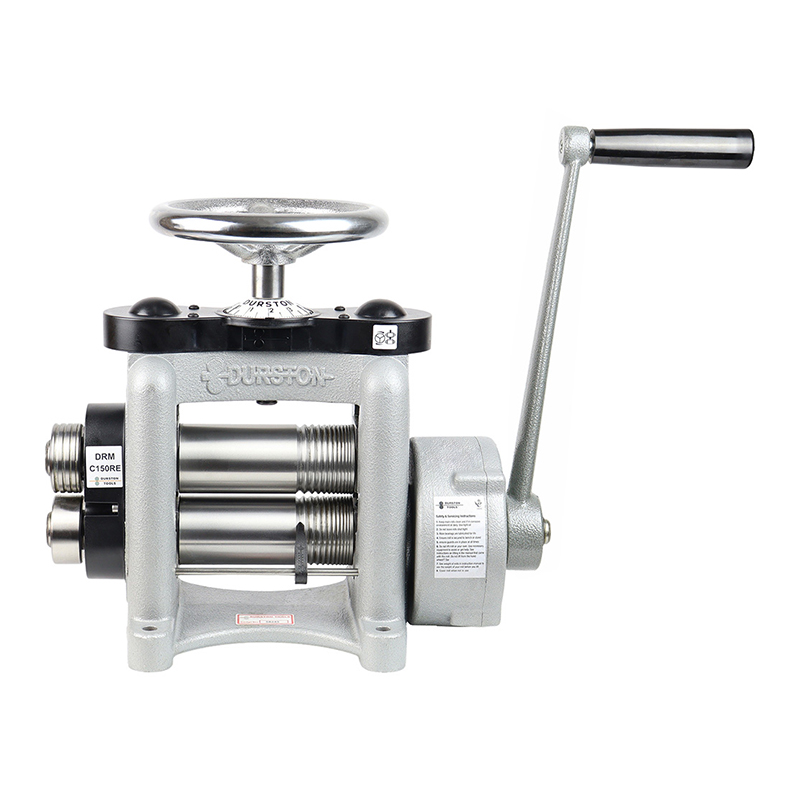
- Key Specs: 150MM Roller Length, 60MM Roller Diameter, Combination Roller Type, 5 to 1 Gearbox, 11 Grooves, Size Extensions: 4, 3, 2, 1.5MM, Max Sheet Thickness: 6MM, Max Wire Capacity: 8MM, Weight: 47.3KG.
- Verdict: The heavy-duty pressure champion. While it is technically a combination mill, its massive 150mm overall width still yields a very generous flat section. What makes this mill indispensable for embossing is its sheer rigidity. Weighing 47.3kg with a 5:1 gearbox, it applies the extreme, zero-flex downward pressure necessary to transfer deep, intricate patterns from hardened steel plates flawlessly into dead-soft silver without the frame cambering under load.
Maintenance Tips for Embossing Workshops
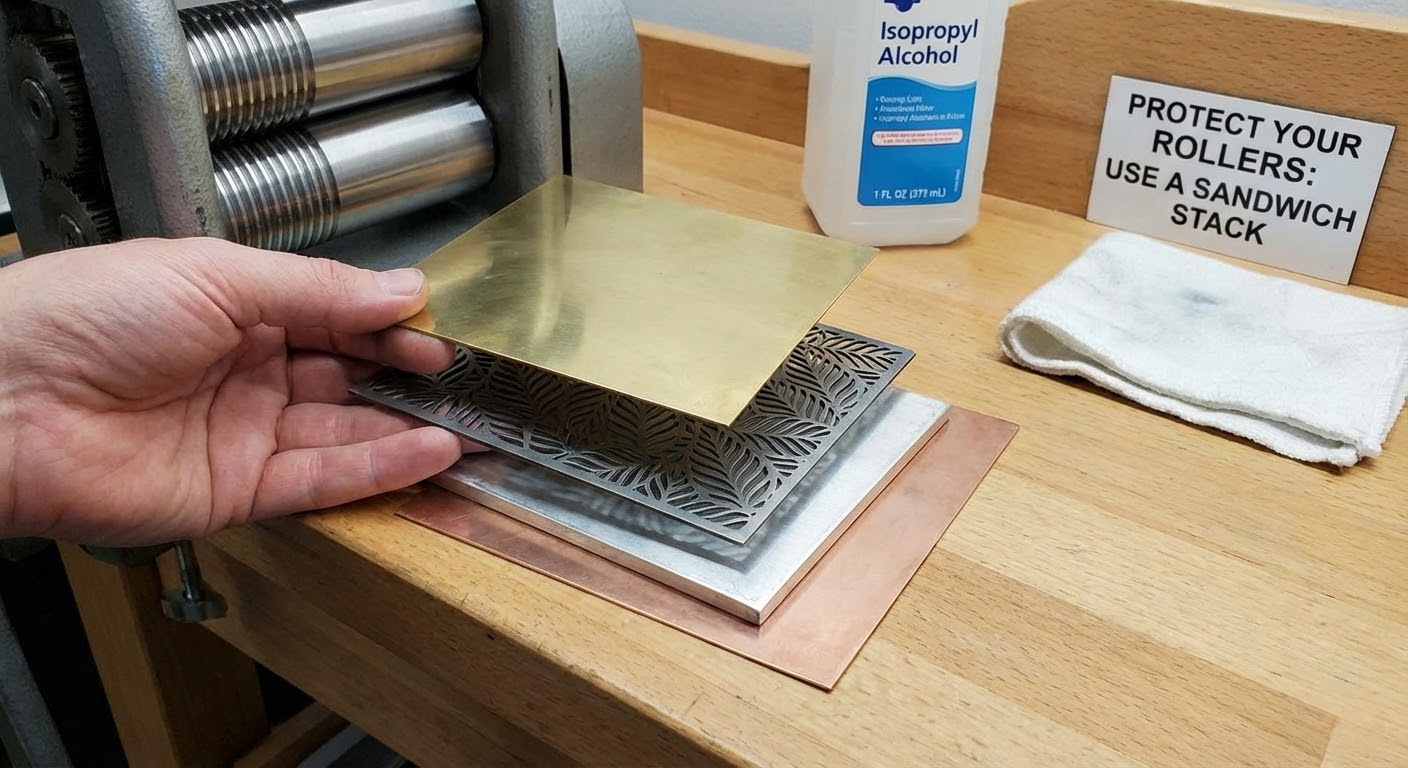
- Protecting the Rollers: Embossing can be hazardous to your rollers if done incorrectly. Never run a hardened steel texture plate directly against the mill’s rollers; always sandwich your work.
- The Correct Sandwich Stack: The stack should be: Protective brass/copper sheet → Texture matrix → Annealed precious metal → Protective brass/copper sheet. This ensures the HRC 60+ steel rollers never touch anything that could scratch them.
- Cleaning Organic Residue: If you use organic materials (like feathers or dried leaves), thoroughly clean the rollers with alcohol afterward to remove any moisture or acidic residue that could lead to localized pitting and rust.
Frequently Asked Questions about Texture Embossing Tools
- Q: Can I use a combination mill for texture embossing?
- A: Yes, but you are limited by the width of the flat section (usually 60-70mm). If you want to emboss a wide cuff bracelet, a dedicated flat mill is highly recommended.
- Q: Why didn’t my texture transfer properly?
- A: Usually, it’s one of two reasons: either the precious metal was not fully annealed to its maximum ductility, or you did not apply enough pressure on the first pass. Embossing must be done in one single, heavy pass.
- Q: Will rolling brass texture plates ruin my mill?
- A: No, as long as the brass is softer than the mill’s steel rollers (which are HRC 60+). However, always use protective outer sheets (a “rolling sandwich”) as a best practice to protect your investment.
- Q: What is the best metal state for embossing?
- A: The metal must be “dead soft” (freshly annealed and pickled). Any work-hardening will cause the metal to resist the texture matrix, resulting in a shallow impression.
- Q: Does roller speed matter when embossing?
- A: Consistency matters more than speed. You want a smooth, uninterrupted rotation. Stopping halfway through a pass will almost always leave a visible line or “hiccup” in the transferred texture.
Ready to upgrade your Texture Embossing setup?
Get a Quick Quote. Our team will provide a detailed quote sheet within 3 hours.