

Why Scrap Metal Upcycling Needs a Specific Type of Rolling Mill
- Upcycling Practice: Upcycling scrap metal—melting down old chains, broken rings, and bench sweeps into a fresh ingot—is a highly profitable practice, but it is a nightmare for your equipment.
- Scrap Contamination: Unlike pristine, factory-alloyed casting grain, scrap metal is heavily contaminated.
- Material Composition: It contains varying karats of gold, hard cadmium-based solders, oxidized copper alloys, and trace amounts of investment plaster.
- Ingot Characteristics: When poured into an ingot, this mixture is often porous, brittle, and plagued with “hard spots.”
- Equipment Risk: If you run a dirty, porous scrap ingot through a delicate finishing mill, you will destroy the machine.
- Machine Damage: The hard solder inclusions will instantly pit HRC 60 rollers, and the brittle metal can snap under pressure, sending jagged shards into the gear assembly.
- Machine Requirements: A rolling mill dedicated to scrap upcycling must be an absolute brute.
- Specific Features: It requires HRC 64+ rollers to resist denting, a heavily shielded gear housing to keep out metal shrapnel, and deep V-grooves to safely compress and elongate rough pours before they are flattened into sheet.
Key Technical Specs for Scrap Upcycling Applications
Survivability and crushing power are the only metrics that matter when processing contaminated metals.
| Specification | Recommended Range | Why It Matters for Scrap Upcycling |
| Roller Hardness | Minimum HRC 64 | Essential for surviving contact with hard solder inclusions, trace steel springs, or borax glass trapped inside the scrap ingot. |
| Gear Housing | Fully Enclosed / Shielded | Brittle scrap ingots often splinter or flake during the first pass. A shielded housing prevents these metal shards from destroying the gear teeth. |
| Roller Configuration | Heavy V-Groove Bias (70/30) | Scrap pours must be heavily compressed on all four sides in deep V-grooves to close internal porosity before attempting to roll them flat. |
Top 3 Rolling Mill Recommendations for Scrap Metal Upcycling
Built to take severe abuse and process unpredictable alloys, these mills are the ultimate recycling tools:
1. US Made Black Only Wire Rolling Mill 130MM(L)65MM(D) – JYBS
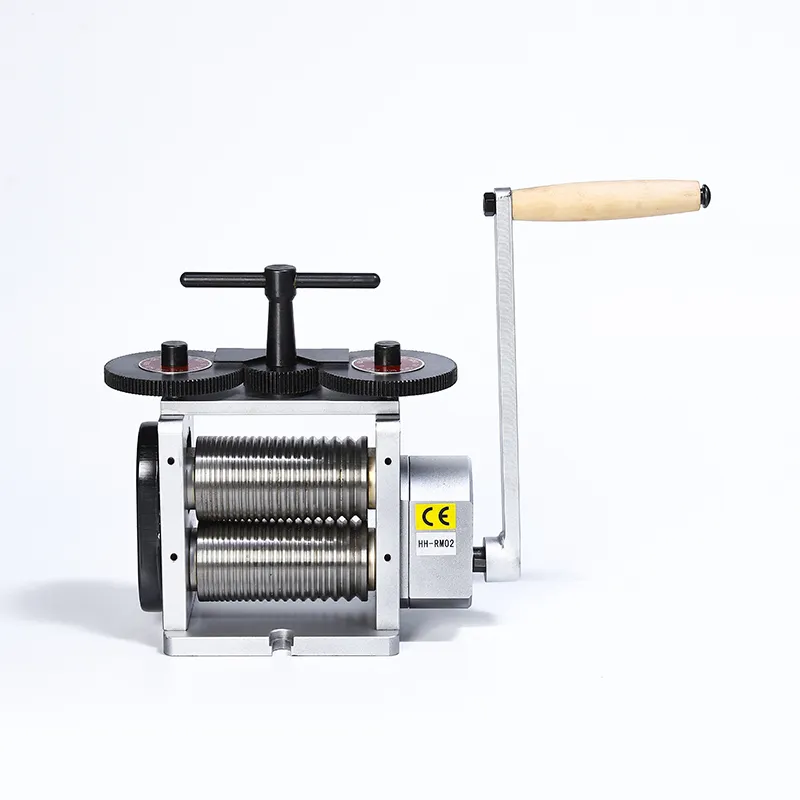
- Specs: 130mm dedicated wire width (100% V-Groove), 65mm roller diameter, 4:1 Gear Ratio, Max opening 4.5mm, 23KG.
- Verdict: The essential first-stage reduction tool. Because dirty scrap pours are inherently porous, they must be compressed from all four sides before they can be rolled flat. By dedicating the entire 130mm roller to square and half-round grooves, this mill allows you to aggressively crush and consolidate rough ingots. Using a dedicated wire mill for this violent initial breakdown protects your delicate flat-rolling machines from the hard solder inclusions hidden in recycled metal.
2. Durston® DRM Rolling Mills DRM C130RE
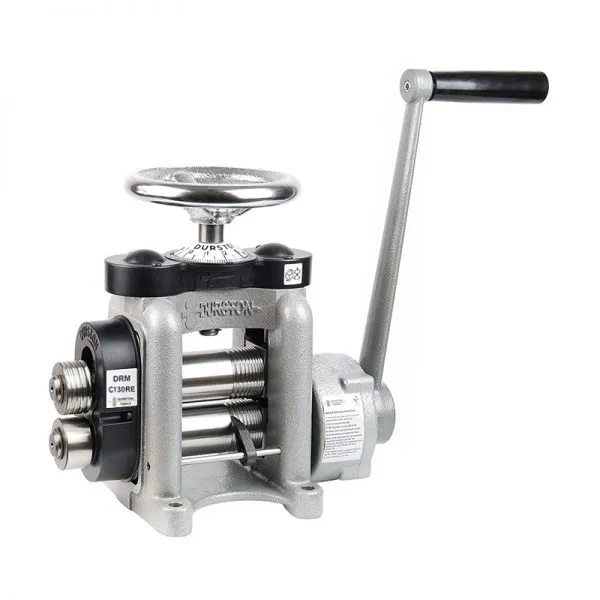
- Specs: 130mm combination width, 5:1 Reduction Gearbox, 11 square grooves (max 8mm capacity), Max sheet thickness 6mm, Heavy 45.3KG build.
- Verdict: The gold standard for safely processing unpredictable alloys. The massive 45.3KG chassis and authentic 5:1 reduction gearbox provide the immense, stable torque needed to crush stubborn scrap without the operator stuttering. Crucially, Durston’s fully enclosed gear housing ensures that when brittle scrap inevitably splinters or flakes under pressure, jagged metal shards will not enter the mechanics and destroy the gear teeth.
3. Single Sided 1.5HP Desktop Electric Rolling Mill – JYBS
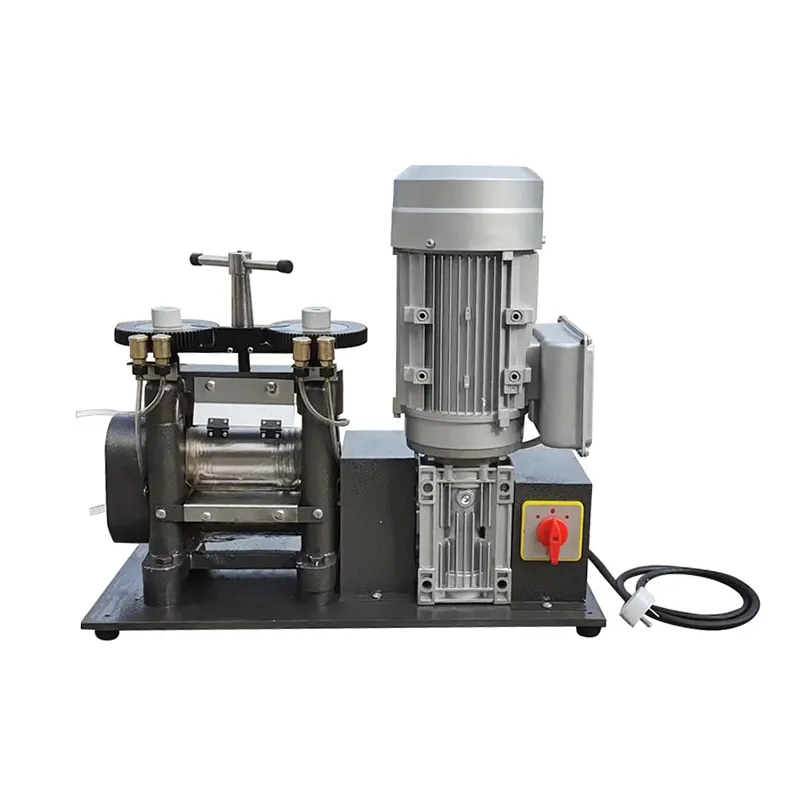
- Specs: 1.5HP (1.125KW) electric motor, 140mm Chrome Steel combination rollers (70mm flat area, 11 square grooves up to 8mm), 70KG desktop footprint.
- Verdict: The ultimate brute-force solution for jewelers processing large volumes of upcycled metal. Scrap metal is notoriously plagued with internal “hard spots” that can suddenly halt a manual crank, causing shear stress and severe edge-tearing. The continuous torque of this 1.5HP motor, paired with highly durable Chrome Steel rollers, effortlessly forces porous, resistant silver pours into dense workable plates, completely eliminating the human error and fatigue of manual scrap processing.
Maintenance Tips for Scrap Upcycling Workshops
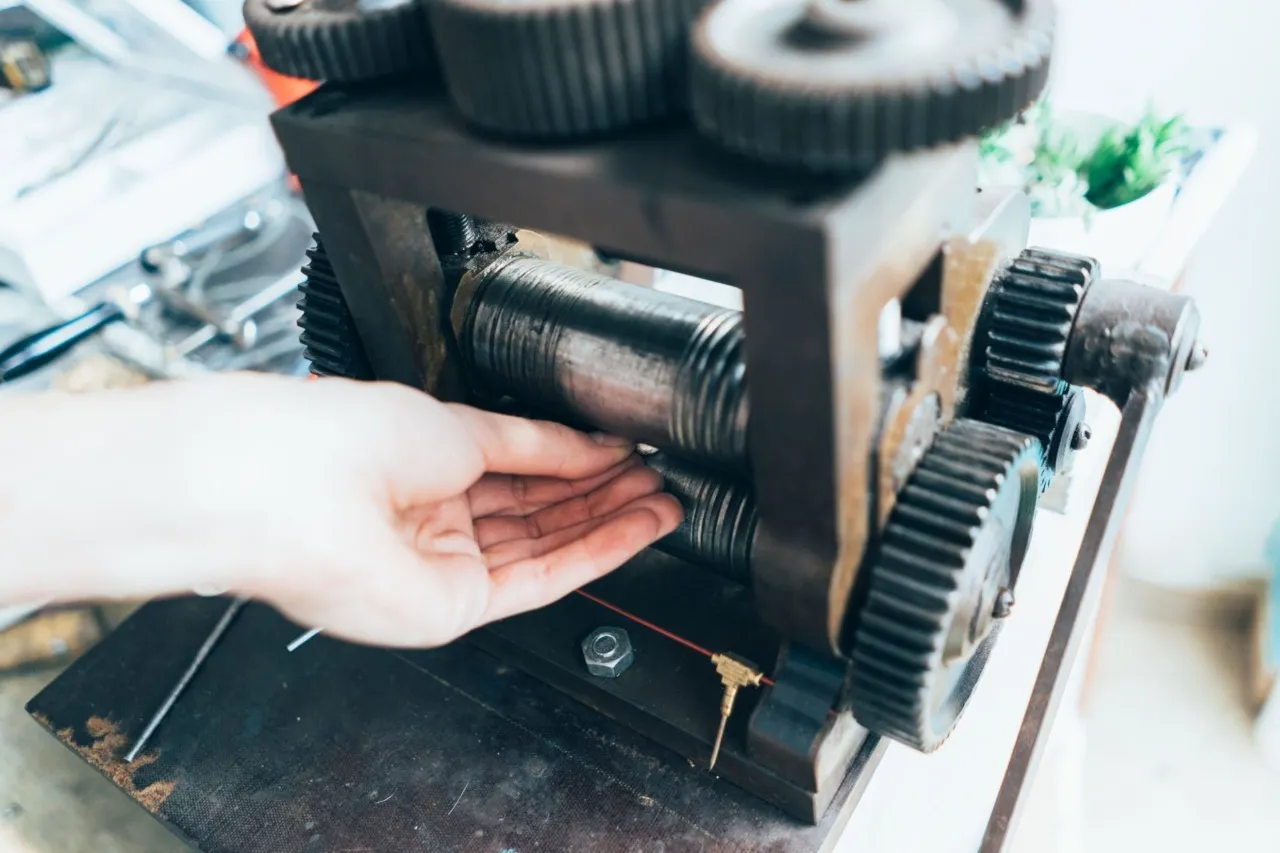
- Nature of the Work: Rolling scrap is a dirty job.
- Borax Flux Contamination: Freshly poured scrap ingots are often covered in borax flux glass, which is essentially liquid sandpaper.
- Pre-Rolling Preparation: You must aggressively forge the ingot with a hammer to break off the flux glass, and then boil it in a strong pickle solution before it ever touches the mill.
- Daily Cleaning Protocol: Because scrap metal tends to flake and splinter during the rolling process, you must use compressed air to blow out the V-grooves and bearing blocks at the end of every day.
- Lubrication Requirements: Apply a heavy coat of lithium grease to the gears, as standard oil will simply attract the abrasive metallic dust.
Frequently Asked Questions about Scrap Upcycling Tools
- Q: Why does my scrap gold ingot shatter like glass in the rolling mill?
- A: This is called “hot shortness.” Your scrap likely contained trace amounts of lead (from cheap solder) or tin. These metals settle in the grain boundaries and cause the alloy to shatter under pressure. You must re-refine the metal chemically.
- Q: Should I roll scrap ingots flat or square first?
- A: Always roll them square through the V-grooves first. This compresses the metal from four sides, closing up the internal gas porosity (bubbles) caused by a dirty melt. Once the grain is compressed, you can roll it flat.
- Q: Will rolling dirty scrap ruin my mill?
- A: Yes, if you don’t clean it. Borax flux and hard solders will permanently dent and scratch standard HRC 60 steel rollers, ruining the finish for your pristine metals.
- Q: Why is the metal flaking off in the V-grooves?
- A: You are experiencing edge-tearing, likely because you did not forge the rough edges of the ingot smooth on an anvil prior to rolling. The mill is simply tearing off the weak, porous cast edges.
- Q: Can I put scrap metal straight from the crucible into the mill?
- A: Absolutely not. The metal must be quenched, scrubbed, pickled, and ideally forged with a hammer before it is safe to put through precision steel rollers.
Ready to upgrade your Scrap Metal Upcycling setup?
Get a Quick Quote. Our team will provide a detailed quote sheet within 3 hours.