

Why Platinum Processing Needs a Specific Type of Rolling Mill
- Extreme Material Demands: Fabricating platinum is arguably the most demanding mechanical task a goldsmith will face. Platinum alloys (such as 950 Platinum/Ruthenium or Platinum/Iridium) possess extreme density, remarkable ductility, and incredibly high tensile strength.
- The Risk to Standard Equipment: When you attempt to roll a poured platinum ingot on a standard jewelry mill, the frame will flex, the gears will bind, and you risk permanently scoring your rollers.
- Engineering for High Resistance: Platinum processing requires heavy industrial-grade engineering. Because platinum does not oxidize, it is forged at high temperatures, but rolling is still done cold. The metal’s sheer resistance to deformation dictates that a platinum-rated mill must feature a massive reduction gear ratio—typically 5:1 to 7:1—to generate the torque necessary to compress the metal’s dense atomic structure.
- Surface Integrity and Hardness: Furthermore, any microscopic pitting on the rollers will immediately transfer to the platinum, creating surface defects that are notoriously difficult to polish out. Therefore, extreme roller hardness (HRC 64+) is an absolute requirement.
Key Technical Specs for Platinum Applications
Do not compromise on specifications when dealing with platinum; a sub-par mill will fail catastrophically under the pressure.
| Specification | Recommended Range | Why It Matters for Platinum |
| Gear Ratio | 5:1 to 7:1 Minimum | Generates the immense rotational torque required to compress dense platinum alloys without operator injury. |
| Roller Hardness | HRC 64 – 65 | Platinum is tough; standard HRC 60 rollers can become marred over time, transferring flaws to your high-value stock. |
| Frame Construction | Solid Billet Steel / Heavy Cast | Standard frames will micro-flex under platinum’s resistance, resulting in uneven sheet thickness (cambering). |
Top 3 Rolling Mill Recommendations for Platinum Processing
For master platinumsmiths, we recommend these heavy-duty, high-torque workhorses:
1. Durston® DRM Rolling Mills DRM C150RE
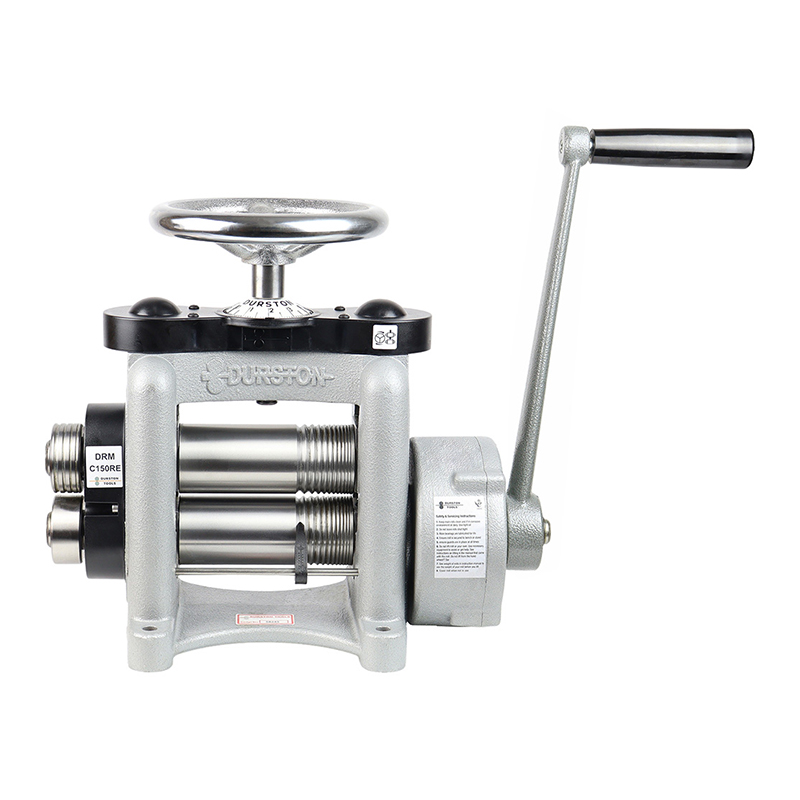
- Key Specs: 150mm Roller Length, 60mm Roller Diameter, 5:1 Gearbox, 11 Grooves, Size Extensions (4, 3, 2, 1.5mm), Max Sheet Thickness: 6mm, Max Wire Capacity: 8mm, Weight: 47.3KG.
- Verdict: The apex predator of manual rolling mills. Designed specifically for the most demanding fabrication environments, its massive 150mm roll width provides unparalleled surface area. The heavy-duty 5:1 reduction gear turns the otherwise exhausting process of drawing dense platinum square wire into a smooth, strictly controlled operation, while its 47.3kg weight ensures the frame will not flex under extreme pressure.
2. Durston® DRM Rolling Mills DRM C130RE
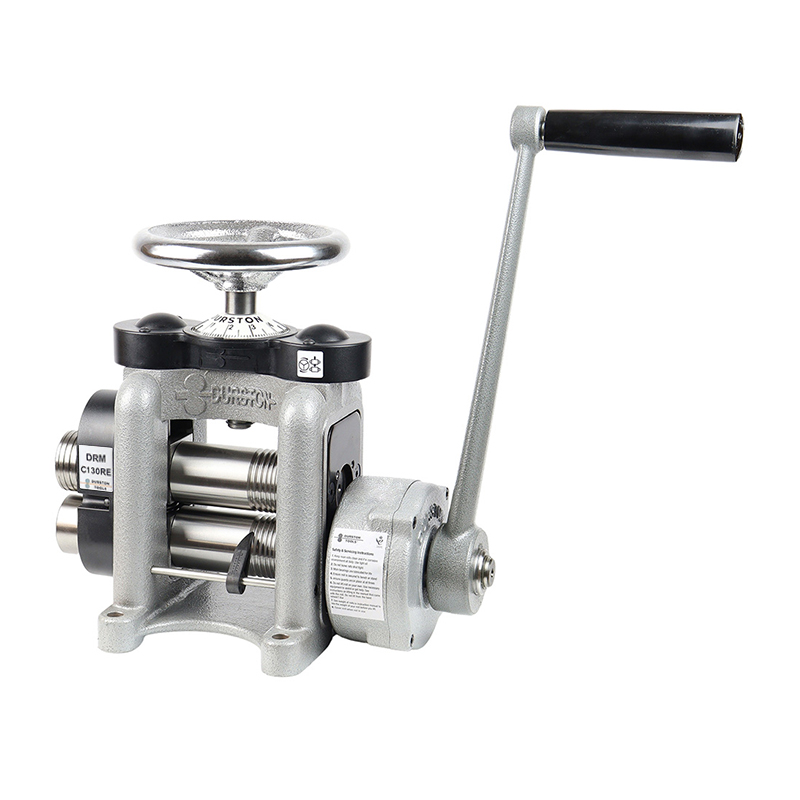
- Key Specs: 130mm Roller Length, 60mm Roller Diameter, 5:1 Gearbox, 11 Grooves, Size Extensions (4, 3, 2, 1.5mm), Max Sheet Thickness: 6mm, Max Wire Capacity: 8mm, Weight: 45.3KG.
- Verdict: An exceptional balance of manual control and brute force. Weighing a formidable 45.3kg, the C130RE’s cast-iron chassis acts as an immovable anchor, preventing the microscopic flexing (cambering) that ruins platinum sheet parallelism. The 5:1 gearbox provides the immense rotational torque required to compress dense atomic structures safely, making it the industry standard for daily platinum processing.
3. Single Sided 1.5HP Desktop Electric Rolling Mill – JYBS
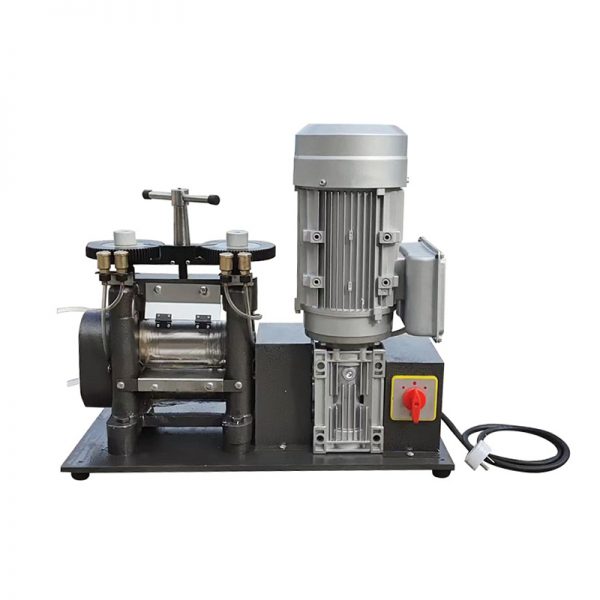
- Key Specs: 140mm Roller Length, 70mm Roller Diameter, 1.5HP Motor (1.125KW), 220V, Chrome Steel Rollers, 70mm Flat Surface, Square Wire (1mm–8mm), 4mm Half Round, Weight: 70KG.
- Verdict: The ultimate upgrade when manual reduction is no longer viable for your production volume. Platinum’s sheer resistance to deformation can cause immense operator fatigue. Driven by a relentless 1.5HP motor, this 70kg desktop powerhouse delivers consistent downward pressure and perfectly steady rolling speeds. Equipped with tough chrome steel rollers, it is a phenomenal, highly capable electric choice for fabricators who need to process thick platinum billets efficiently without sacrificing workspace.
Maintenance Tips for Platinum Workshops
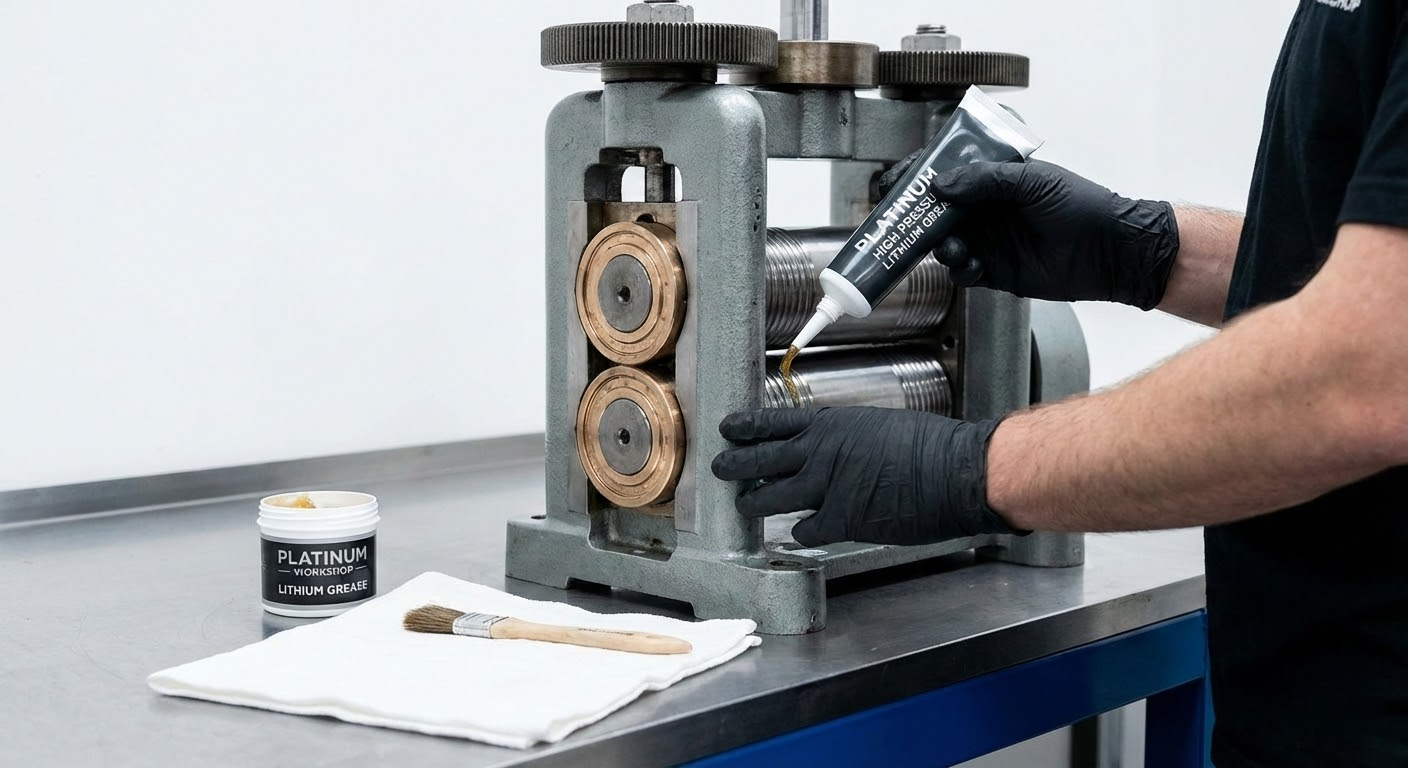
- Mechanical Stress & Lubrication: Because platinum requires extreme pressure to process, the mechanical stress on your mill’s internal components is magnified. The bronze or self-lubricating bearings housing the rollers must be inspected and greased monthly with high-pressure lithium grease—standard oil is not sufficient for the load ratings of platinum processing.
- Cleanliness & Contamination Control: Ensure the work environment is immaculate; platinum will readily embed stray steel dust or bench debris into its surface under the immense pressure of the rollers, leading to contamination and porosity during later soldering or welding stages.
Frequently Asked Questions about Platinum Tools
- Q: Why is it so hard to turn the handle when rolling platinum compared to gold?
- A: Platinum has a much higher density and resistance to deformation (yield strength) than gold. It requires significantly more mechanical force to compress its grain structure, hence the need for high gear ratios.
- Q: Can I use my platinum mill for silver and gold?
- A: Yes, a mill built for platinum will handle silver and gold effortlessly. However, ensure the rollers are meticulously cleaned to prevent cross-contamination.
- Q: Do I need to anneal platinum as often as white gold?
- A: Interestingly, no. Platinum is incredibly ductile and can be reduced by up to 70% of its thickness before requiring an annealing cycle, whereas white gold may need annealing after a 30% reduction.
- Q: Why are my platinum sheets coming out curved?
- A: If the mill is rated for platinum, curving indicates uneven feeding. If the mill is a standard model, the frame is likely flexing under the extreme pressure, causing the rollers to lose parallelism.
- Q: What is the ideal roller hardness for a platinum shop?
- A: Look for a minimum of Rockwell C (HRC) 64. Standard HRC 60 rollers will wear down and lose their mirror finish much faster when subjected to daily platinum fabrication.
Ready to upgrade your Platinum Processing setup?
Get a Quick Quote. Our team will provide a detailed quote sheet within 3 hours.