

High-precision tools—from carbide cutters and micro-molds to dental handpieces and jewelry burrs—demand absolute cleanliness. Yet, traditional scrubbing scratches micro-edges, and chemical soaking misses deep blind holes. Industrial ultrasonic cleaning solves this instantly through acoustic cavitation, delivering 360° non-destructive deep cleaning into the smallest micro-pores without harming delicate geometries.
I. Key Technical Specifications for Selecting Ultrasonic Cleaners for Precision Tools
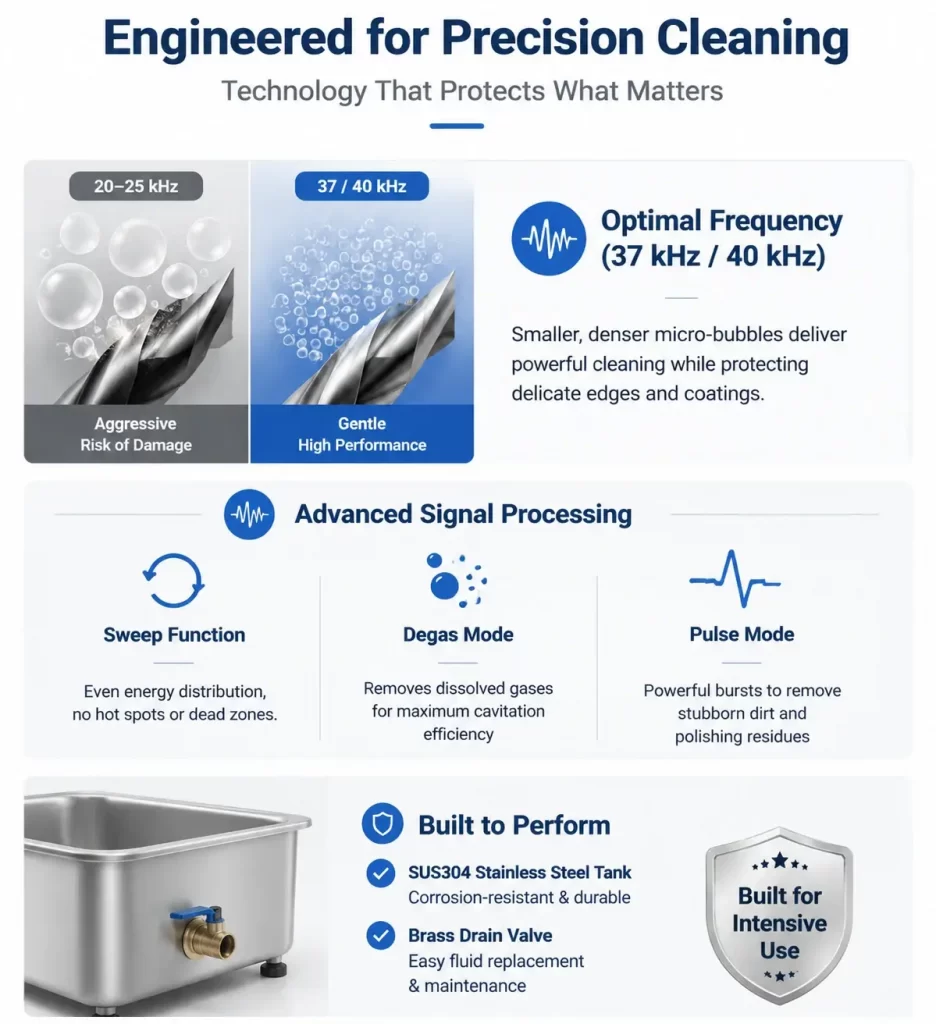
Evaluating ultrasonic cleaning equipment for technical tooling requires looking beyond basic tank dimensions. Achieving reliable cleaning without damaging delicate edges depends on several core engineering parameters.
Professional Cleaning Frequency (37 kHz / 40 kHz)
Frequency determines the size and energy density of the cavitation bubbles. Standard low frequencies (like 20–25 kHz) produce large, aggressive cavitation events that can pit or erode delicate metal coatings and razor-sharp edges. Operating at 37 kHz or 40 kHz creates smaller, denser micro-bubbles. This range provides strong scrubbing action to dislodge stubborn compounds while remaining gentle enough to preserve delicate tool geometries and protective coatings.
Advanced Signal Processing Features
- Sweep Function: Standard fixed frequencies create standing waves inside the tank, resulting in hot spots of intense cavitation and dead zones with virtually no cleaning action. The Sweep function continuously modulates the ultrasonic frequency around the center point, distributing acoustic energy evenly throughout the bath. This prevents localized acoustic burning on precision edges.
- Degas Mode: Freshly mixed cleaning solutions contain dissolved gases that absorb acoustic energy and cushion cavitation impacts. Degas mode rapidly pulses the ultrasonic transducers, driving trapped oxygen out of the fluid so cavitation operates at maximum energy density.
- Pulse Mode: For heavy-duty applications involving blind-hole components or caked-on polishing pastes, Pulse mode delivers periodic surges of elevated acoustic power to blast away stubborn debris.
Material Selection and Industrial Construction
Intensive, daily operation demands robust construction. High-grade ultrasonic baths utilize heavy-gauge SUS304 stainless steel tanks, providing resistance to wear, mild acids, and alkaline agents. Furthermore, integrated brass drain valves on medium-to-large models simplify fluid replacement, preventing contaminated sludge from accumulating on the tank floor.
II. Recommended Equipment for Various Application Scenarios
Different workshops require specific hardware configurations to match their operational throughput and contamination types.
Scenario 1: Precision Cleaning Combined with Heavy-Duty Wax/Polishing Compound Removal
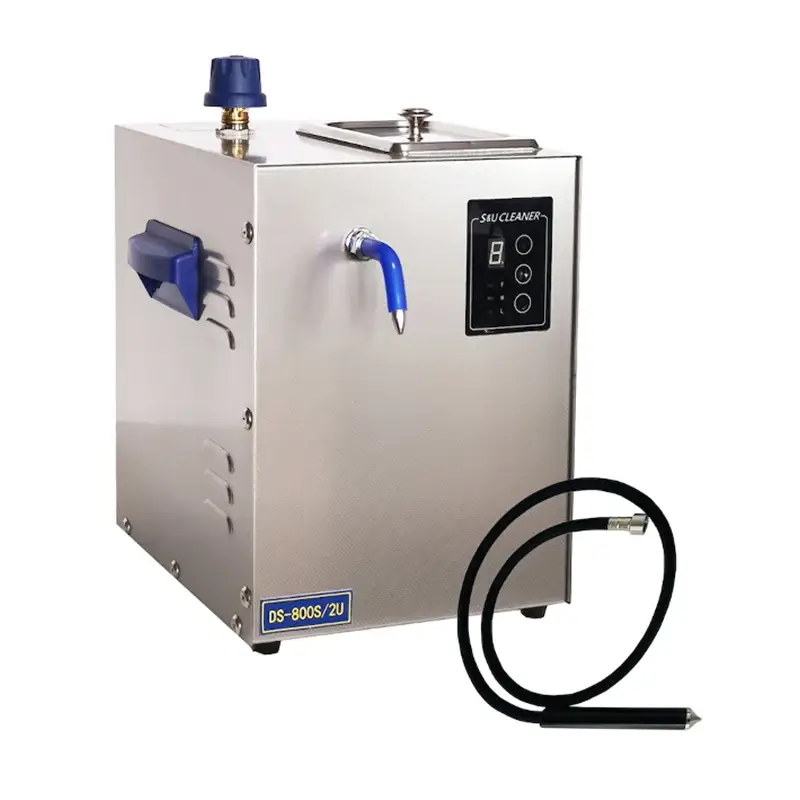
- Target Applications: Precision jewelry components, complex form tools, micro-parts coated in hardened polishing compounds, and heavy grease.
- Recommended Model: DS-800S/2U Combination Ultrasonic & Steam Cleaner
- Key Advantages: This innovative hybrid system combines a 40 kHz / 40 W ultrasonic bath (1 L) with an integrated 140°C high-pressure steam gun fed by a 2 L boiler (operating at 2–5 kg pressure). Operators can use the foot-pedal controlled steam jet to blow off heavy surface waxes, followed by an ultrasonic bath cycle to clear internal crevices. This dual-action process leaves delicate metal parts entirely residue-free.
Scenario 2: High-Precision Laboratories, Dental/Medical Facilities, and Precision Parts
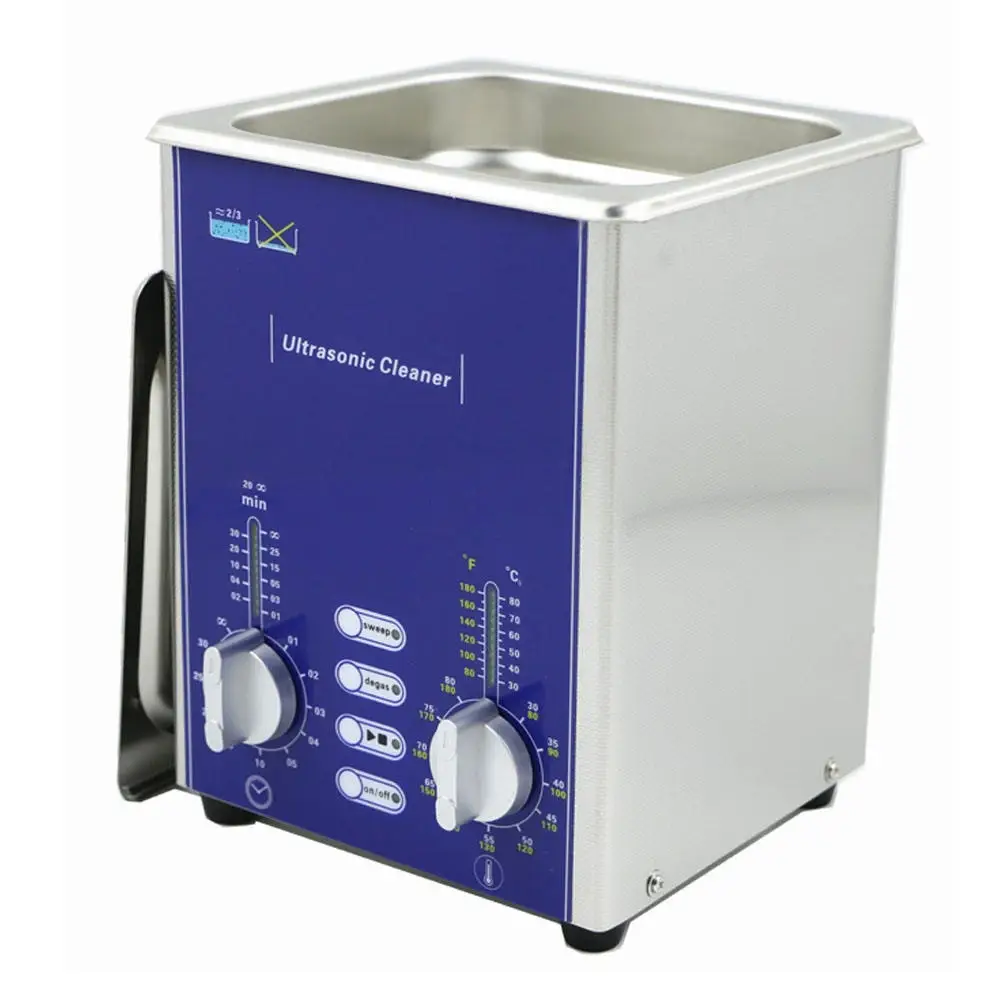
- Target Applications: Dental handpieces, surgical instruments, populated circuit boards, micro-bearings, and inspection calipers.
- Recommended Models: DR-DS Series Professional Sweep & Degas Ultrasonic Cleaners (e.g., DR-DS30, DR-DS100, DR-DS280)
- Key Advantages: Featuring intuitive LCD interface controls, the DR-DS Series offers dedicated Sweep and Degas modes operating at a refined 37 kHz frequency. Available in tank capacities from 1.3 L up to 28 L, these units protect sensitive electronics and micro-machined parts while providing thorough contaminant removal.
Scenario 3: Stubborn Contaminants in Deep Holes & Batch Cleaning
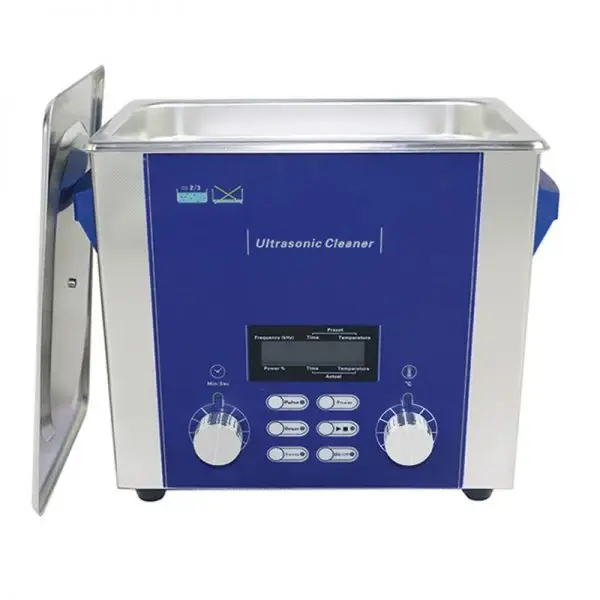
- Target Applications: Industrial hardware batches, micro-tubing, deep blind-hole housings, and heavy shop degreasing.
- Recommended Models: DR-P Series Large-Screen Pulse Ultrasonic Cleaners (e.g., DR-P60, DR-P150, DR-P280)
- Key Advantages: Built for continuous industrial duty, the DR-P Series combines high-output transducers with specialized Pulsed technology. Delivering up to 640 W of ultrasonic power paired with a 620 W heating system, these units drive fluid deep into narrow channels and tapped holes to break up packed oil and metal fines.
III. Comparison Table of Ultrasonic Cleaning Equipment Specifications
To streamline your selection process, the matrix below highlights key performance specifications across typical precision tool cleaning setups:
| Application Scenario / Tool Type | Recommended Model | Capacity / Power | Key Features (37/40kHz, Degas, Sweep, Steam) | Selection Advice |
| Heavy-Duty Polishing Paste / Jewelry / Hybrid Cleaning | DS-800S/2U | 1 L (Ultrasonic) + 2 L (Boiler) / 1300 W Total | 40 kHz Ultrasonic + 140°C High-Pressure Steam Jet (2-in-1) | Ideal for jewelry repair, complex wax removal, and instant surface shine. |
| Medical & Dental / Precision Instruments / Blind-Hole Parts | DR-DS100 | 10 L / 320 W Ultrasonic + 310 W Heating | 37 kHz + Degas + Sweep + Brass Drain Valve | Excellent for clinical environments, lab glassware, and sensitive electronics. |
| Deep-Hole Oil Contamination / Industrial Batch Processing | DR-P150 | 15 L / 480 W Ultrasonic + 470 W Heating | 37 kHz + Pulsed Cleaning + Digital Display Control | Best for high-volume machine shops, hardware maintenance, and engine rebuilds. |
| Basic Small Tools / Desktop Quick Cleaning | DSA50-SK | 1.8 L–2.5 L / 50 W Ultrasonic | 40 kHz + Digital Temperature/Timer Control + SUS304 Tank | Compact footprint for small workshops, micro-burrs, and inspection probes. |
IV. Best Practices for Ultrasonic Cleaning of Precision Tools
Deploying industrial ultrasonic equipment requires correct operational protocols to maximize cleaning efficiency and protect your tooling investment.
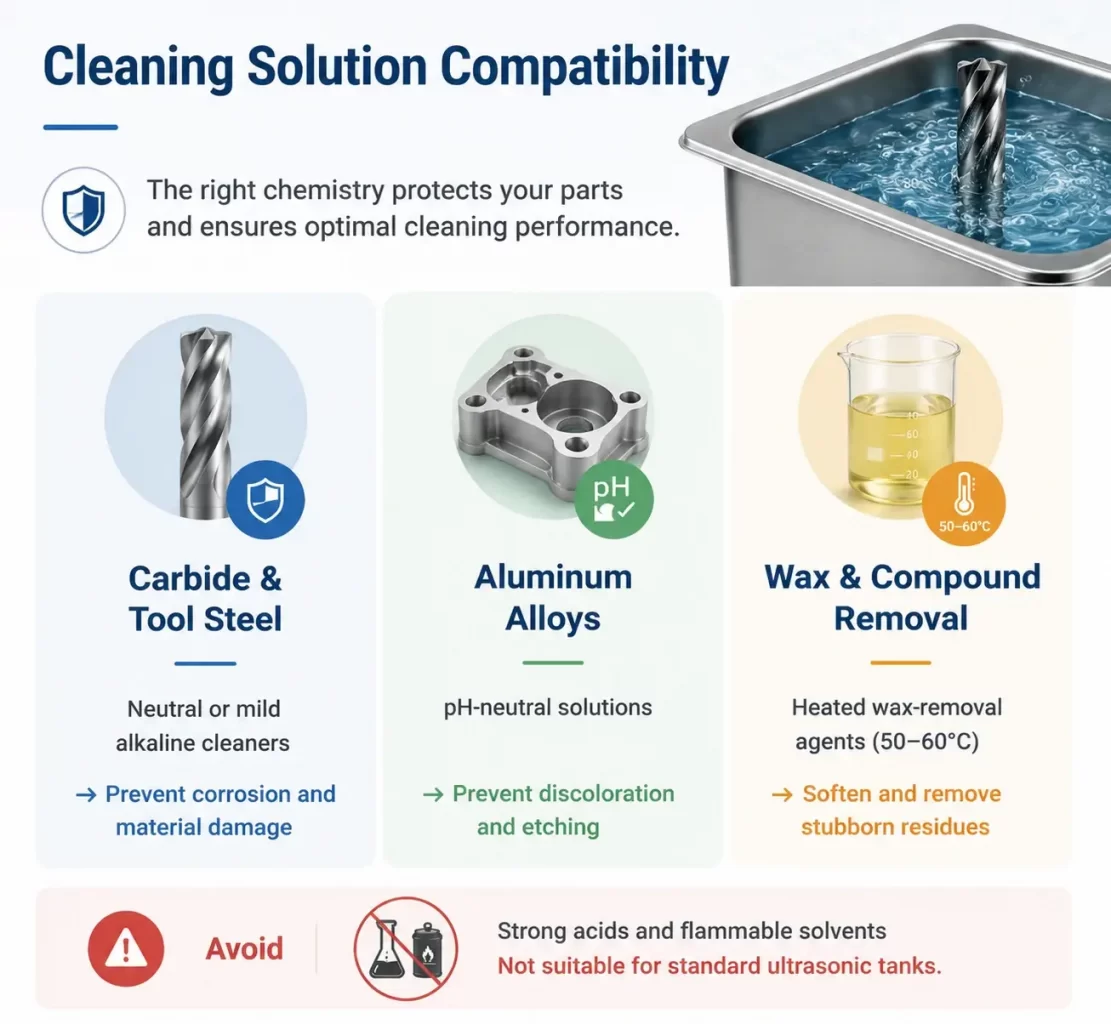
1. Cleaning Solution Compatibility
Never clean precision metal components in pure water alone, as water lacks the surface tension characteristics needed for efficient cavitation. Always pair your equipment with chemistry formulated for the specific substrate:
- Cemented Carbides & Tool Steels: Use neutral or mildly alkaline aqueous degreasers to prevent cobalt leaching or flash rusting.
- Aluminum Alloys: Select pH-neutral formulations to prevent surface discoloration and etching.
- Wax and Compound Removal: Use specialized water-soluble wax-stripping agents heated between 50°C and 60°C to soften residues quickly.
- Note: Avoid highly acidic solutions or flammable solvents inside standard ultrasonic tanks.
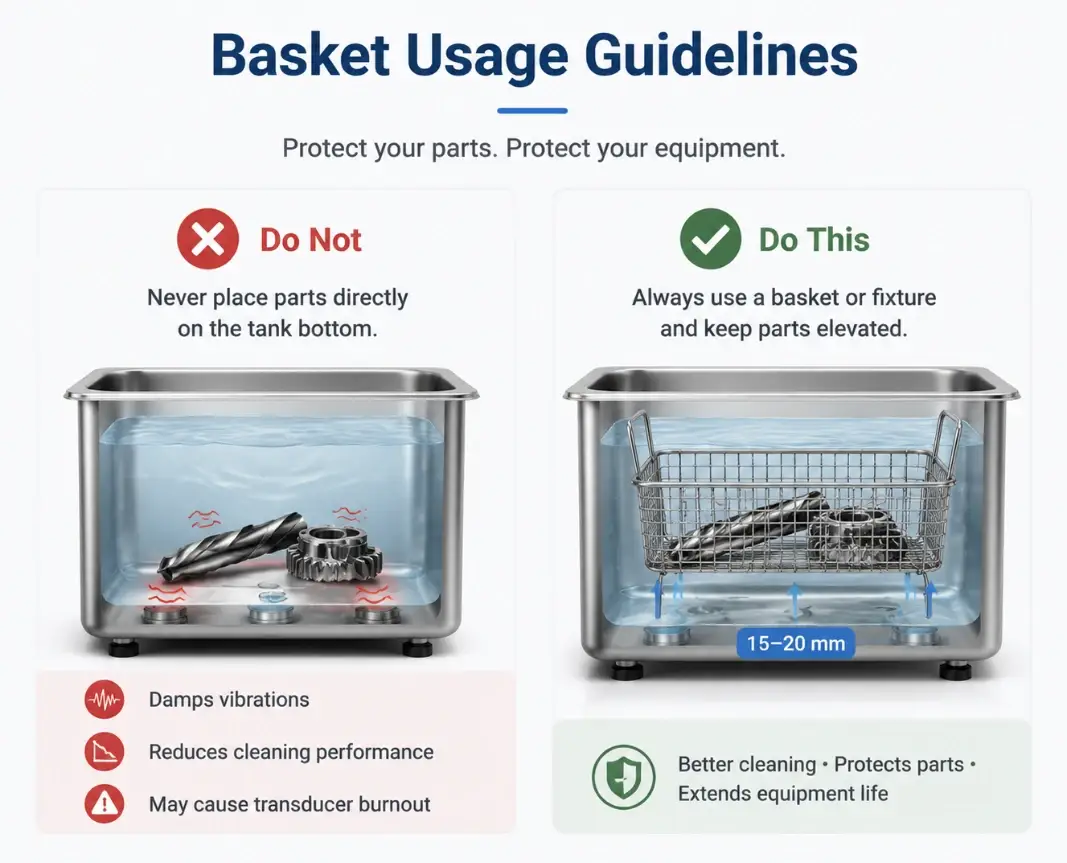
2. Basket Usage Guidelines
Workpieces must never rest directly on the bottom of the ultrasonic tank. Placing tools directly on the tank floor damps transducer vibrations, drastically reduces cleaning performance, and can cause premature transducer burnout. Always suspend parts inside a high-density wire mesh basket or custom fixture elevated at least 15–20 mm off the tank floor.
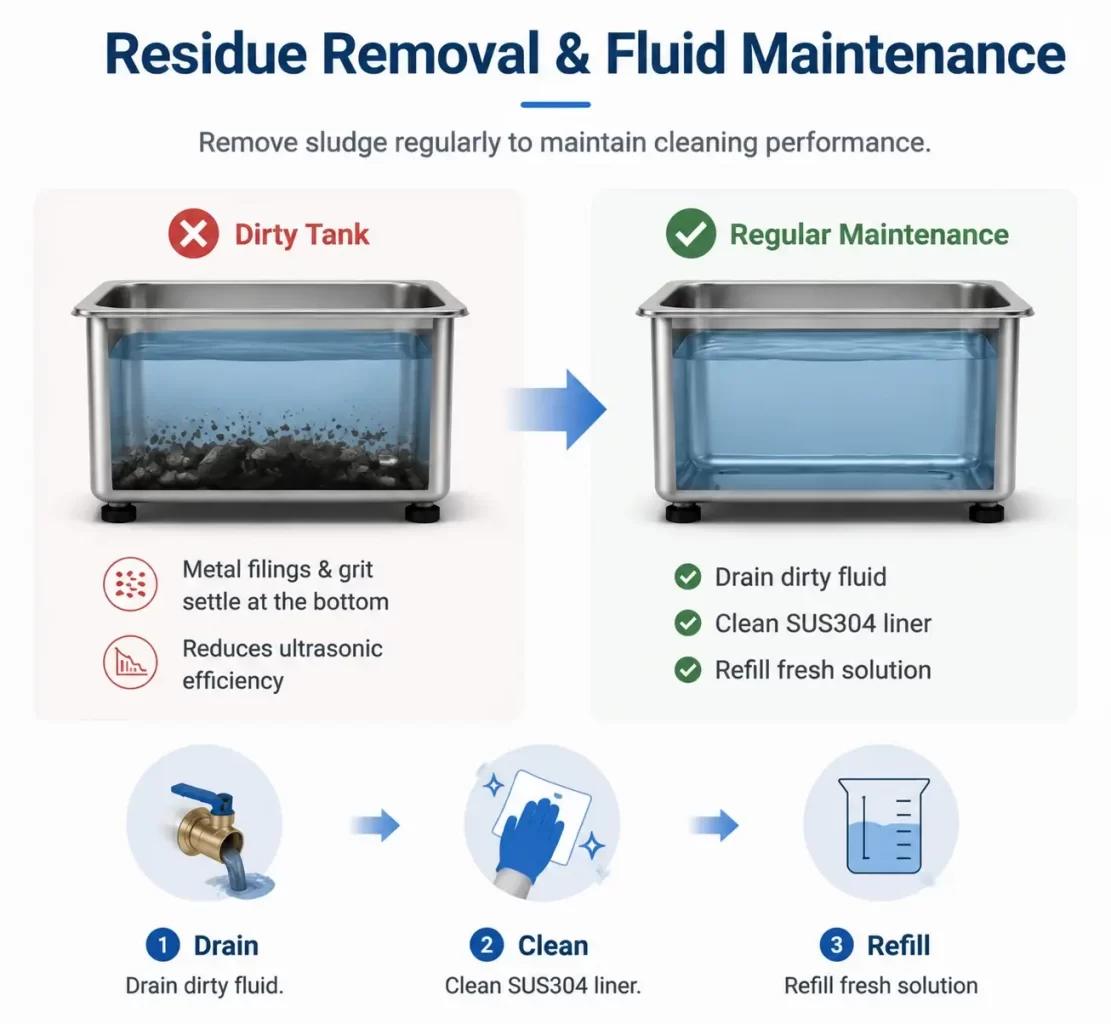
3. Residue Removal and Fluid Maintenance
As contaminants separate from your tools, heavier metal filings and abrasive grit settle at the bottom of the tank. If left unmanaged, this sludge absorbs ultrasonic energy and can re-contaminate clean parts. For units equipped with built-in drain valves, establish a regular maintenance schedule to drain dirty fluid, wipe down the SUS304 liner, and replenish the chemistry.
Enterprise Supply & Manufacturing Support
As a professional ultrasonic cleaning equipment supplier, JYBS brings 35 years of specialized engineering experience to high-precision industries. Our complete line of ultrasonic cleaning equipment is built to rigorous B2B standards using premium SUS304 stainless steel and durable ABS housings, making us a trusted wholesale partner for workshops, laboratories, and manufacturing facilities worldwide.
Our equipment holds authoritative international certifications—including CE, RoHS, SGS, and FCC—ensuring full compliance with global medical, laboratory, and industrial safety regulations. We support our enterprise partners, distributors, and buyers with:
- Flexible B2B procurement options and direct wholesale supply.
- Reliable, high-volume manufacturing capabilities backed by our own production facilities.
- Comprehensive 12-month warranty coverage alongside dedicated spare parts availability for large-scale deployments.
Ready to upgrade your tool maintenance workflow? Contact our technical support team today to request complete PDF product spec sheets, chemistry compatibility guides, and current wholesale price lists.