

When evaluating diamonds on the international D-to-Z color scale, the absolute neutrality of your optical equipment is critical. Even a microscopic variance in perceived hue can drop a stone’s classification by a full grade, leading to significant financial losses. While mass-market magnifiers utilize cheap blue, violet, or green anti-reflective chemical layers to artificially enhance brightness, professional gemological grading demands highly specialized, color-neutral or non-coated optics. Understanding the physics of light transmission through unadulterated optical glass is essential for eliminating artificial color interference from your workflow.
The Physics of Optical Coatings and Color Distortion
Anti-reflective coatings (ARC) function by applying thin chemical films to the surface of a lens to facilitate light transmission and minimize internal glare. However, standard mass-market coatings introduce a critical technical compromise for gemologists:
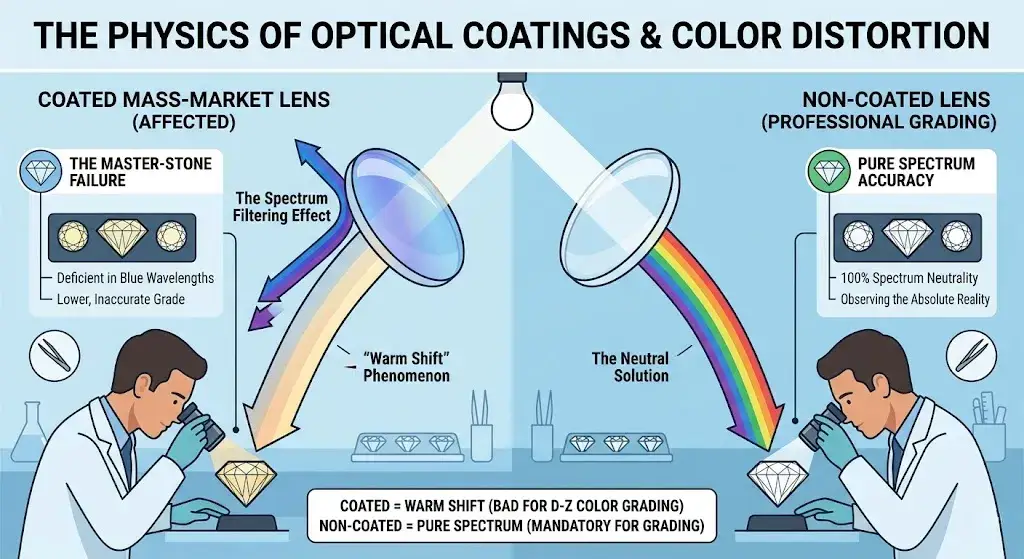
- The Spectrum Filtering Effect: Common anti-reflective coatings do not filter all light evenly. They selectively bounce away specific wavelengths—usually blue or violet—which creates the characteristic colored reflection seen on the lens surface.
- The “Warm Shift” Phenomenon: Because the low-end coating repels blue wavelengths, the light that actually passes through the lens and reaches the gemologist’s eye is left slightly deficient in blue light. This causes a subtle, artificial shift toward the warmer, yellow end of the color spectrum.
- The Master-Stone Failure: When comparing a borderline diamond against a set of master stones, this artificial warm shift can mask a stone’s true crisp white body color, forcing an inaccurate, lower grade.
- The Neutral Solution: High-end professioanal grading demands lenses that transmit the entire incoming visible light spectrum with perfect, uniform neutrality. This ensures zero artificial hue modifications, allowing you to observe the absolute reality of the mineral structure.
Comparison: Professional Grading vs. Standard Coated Optics
| Technical Property | Professional Grading Optics | Coated Mass-Market Magnifier |
| Color Fidelity | 100% Pure Spectrum Neutrality | Subtle spectrum shift (Warm/Yellow bias) |
| Surface Reflection | Clear, natural white or color-neutral reflection | Artificial blue, violet, or green hue |
| D-Z Color Accuracy | Lab & Appraisal Certified | Unreliable for borderline grades |
| Resolution Standard | High resolving power (e.g., 67 lines/mm) | Varies; low-end chemical layers affect sharpness |
Top Recommendations for Pure Spectrum Color Grading
1. Alfa Mirage® CARTON LOUPE PRO 10X
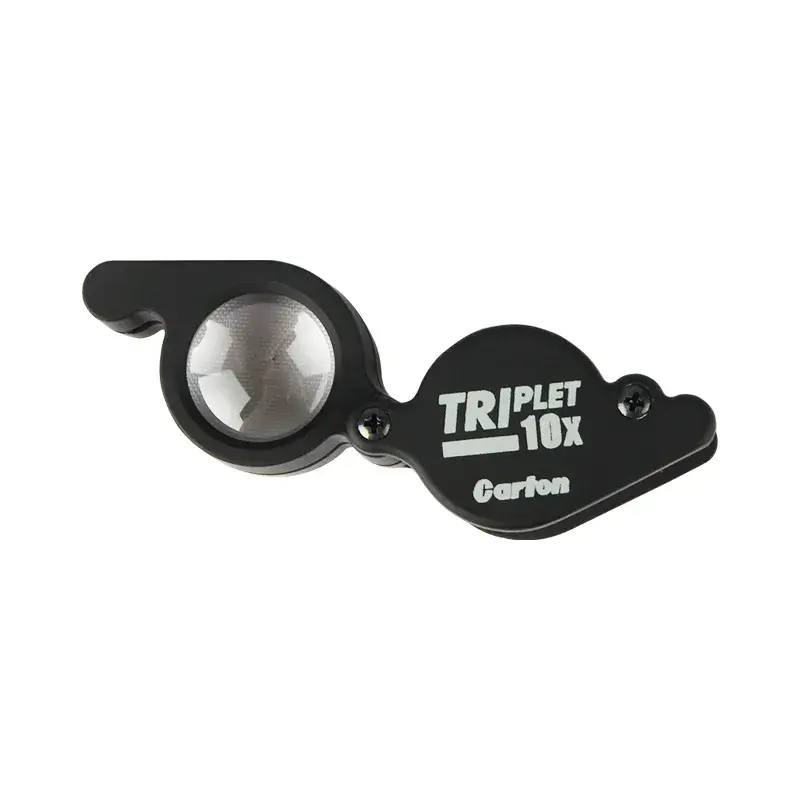
- Lens Engineering: Premium Japanese-crafted Steinheil Triplet (Achromatic & Aplanatic) featuring a strictly non-coated optical glass architecture for true color rendering.
- Technical Metric: Delivers an exceptional optical resolution exceeding 67 lines/mm, guaranteeing that even the smallest color differences can be distinguished across the D-to-Z spectrum.
- Best For: Authoritative GIA color grading, definitive master-stone comparisons, and certified laboratory appraisals where zero chemical color distortion is mandatory.
2. Professional Triplet Hexagon Loupe With Rubber Grip – JYBS
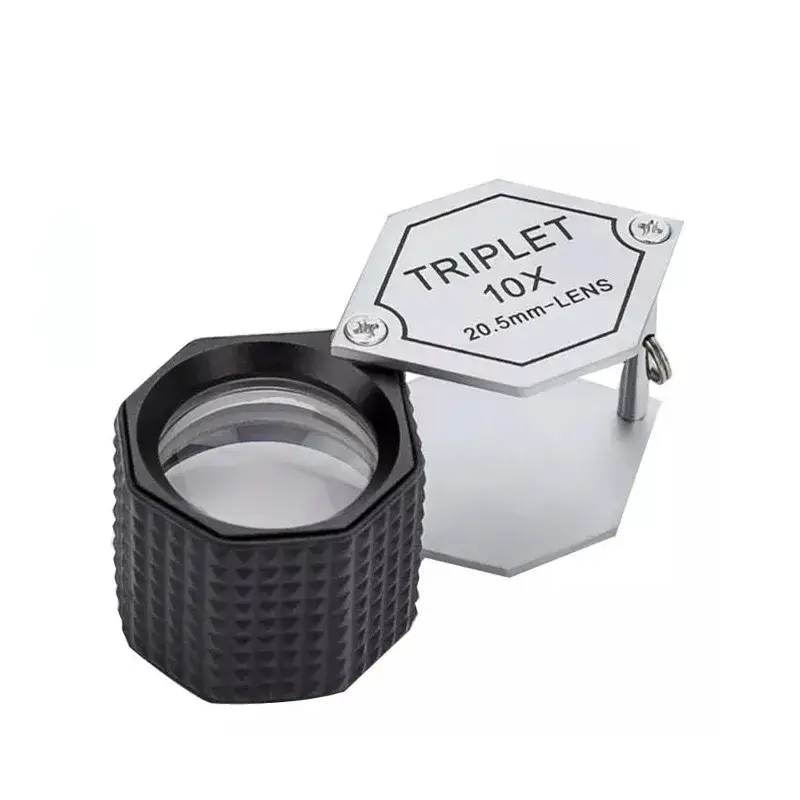
- Lens Engineering: High-glass quality 10x magnification triplet system built with a large 20.5mm aperture and a balanced 1-inch focal distance.
- Technical Metric: Engineered with a specialized flat black inner lens holder that physically absorbs scattered light and controls ambient glare, maximizing color transmission accuracy without the need for color-distorting films.
- Best For: High-volume color sorting, diamond parcel parsing, and extended inspection at the workshop bench with reduced eye strain.
3. SCHNEIDER Diamond Loupe L1
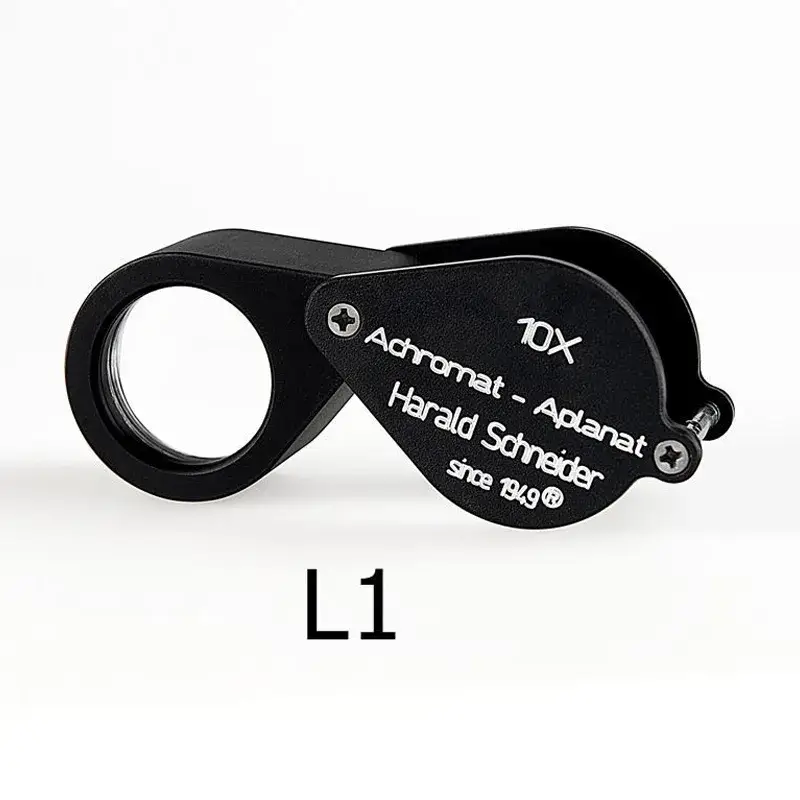
- Lens Engineering: Legendary German-engineered Harald Schneider 10x Achromat-Aplanat flagship triplet system custom-made from the highest-quality German optical glass.
- Technical Metric: Layered with a proprietary, premium color-neutral anti-reflective coating designed specifically for diamond graders to achieve maximum light transmission and depth of focus without introducing artificial hues.
- Best For: International laboratory diamond color grading, high-value auction house evaluations, and confident purchasing decisions where distortion-free, razor-sharp edge-to-edge clarity is required.
Frequently Asked Questions
Q: Doesn’t a non-coated lens suffer from more glare than a coated lens?
A: While standard anti-reflective coatings reduce ambient surface glare, low-quality coatings compromise color purity. In professional gemology, internal glare is strictly controlled via flat black lens housings (like the JYBS Hexagon model) and optimized light angles rather than colored chemical coatings.
Q: Why does the box of my magnifier say “Achromatic” if it is non-coated?
A: Achromatic correction is a matter of lens geometry and glass bonding—it means using different shapes of glass to bring color wavelengths to a single focus point. Coatings are simply chemical treatments applied on top of that physical geometry.
Q: Can a standard blue-coated loupe be used for checking diamond inclusions (Clarity)?
A: Yes, standard coated loupes are perfectly fine for checking inclusions, fractures, or laser inscriptions. However, they should be swapped for a color-neutral or non-coated lens the moment you begin critical D-to-Z color grading.
Q: How does lighting interact with a professional non-coated lens?
A: A non-coated lens passes through whatever light is given to it. Therefore, it must be paired with a standardized 5000K–6500K North-Daylight equivalent grading lamp to achieve accurate results.
Q: Does a non-coated lens scratch more easily than a coated one?
A: No. In fact, low-end anti-reflective coatings are often softer than optical glass and scratch easily, creating cloudy micro-scratches over time. Non-coated high-quality optical glass is highly durable and easier to clean thoroughly.
Strategic B2B Partnerships
JYBS operates as a specialized supplier for global jewelry tool manufacturers and industrial laboratories. We focus on supplying high-precision instruments that strictly adhere to the rigorous technical standards of professional work environments.
Looking for Wholesale Pricing or Bulk Procurement?
- B2B Bulk Orders: Customized tiered pricing structures designed to scale for tool retailers, educational institutions, and gemological laboratories.
- Worldwide Shipping: We support worldwide procurement with reliable global shipping. Our professional tools—including industry-standard loupes—can be delivered directly to international buyers and facilities across the globe.
- Technical Consulting: Acquire the detailed specification sheets and high-volume wholesale quotes you require within a guaranteed 3-hour turnaround.
Contact our B2B Sales Team for a Professional Quote