
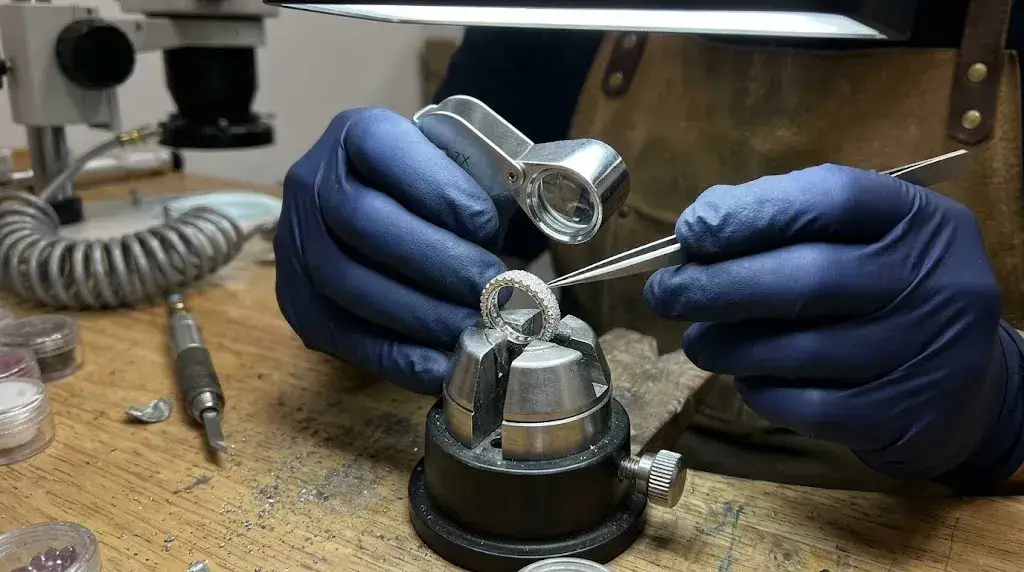
Why Micro-Pave Setters Require a Specialized Loupe
- The Discipline of Micro-Pave Setting: Micro-pave setting is an extreme discipline where jewelers set dozens of diamonds—often smaller than 1.0mm in diameter—using pneumatic gravers under a microscope.
- The Role of the Hand-Loupe: Although stereo microscopes are the primary bench tool, setters rely on hand-loupes for rapid, mid-process quality control. This includes checking girdle alignment and inspecting the final “bright-cutting” (the polished metal edges surrounding the stones).
- Requirement for Extraordinary Depth of Field (DoF): A setter needs a loupe with high DoF to evaluate curved pieces, such as eternity bands. This allows them to see multiple stones in focus at once to properly judge the symmetry of the beads.
- Aplanatic (Flat-Field) Lens Necessity: Highly corrected aplanatic lenses are essential to eliminate spherical distortion. Without a flat field of view, diamonds at the periphery appear warped, making it impossible to verify if the pave layout is mathematically straight.
- Optimized Magnification and Working Distance: Setters often prefer a slightly lower magnification, such as 7x or 8x.
- Focal Length for Maneuverability: This lower magnification provides a longer Focal Length (Working Distance), which is necessary to comfortably hold both the ring and a pair of tweezers under the lens during inspection.
Critical Optical Specs for Micro-Pave Standards
Symmetry and structural alignment are the core focus; distortion control is an absolute necessity.
| Key Specification | Recommended Standard | Why It Matters for Pave Setters |
| Spherical Correction | Aplanatic Flat-Field | Pave rows must be perfectly straight. Any “barrel” or “pincushion” distortion in the lens will falsely curve the appearance of the diamond layout. |
| Depth of Field (DoF) | High (Deep Focal Plane) | Allows the setter to inspect the top of the retaining beads and the culet (bottom) of the diamonds simultaneously without adjusting their head. |
| Focal Length | 18mm (For Final QC) to 350mm (For Active Setting) | Active cutting requires long clearance (30mm+) to prevent bumping tools against the glass. However, for the final structural inspection of the beads and bright-cutting, a standard 18mm focus (10X Loupe) is mandatory for maximum detail. |
Top 3 Loupe Recommendations for Micro-Pave Setters
For a micro-pave setter, the term “loupe” extends beyond the traditional 10X eye-piece. An efficient, professional workflow requires a combination of high-magnification QC loupes, wide-view hand magnifiers, and hands-free head visors.
1. SmartPro Triplet Loupe H10
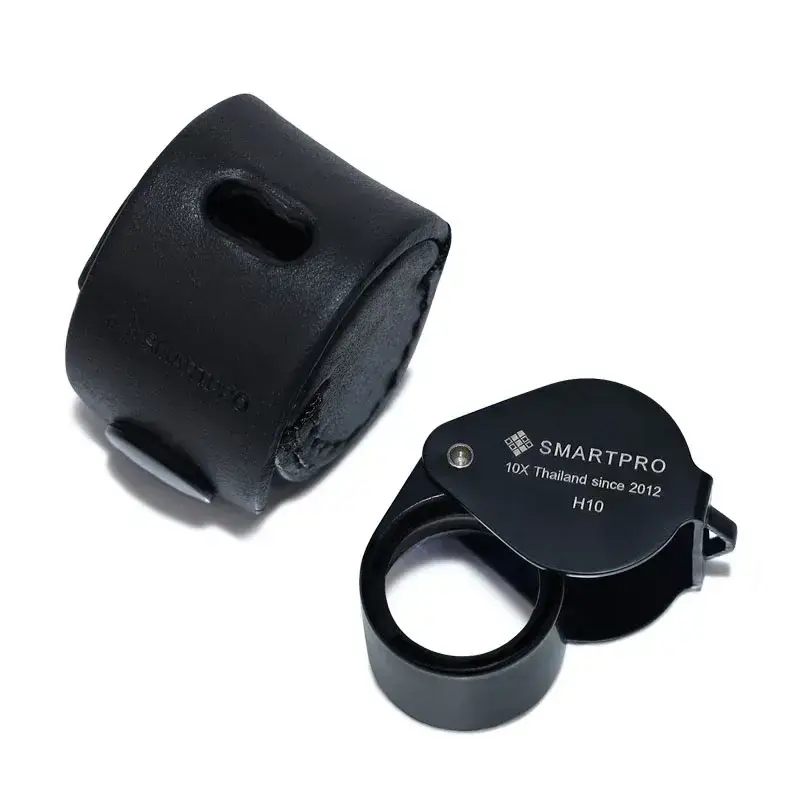
- Specs: 10X (± 1%) magnification, 14.5mm optical glass equiconvex lens, 18mm focus distance, >63 lines/mm resolution. Made in Thailand.
- Verdict: The gold standard for final QC. Weighing just 15.75g, this ergonomic loupe delivers a crisp, high-definition image with negligible color aberration and zero internal strain. Its unique equiconvex lens allows setters to view micro-pave details from either side, while the 63 lines/mm resolving power ensures the outermost rows of a halo are as geometrically accurate and sharp as the center.
2. Hand Grip 5x 7x Magnification Loupes Mini Portable
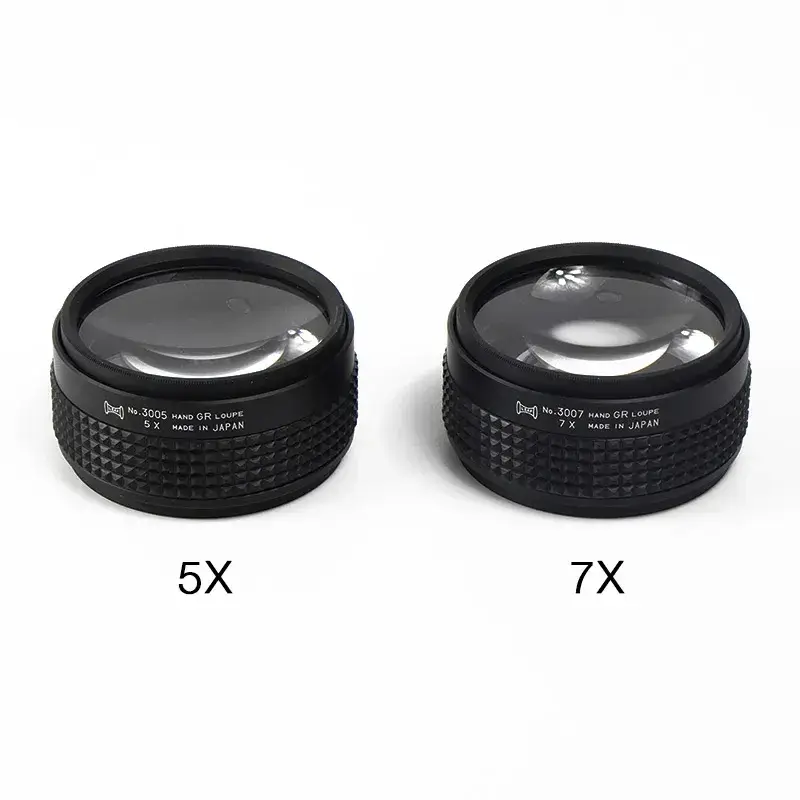
- Specs: Selectable 5X or 7X magnification, massive 53.5mm lens diameter, ergonomic handle.
- Verdict: The ultimate mid-process tool for bulk workshop procurement. Offering optical performance that rivals expensive Japanese brands, this JYBS model features a massive 53.5mm lens that drastically extends the depth of field. It provides a sweeping, uninterrupted view of curved eternity bands. The lower 5X or 7X magnifications allow the setter to see deep into freshly drilled pilot holes with a comfortable working distance, preventing tool collisions at the bench.
3. Original OptiVISOR Head Magnifier
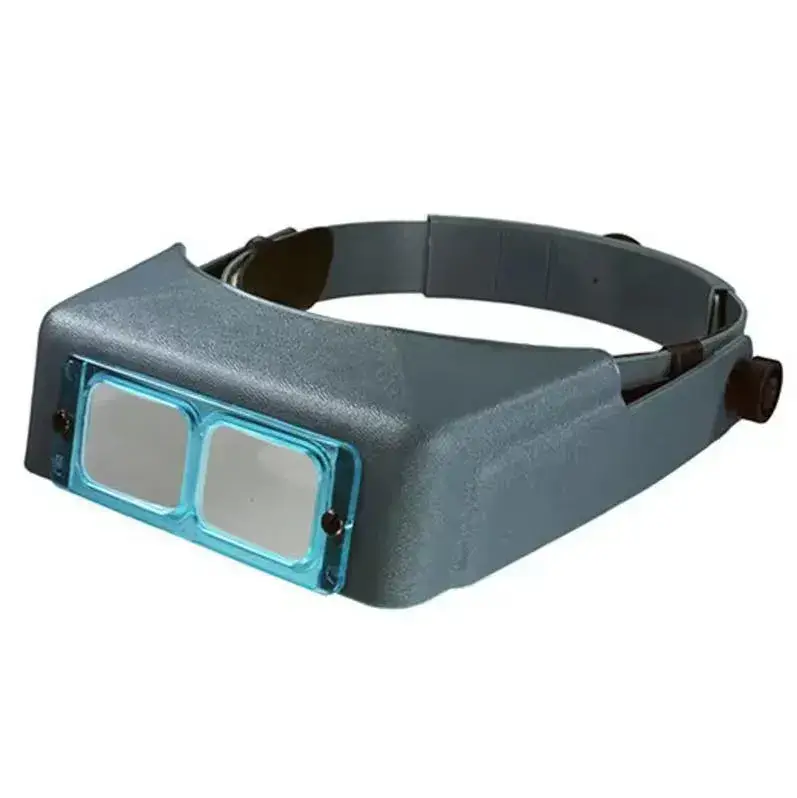
- Specs: Binocular headband magnifier, ground and polished optical glass prismatic lenses, selectable magnification (1.75X to 3.5X), 4″ to 14″ focal length. Made in USA.
- Verdict: For setters who need precision 3D vision without being tethered to a heavy stereo microscope. Featuring interchangeable lenses (DA3 through DA10), it offers massive clearance—up to 14 inches (350mm) of working distance—leaving both hands completely free for pneumatic handpieces and gravers. The adjustable tilting visor and genuine leather orthopedic felt band ensure comfort during long hours at the bench.
How to Clean and Protect Your Micro-Pave Loupe
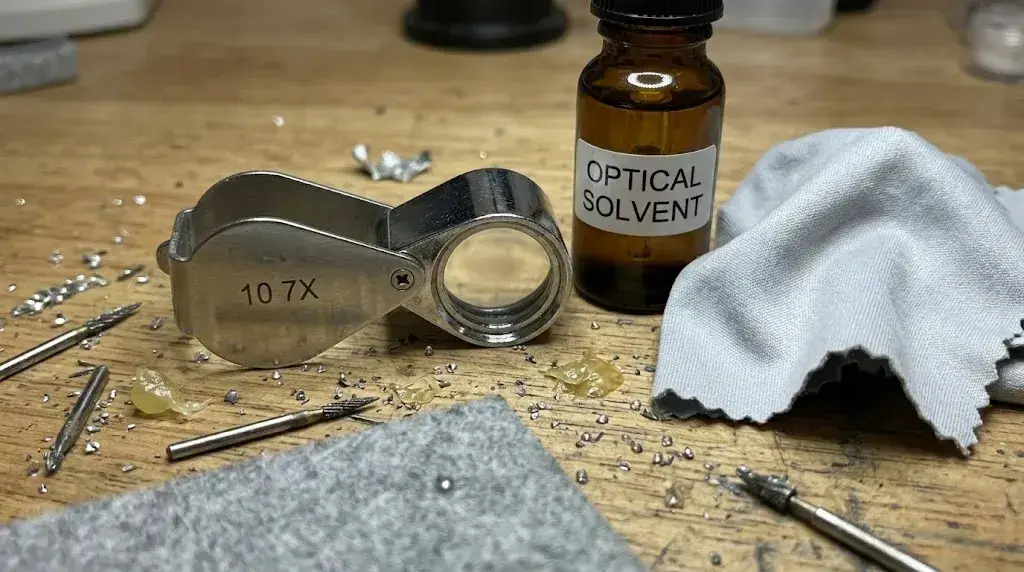
- Abrasive Bench Environment: A setter’s bench is a high-risk area covered in abrasive debris, including shattered diamond melee, broken carbide burs, and sticky holding wax.
- Preventing Scratches: If a loupe is dropped on a bench block, even a tiny rogue diamond shard can instantly scratch the optical glass, causing permanent damage.
- Wax Contamination: When picking up the loupe to check a setting, it is vital to ensure your fingers are free of setting wax. Wax transfers easily to the lens and is notoriously difficult to remove.
- Avoiding Smeared Film: Improperly removed wax often leaves a smeared film on the optics, which compromises the clarity needed for fine inspection.
- Professional Maintenance: To maintain optimal performance, use a dedicated optical solvent and a fresh microfiber cloth on a weekly basis to thoroughly clean the lens.
Looking to upgrade your workshop’s optical capabilities? Browse our latest collection of high-definition magnifiers and microscopes to ensure every bead and bright-cut is executed with perfection.
FAQ: Selecting a Loupe for Micro-Pave Setting
- Q: Can I use my 10x loupe while actively cutting metal with a graver?
- A: No. A 10x loupe requires a very short focal length (around 18mm). Your graver and your hand need much more space than that. For active cutting, you must use a stereo microscope or a hands-free visor to achieve the necessary tool clearance.
- Q: Why does the row of diamonds look curved in my loupe, but straight to the naked eye?
- A: This is classic spherical aberration (barrel distortion). You are using a cheap lens. A high-quality Aplanatic Triplet mathematically corrects the light paths so that straight lines remain perfectly straight.
- Q: Do I need Achromatic (color) correction for pave setting?
- A: It is less critical than for diamond grading, but still highly recommended. Pave diamonds are usually F-G color; chromatic aberration might introduce yellow fringes, making the setter think they accidentally mixed in lower-color stones.
Need to bulk buy for your Micro-Pave Setting team?
Get a Quick Quote. Our optical specialists will respond within 3 hours.