

Why Independent Jewelry Designers Need a Specific Type of Rolling Mill
- Workspace & Versatility: For independent jewelry designers, workspace is often at a premium, and versatility is non-negotiable. Unlike mass-production facilities that use dedicated power mills for specific tasks, an independent studio requires a single piece of equipment capable of transitioning seamlessly from drawing square wire for ring shanks to flattening sterling silver sheet for bezel settings.
- The Need for Combination Mills: When you are constantly switching between custom alloys—perhaps moving from 18K yellow gold to Argentium silver within the same hour—you need a combination mill. A standard flat mill limits your creative output.
- Managing the Fabrication Process: Furthermore, independent designers often handle the entire fabrication process. Understanding the metal’s ductility and knowing precisely when to stop rolling and begin the annealing process is critical.
- Tactile Feedback & Protection: A high-quality combination mill provides the tactile feedback necessary to feel the metal’s resistance before work hardening causes micro-fractures in your billet.
Key Technical Specs for Independent Design Applications
When outfitting a bespoke studio, prioritizing the right specifications over raw size will save you both capital and bench space.
| Specification | Recommended Range | Why It Matters for Independent Designers |
| Roller Type | Combination (Flat & Wire) | Eliminates the need for two separate mills; allows for drawing square wire and rolling sheet metal. |
| Gear Ratio | 4:1 or 5:1 | Reduces physical fatigue during manual operation, providing enough torque for dense alloys without sacrificing speed. |
| Roller Hardness | Minimum HRC 60 | Ensures the rollers maintain a mirror finish over years of daily use, preventing transfer marks on your precious metals. |
| Extension Rollers | Half-round grooves | Crucial for forming D-shape wire for traditional ring bands without using a drawplate. |
Top 3 Rolling Mill Recommendations for Independent Jewelry Designers
Based on bench testing and long-term reliability in bespoke studios, here are the top three models for 2026:
1. Durston® DRM Rolling Mills DRM C130RE
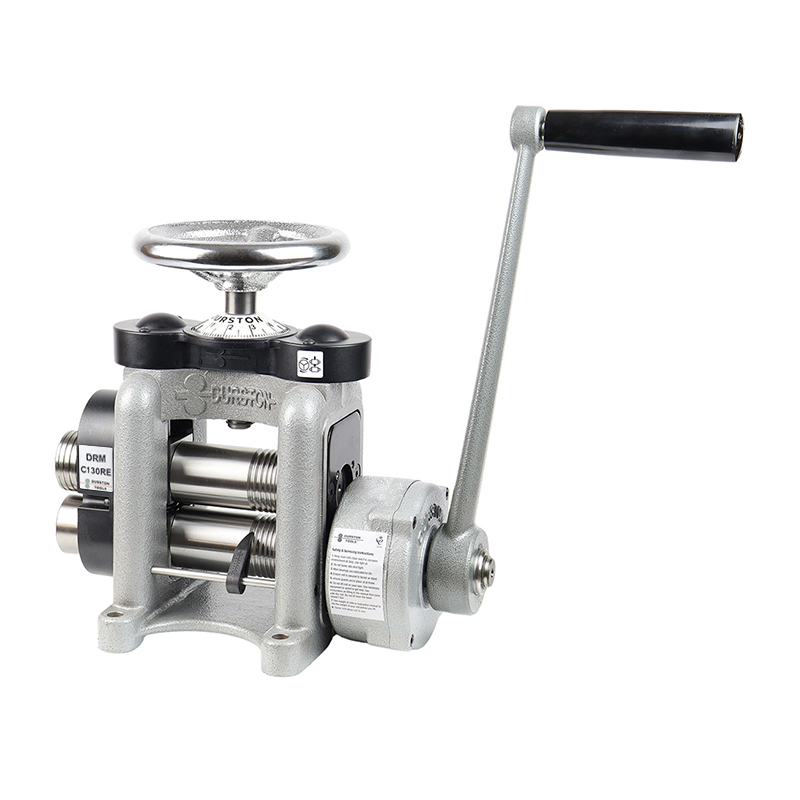
- Key Specs: 130mm Roll Length, 60mm Roller Diameter, 5:1 Gearbox, Max Sheet Thickness: 6mm, Max Wire Capacity: 8mm, Weight: 45.3KG
- Verdict: The ultimate studio workhorse. Manufactured in the UK, the DRM C130RE provides a massive mechanical advantage with its 5:1. reduction gear, making the processing of thick ingots incredibly smooth and reducing physical fatigue. Its robust 45.3kg frame ensures zero flex during operation. With 11 dedicated wire grooves and specialized side extensions (1.5mm to 4mm), independent designers get maximum versatility for complex fabrication without needing additional bench tools.
2. Durston® Mini Rolling Mills Agile C130
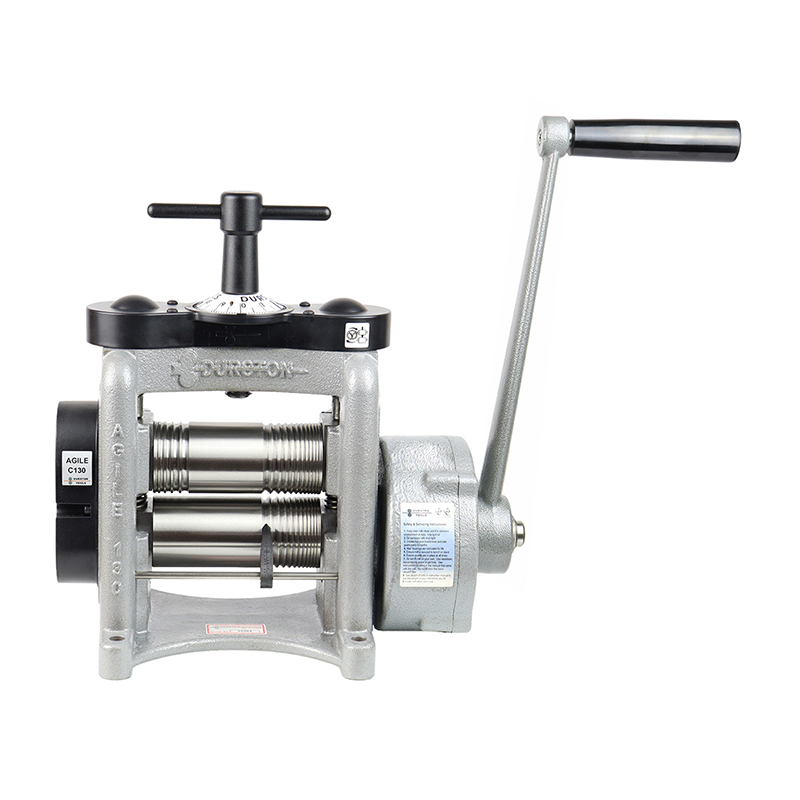
- Key Specs: 130mm Roll Length, 60mm Roller Diameter, 5:1 Gearbox, Max Sheet Thickness: 6mm, Half-Round Sizes: 2mm–6mm, Weight: 39.7KG.
- Verdict: The ideal balance of premium power and a streamlined footprint. The Agile C130 delivers the exact same impressive 130mm working width, 6mm maximum sheet capacity, and effortless 5:1 gearbox as the premium DRM line, but in a lighter 39.7kg chassis. It is perfect for designers who demand top-tier reliability and wide half-round capabilities (up to 6mm) but want a slightly more manageable weight for their studio setup.
3. Combination Rolling Mill 130MM(L)65MM(D) – JYBS
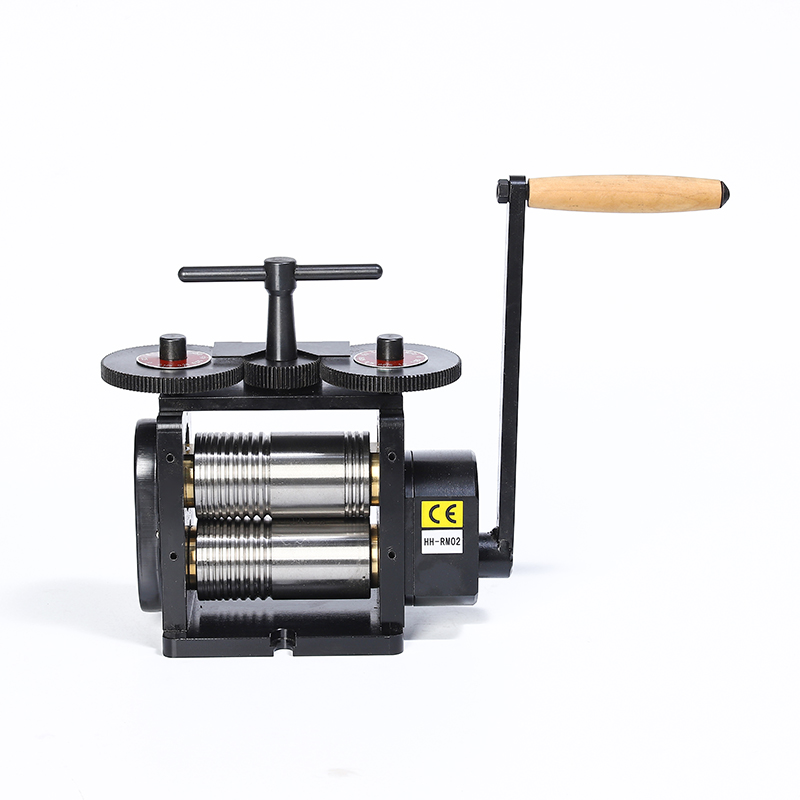
- Key Specs: 130mm Roll Length, 65mm Roller Diameter, 4:1 Gear Ratio, Max Opening: 4.5mm, Flat Area: 63mm, Weight: 23KG.
- Verdict: The high-efficiency space saver. Measuring just 30 x 13.5 x 29.5 cm and weighing only 23kg, this mill is specifically designed to maximize extremely tight workspace. Despite its compact size, it offers a generous 63mm flat area alongside comprehensive square wire (1.0mm–6.5mm) and ring shank grooves. The 4:1 gear ratio provides excellent torque for daily tasks, making it a stellar, budget-friendly choice for entry-to-mid-level bespoke studios.
Maintenance Tips for Independent Studios
In a one-person studio, equipment downtime means lost revenue. To protect your investment:
- Never roll metal that hasn’t been properly pickled and dried after annealing; copper oxides and flux residues are highly abrasive and will pit your rollers.
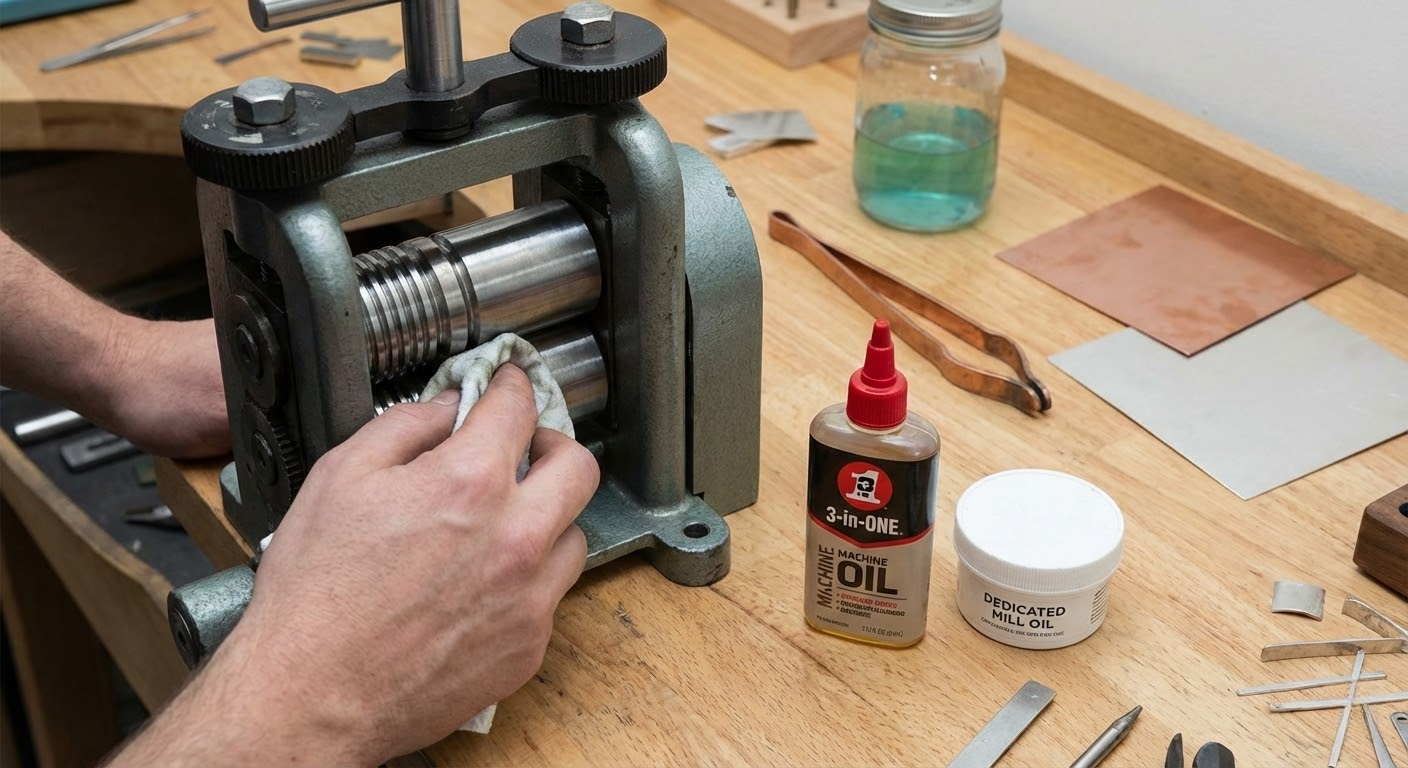
- At the end of every workday, wipe the rollers with a lint-free cloth lightly coated in a high-grade machine oil (like 3-in-One or dedicated mill oil).
- Prevent contamination: If you are rolling base metals like brass or copper for prototyping, ensure you clean the rollers thoroughly before switching back to gold or silver to prevent cross-contamination of the grain structure.
Frequently Asked Questions about Independent Design Tools
- Q: Can I roll patterned metal on a combination mill?
- A: Yes, but you must use the flat section of the rollers and sandwich your metal with the texture plate (like a brass template or skeletonized leaf) between two sheets of protective brass or copper to prevent damaging the mill’s HRC 60+ surface.
- Q: How do I know when to anneal my metal while rolling?
- A: Listen to the mill and feel the handle. As the metal undergoes work hardening, its ductility drops and tensile strength increases. When the metal resists the roll and the handle becomes difficult to turn, stop immediately and anneal.
- Q: Is a 4:1 gear ratio necessary for a solo jeweler?
- A: Highly recommended. A 4:1 ratio means four turns of the handle equal one turn of the roller. This mechanical advantage prevents shoulder strain and allows for smoother, more consistent passes, which results in better sheet thickness uniformity.
- Q: Why are my silver sheets curving as they come out of the mill?
- A: Curving usually occurs when the metal is not fed perfectly straight, or if the metal was not annealed evenly. Always feed the sheet into the center of the flat rollers.
- Q: Do I need to bolt the mill to my bench?
- A: Absolutely. A loose mill creates uneven pressure and poses a severe safety hazard. Mount it to a heavy, vibration-dampening jeweler’s bench using heavy-duty carriage bolts.
Ready to upgrade your personal studio setup?Get a Quick Quote. Our team will provide a detailed quote sheet tailored for independent designers within 3 hours.