

Why Jewelry Repairers Need a Specific Type of Rolling Mill
- Time as a Commodity: In high-volume jewelry repair, time is your most valuable commodity. Unlike fabricators who start from raw ingots, repair bench jewelers are typically modifying existing stock—resizing heavy men’s bands, rebuilding worn prongs, or drawing down scrap gold to create half-round sizing stock. Your rolling mill needs to be fast, precise, and immediately accessible.
- Handling Diverse Alloys: Repairers frequently deal with a myriad of alloys with varying degrees of tensile strength, from brittle vintage 10K gold to highly malleable 24K pure gold. You cannot afford a mill that requires constant, tedious recalibration.
- Precision and Responsiveness: A repair-focused mill must feature a highly responsive dial gauge and quick-release tension adjustments. When you need to match the exact 1.8mm thickness of a worn ring shank, guessing isn’t an option.
- Absolute Parallelism: The mill must provide absolute parallelism to ensure the sizing stock solders cleanly without gaps.
Key Technical Specs for Jewelry Repair Applications
A repair bench demands precision over sheer capacity. Here is what matters when matching existing jewelry dimensions.
| Specification | Recommended Range | Why It Matters for Repairers |
| Micrometer Dials | Calibrated to 0.01mm | Essential for accurately matching the gauge of existing ring shanks and bezel walls during restoration. |
| Roller Configuration | Heavy on Wire/Half-Round | Repairers draw more wire for prongs and sizing stock than they roll large flat sheets. |
| Frame Rigidity | Cast Iron Solid Frame | Prevents microscopic flexing under load, ensuring the exact thickness is achieved on the first pass to save time. |
Top 3 Rolling Mill Recommendations for Jewelry Repairers
For the fast-paced environment of a repair shop, we recommend the following precision-engineered models:
1. Durston® Mini Rolling Mills Agile C110
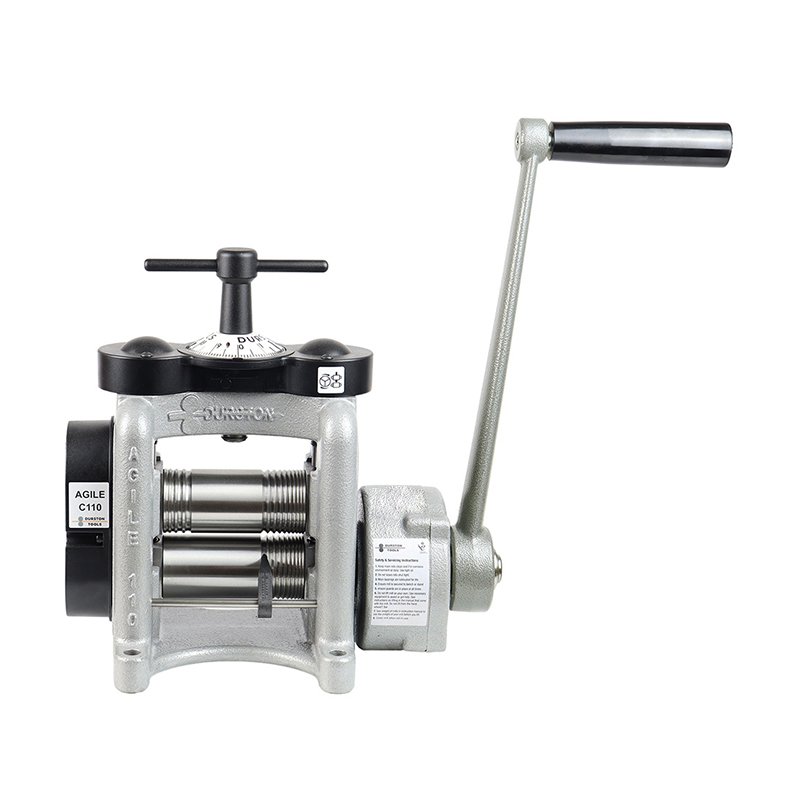
- Key Specs: 110mm Roll Width, 4:1 Gearbox, 50mm Flat Area, 9 Square Grooves, Half-Round Sizes (2, 3, 4, 5mm), Max Sheet Thickness: 5.5mm, Weight: 26KG.
- Verdict: Perfect for the crowded repair bench. The Agile C110 offers legendary Durston precision with fully supported, self-lubricating bearings that are completely maintenance-free—saving you valuable time. It provides a precise 50mm flat area for creating sizing stock, alongside 9 square grooves and 4 half-round extensions that are absolutely crucial for rebuilding worn prongs and ring shanks accurately.
2. Only wire Rolling Mill – JYBS
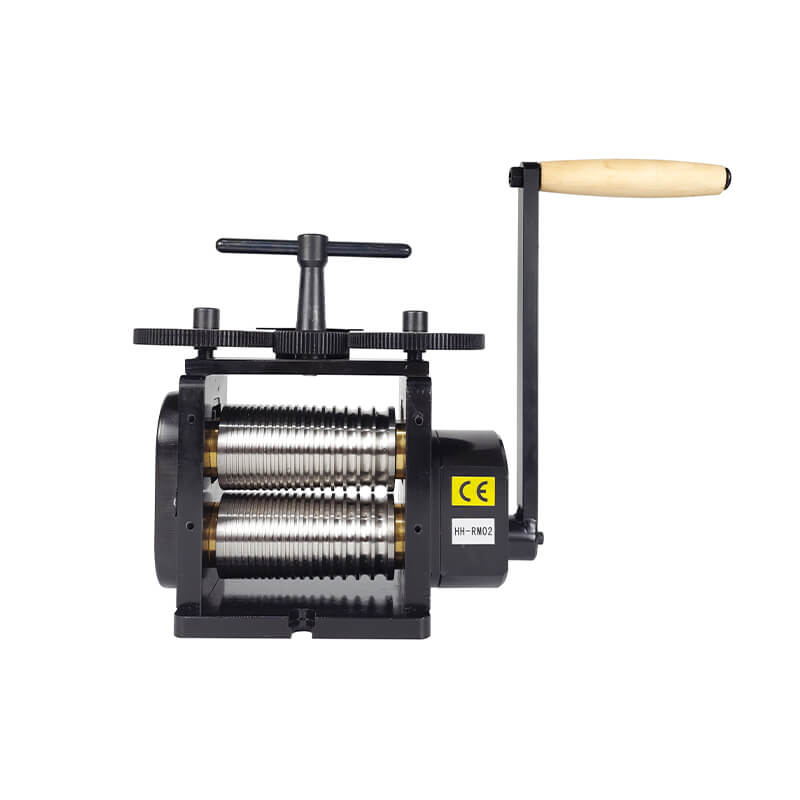
- Key Specs: 130mm Roll Width, 65mm Roller Diameter, 4:1 Gear Ratio, Max Opening: 4.5mm, Square Wire (1.0mm–6.5mm), Ring Shank Half-Round (2.5×1 to 4×1.5mm), Weight: 23KG.
- Verdict: The ultimate time-saver for prong and shank rebuilding. Because repair jewelers frequently draw down scrap gold into specific shapes, this mill handles extensive wire work with precision. The 4:1 gear ratio and the highly detailed square and half-round ellipsis grooves allow you to rapidly fabricate custom sizing stock for heavy men’s bands or delicate vintage rings without struggling against tough alloys.
3. US Made Flat Rolling Mill 110MM(L)55MM(D) – JYBS
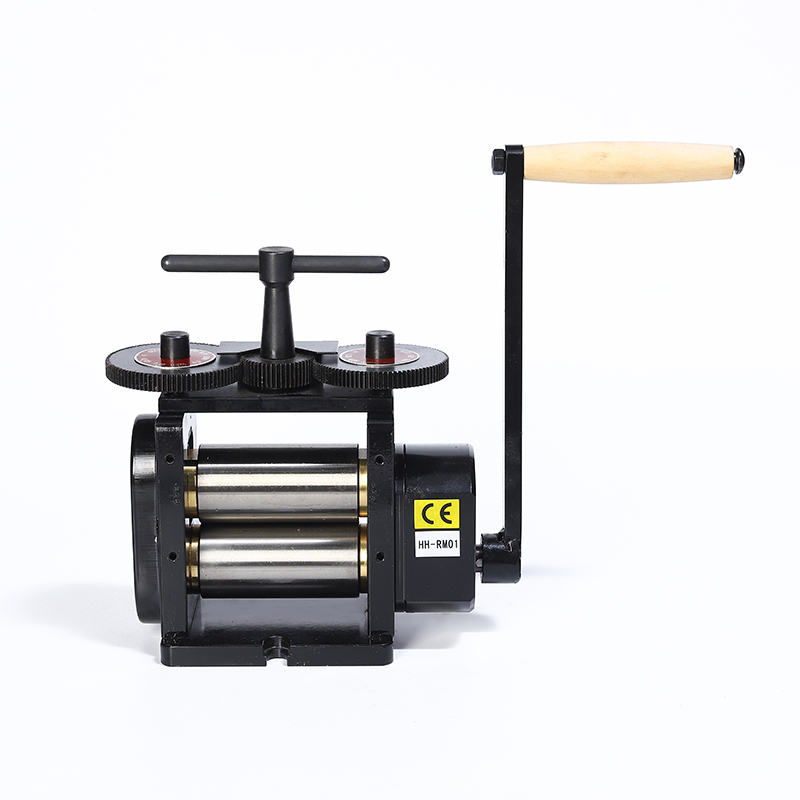
- Key Specs: 110mm Roll Width, 55mm Roller Diameter, 4:1 Gear Ratio, 110mm Dedicated Flat Area, Max Opening: 4mm, Dimension: 23×13.5x28CM, Weight: 18.5KG.
- Verdict: An excellent, space-saving dedicated flat mill for retail-front repair shops. Measuring just 23×13.5x28cm and weighing a highly manageable 18.5kg, it securely fits onto the tightest standard repair desks. The full 110mm flat area and sturdy 4:1 gear ratio deliver absolute parallelism, ensuring that when you roll out flat sizing stock or bezel walls, the thickness is uniform and solders cleanly without gaps on the very first pass.
Maintenance Tips for Repair Workshops
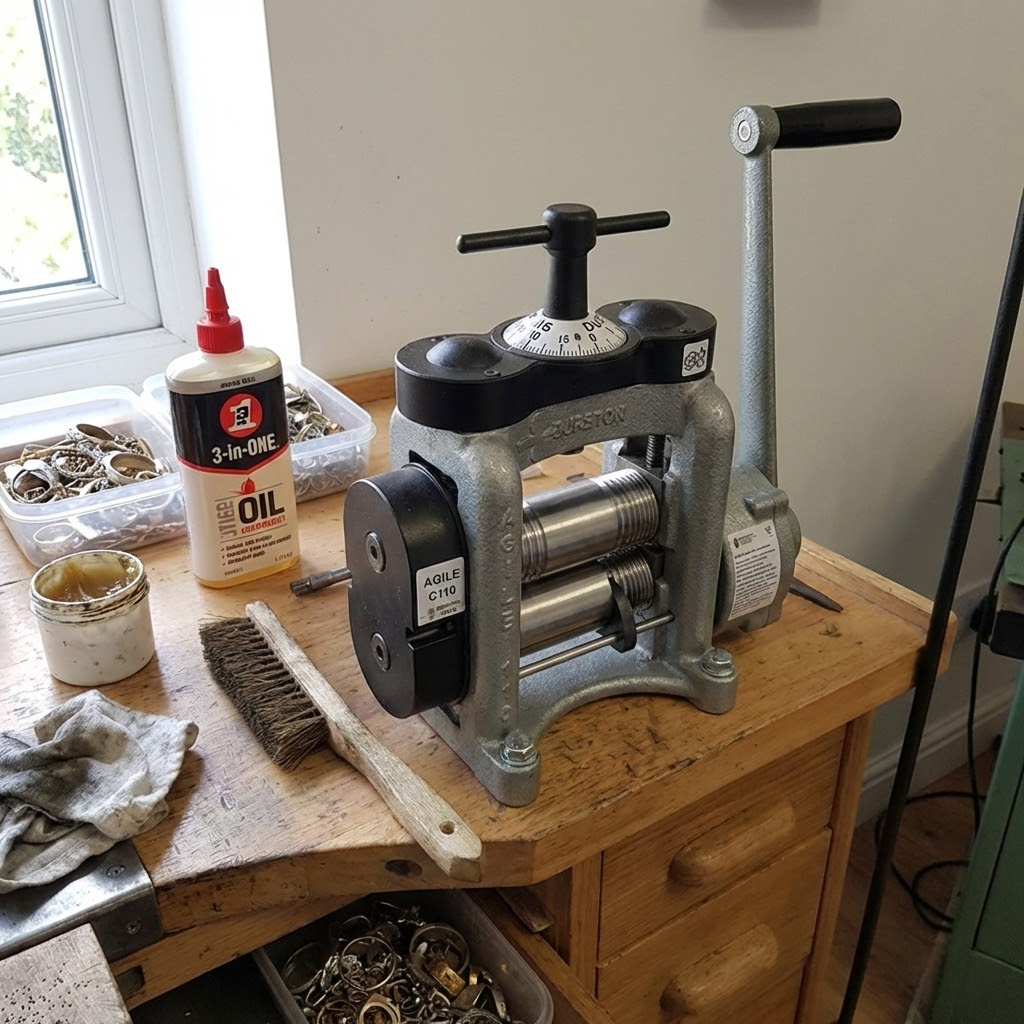
- Handle Contaminated Metal: Repair shops often deal with dirty metal—old jewelry covered in polishing compounds, lotions, and sizing solders. Never roll metal that has solder on it without understanding its melting point and hardness, as hard solders can sometimes crack under pressure and damage the rollers.
- Daily Dust Management: Because repair mills are used in short, frequent bursts throughout the day, keep a dedicated soft brush nearby to sweep away gold and silver dust from the gears.
- Lubrication and Thread Protection: Lubricate the T-bar and top gear assembly weekly, as the constant micro-adjustments required for repair work can wear out dry threads quickly.
Frequently Asked Questions about Jewelry Repair Tools
- Q: Can I use my rolling mill to flatten out an old ring for scrap?
- A: Yes, but remove any stones first! Also, ensure the ring has been fully annealed. Rolling a work-hardened, cast ring will likely crack the metal and could potentially stress the mill’s bearings.
- Q: Why is half-round wire so important for a repair mill?
- A: 90% of ring sizings up (adding metal) require half-round or flat-milled stock. Having side-extension rollers with half-round grooves allows you to instantly fabricate sizing stock from your scrap gold.
- Q: Do I need a reduction gear for repair work?
- A: While not strictly necessary for rolling thin stock, a 4:1 gear ratio is highly recommended if you regularly work with tough alloys like 14K nickel-white gold, which has high tensile strength and resists deformation.
- Q: How accurately can a good mill match sheet thickness?
- A: A professional mill with a cast-iron frame and top-mounted micrometer dials can achieve tolerances of +/- 0.02mm, ensuring a perfect flush fit for patch repairs.
- Q: Should I clean the rollers between different karat golds?
- A: Generally, wiping with a dry microfiber cloth is sufficient unless you are moving from a very dirty repair job to fabricating with pure platinum, where cross-contamination is a severe issue.
Ready to upgrade your Jewelry Repair setup?Get a Quick Quote. Our team will provide a detailed quote sheet within 3 hours.