
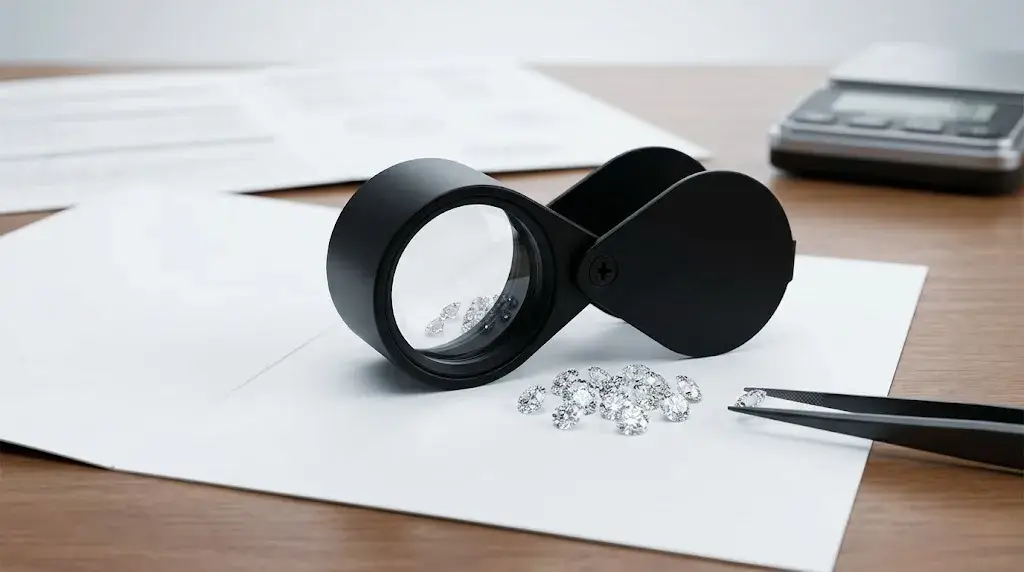
Why Loose Diamond Traders Require a Specialized Loupe
- High-Speed, High-Stakes Sorting: Traders must sort through “parcels”—large papers containing hundreds of melee or carat-sized diamonds—with extreme efficiency. They do not have the luxury of using laboratory microscopes; instead, they must evaluate color, clarity, and make (cut) in a matter of seconds.
- Rapid-Screening “Light Vacuum”: The loupe must function as a high-performance tool for quick assessment. To facilitate this, a massive Field of View (FOV) is the most critical requirement.
- Aperture Size Requirements: While a standard 18mm lens is common, it is too narrow for trade work as it forces the trader to pan excessively. A 21mm to 23mm wide aperture is required to allow the trader to view multiple melee diamonds simultaneously.
- Absolute Achromatic Correction: Because traders evaluate diamonds against white folding paper to judge subtle body color (ranging from D through J), the lens must have perfect color neutrality.
- The Risk of Misgrading: If the glass introduces even a hint of blue or yellow color fringing (chromatic aberration), the financial consequences are severe. A high-value E color diamond could be disastrously misgraded as an F or G, leading to significant loss in a high-stakes environment.
Critical Optical Specs for Loose Diamond Standards
When buying wholesale parcels, light transmission and color neutrality dictate your profit margins.
| Key Specification | Recommended Standard | Why It Matters for Diamond Traders |
| Lens Diameter (FOV) | 21mm to 23mm | A wide lens allows the trader to inspect 5 to 10 melee diamonds at once while they sit in the sorting tray, drastically speeding up the purchasing process. |
| Achromatic Correction | Daylight Neutral Glass | The lens must be chemically neutral. Any optical color bias will interfere with accurately judging the subtle body color of the rough or polished diamond. |
| Anti-Reflective Coating | Multi-Coated Elements | Reduces surface glare from the pavilion facets, allowing the trader’s eye to penetrate the stone immediately to spot dark pique (carbon) inclusions. |
Top 3 Loupe Recommendations for Loose Diamond Traders
Engineered for rapid parcel sorting and flawless color grading:
1. ZEISS D40 & D36 Loupe
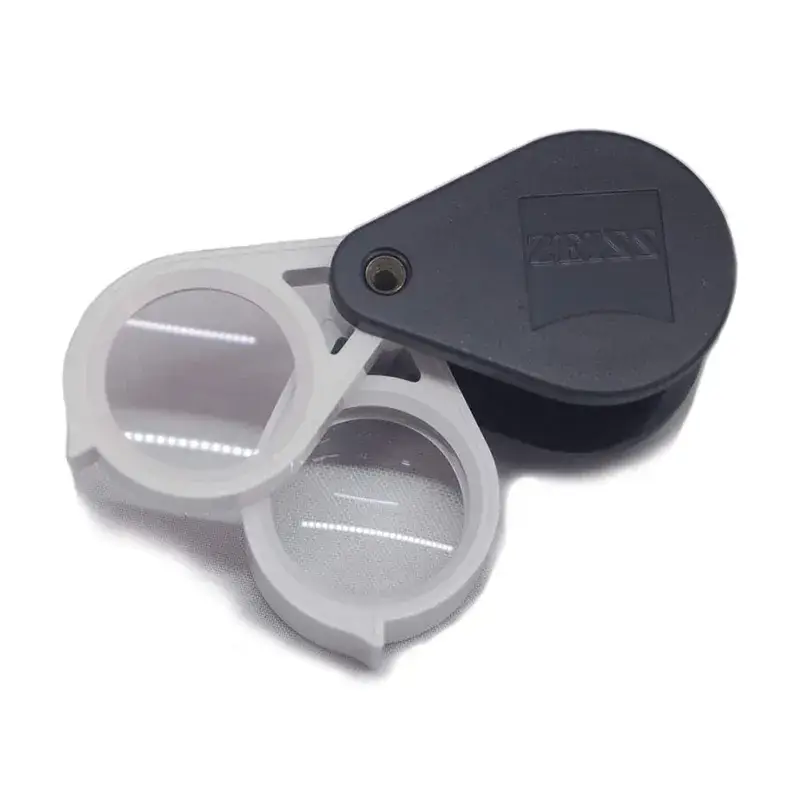
- Specs: 13mm (D40) or 22mm (D36) lens diameter, Aplanatic-Achromatic design, T* Anti-Reflective Coating. Made in Germany.
- Verdict: The ultimate precision tool for demanding professionals. For strict diamond grading, the D40 features a pure, distortion-free 10X fixed triplet lens with a 13mm optically effective diameter and legendary T* coating to minimize glare. For broader routine inspections, the D36 offers a dual independent lens structure providing up to 9X magnification with a wider 22mm view. Both guarantee top-tier achromatic correction.
2. Nikon 10X Triplet Loupe
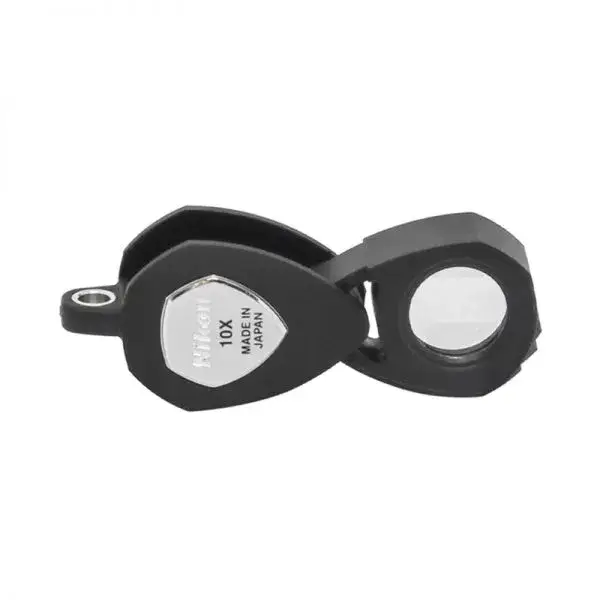
- Specs: 13mm orthoscopic triplet lens, >63 lines/mm high definition, lightweight black plastic frame. Made in Japan.
- Verdict: The master of clarity. This compound lens delivers a distinct, magnified image with absolutely no color distortion or spherical aberration at the edges. While the 13mm size may seem compact, it represents the true in-focus area—larger inferior lenses only offer out-of-focus edges beyond this exact diameter. The matte black case eliminates color-altering light reflections, and the smart 90-degree lanyard eyelet ensures it always hangs correctly.
3. SCHNEIDER Diamond Loupe L2
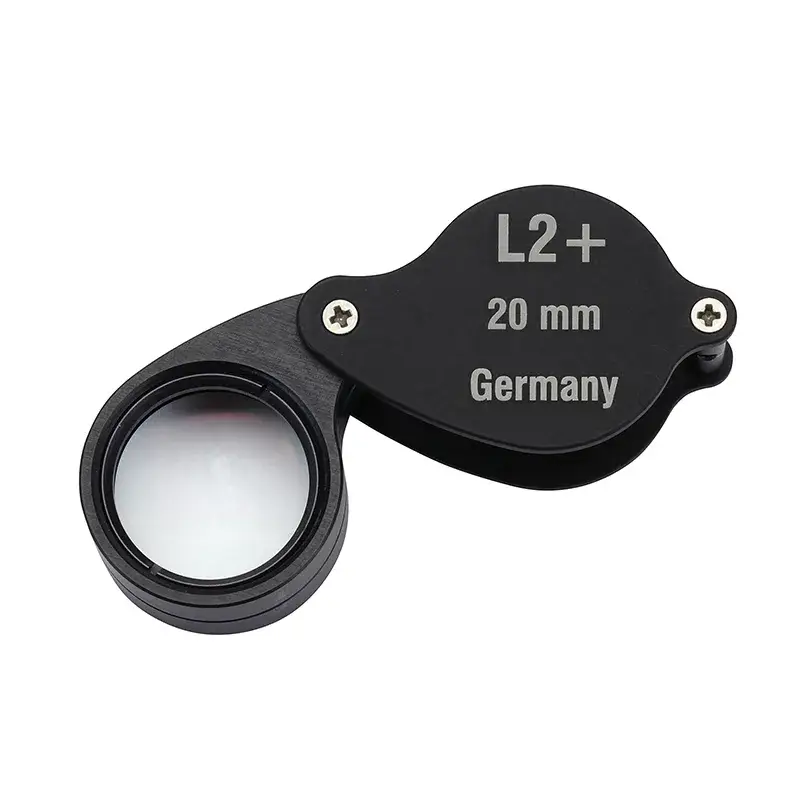
- Specs: 20mm Achromatic-Aplanatic triplet lens, multilayer AR (Anti-Reflective) coating, black ergonomic casing. Designed by Harald Schneider®.
- Verdict: The pinnacle of resolution and depth of focus. The L2 model features a completely new, unique lens system that utilizes a thinner lens design, reducing the overall weight (2.46 oz) while reflecting significantly more light into the viewing area. This 20mm lens virtually eliminates all distortion, offering unmatched sharpness and clarity for high-level gem inspection. It arrives trade-ready with a premium Harald Schneider lanyard and protective leather pouch.
How to Clean and Protect Your Loose Diamond Loupe
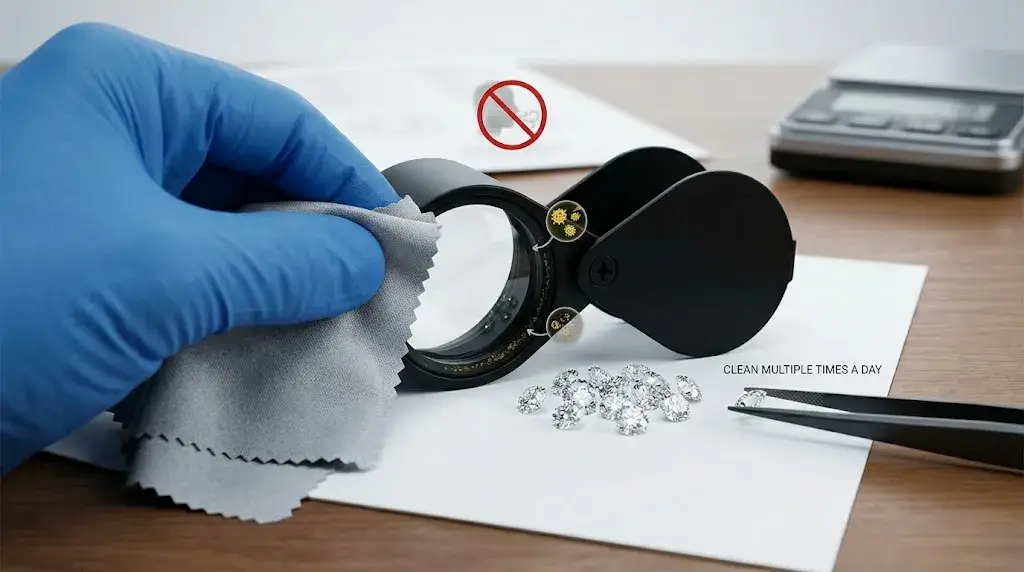
- Manage Oil Transfer: Diamond traders are constantly handling diamond papers, sorting pads, and stones. Skin oils inevitably transfer from the hands to the loupe’s casing and eventually to the edges of the glass.
- Prevent the “Bloom” Effect: An oily lens creates a hazy “bloom” effect. This optical distortion is dangerous because it can mimic the appearance of a cloudy or fluorescent diamond, leading to an incorrect evaluation of the stone’s quality.
- Frequent Cleaning Schedule: You should clean your loupe multiple times a day. Always use an optical-grade microfiber cloth to ensure that dust and oils are removed without scratching the surface of the glass.
- Avoid Using Breath: Never use your breath to fog the lens for cleaning. The moisture and mild acids from your breath can seep into the minute crevices of the metal or plastic housing.
- Prevent Internal Damage: Over time, moisture trapped within the housing assembly can lead to rust on the metal casing rings or irreversible fungal growth around the edges of the lens, effectively degrading the loupe’s longevity and clarity.
FAQ: Selecting a Loupe for Loose Diamonds
- Q: Why does my current loupe make the edges of the diamond look curved?
- A: Your loupe suffers from spherical aberration. It is likely a cheap doublet or single lens. A professional Aplanatic Triplet lens corrects this, ensuring the diamond’s straight facet edges remain perfectly straight in your view.
- Q: Is a 14x loupe better for checking small melee diamonds?
- A: No. A 14x loupe drastically reduces your focal length and narrows your field of view. For rapid parcel sorting, 10x is the universally accepted standard that balances magnification with a wide, bright viewing area.
- Q: Does the color of the loupe’s metal housing matter?
- A: Yes. Professional diamond loupes have black housings (either painted or oxidized). A shiny silver or gold housing will reflect colored light onto the diamond, severely hindering your ability to grade its true color.
Ready to upgrade your optical kit? View all our high-precision magnifiers and professional tools.
Need to bulk buy for your Loose Diamond Trading team?
Get a Quick Quote. Our optical specialists will respond within 3 hours.