

Custom jewelry making isn’t an assembly line—one hour you’re rebuilding prongs next to heat-sensitive antique gems, the next you’re annealing heavy silver cuffs. A responsive thermal setup is the dividing line between endless fire scale cleanup and high-margin, gallery-ready work. Skipping entry-level hobby kits, here are the premier jewelry soldering tools built for pinpoint control, versatile fixturing, and studio-grade safety.
1. The Core Torch System: Precision vs. Heat Output
Selecting the right heat source defines your studio workflow. Custom fabrication demands an intentional balance between a pinpoint flame for tight micro-repairs and broad, enveloping heat for large thermal sinks like sterling silver.
Mini Multi-Gas Torches
Mini multi-gas systems, epitomized by setups like the Smith Little Torch, serve as the workhorse for high-end goldsmithing and fine platinum detailing.
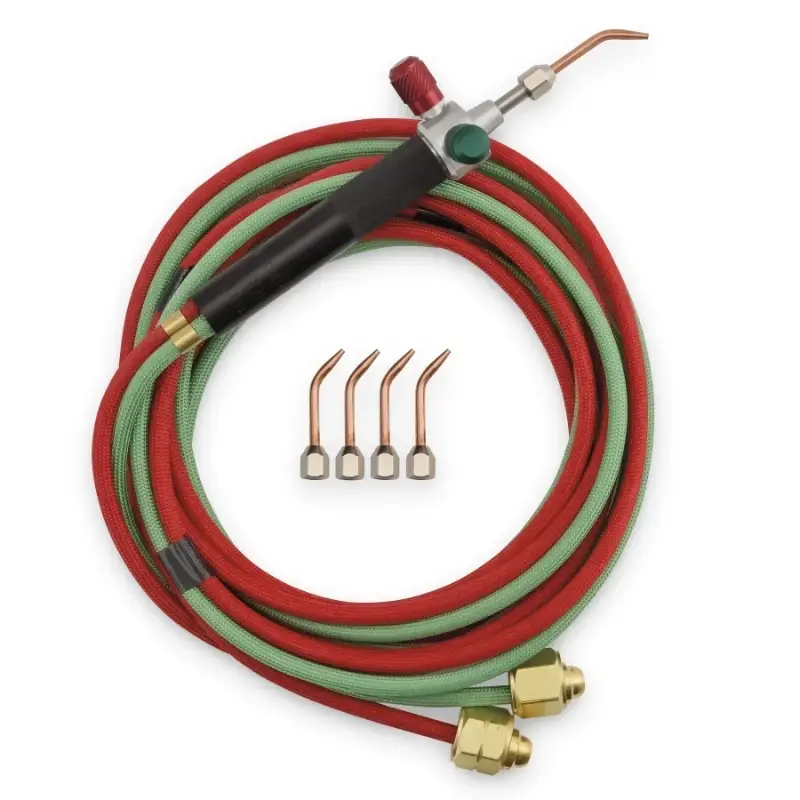
- Key Advantages: The aluminum handle weighs mere ounces, eliminating wrist strain during multi-hour assembly sessions. Paired with curved precision tips (#2 through #7), it produces an intense, needle-sharp flame with zero thermal spillover.
- Practical Applications: Fast prong re-tipping on micro-pavé settings, clean jump-ring fusion, and delicate ring resizing without stripping surrounding metal.
- Recommended Gas Setup: Oxygen and propane. While oxygen-acetylene yields extreme heat, it creates airborne carbon soot and foul odors inside small spaces. Propane burns clean, leaves zero soot on fine gold, and operates safely in enclosed studios.
Heavy-Duty Butane Torches
Stand-alone butane torches provide self-contained, high-volume heat without running pressurized lines across your bench.
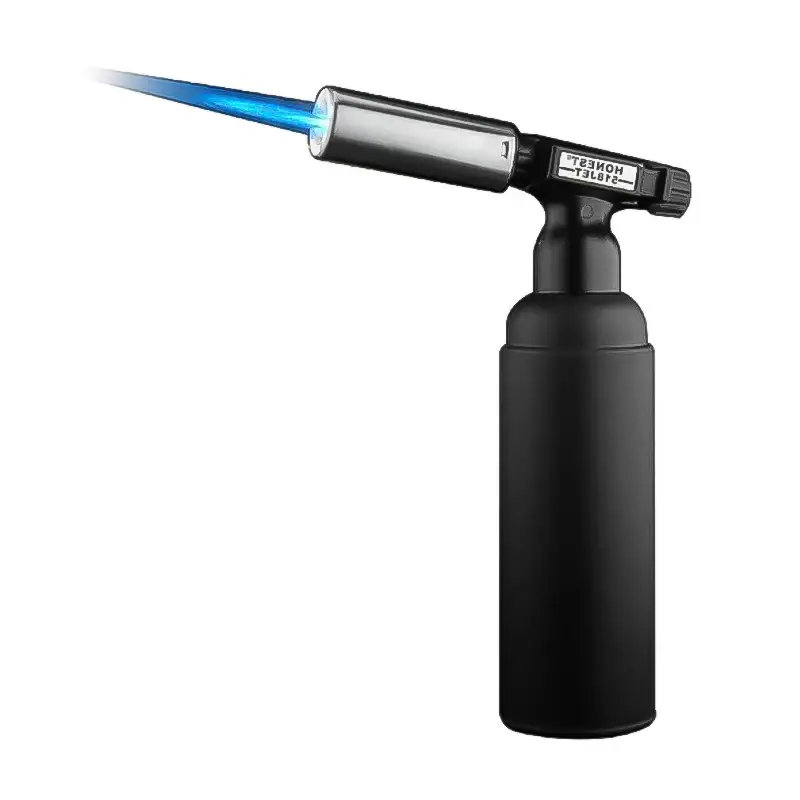
- Key Advantages: No hoses pulling against your hand, zero gas tanks under the desk, and immediate piezoelectric ignition.
- Practical Applications: Annealing broad gauge sheet, melting scrap in small crucibles, and preheating heavy sterling silver bangles that pull heat away faster than a micro-torch can supply it.
Pulse Arc & Micro TIG Systems (e.g., 150Ws–200Ws Dual-Mode Pulse Welder)
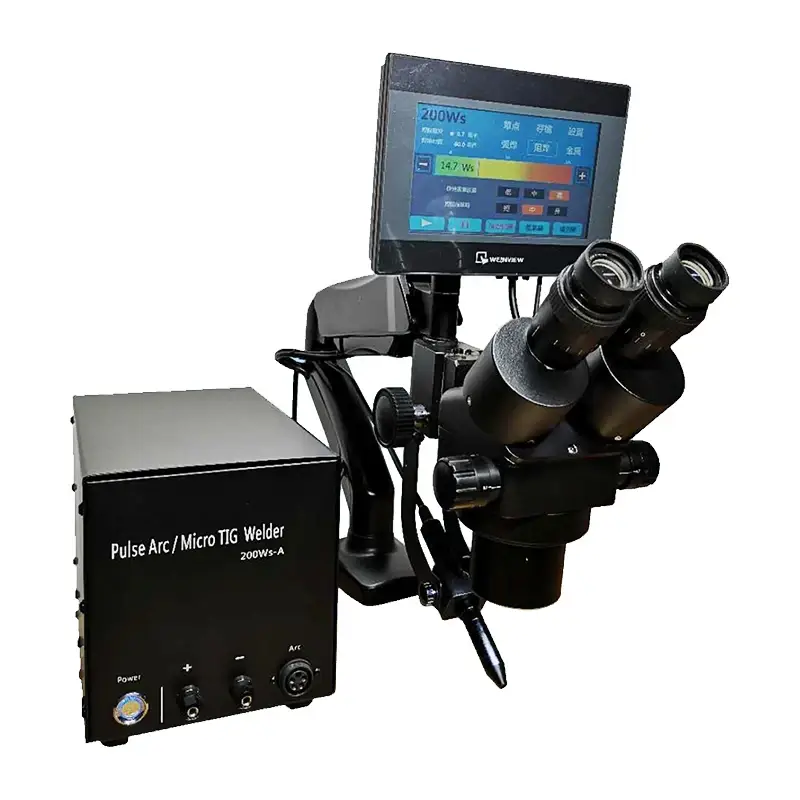
- Key Advantages: Combines pulse arc micro-welding with resistance tacking up to 200Ws (joules) of energy under automatic argon gas shielding. The split console design with an independent 4” industrial touch screen keeps the main unit off crowded benches while offering 10 customizable preset memories for seamless alloy switching.
- Integrated Optical Precision: Equipped with a 7–45x continuous zoom stereo microscope and a fast-response electronic auto-darkening UV shutter, allowing jewelers to inspect and fuse joints at the micron level without optical fatigue.
- Practical Applications: Sizing eternity rings, re-tipping prongs directly against heat-sensitive stones (emeralds, pearls, opals) with zero thermal shock, closing hollow chain links, and tackling reactive metals like titanium and stainless steel.
| System Type | Power & Fuel System | Thermal & Joint Characteristic | Best Used For |
| Mini Multi-Gas Torch | Oxygen + Propane | Concentrated needle flame; precise local heating | Pavé prong repairs, ring sizing, bezel soldering |
| Heavy-Duty Butane | Refillable Butane | Soft, wide, high-volume brush flame | Annealing thick wire/sheet, silver cuffs, ingot casting |
| Pulse Arc & Resistance Welder (150Ws–200Ws) | Electric Pulse + Automatic Argon Shield | Non-contact micro-arc; localized cold weld with zero thermal spread | Stone-adjacent prong re-tipping, porosity filling, titanium & fine chains |
2. Thermal Foundations & Hands-Free Fixturing
Controlling how heat reflects, sinks, or leaves your metal is half the battle. A custom workstation requires a dedicated staging area to support complex, multi-component builds.
Differentiated Refractory Bases
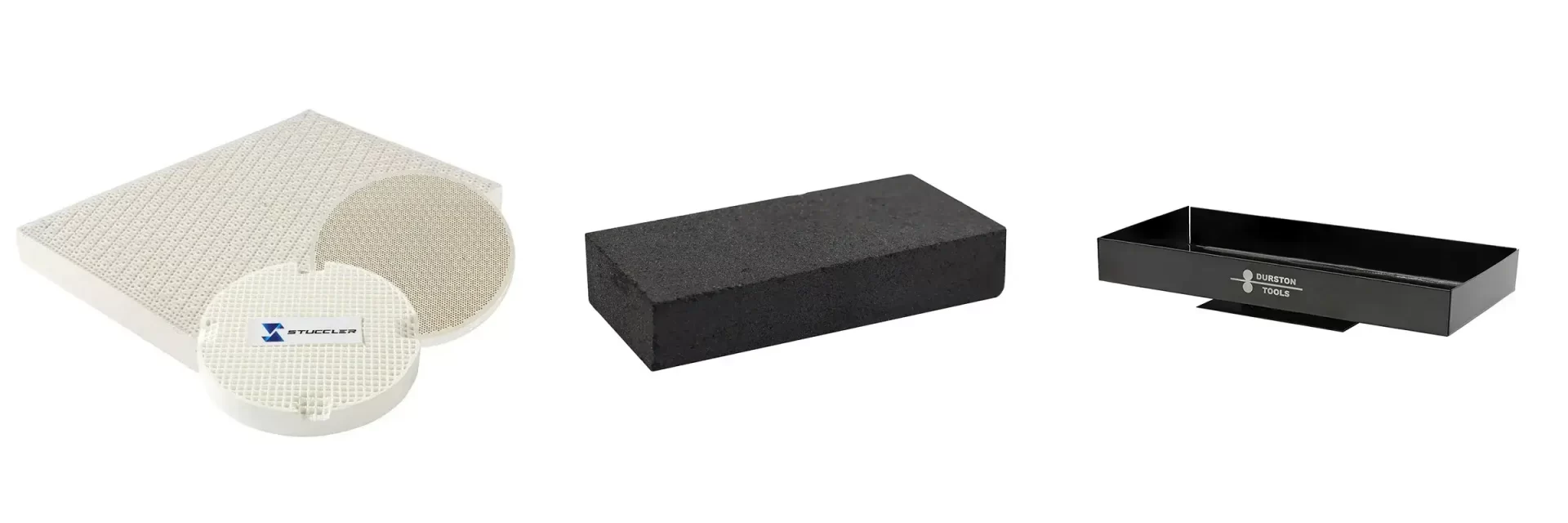
- Honeycomb Ceramic Boards: Perforated with thousands of smooth, uniform holes, these boards accept stainless steel or nichrome pins. They allow you to build scaffolding for three-dimensional, multi-part pendants, keeping components mechanically rigid at strange angles before the torch is lit.
- Compressed Charcoal Blocks: Charcoal creates a localized reducing atmosphere by scavenging atmospheric oxygen as it warms. This suppresses fire stain on sterling silver. Hard-compressed varieties offer flat, firm surfaces that bounce radiant heat back into the underside of the piece.
- Rotating Soldering Turntables: A shielded, ball-bearing 360° turntable allows you to spin the workpiece with your off-hand. You maintain an optimal torch angle without having to contort your body or break your visual line of sight along the seam.
Precision Micro-Manipulation Fixtures
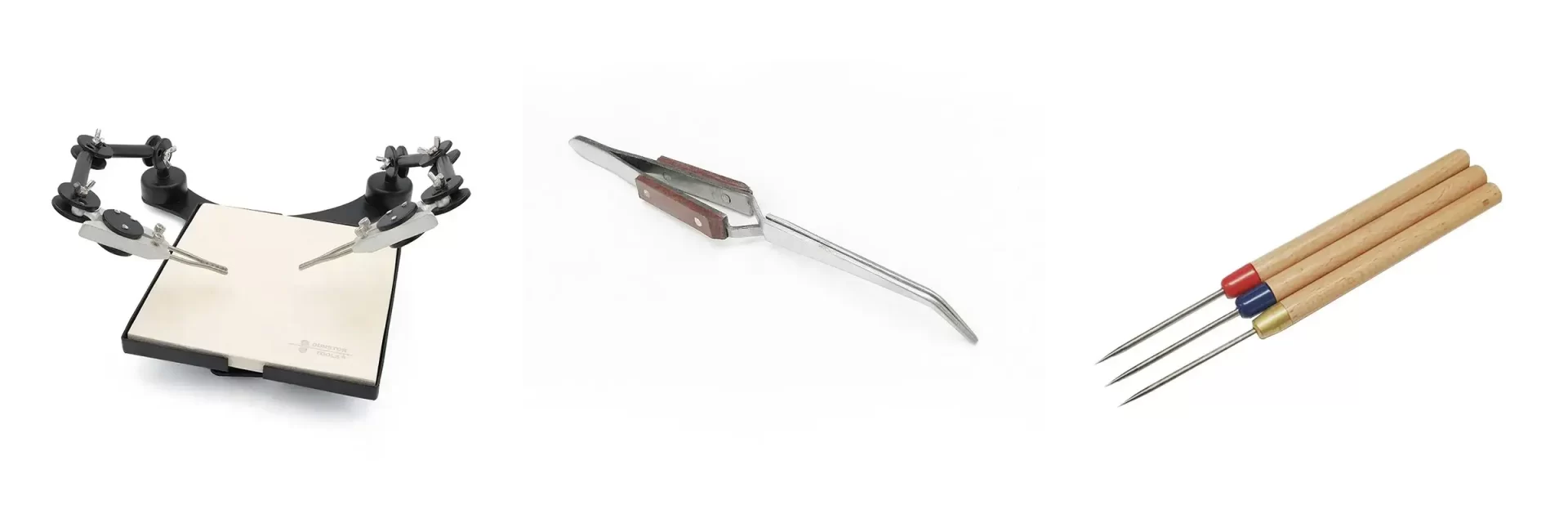
- Weighted Third-Hand Bases: Heavy cast-iron or stainless steel bases anchor articulating ball-joints, suspending parts in mid-air right against a baseplate without tipping over.
- Cross-Locking Tweezers: Featuring fiber-grip heat shields, these reverse-action tweezers clamp shut on their own. They hold delicate bails, bezels, and gallery wire without requiring continuous finger pressure.
- Titanium Solder Picks: Titanium resists wetting by molten silver or gold alloys and will not melt below 1600°C. Solder paillons refuse to fuse to it, allowing you to nudge liquid solder spheres straight into tight corners without contaminating the joint.
3. Clean Bonding: Solder Flow & Chemistry
A joint fails when oxides form before the alloy melts, or when an earlier seam refloats and shifts out of true. Clean bonds require chemical discipline and a strict thermal sequence.
Multi-Joint Temperature-Stepping Strategy
Fabricating complex assemblies with three or more adjoining seams demands solder grades with staggered liquidus points:
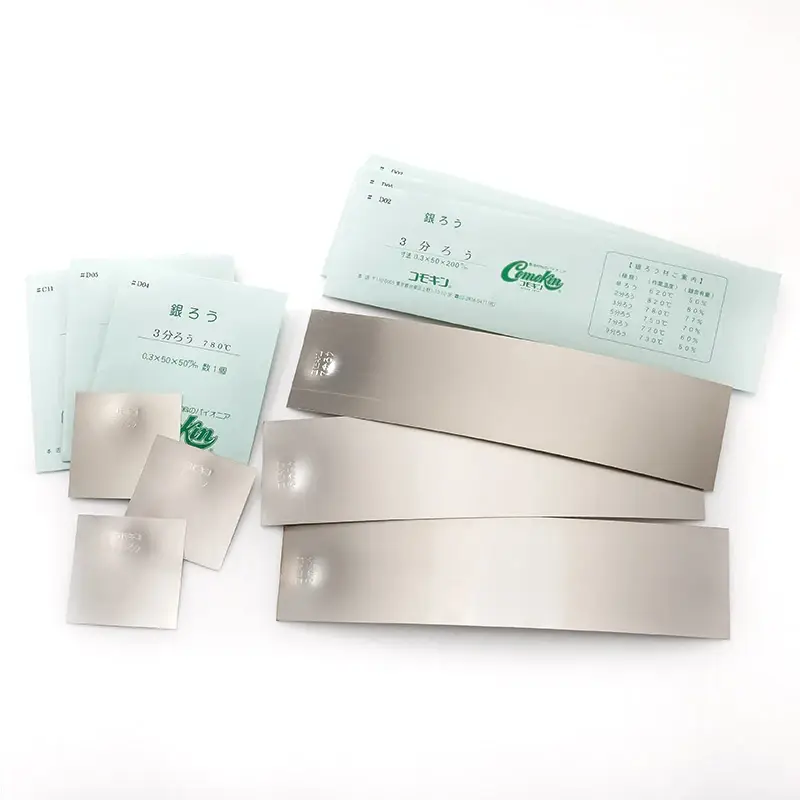
- Hard Solder (Highest Melting Point): Used for initial structural seams, primary bezel closures, and internal framework.
- Medium Solder: Deployed for secondary attachments, accents, and decorative filigree.
- Easy Solder: Applied for final bails, ear posts, or securing fragile decorative trims.
- Extra Easy Solder: Reserved strictly for final assembly adjustments or emergency closures, ensuring earlier joints remain frozen solid.
Precision Flux Matching
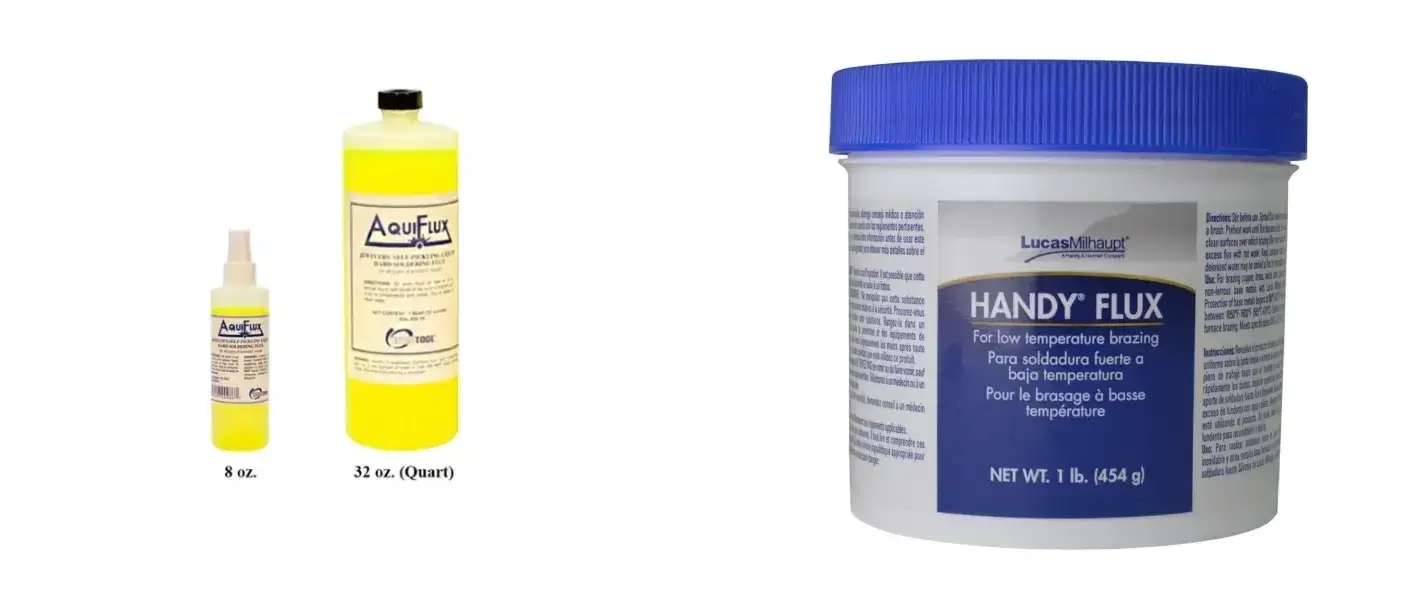
- Fluoride-Free Liquid Flux: Applied with a fine camel-hair brush, liquid flux shields gold, platinum, and precision wire settings without creating thick, foaming crusts that push delicate paillons out of alignment.
- Heavy Paste Flux: Essential for long heating cycles on large silver structures. Paste flux holds its protective barrier across prolonged soak times, preventing tenacious copper oxides from forming under a broad flame.
Eco-Friendly Temperature-Controlled Pickling
Pair an electric, variable-temperature pickle pot with food-grade citric acid pickling salts or dry acid bisulfate salts. Heated to roughly 50°C (120°F), fresh solution dissolves glassy vitrified borax residues and lifts surface copper oxides in minutes.
Always use dedicated copper, plastic, or titanium tongs—submerging steel tweezers creates an electrochemical circuit that flashes a layer of pink copper over your fine silver pieces.
4. Workshop Safety & Critical Heat Shielding
Precision metalwork involves open flames, high pressures, and chemical off-gassing. Studio design must prioritize physical protection alongside creative output.
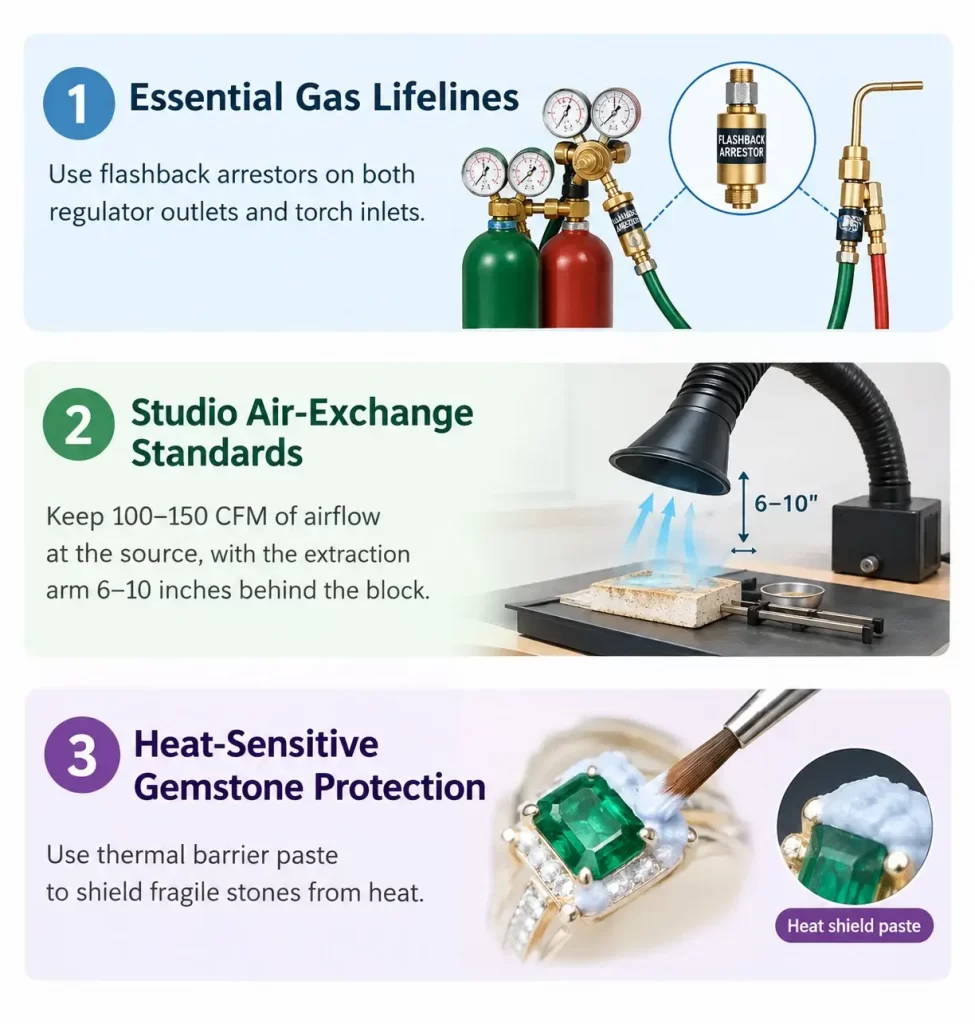
Essential Gas Lifelines
Every pressurized dual-gas configuration requires flashback arrestors installed at both the regulator outlets and the torch handle inlets. These sintered metal valves instantly quench reverse flame travel and stop pressure waves from entering fuel lines.
Inspect every regulator fitting and quick-connect coupling monthly by swabbing joints with a mild soap-and-water solution to monitor for expanding bubbles under static system pressure.
Studio Air-Exchange Standards
Vaporized fluorides, zinc fumes, and hot borax vapors irritate lung tissue over long hours. A production workspace should pull a minimum of 100 to 150 CFM (Cubic Feet per Minute) directly at the source. Position an articulating extraction arm 6 to 10 inches behind the soldering block, pulling fumes away from your face before they rise into your breathing zone.
Heat-Sensitive Gemstone Protection
Unsetting fragile stones during a quick repair eats up shop hours and introduces stone-breakage risks. Thermal barrier pastes—specially formulated cellulose-water gels—isolate and absorb conductive heat. Smearing a generous collar of heat shield paste over an emerald, pearl, or opal allows you to weld a jump ring or re-tip a nearby prong without thermal shock fracturing the gem.
Cohesive Soldering Ecosystems
Professional bench performance comes from an interconnected ecosystem: your torch, work-holding fixtures, flux chemistry, and ventilation all need to match your workload.
- For Fine Jewelry Repair & Sizing: A mini multi-gas torch + honeycomb ceramic board + titanium pick + heat-shield paste.
- For Bold Silverwork & Vessel Forging: A high-output butane torch + thick compressed charcoal block + heavy paste flux.
- For Stone-Adjacent Precision & Micro-Repairs: A pulse argon welder (micro TIG) + stereo microscope workstation (eliminates the need to unset heat-sensitive stones).
Upgrade the bottleneck in your workspace today, whether that means swapping out a worn soldering pad for a high-density charcoal block or adding an articulating third-hand fixture.
When you need reliable, workshop-grade Jewelry Soldering Tools, sourcing from a trusted jewelry tools supplier makes all the difference. JYBS provides jewelers, design studios, and commercial manufacturers with dependable fabrication equipment, offering full catalog access and dedicated B2B fulfillment for wholesale and bulk orders.