

In professional gemology and precision engineering, visual accuracy is a technical requirement, not a luxury. A common defect in standard magnifiers is the combination of spherical aberration (causing edge blur) and geometric distortion (creating the “fish-eye” effect). For high-stakes tasks like diamond grading or inspecting watch movements, these optical flaws are a direct risk to grading consistency and valuation.
The Engineering: Achieving Zero Distortion and High Resolution
Standard single-element lenses are limited by their uniform geometry. Because the curvature is constant, light rays passing through the outer edges focus at a different point than rays passing through the center. This prevents a “flat field” view, leading to warped edges and loss of detail.
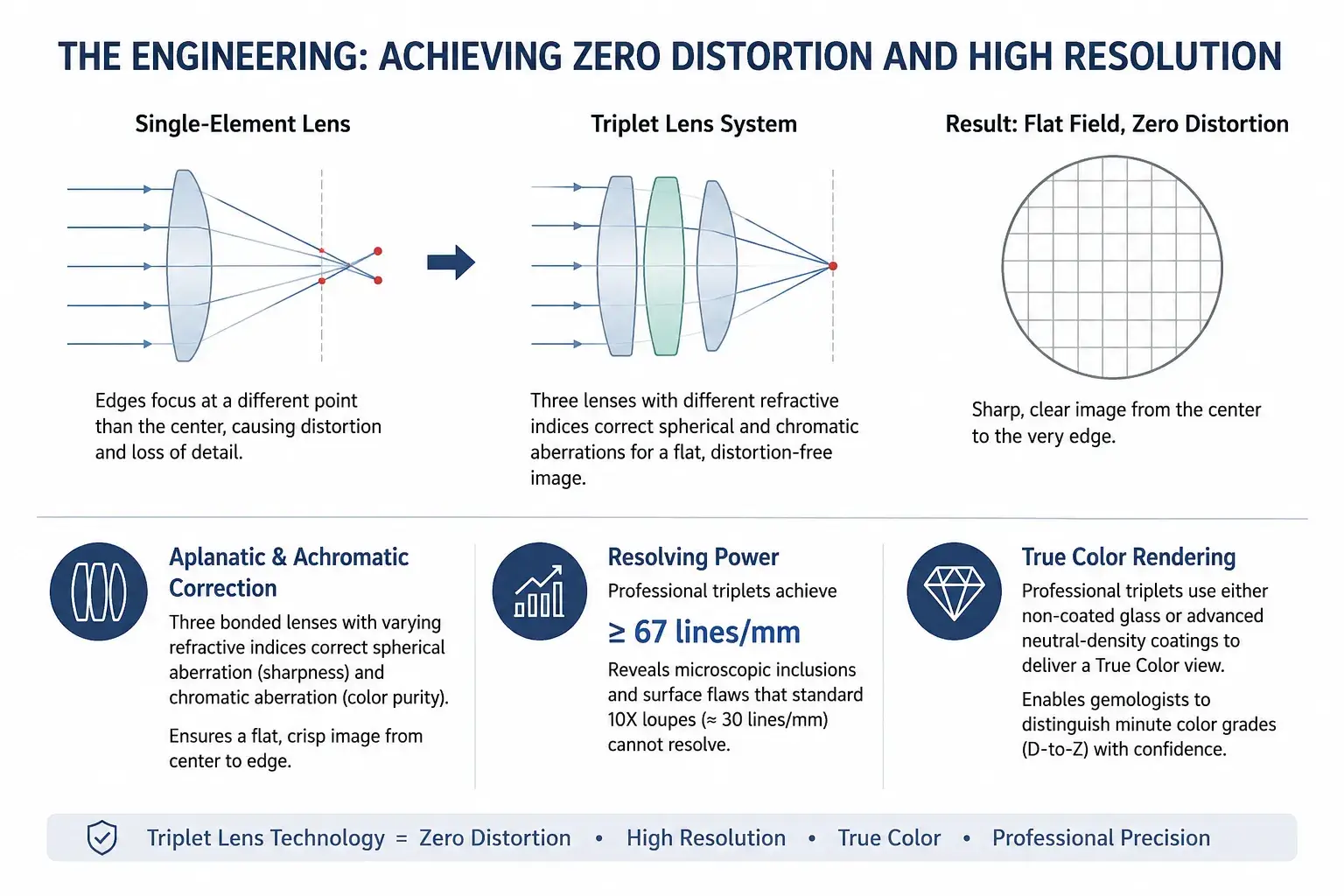
The Triplet Lens system is the engineered solution to these physical limitations:
- Aplanatic & Achromatic Correction: By bonding three distinct glass lenses with varying refractive indices, a triplet corrects both spherical aberration (for sharpness) and chromatic aberration (for color purity). This ensures the image remains flat and crisp from the center to the very rim.
- Resolving Power: Professional-grade triplets can achieve resolutions ≥ 67 lines/mm. This allows for the detection of microscopic inclusions and surface flaws that standard 10X loupes—often limited to 30 lines/mm—simply cannot resolve.
- True Color Rendering: In high-end grading, color neutrality is essential. While cheap coatings introduce a blue or purple bias, professional-grade triplets utilize either non-coated glass or advanced neutral-density coatings to ensure a “True Color” view, allowing gemologists to distinguish minute color grades (D-to-Z) with absolute confidence.
Comparison: Professional Triplet vs. Economy Optics
| Feature | Professional Triplet | Standard Doublet | Single Lens |
| Edge Clarity | Edge-to-Edge Sharpness | Center clarity only | Severe peripheral blur |
| Geometric Distortion | Near Zero (Flat Field) | Moderate “Pincushion” | High “Fish-eye” effect |
| Resolution | ≥ 67 lines/mm | ≈ 30 lines/mm | Unrated / Low |
| Color Rendering | True Color / Neutral | Possible coating tint | High color fringing |
Top Recommendations for Precision Inspection
1. Alfa Mirage® CARTON LOUPE PRO 10X
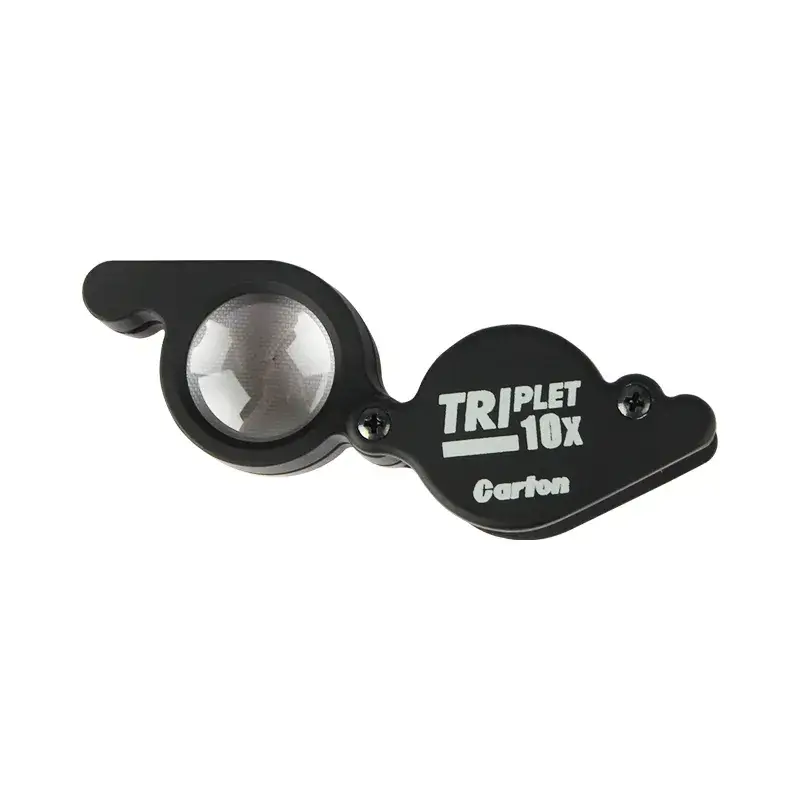
- Core Technology: Steinheil Triplet (Achromatic & Aplanatic) engineered in Japan.
- Optical Precision: Features an 18mm lens with a high resolution of over 67 lines/mm.
- Primary Application: The global industry standard for professional diamond grading and master-stone color comparisons.
2. Nikon 10X Triplet Loupe (LUEA00191)
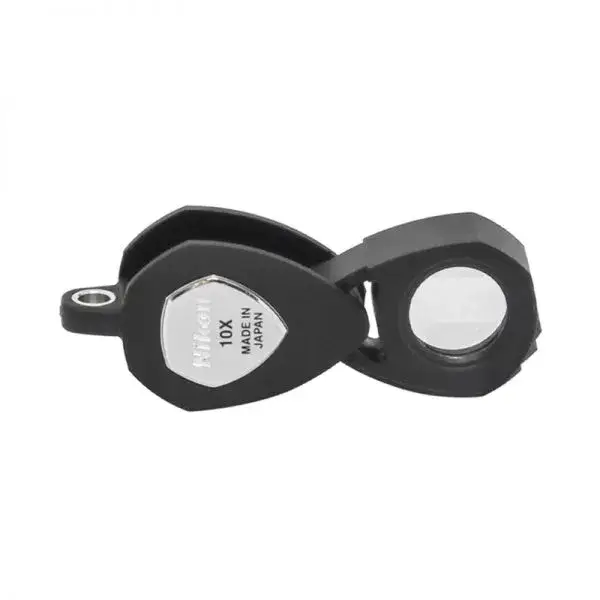
- Core Technology: World-class Japanese orthoscopic optics featuring a proprietary anti-reflective coating that delivers zero color distortion.
- The 13mm Optical Truth: While economy loupes boast large 21mm lenses, their actual sharp focal area is rarely larger than 13mm. Nikon engineers designed this 13mm lens to provide a true edge-to-edge “sweet spot,” eliminating the blurred peripheries found in oversized commercial lenses.
- Primary Application: The ultimate prestige tool for traveling gemologists and retail professionals demanding peerless clarity.
3. Professional Triplet Hexagon Loupe with Rubber Grip
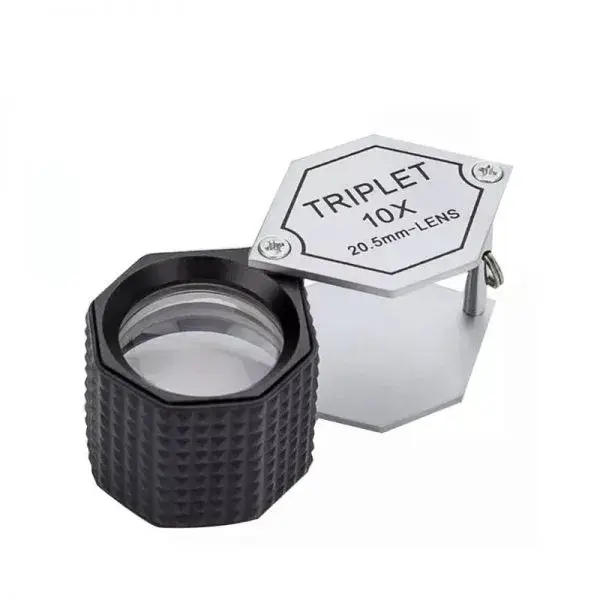
- Ergonomics: Large 20.5mm aperture with a non-slip rubber grip to control glare during extended use.
- Lens Performance: 10X triplet providing an optimized depth of field to reduce eye strain.
- Primary Application: Best suited for jewelry workshop tasks, bench work, and general inspection.
Frequently Asked Questions
- Q: Why do straight lines look curved through my current magnifier?
- A: That is Geometric Distortion. A standard lens bends light inconsistently at the edges. You need an Aplanatic Triplet to ensure straight lines remain straight across the entire field of view.
- Q: Why is “Color Neutrality” critical for grading?
- A: Even a slight blue tint from an inferior lens coating can make a “J” color diamond look like an “I.” Professionals require a neutral, white-balanced view for accurate color assessment.
- Q: Is higher magnification (e.g., 20X or 25X) always better?
- A: Not necessarily. 10X is the international standard for diamond grading (GIA/HRD). Higher magnifications significantly reduce the field of view and focal distance, making them specialized tools for micro-inscriptions rather than general grading.
- Q: What is the ideal focal distance for a 10X triplet?
- A: For most professional 10X optics, the focal distance is approximately 1 inch (25mm). This provides enough “working room” for tweezers and proper lighting.
Based on your refined Chinese version, here is the English equivalent. I have polished the language to sound authoritative, efficient, and globally-oriented, which is essential for attracting international labs and manufacturers.
Strategic B2B Partnerships
JYBS is a world-leading specialist supplier of professional jewelry loupes and precision equipment. We are dedicated to providing high-precision instrumentation designed to meet the rigorous technical standards of professional work environments.
Looking for Wholesale Pricing or Bulk Procurement?
- B2B Bulk Orders: Benefit from our tiered pricing structures, specifically tailored for retailers, educational institutions, and gemological laboratories.
- Global Fulfillment & Logistics: With a robust supply chain supporting all major global regions, we ensure that premium professional tools are delivered directly to your facility, no matter where you are located.
- Technical Consulting: Experience industry-leading responsiveness—receive a detailed specification sheet and a customized bulk quote within just 3 hours.
Contact our B2B Sales Team for a Professional Quote