

In the jewelry industry, there is a common misconception that higher magnification always equates to better inspection. However, for a professional grader or stone setter, selecting between 10x and 20x is a strategic decision that balances optical power against focal depth, light throughput, and ergonomic efficiency. Choosing the wrong magnification can lead to significant eye strain and inefficient inspection routines.
The 10x Standard: Why the GIA Insists on It
The 10x Triplet Loupe is the universal industry standard for a reason. Most international grading systems, including the GIA, HRD, and IGI, base their clarity scales on what is visible under 10x magnification.
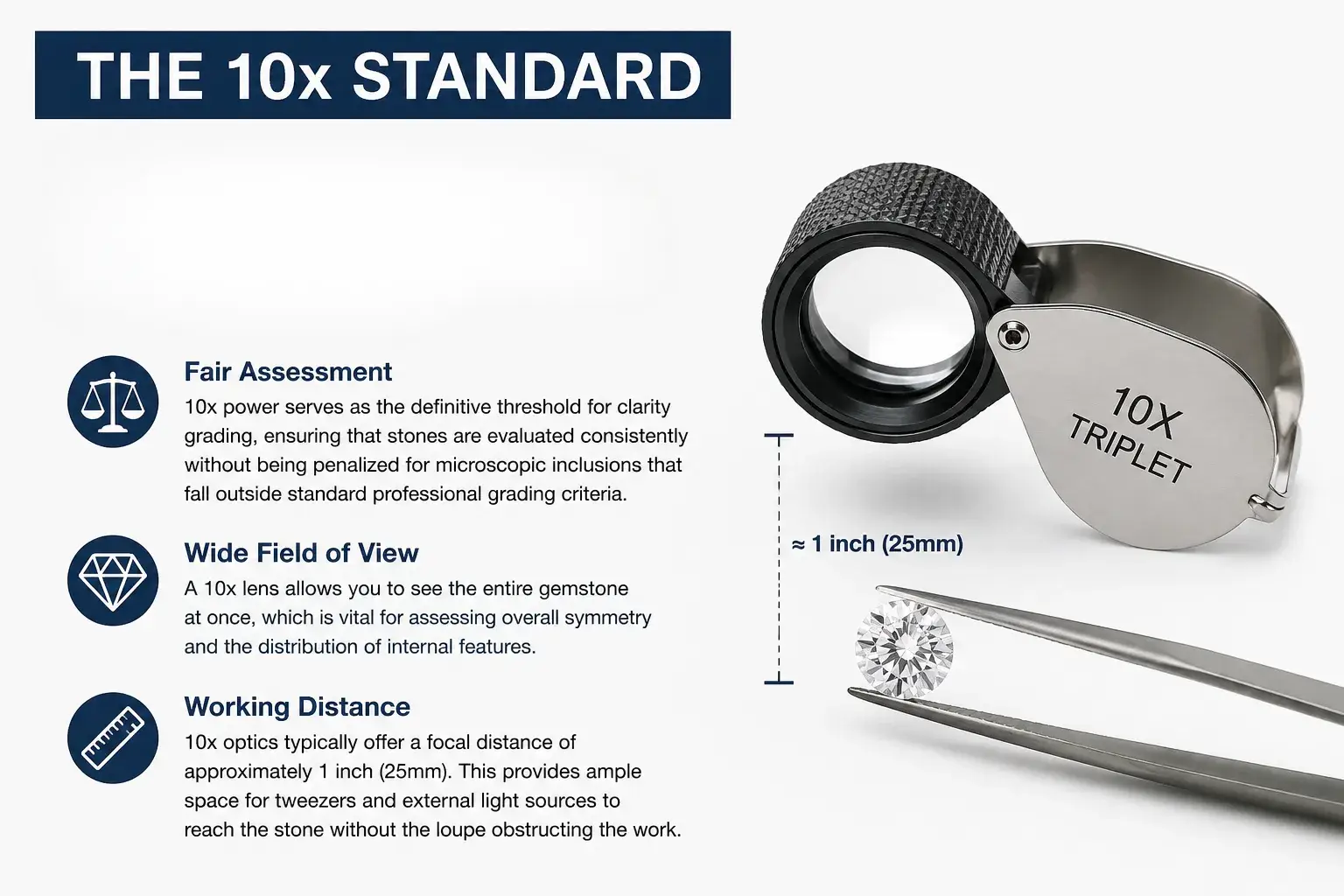
- Fair Assessment: 10x power serves as the definitive threshold for clarity grading, ensuring that stones are evaluated consistently without being penalized for microscopic inclusions that fall outside standard professional grading criteria.
- Wide Field of View: A 10x lens allows you to see the entire gemstone at once, which is vital for assessing overall symmetry and the distribution of internal features.
- Working Distance: 10x optics typically offer a focal distance of approximately 1 inch (25mm). This provides ample space for tweezers and external light sources to reach the stone without the loupe obstructing the work.
The 20x Specialist: When High Power is Mandatory
While 10x is for grading, higher magnification is often required for forensic inspection and high-precision manufacturing.
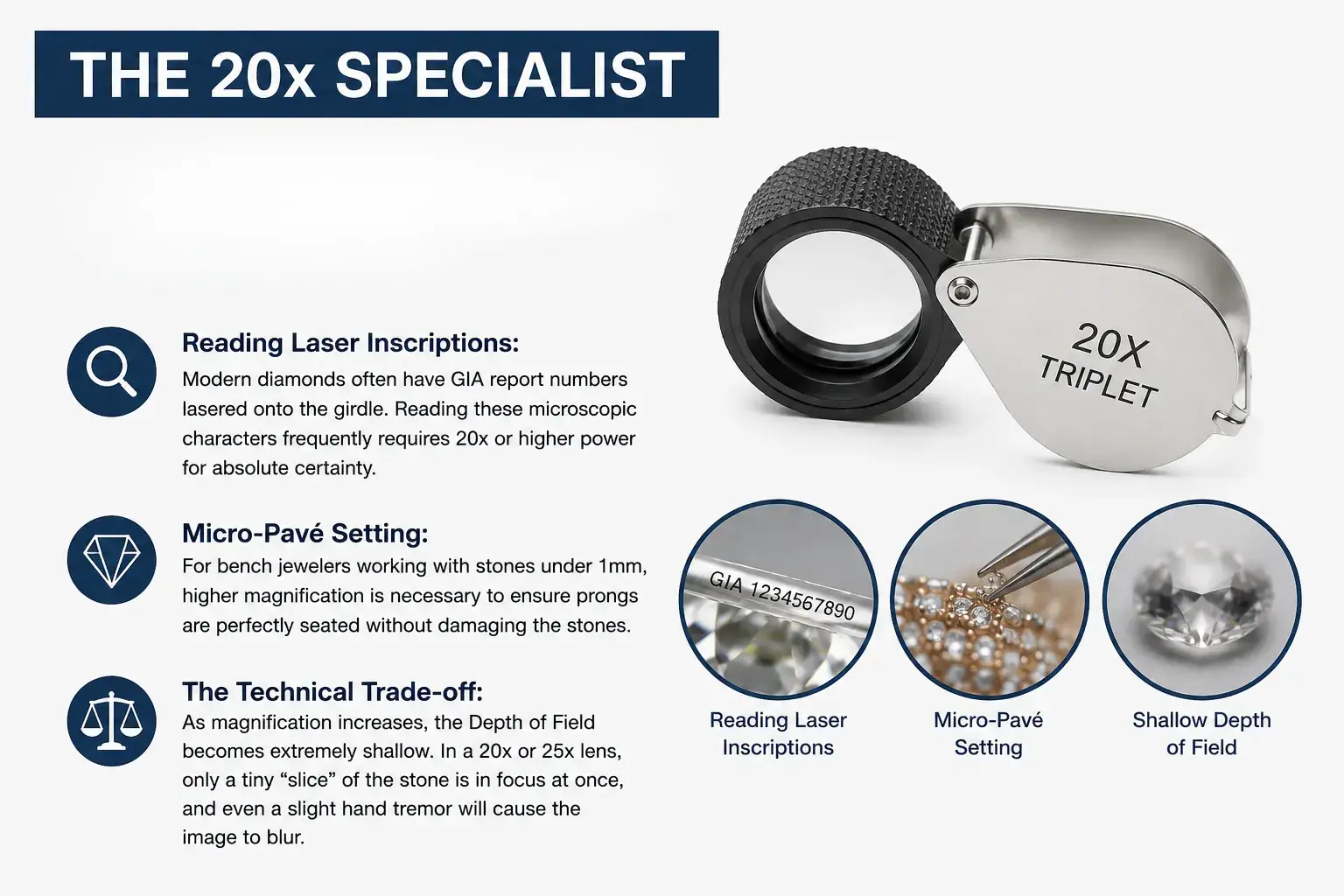
- Reading Laser Inscriptions: Modern diamonds often have GIA report numbers lasered onto the girdle. Reading these microscopic characters frequently requires 20x or higher power for absolute certainty.
- Micro-Pavé Setting: For bench jewelers working with stones under 1mm, higher magnification is necessary to ensure prongs are perfectly seated without damaging the stones.
- The Technical Trade-off: As magnification increases, the Depth of Field becomes extremely shallow. In a 20x or 25x lens, only a tiny “slice” of the stone is in focus at once, and even a slight hand tremor will cause the image to blur.
Technical Comparison: 10x vs. 20x Magnification
| Specification | 10x Magnification (Standard) | 20x+ Magnification (Macro) |
| Industry Compliance | Full GIA/Lab Standard | Supplemental Use Only |
| Field of View | ≈ 18–21mm (Wide) | ≈ 8–10mm (Narrow) |
| Working Distance | Comfortable (≈ 25mm) | Very Close (≈ 10mm) |
| Ease of Use | High | Low (Requires steady hands) |
| Light Intake | High (Bright view) | Lower (Requires internal LED) |
Top Recommendations for Professional Inspection
Choosing the right loupe is an investment in accuracy. As a specialized supplier and distributor of professional-grade instrumentation, we recommend the following industry-leading models for their uncompromising optical quality.
1. SCHNEIDER Diamond Loupe L2
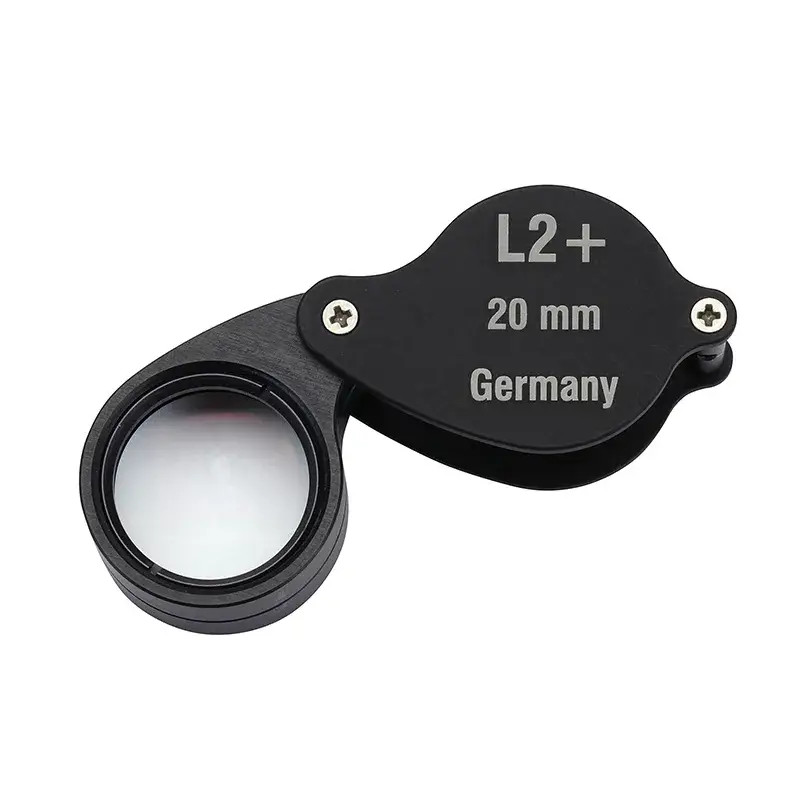
The Harald Schneider® L2 represents the apex of gemological optics, featuring a unique, completely new lens system that virtually eliminates distortion.
- Core Technology: Achromatic-aplanatic triplet lens with a multi-layer AR (Anti-Reflective) coating.
- Optical Precision: The large 20mm lens provides maximum light transmission, while the thinner lens profile reduces the overall weight (2.46 oz).
- Best For: Professionals requiring the highest resolution, maximum depth of focus, and edge-to-edge clarity for critical master-stone evaluations.
2. ZEISS D40 Professional Loupe
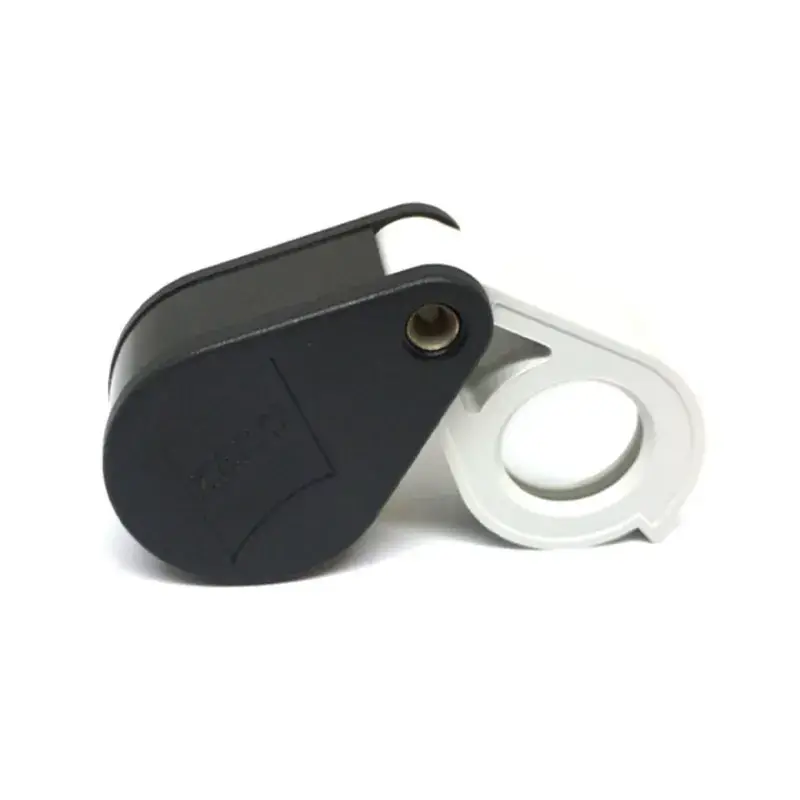
Embodying German engineering excellence, the Zeiss D40 is engineered for the most demanding professionals and aligns perfectly with GIA-standard diamond grading.
- Core Technology: Aplanatic-Achromatic triplet lens featuring the world-renowned T* Anti-Reflective Coating.
- Optical Precision: The 13mm fixed 10X lens delivers unparalleled high-contrast imaging with zero color dispersion and geometric aberration.
- Best For: Precision diamond grading, gemstone identification, and rigorous compliance with GIA and CIBJO appraisal standards.
3. 10X Triplet Loupe With LED/UV Light
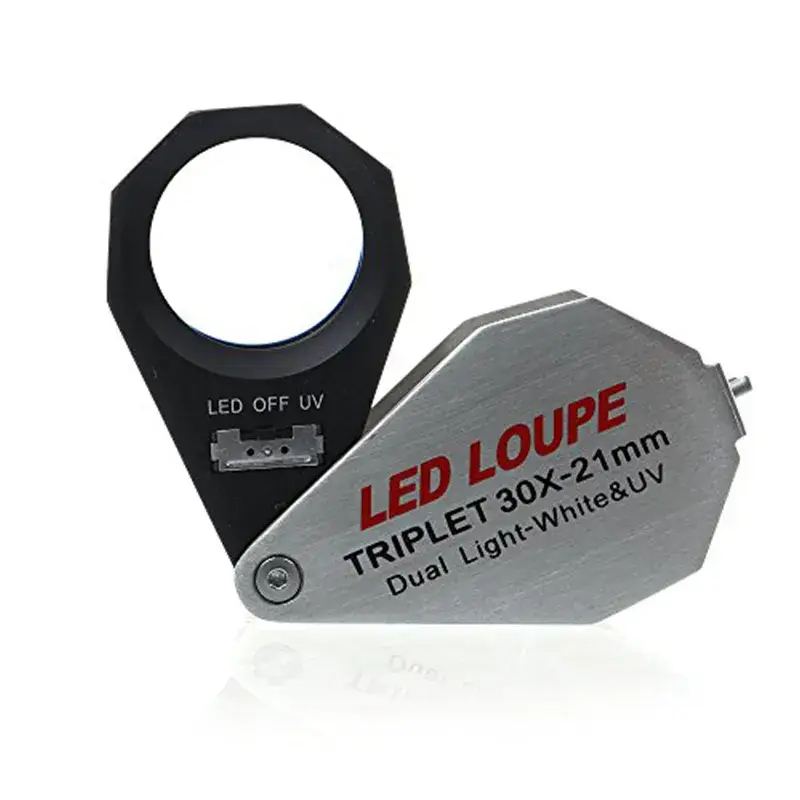
When ambient lighting is insufficient, this illuminated model provides a comprehensive inspection solution without compromising optical integrity.
- Core Technology: Aplanatic and achromatic triplet lens encased in top-quality metal, complemented by a built-in band of 6 LED lights and 1 UV light.
- Optical Precision: The wide 21mm lens ensures a large, true-color field of view, while direct LED illumination eliminates shadows.
- Best For: Inspecting diamonds and gemstones in poor light conditions and conducting immediate gemstone fluorescence testing with the integrated UV base.
Frequently Asked Questions
Q: Why is 10x magnification the standard for diamond grading?
A: It balances power with a wide enough field of view to see the whole stone. Standards like GIA are based on what is visible at 10x to prevent over-grading microscopic flaws.
Q: Is it harder to use a 20x loupe than a 10x loupe?
A: Yes. Because the depth of field is so shallow, you must hold the stone very still and very close to the lens. Any slight movement will throw the image out of focus.
Q: Can I use a 20x loupe for color grading?
A: It is not recommended. The narrow field of view and smaller lens diameter make it difficult to compare the body color of a stone against a master set effectively.
Q: Do high-power loupes (20x-25x) require more light?
A: Yes. Higher magnification lenses are more curved and often smaller, which allows less ambient light to reach your eye. Using an integrated LED light is often mandatory at these levels.
Q: Will using 20x magnification cause more eye strain?
A: For long sessions, yes. The brain has to work harder to process the narrow, high-detail field, leading to faster ocular fatigue compared to a wide-field 10x lens.
Strategic B2B Partnerships
JYBS is a world-leading specialist supplier of professional jewelry loupes and precision equipment. We are dedicated to providing high-precision instrumentation designed to meet the rigorous technical standards of professional work environments.
Looking for Wholesale Pricing or Bulk Procurement?
- B2B Bulk Orders: Benefit from our tiered pricing structures, specifically tailored for retailers, educational institutions, and gemological laboratories.
- Global Fulfillment & Logistics: With a robust supply chain supporting all major global regions, we ensure that premium professional tools are delivered directly to your facility, no matter where you are located.
- Technical Consulting: Experience industry-leading responsiveness—receive a detailed specification sheet and a customized bulk quote within just 3 hours.
Contact our B2B Sales Team for a Professional Quote