

Why Identifying Microscopic Flaws Requires a Specialized Loupe
- Testing the Limits of Optics: Whether you are a master diamond cutter checking for subsurface stress fractures, an appraiser looking for laser drill holes, or a buyer scrutinizing a high-value gemstone for pinpoint clouds (VVS2 vs IF clarity), identifying microscopic flaws tests the absolute limit of hand-held optics.
- The Invisibility of Low-Relief Defects: These flaws are often transparent, low-relief, and completely invisible under standard overhead lighting.
- Priority of Contrast and Light Transmission: A loupe designed specifically for microscopic flaw detection must prioritize extreme contrast. Standard uncoated glass often washes out faint twinning wisps or transparent crystal inclusions due to internal light scatter.
- Mastering Light Control: Identifying these elusive flaws requires mastering light control—either through ultra-high-grade Anti-Reflective coatings that penetrate the stone’s surface glare to see deep inside, or targeted Brightfield LEDs to highlight surface-reaching blemishes.
- Absolute Aplanatic Precision: Furthermore, because the flaws are so small, the lens must have absolute Aplanatic (flat-field) correction; any spherical distortion will blur a tiny pinpoint inclusion, making it look like a spec of dust on the surface rather than a structural flaw deep within the gemstone.
Critical Optical Specs for Flaw Identification Standards
When the difference between Internally Flawless (IF) and Very Very Slightly Included (VVS1) means thousands of dollars, contrast and illumination are critical.
| Key Specification | Recommended Standard | Why It Matters for Flaw Identification |
| Illumination System | Targeted LED (Brightfield/UV) | Overhead brightfield light is essential for highlighting surface blemishes. Specialized UV lighting assists in fluorescence checking and identifying structural treatments. |
| Spherical Correction | Aplanatic Triplet | Pinpoints and micro-fractures are tiny. Edge distortion will blur these critical diagnostic features, leading to an inaccurate clarity grade. |
| Lens Coating | High-Contrast Anti-Reflective | Essential for cutting through the intense surface glare (luster) of high-refractive-index stones like diamonds or zircons to see into the depths of the gem. |
Top 3 Loupe Recommendations for Microscopic Flaw Identification
Engineered for extreme contrast and low-relief inclusion detection:
1. ZEISS Triplet Loupe D40
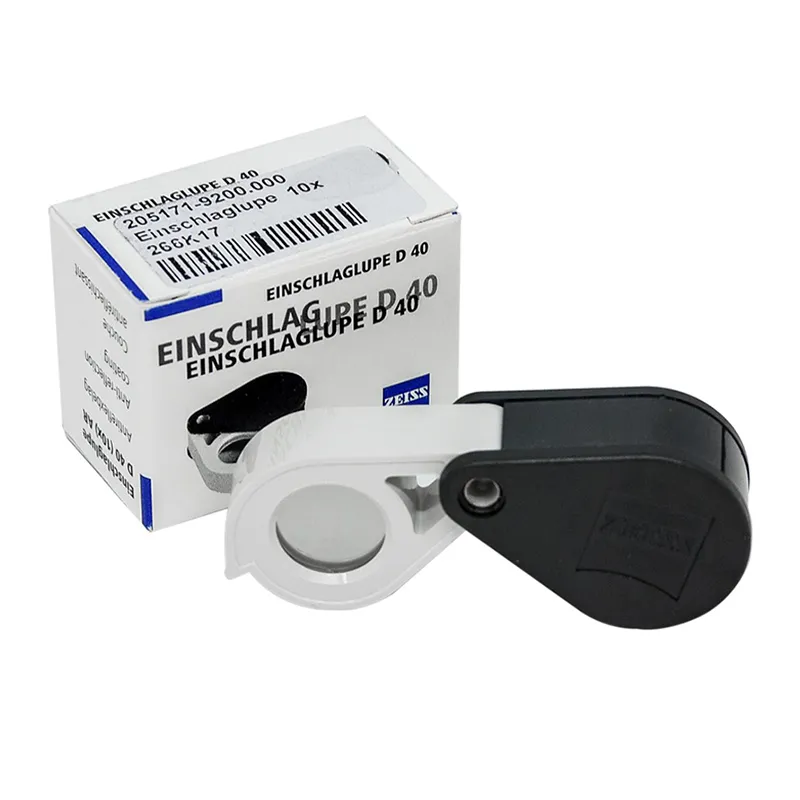
- Specs: 10x Fixed Triplet (13mm), T* Anti-Reflective Coating, Achromatic-Aplanatic.
- Verdict: The ultimate tool for high-contrast VVS grading. Its world-renowned proprietary T* Anti-Reflective Coating aggressively cuts through the intense surface glare (luster) of diamonds. This maximizes light transmission and contrast, allowing the grader’s eye to penetrate deep into the stone to spot transparent, low-relief pinpoint clouds and twinning wisps that other lenses miss.
2. SmartPro Triplet Loupe H14
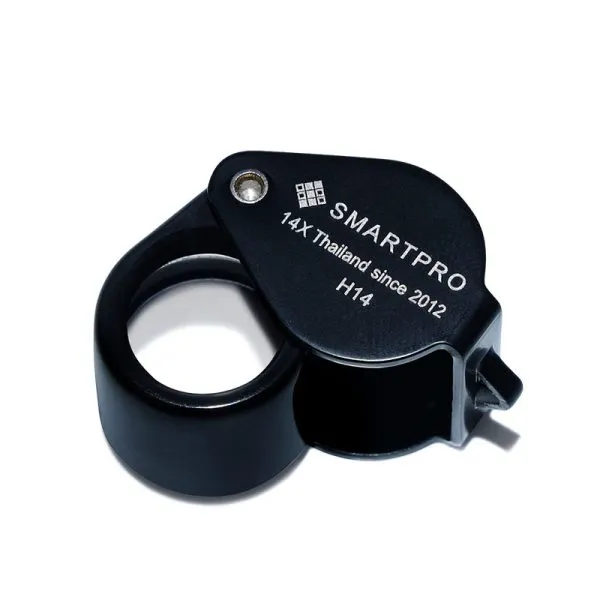
- Specs: 14x Magnification, 10.8mm Strain-free Triplet Optical System, 63 lines/mm resolving power.
- Verdict: The high-magnification standard for verification. When a 10x loupe reveals a suspicious shadow, this precise 14x instrument is deployed. With an exceptional resolution of 63 lines/mm and negligible distortion (± 1% error), it provides the extreme micro-detail needed to conclusively determine if a flaw is a microscopic included crystal, a tiny feather (fracture), or just a natural graining line.
3. 10X Triplet Loupe With LED Light And UV Light
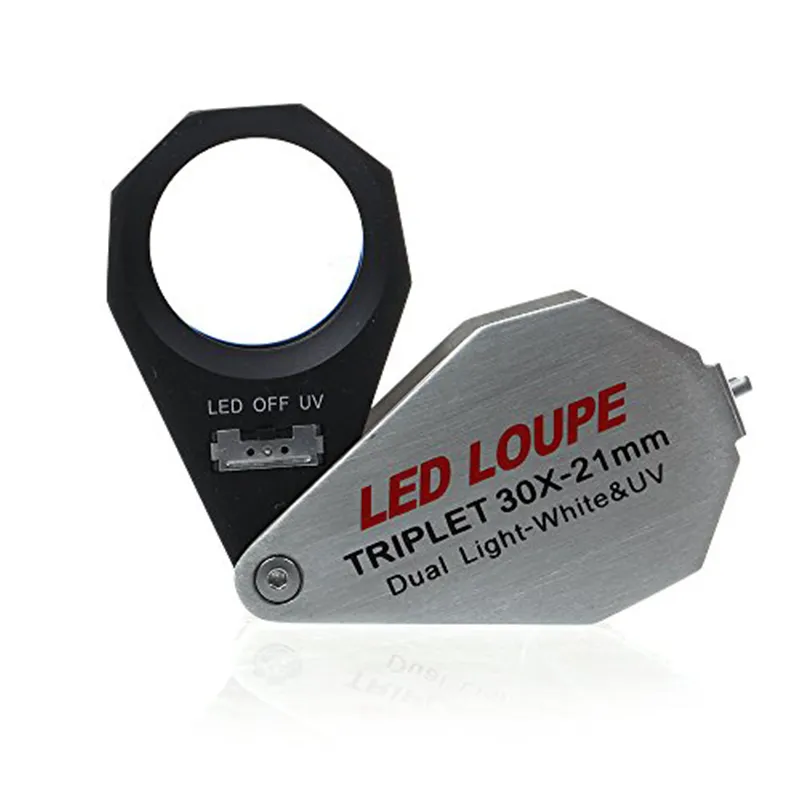
- Specs: 10x Triplet (21mm), Aplanatic & Achromatic, Built-in 6 Brightfield LEDs + 1 UV Light.
- Verdict: Specifically designed for checking external blemishes and fluorescence. The intense overhead 6-LED ring provides direct brightfield illumination, which is perfect for highlighting surface graining, extra facets, or microscopic abrasions on facet junctions that affect the polish grade. The added UV light assists in identifying fluorescence or structural treatments.
How to Clean and Protect Your Flaw Identification Loupe
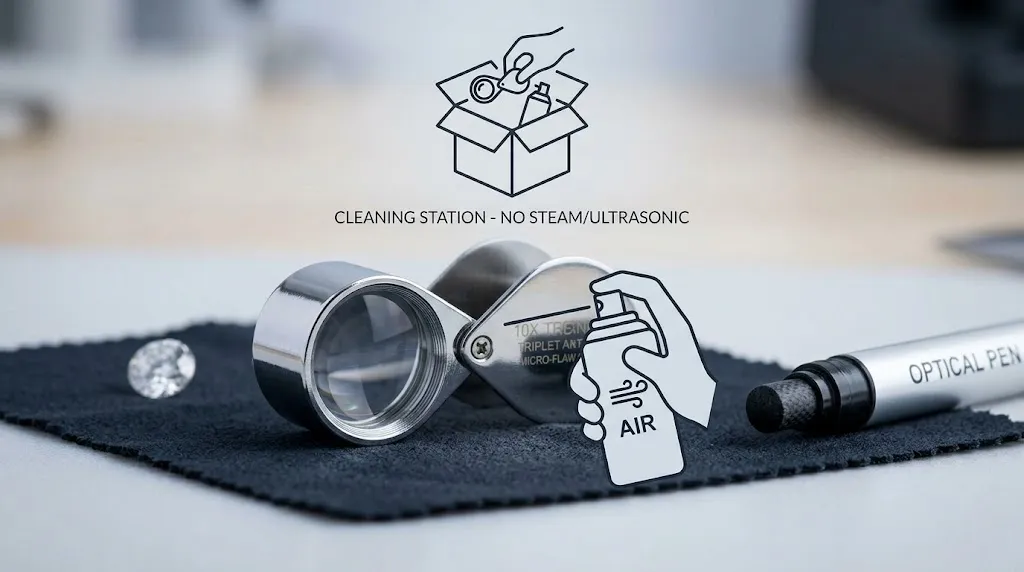
- Surgical Cleanliness Standards: When you are hunting for flaws the size of a pinprick, a speck of dust on your loupe lens can easily be misidentified as a VVS inclusion in the diamond. Your loupe must be surgically clean.
- Dual-Stage Cleaning Process: Always use compressed air to remove coarse particles before using a carbon-tipped optical cleaning pen to eliminate any oily haze.
- Electronic Component Protection: Because Darkfield loupes contain integrated circuitry and LEDs, keep them away from ultrasonic cleaners and steam, as moisture will instantly short out the lateral lighting system.
FAQ: Selecting a Loupe for Microscopic Flaws
- Q: Why are transparent inclusions so hard to see with a regular loupe?
- A: Transparent inclusions (like a diamond crystal inside a diamond) have the exact same refractive index as the host stone. Light passes through them without bending, making them nearly invisible. Darkfield (side) lighting is required to catch the edges of these inclusions.
- Q: Does a 14x loupe make it easier to find VVS inclusions?
- A: Yes, but it comes at a cost. A 14x loupe has a very short focal length and a narrow field of view, making it harder to scan the entire stone quickly. You should locate the general area with a 10x, and inspect it closely with a 14x.
- Q: What is the difference between an inclusion and a blemish?
- A: An inclusion is entirely inside the stone (e.g., a crystal, feather, or cloud). A blemish is strictly on the surface (e.g., a scratch, pit, or abrasion). You need brightfield (overhead) light for blemishes, and darkfield (side) light for low-relief inclusions.
Need to bulk buy for your Clarity Grading or Gemological team? Get a Quick Quote. Our optical specialists will respond within 3 hours.