

Why Jewelry QC Inspectors Require a Specialized Loupe
- The Final Line of Defense: The final Quality Control (QC) inspector is the last line of defense before a piece of jewelry is shipped to a retail boutique or a high-net-worth client. The QC inspector is not grading the diamonds; they are hunting for manufacturing defects.
- Identifying Manufacturing Flaws: This includes searching for unpolished casting sprue marks, checking if rhodium plating has pooled unevenly, verifying that laser-welded jump rings are fully sealed, and ensuring no polishing compound is trapped beneath the gemstone culets.
- Optimal Magnification and Field of View: Because QC inspectors must examine hundreds of pieces per shift, extreme magnification (like 20x) is too slow and has a dangerously shallow focal depth. They require an oversized Wide-Aperture (20mm+) loupe to maximize the Field of View (FOV), allowing them to scan an entire tennis bracelet rapidly.
- Anti-Reflective Multi-Coating: Furthermore, because they are hunting for reflective defects—like micro-scratches on high-polish gold surfaces—a loupe with Anti-Reflective Multi-Coating is essential. Uncoated lenses will bounce the glare of the polished gold directly back into the inspector’s eye, causing fatigue and masking surface flaws.
Critical Optical Specs for Factory QC Standards
Speed, glare reduction, and a massive viewing area define the perfect QC instrument.
| Key Specification | Recommended Standard | Why It Matters for QC Inspectors |
| Lens Diameter (FOV) | 20mm to 21mm | A wider lens allows the inspector to evaluate the symmetry of an entire setting or a row of pavé stones without constantly panning the loupe. |
| Lens Coating | Multi-layer AR Coating | Polished jewelry creates blinding glare. AR coatings act like polarized sunglasses, cutting through reflections to reveal microscopic polishing drag-lines. |
| Illumination | Integrated Brightfield LED | Dark recesses (like the gallery under a center stone) hide polishing rouge. Integrated LEDs blast light into these hidden areas for total clarity. |
Top 3 Loupe Recommendations for Jewelry QC Inspectors
Engineered for high-volume inspection and surface-flaw detection:
1. Triplet Hexagon Loupe 10x-JYBS
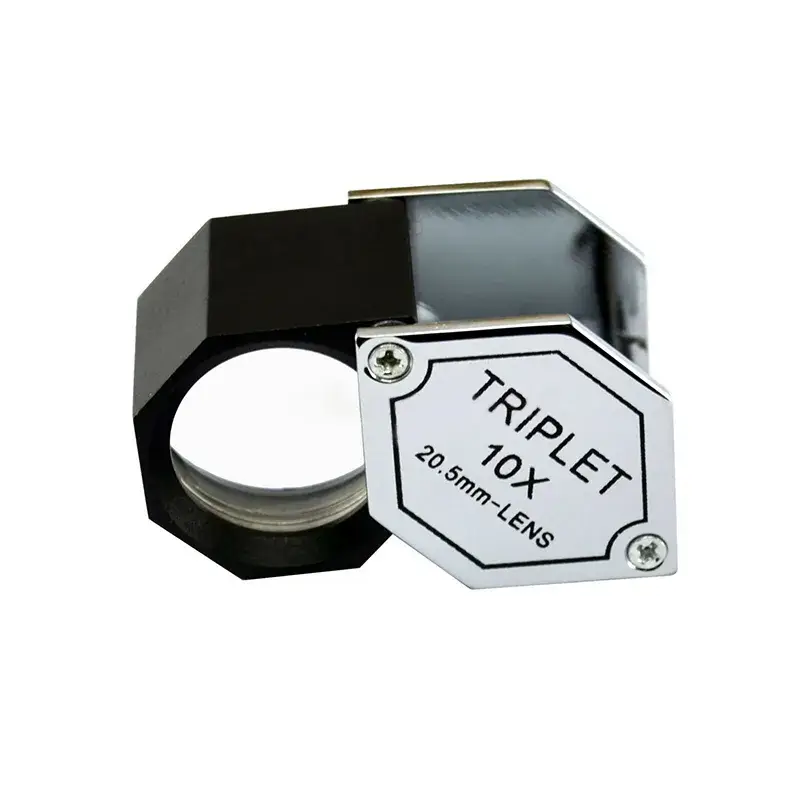
- Specs: 10x Triplet, Oversized 20.5mm Achromatic lens, High-grade anti-reflective optical coating.
- Verdict: The ultimate factory-floor tool. The unique hexagon shape ensures a secure, non-slip grip during fast-paced 8-hour shifts. The massive 20.5mm aperture provides an unprecedented field of view, while the high-grade AR coating ensures the inspector isn’t blinded by glare when checking the final high-polish on large gold surfaces.
2. Triplet Loupe with LED Lighted LED-JYBS
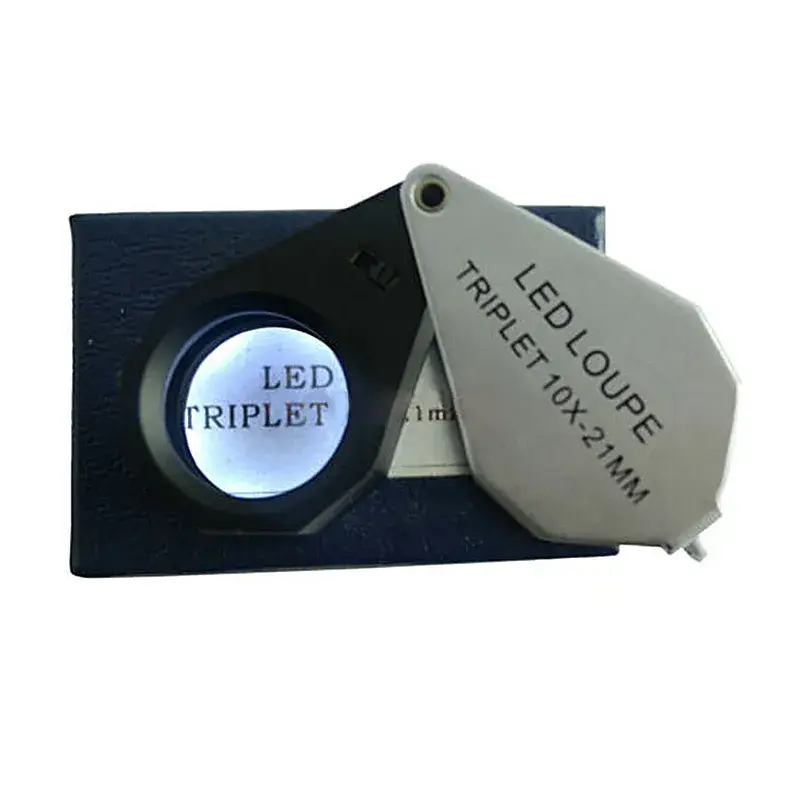
- Specs: 10x Triplet (21mm), Aplanatic & Achromatic, 6-LED ring light, Non-reflective black surround.
- Verdict: Essential for checking deep cleanliness. Meeting the critical 21mm wide-aperture standard, this loupe provides true-color, edge-to-edge clarity. The 6-LED ring eliminates shadows in deep settings, instantly highlighting trapped polishing compound that overhead lamps miss, while the non-reflective black frame prevents internal light bouncing.
3. Schneider Diamond Loupe L2 (10x)
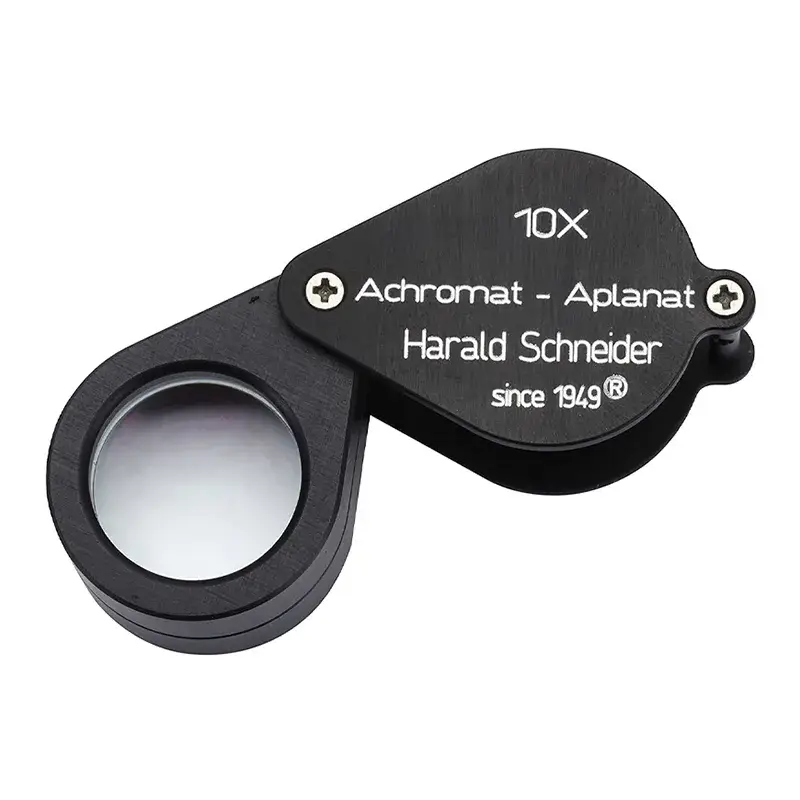
- Specs: 10x Triplet (20mm), Multi-layer AR Coating, German Precision Engineering.
- Verdict: The Gold Standard for QC managers and senior supervisors. The L2 model features Schneider’s newest lens system, offering the industry’s highest resolution and depth of focus. Its thinner 20mm lens reflects more light than standard optics while remaining lightweight. For high-stakes final inspections where zero-defect shipping is mandatory, the L2 is the definitive professional instrument.
How to Clean and Protect Your QC Loupe
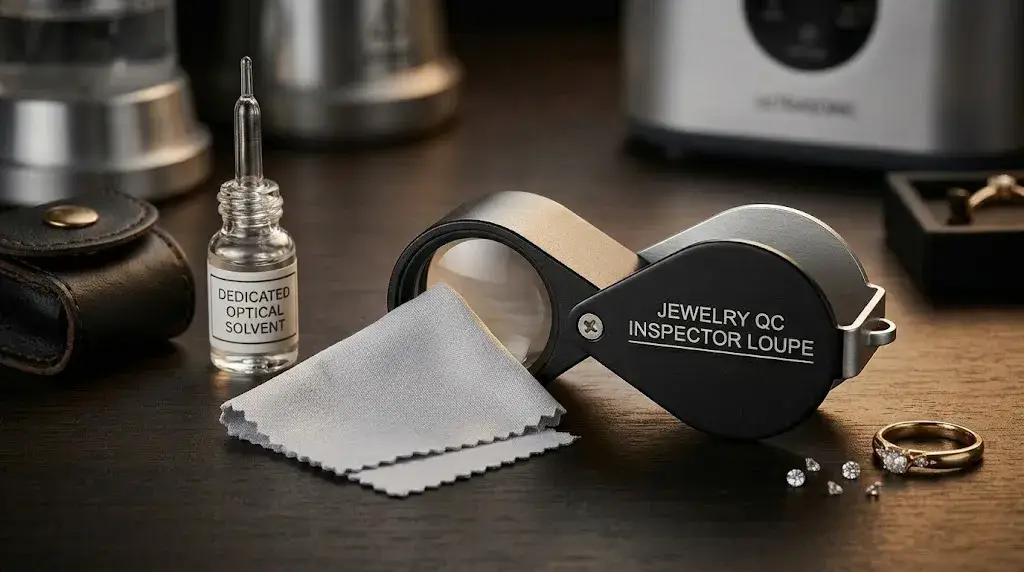
- Preventing Moisture Transfer: QC inspectors often handle pieces that have just come from ultrasonic cleaning or steam stations. This residual moisture can transfer to the loupe’s lens, leaving chemical water spots that obscure vision. Always ensure jewelry is completely dry before inspection.
- Daily Maintenance: Wipe the optical glass multiple times a day with a dry microfiber cloth.
- Solvent Care: Use a dedicated optical solvent to remove stubborn chemical residues without damaging the sensitive AR coating on your professional lenses.
FAQ: Selecting a Loupe for Final QC
- Q: Why is Aplanatic (flat-field) correction important for checking rhodium plating?
- A: Rhodium is plated over white gold to ensure a bright white finish. If the plating is thin, the yellowish gold shows through on the edges. Edge distortion in a cheap loupe will blur these margins; a flat-field Triplet ensures thin plating is detected instantly across the entire lens.
- Q: Is a built-in LED better than an overhead bench lamp for QC?
- A: Yes, for internal mounting inspections. An overhead lamp illuminates the top of the gemstone, but a loupe-mounted LED projects light parallel to your line of sight, forcing light deep into the “gallery” where polishing rouge hides.
- Q: Can a 10x loupe see casting porosity?
- A: Yes. Surface porosity appears as microscopic dark “pinholes.” A high-contrast, AR-coated 10x loupe makes these pinholes stand out sharply against the polished metal, allowing for a fast “pass/fail” decision.
Need to bulk buy for your Factory Quality Control team? Get a Quick Quote. Our optical specialists will respond within 3 hours.