
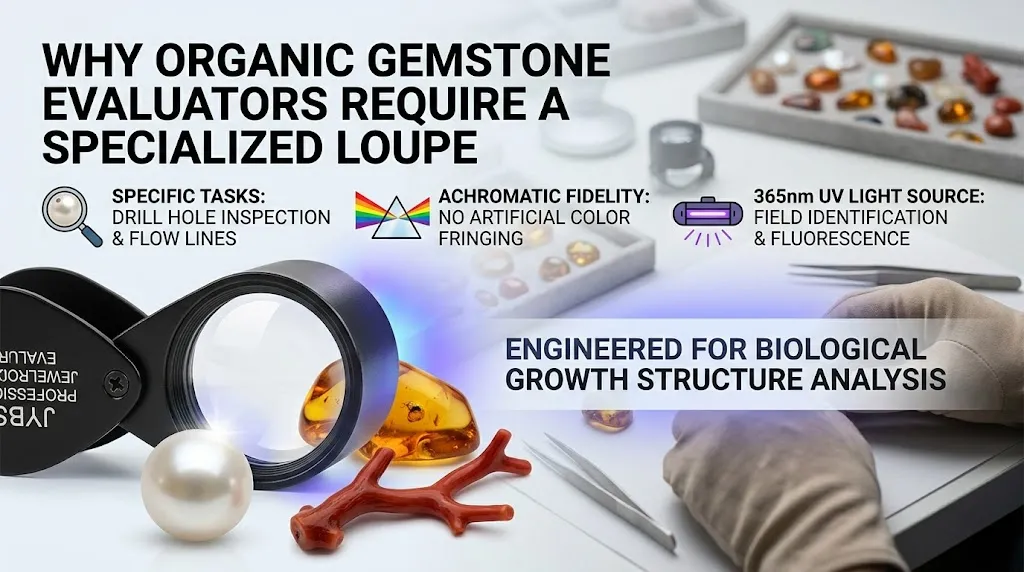
Why Organic Gemstone Evaluators Require a Specialized Loupe
Evaluating organic gemstones—such as pearls, amber, and precious coral—is a completely different discipline from grading crystalline minerals like diamonds. Organics are opaque or translucent, and appraisers are hunting for biological growth structures rather than crystalline inclusions.
Here is why organic gemstone buyers require specialized optics for field evaluation:
- Specific Inspection Tasks: A gemologist must inspect a pearl’s drill hole to check nacre thickness (to distinguish cultured from natural or imitation). They must also examine the microscopic flow lines and sun spangles in amber to separate it from copal or plastic imitations.
- Importance of Achromatic Fidelity: Identifying dyed coral or color-treated “golden” South Sea pearls relies on detecting unnatural concentrations of color. If a loupe introduces artificial color fringing, it completely invalidates the evaluation.
- UV Source Necessity: Amber and pearls have highly specific fluorescence profiles under long-wave ultraviolet light. Having a built-in 365nm UV source is an absolute necessity for rapid field identification during global buying trips.
Critical Optical Specs for Organic Gemstone Standards
When identifying biological growth structures and artificial dyes, color neutrality and specific illumination are your primary tools.
| Key Specification | Recommended Standard | Why It Matters for Organic Gems |
| Achromatic Correction | True Color Triplet | Essential for identifying dyed organics. The lens must be chemically neutral so the appraiser can accurately spot artificial pink dye pooling in the natural pits of coral. |
| Integrated UV Lighting | 365nm Long-Wave UV | Crucial for identifying imitations. Natural amber typically fluoresces blue or yellow-green, whereas plastic or modern copal often has a completely different or inert reaction. |
| Light Transmission | Superior Illumination | Necessary for illuminating the dark interiors of pearl drill holes to clearly see the demarcation line between the nucleus and the outer nacre layer. |
Top 3 Loupe Recommendations for Organic Gemstone Evaluators
Engineered specifically for biological structure analysis, field purchasing, and fluorescence testing:
1. Triplet Loupe with LED/UV Lighted LED-JYBS
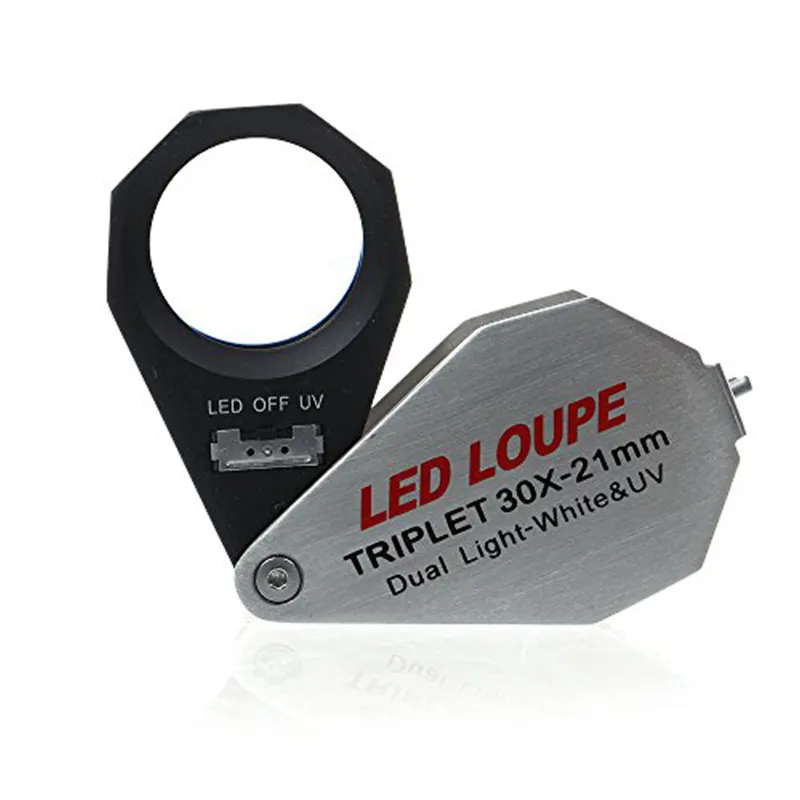
- Specs: 10X Magnification, 21MM Achromatic & Aplanatic Triplet Lens, 6 LED Lights & 1 Base UV Light.
- Verdict: The ultimate tool for the pearl and amber buyer. The built-in band of six LED lights provides direct, shadow-less illumination to see the overlapping aragonite platelets on a pearl’s surface. With the flip of a switch, the UV light set into the base instantly exposes the chalky fluorescence of fake, plastic amber or identifies specific color treatments in pearls.
2. Triplet Hexagon Loupe with Rubber Grip-JYBS
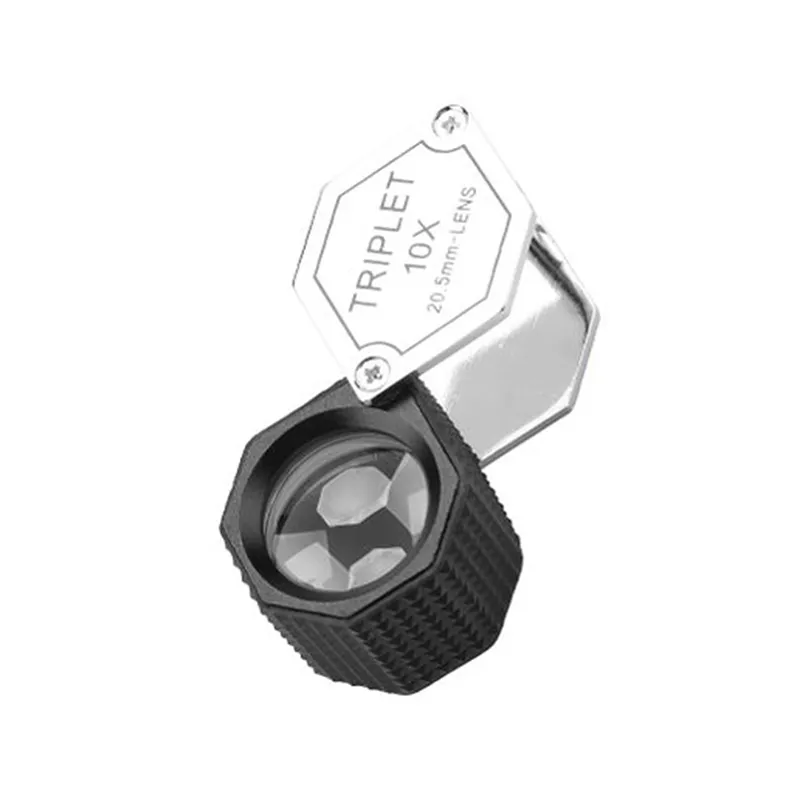
- Specs: 10X Magnification (15X and 20X available for extreme macro inspection), 20.5MM Lens, 1-Inch Focal Distance, Ridged Rubber Grip, Flat Black Lens Holder.
- Verdict: Specifically designed with gemstone fragility in mind. Because organic gems are incredibly soft, the ridged rubber sides ensure a steady grip, eliminating the risk of accidentally dropping the metal housing and scratching a valuable South Sea pearl. Furthermore, the flat black color of the lens holder prevents color distortion and controls glare, dramatically increasing the accuracy when evaluating the subtle orient of pearls.
3. Pocket Loupe 14x-JYBS
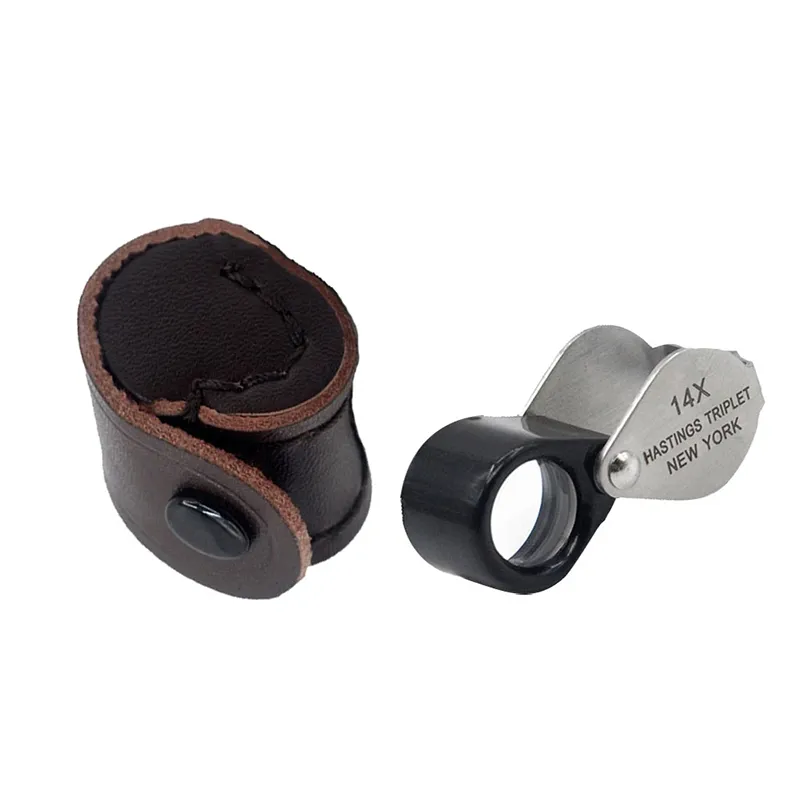
- Specs: 14X Magnification, 12MM Optical Glass Lens, Aluminum Alloy Construction, Compact Folding Design.
- Verdict: For advanced dye detection. The enhanced 14x magnification from this high-quality optical glass lens is critical when examining the microscopic longitudinal striations in precious coral to ensure color hasn’t been artificially injected. Its ultra-portable aluminum alloy build and protective leather case make it a long-lasting, pocket-ready tool for instant authenticity checks in the field.
How to Clean and Protect Your Organic Gem Loupe
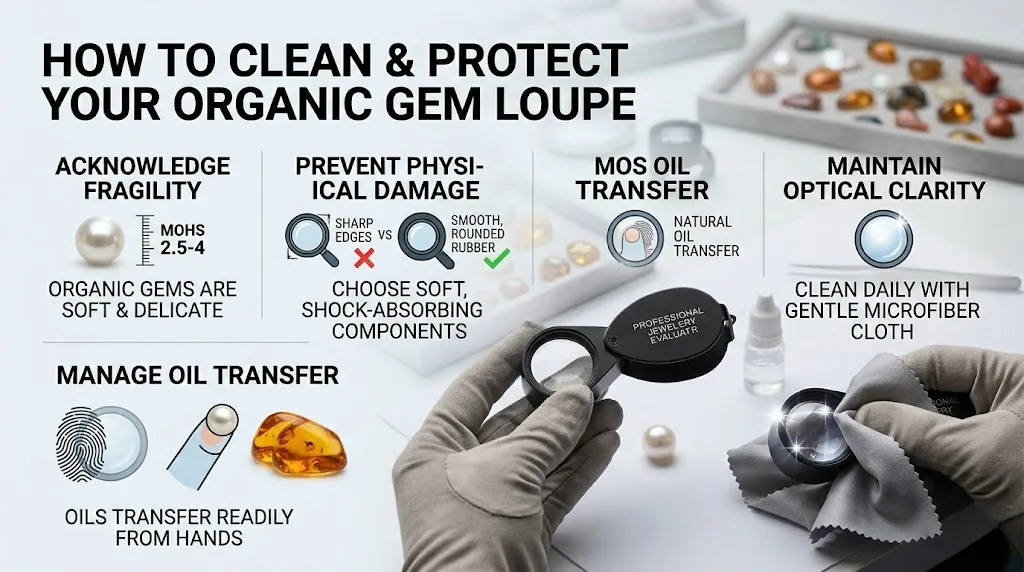
- Acknowledge Gemstone Fragility: Organic gemstones are incredibly soft, averaging just 2.5 to 4 on the Mohs scale.
- Prevent Physical Damage: If your loupe’s metal housing has sharp edges, accidentally bumping a pearl or piece of amber during inspection will cause permanent scratching. Always use a loupe with a smooth, rounded housing or shock-absorbing rubber components.
- Manage Oil Transfer: Because organics are often handled with bare hands to feel their warmth, skin oils transfer readily to your lens.
- Maintain Optical Clarity: Clean your optics daily with a gentle microfiber cloth to maintain the high contrast needed to see subtle biological growth lines.
FAQ: Selecting a Loupe for Organic Gemstones
Q: Can a loupe tell me if a pearl is fake?
A: Yes. Under a 10x Triplet, a natural or cultured pearl shows a microscopic, stepped, maze-like pattern caused by overlapping aragonite crystals. A fake “Majorica” or glass pearl will look perfectly smooth or show a grainy, painted texture.
Q: Why do I need to look into the drill hole of a pearl?
A: The drill hole is the only place you can see a cross-section of the gem. By using a loupe with excellent light transmission and shifting your focus down into the hole, you can clearly see the demarcation line between the mother-of-pearl bead nucleus and the outer nacre layer to accurately judge its thickness.
Q: How does a loupe help identify real amber from plastic?
A: Natural amber contains microscopic flow lines, trapped bubbles, and organic debris. Plastic imitations often have perfectly spherical, unnaturally uniform bubbles or swirl marks that look exactly like stirred paint under 10x magnification.
Need to bulk buy for your Pearl and Amber Purchasing team?
Get a Quick Quote. Our optical specialists will respond within 3 hours.