
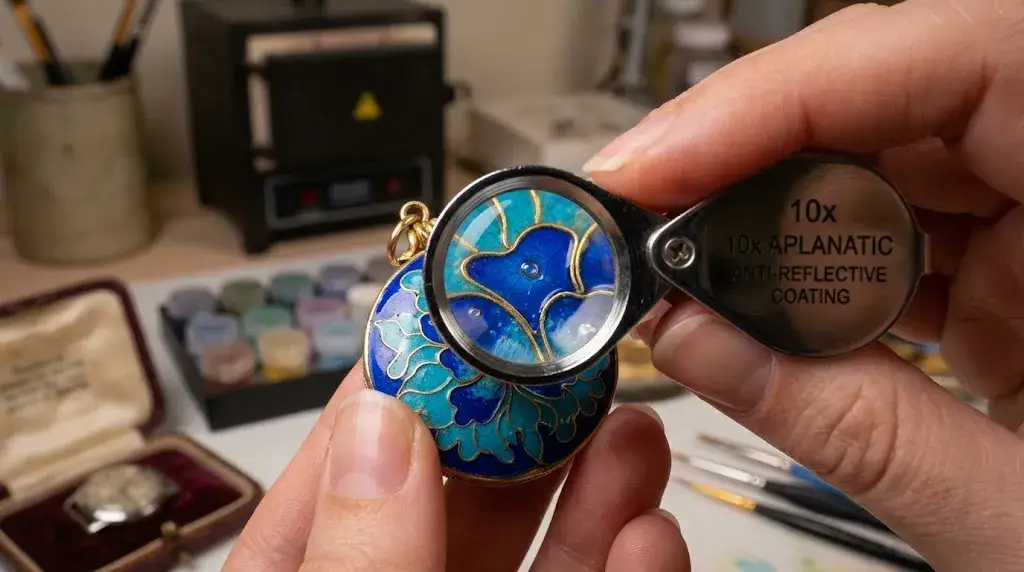
Why Enamel Artists and Conservators Require a Specialized Loupe
- Critical Quality Control Instrument: For artists creating Cloisonné or Champlevé enamel, or conservators restoring Fabergé eggs and antique enameled watches, the loupe is a vital tool for inspection.
- Inspecting Fused Glass: Enamel is essentially fused glass, requiring an artist to inspect the piece between multiple kiln firings.
- Identifying Defect Types: The specialist must identify microscopic “crazing” (hairline cracks), trapped gas bubbles, or incomplete bonding between the silver/gold wires and the vitreous glass.
- Requirement for Aplanatic Correction: Evaluating enamel requires extreme Aplanatic (flat-field) correction and exceptional glare management.
- Managing Surface Reflection: Because fired enamel possesses a highly reflective, mirror-like surface, a cheap loupe will bounce ambient light directly back into the viewer’s eye, masking microscopic flaws.
- High Light Transmission: Conservators require premium triplet lenses with advanced anti-reflective coatings to maximize light entry. This allows the eye to look past surface reflections and focus on the internal structures of the translucent glass layers.
Critical Optical Specs for Enamel Standards
When evaluating fused glass and delicate wirework, glare reduction and flat-field geometry are essential.
| Key Specification | Recommended Standard | Why It Matters for Enamel Artists |
| Spherical Correction | Aplanatic Flat-Field | Cloisonné wires are meticulously shaped. If the lens distorts the edges, the artist cannot tell if the wire shifted during firing or if it is an optical illusion. |
| Lens Coating | Multi-Coated Anti-Reflective | Fired enamel is highly reflective. Anti-reflective coatings cut through the surface glare, allowing the eye to see microscopic bubbles trapped deep within the glass layers. |
| Magnification | 10x (Wide Aperture) | 10x provides the perfect balance of magnification to spot crazing (micro-cracks) while maintaining a wide enough field of view to evaluate the color gradients. |
Top 3 Loupe Recommendations for Enamel Artists & Conservators
Engineered for glare reduction and structural flaw detection in fused glass:
1. Zeiss D40 & D36 Loupe
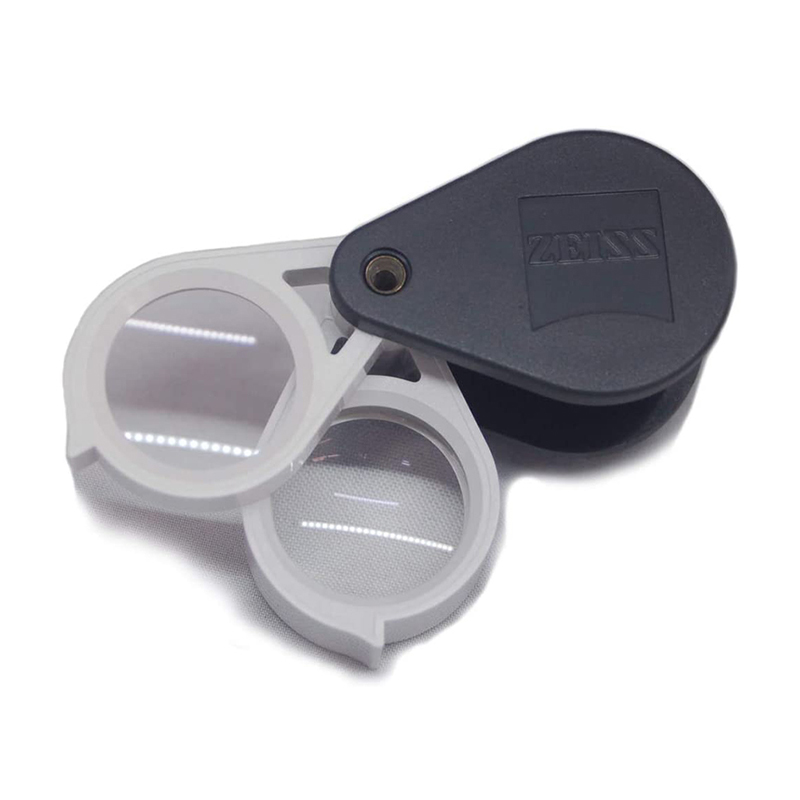
- Specs: German-made Aplanatic-Achromatic optical system, T* Anti-Reflective Coating. Available in D40 (Fixed 10X, 13mm) or D36 (Variable 3X/6X/9X, 22mm).
- Verdict: The ultimate tool for checking kiln results. Zeiss’s proprietary T* Anti-Reflective Coating maximizes light transmission, allowing the eye to look past surface reflections and peer deeply into the fired enamel layers. This reveals any hidden porosity, microscopic crazing, or un-fused glass frit with pure, distortion-free clarity. The D36 offers a wider 22mm view for evaluating larger enameled surfaces.
2. Original Optivisor Head Magnifier
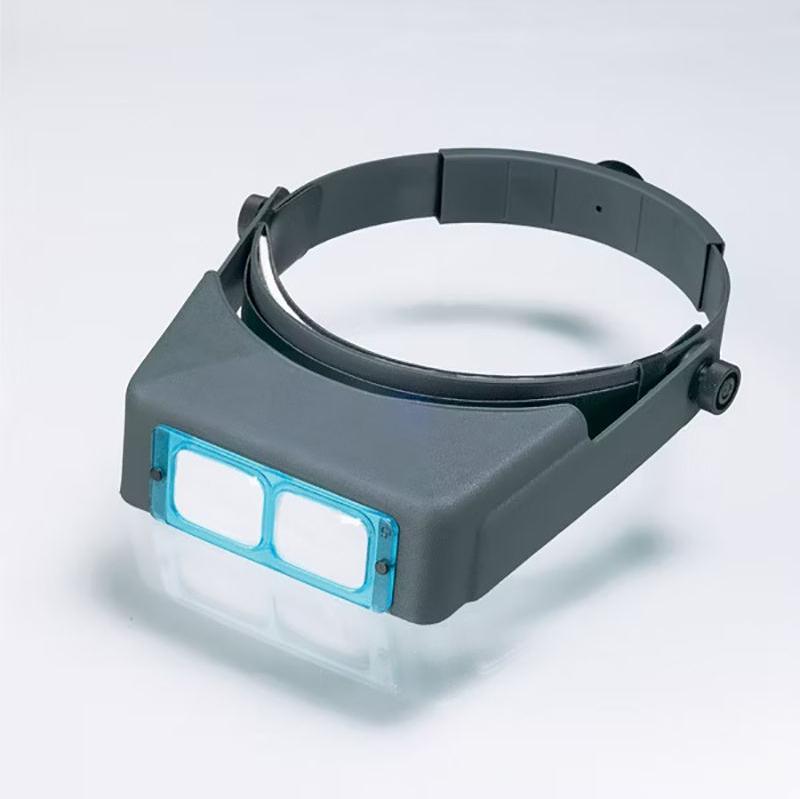
- Specs: USA-made Binocular Headband Magnifier, Ground & polished optical glass prismatic lenses, Selectable magnifications (1.75X to 3.5X) with 4″ to 14″ working distances.
- Verdict: Essential for active wire-bending and layout. Enamel artists require both hands to manipulate delicate silver or gold wires. The Optivisor provides comfortable, unrestricted three-dimensional vision and generous working distances, allowing the artist to meticulously shape and place Cloisonné wires across a curved surface. The padded orthopedic felt and genuine leather comfort band ensure it can be worn during long, intense studio sessions without eye or neck strain.
3. Adjustable Focusing 10X Tripod Loupe-JYBS
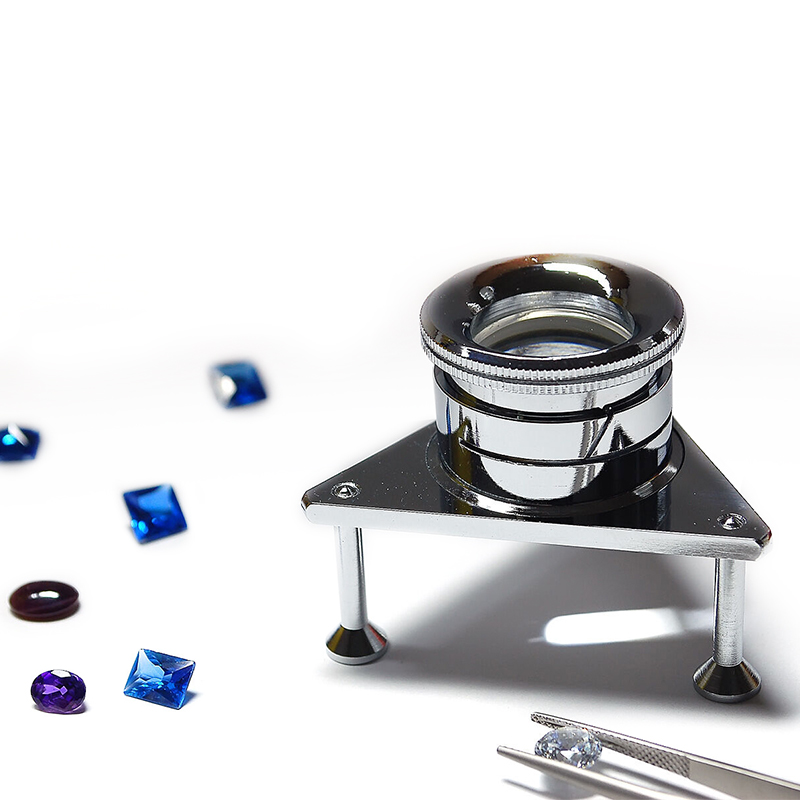
- Specs: 10X Achromatic & Aplanatic Triplet Lens, 18mm Diameter, Heavy-duty Steel Frame, Adjustable Focusing Height (37-55mm).
- Verdict: Specifically designed for flat Champlevé and surface evaluation. By resting directly on the work table, the steel tripod ensures a perfectly stable, hands-free setup elevated about 1 inch from the surface—leaving plenty of room to operate tweezers underneath. The adjustable focus allows the conservator to dial in the exact focal plane to inspect filed, flush surfaces perfectly, eliminating the hand-shake that can make flush glass appear distorted.
How to Clean and Protect Your Enamel Loupe
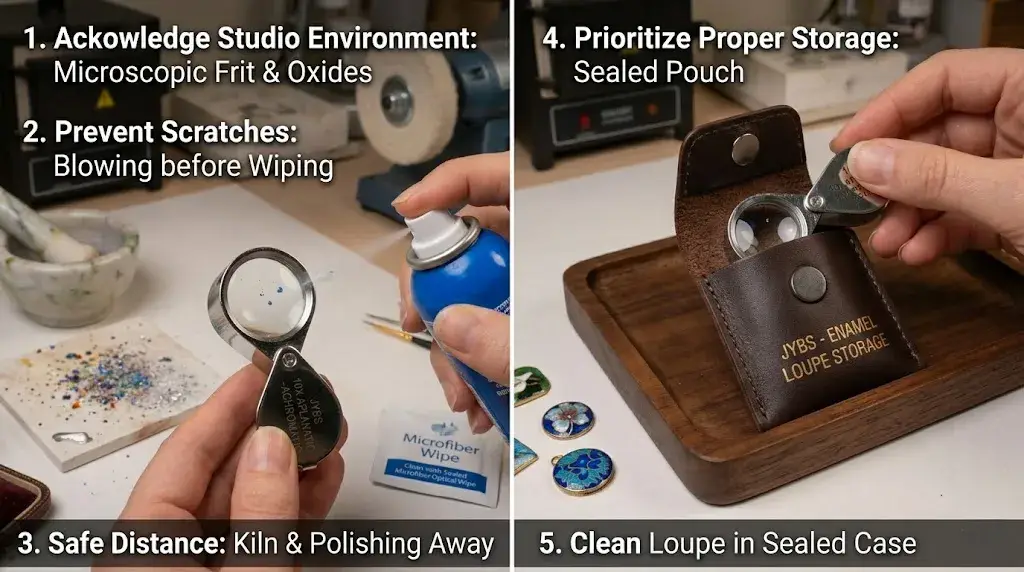
- Acknowledge the Studio Environment: An enamel studio is filled with microscopic glass dust (frit) and metal oxides.
- Prevent Surface Scratches: If glass dust settles on your loupe, wiping it with a dry cloth will instantly scratch the anti-reflective coating.
- Use Proper Clearing Techniques: Always blow the lens clean with compressed air before using a wet optical wipe.
- Maintain Safe Distance: Keep your loupe far away from your grinding and polishing stations where Alundum and diamond pastes are used.
- Prioritize Proper Storage: Always store it in a sealed leather pouch to prevent abrasive airborne particles from settling on the lens.
FAQ: Selecting a Loupe for Enamel Work
- Q: Why does my enamel look cloudy under the loupe?
- A: If the surface is polished but looks cloudy inside under 10x magnification, you are likely seeing thousands of microscopic, trapped gas bubbles (often caused by under-firing or contaminated metal). A high-quality loupe makes this porosity obvious.
- Q: Can a loupe help me see “crazing” before the enamel chips off?
- A: Yes. Crazing (hairline tension cracks) in enamel is often invisible to the naked eye until it fails completely. Using a 10x Aplanatic loupe and angling the piece to catch the light will reveal these microscopic stress fractures immediately.
- Q: Why is flat-field (Aplanatic) correction so important for Champlevé?
- A: In Champlevé, glass is fired into engraved recesses in thick metal. You must ensure the glass is filed perfectly flush with the metal surface. Edge distortion in a cheap loupe will make flush surfaces appear convex or concave.
Need to bulk buy for your Enamel Studio or Conservation Lab?
Get a Quick Quote. Our optical specialists will respond within 3 hours.