

Why Identifying Lab-Grown Diamonds Requires a Specialized Loupe
The proliferation of High Pressure High Temperature (HPHT) and Chemical Vapor Deposition (CVD) lab-grown diamonds has completely changed the landscape of gemology. While differentiating a natural diamond from a synthetic usually requires advanced spectroscopic equipment, a highly trained gemologist can spot initial red flags—such as metallic flux inclusions in HPHT stones, or specific graining patterns in CVD stones—using only a loupe.
However, standard loupes fail here for the following reasons:
- Necessity of Achromatic Fidelity: Identifying microscopic metallic remnants requires absolute Achromatic (color-corrected) fidelity to distinguish the dark, opaque nature of a flux inclusion from a natural dark crystal.
- Requirement for Aplanatic Correction: CVD diamonds sometimes exhibit faint brown or gray color zoning and pinpoint cloud formations. To detect these, the loupe must possess extreme Aplanatic (flat-field) correction.
- Mitigation of Spherical Distortion: If the lens has spherical distortion, the resulting glare will mask these faint, diagnostic internal structures, making professional-grade optical correction essential for accurate identification.
Critical Optical Specs for Synthetic Gemstone Standards
When screening for synthetics, magnification, optical resolution, and lighting control are your primary defense mechanisms.
| Key Specification | Recommended Standard | Why It Matters for Synthetics |
| Magnification | 10x or 14x | While 10x is the GIA standard, a 14x loupe provides the extra magnification needed to identify the precise shape of microscopic metallic flux inclusions. |
| Illumination | Built-in LED / UV | Pinpoint inclusions in CVD diamonds are nearly invisible under basic lighting. Strategic illumination highlights internal structures and fluorescence. |
| Lens Correction | Achromatic-Aplanatic Triplet | Eliminates chromatic and spherical aberration, ensuring you don’t mistake optical color fringing for actual color zoning within a synthetic stone. |
Top 3 Loupe Recommendations for Lab-Grown Diamond Identification
Engineered for extreme resolution and diagnostic screening, these are the ultimate lab tools based on our catalog selection:
1. SCHNEIDER Diamond Loupe L1 (Harald Schneider®)
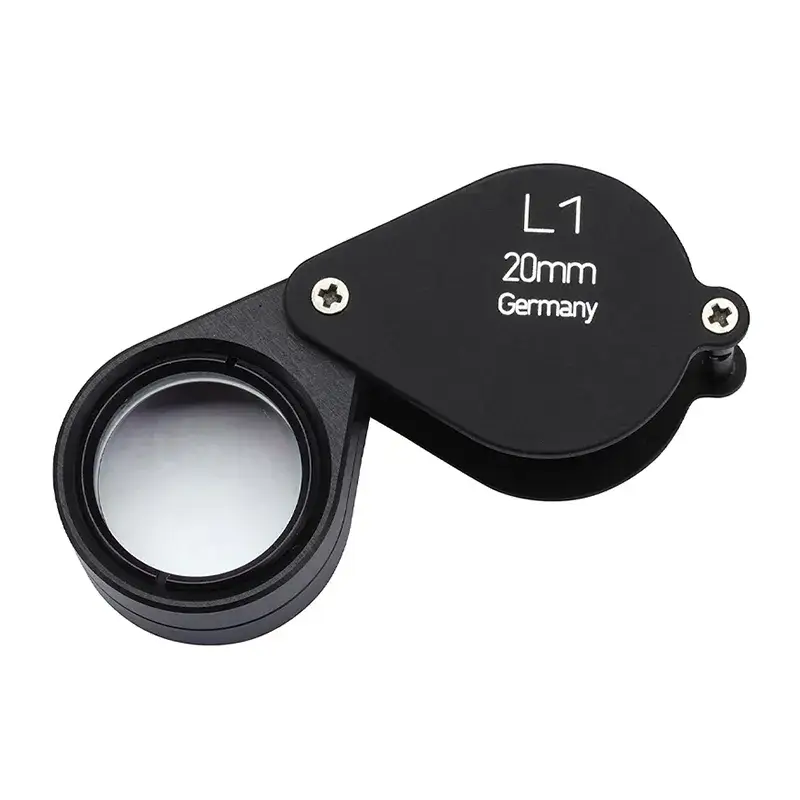
- Specs: 10x Magnification, 20mm single Triplet lens (18mm thickness), 2.46 OZ durable metal housing.
- Verdict: The gold standard for professional diamond graders and gemologists. Its fully-corrected, achromatic-aplanatic triplet lens is custom-made from the highest-quality German optical glass and features an anti-reflective coating. This unique lens system provides the widest field of vision, highest resolution, and depth of focus available, virtually eliminating color distortion and curvature for razor-sharp inspection.
2. Triplet Loupe With LED/UV Lighted (LUEA0018)
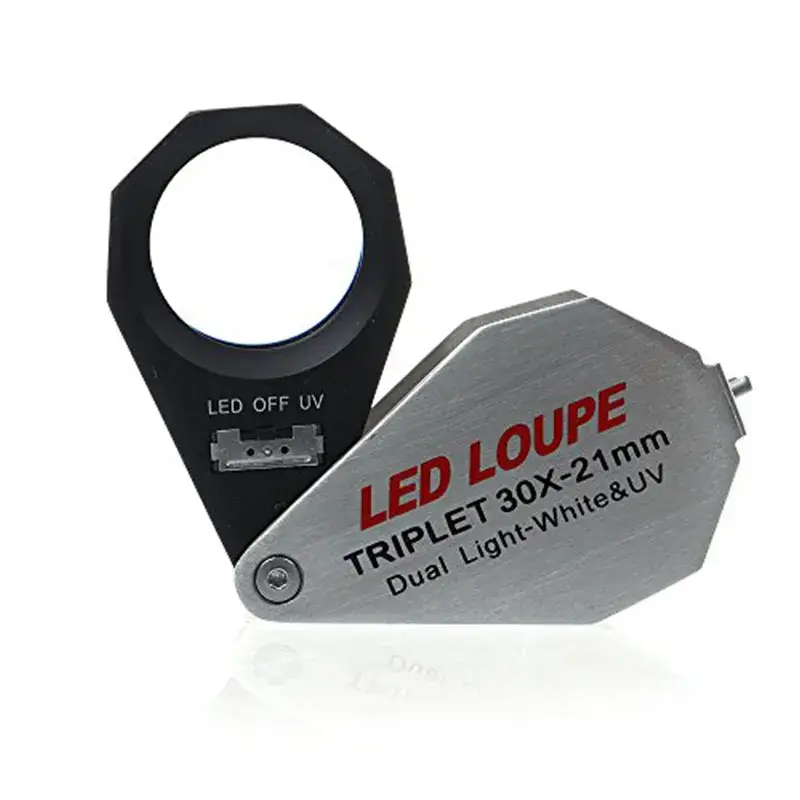
- Specs: 10x Magnification, 21mm Achromatic & Aplanatic Triplet lens, dual lighting system (6 bright LEDs + 1 UV light), robust metal case.
- Verdict: The ultimate tool for rapid, shadow-free screening. Many HPHT diamonds phosphoresce, and with the flip of a switch, the UV light set into the base allows for immediate gemstone fluorescence testing. Concurrently, the band of six LEDs provides bright, direct illumination that eliminates shadows—perfect for spotting micro-details even in poor lighting conditions.
3. Pocket Loupe 14x (LUEA0014)
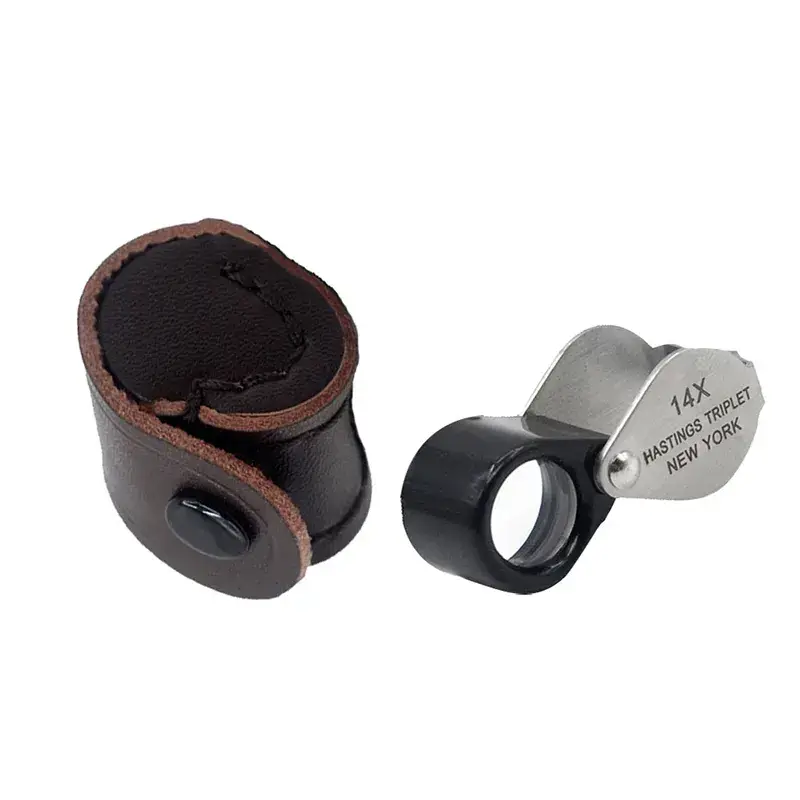
- Specs: 14x Magnification, 12mm optical glass lens, premium aluminum alloy construction with a folding design and leather case.
- Verdict: For advanced gemologists requiring extra power in a highly portable format. The 14x magnification offers the critical visual bump needed to differentiate natural rutile needles from microscopic synthetic flux remnants, while the folding aluminum housing ensures a long service life for on-the-go inspections.
How to Clean and Protect Your Synthetic Testing Loupe
When hunting for microscopic evidence of synthetic growth, a single speck of dust on your lens can easily be mistaken for an inclusion. To ensure your loupe remains in optimal condition, follow these maintenance steps:
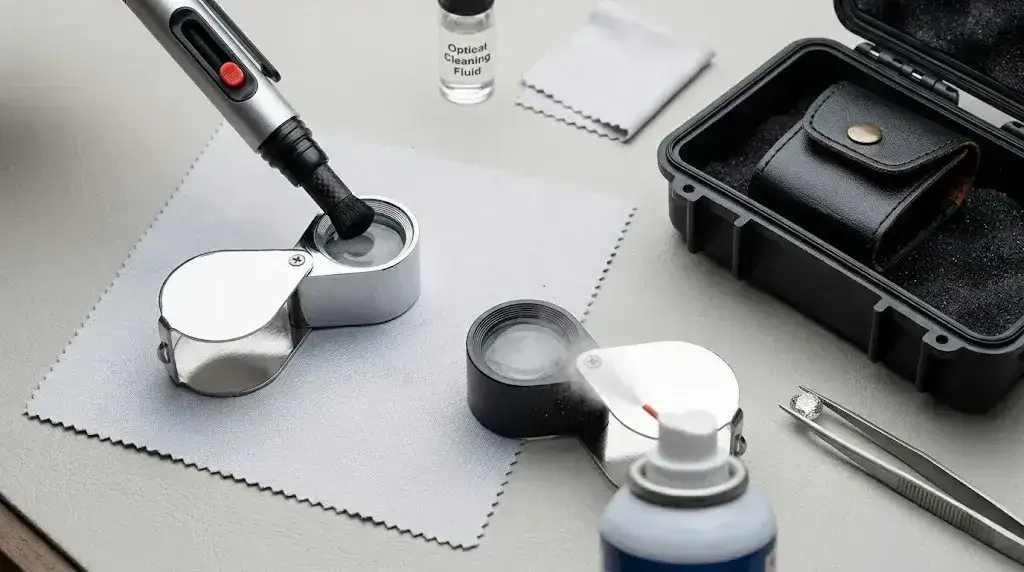
- Maintain Surgical Cleanliness: Since dust can be mistaken for inclusions, keep your lens pristine at all times.
- Remove Coarse Debris: Always use compressed air to blow off loose dust and particles before applying any physical contact to the lens surface.
- Use Specialized Cleaning Tools: Utilize a dedicated optical cleaning pen—specifically one designed for camera lenses with a carbon cleaning tip—to safely absorb fingerprint oils without scratching or damaging the anti-reflective coating.
- Ensure Proper Storage: Always store your loupe in a sealed, hard-shell case whenever it is not actively being used for grading.
FAQ: Selecting a Loupe for Synthetic Gemstones
- Q: Can a 10x loupe definitely prove a diamond is lab-grown?
- A: Rarely. A loupe provides “indicators” (like metallic flux or lack of natural graining). Definitive proof usually requires advanced laboratory testing. A high-quality loupe tells you which stones need to be sent to the lab.
- Q: Why does a 14x loupe have a smaller lens than a 10x loupe?
- A: This is the law of optics. As magnification increases, the radius of the lens curvature must decrease, resulting in a smaller lens diameter and a much shorter focal length (working distance).
- Q: Does chromatic aberration affect identifying synthetic sapphires?
- A: Yes, drastically. Synthetic flame-fusion sapphires show curved color banding (striae). A loupe with chromatic distortion will blur these bands, making them look like natural straight, angular color zoning.
Need to bulk buy for your Gemological Lab team?
Get a Quick Quote. Our optical specialists will respond within 3 hours.